
Sign up to save your podcasts
Or



In this episode of we have the pleasure of hosting the most fan-requested crossover: The Shipwreck Mermaid and the Pirate Historian. Dr. Maddy McAllister, aka the Shipwreck Mermaid, is a Maritime archaeology Curator based out of Australia. Dr. Jamie Goodall is a staff historian with the US government. They are both popular social media personalities on Twitter and Instagram. We discuss their respective careers and how they use primary source data and archaeological reports. We discuss Black Jack Anderson and the lack of famous pirates near Australia. Dr. Goodall enlightens us with more information about Zheng Yi Sao and we chat about if it's possible to see evidence of piracy in shipwrecks. Dr. McAllister and Dr. Goodall end the episode with advice for students interested in maritime archaeology or maritime history.
Literature recommendations:
1) X Marks the Spot: The Archaeology of Piracy edited by Russell K. Skowronek and Charles R. Ewen
2) Pieces of Eight: More Archaeology of Piracy edited by Russell K. Skowronek and Charles R. Ewen
3) Why We Love Pirates: The Hunt for Captain Kidd and How He Changed Piracy Forever by Rebecca Simon
4) The Alliance of Pirates: Ireland and Atlantic piracy in the early seventeenth century by Connie Kelleher
5) Unfinished Voyages: Western Australian Shipwrecks 1622-1850 by Graeme Henderson
Guest Contact
Dr. Goodall's Instagram and Twitter: @l_historienne
Dr. Goodall's Website: jamiegoodall.com
Dr. McAllister's Instagram: @shipwreckmermaid
Dr. McAllister's Facebook: https://www.facebook.com/maddy.mcallister.10 and https://www.facebook.com/shipwreckmermaid/
Contact
ArchPodNet
Affiliates
On this episode of ALiRP, we interview our friend and colleague, Dr. Madeline Mackie. Dr. Mackie just began her position as an assistant professor at Weber State University in Ogden, Utah.
Dr. Mackie studies Paleoindian lifeways and big game hunting, as well as ochre hand sprays. We met Dr. Mackie at the University of Wyoming, where she dealt with our numerous shenanigans.
We start off by talking about her experiences growing up in Southern California and then delve into her MA research on hand sprays in Wyoming. Dr. Mackie then talks about the La Prele Mammoth site and we kind of nerd out about the finds. She then talks about post-doc life and the jobs market.
Literature Recommendations:
Guest Contact
Contact
ArchPodNet
Affiliates
On this episode of A Life in Ruins, we continue our series on ancient civilization and discuss Indus Valley Civilizations and their precursors. We have Stefan Milo join us to discuss this region. Stefan Milo is a popular Youtuber who has appeared on episodes 20 and 43. He made a video on an Indus Valley Civilization where he discusses the interesting lack of social hierarchy found in this civilization (https://www.youtube.com/watch?v=kxP1zornb-w). We struggle with geography, time periods, and basically everything in this episode but also discuss social hierarchy/structure.
Guest Contact
Show Contact
ArchPodNet
Affiliates
We celebrate our 69th episode by investigating the rise of early state civilizations in South America. The four early states that we cover are Norte Chico, Chavin, Nazca, and of course, Moche. This episode is a wild ride of pyramids, ceremonial complexes, severed heads, and Moche sex pots.
Sprinkled throughout the episode are references to Star Wars, Civilization, SAA conferences, South Park, Rick and Morty, and a shoutout to The Dirt Podcast.
Literature recommendations:
1) Ancient Civilizations by Chris Scarre & Brian M. Fagan, 4th edition
2) Archaeology by Robert L. Kelly & David Hurst Thomas, 7th Edition
3) Archaeology and Human History by Deborah I. Olszewski
4) Skeleton Sex Pots by Steve Nash. Sapiens Anthropology Magazine.
5) Dirt Podcast on the Nazca
Contact
ArchPodNet
Affiliates
Buckle up for an episode on the theory of the rise of early states and ancient civilizations. Episode 68 sets the stage for a series investigating early civilizations across the globe. We break down Elman Service and Lewis Henry Morgan's theories on cultural complexity and go through a couple of definitions for "civilization". Think that's going to be boring? Well just wait, we even talk about primary vs secondary civilizations and the four classic theories on how early complex civilizations rise.
Of course, any episode involving the great mistake of neothilization wouldn't be complete without poking fun of our friend Stefan Milo.
Literature Recommendations
Contact
ArchPodNet
Affiliates
In this episode of the A Life in Ruins Podcast, we interview Kelly Brown, the Archives Lab Manager at the Augusta Veterans Curation Program. Her main job component is managing archives, her secondary responsibility is being David's workplace babysitter.
She recently graduated with a Master's Degree in Library and Information science (MLIS) and has accepted a position at the Savannah River Site Museum in Aiken, South Carolina. We discuss Kelly’s background in archaeology from the University of Georgia and her field school on the Georgia coast.
Kelly provides the three hosts a glimpse into the world of archives and documentation and discusses why information science is important in all fields, especially in archaeology
Most of the episode, however, is the roast of David Howe’s illiteracy.
Literature recommendations:
1) Google “IMLS” and look it up yourself, pleib
2) TDAR - The Digital Archaeological Record
3) Society of American Archivists
Guest Contact
Contact
ArchPodNet
Affiliates
We wrap up our animal domestication series with a discussion about animals that were domesticated in North and South America. We cover llamas, guinea pigs (so startled), turkey's and a few other domesticates that the three hosts didn't know about. Of course, there are plenty of South Park and Disney Movie references throughout the episode.
Literature Recommendations
Contact
ArchPodNet
Affiliates
In this episode of A Life in Ruins podcast, The hosts have another off the rails discussion about domesticates. This time however, talking llamas, guinea pigs, camels, horses, goats, and dogs. You might notice that not all of them are Old World Domesticates. Honestly, you’ll just have to listen to the episode understand.
It is actually a very thoughtful and funny conversation about the idiosyncrasies of domestication, animal behavior, and how humans interact with animals.
National suicide prevention hotline: 1-800-273-TALK
Literature Recommendations
Contact
ArchPodNet
Affiliates
In this episode, we delve back into the Paleoindian period. We interview Kelton Meyer, a graduate student in anthropology at Colorado State University about his research on game drives in the Rocky Mountains and the techniques he utilizes to analyze spatial relationships. The three hosts also chat with Kelton about his recent publications and research awards.
Literature Recommendations
Guest Contact Info
Contact
ArchPodNet
Affiliates
For this episode of Just the Boyz, we kick off our series on animal domesticates, starting with the oldest known domesticated animal: the dog. We are fortunate to have David as a one of the hosts as he is one of the leading public scholars when it comes to the relationship between dogs and humans throughout human history. We chat about the earliest evidence for dog domestication, the leading theories behind Howe and why dogs were domesticated, and delve into a discussion about the Siberian Fox Domestication experiment and animal research ethics.
Literature recommendations
1) "Dogs": Darcey Morey
2) "The Social Dog: Behavior and Cognition" Kominski and Marshall-Pescini
3) “Dogs: Archaeology Beyond Domestication" Bethke and Burtt
4) "Inside of a Dog: What Dogs See, Smell, and Know" Alexandra Horowitz
Contact
ArchPodNet
Affiliates
From the publisher's feed
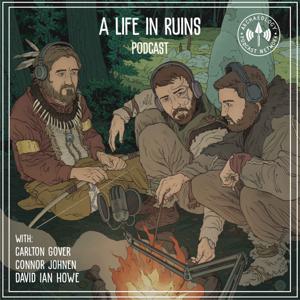
Carlton Gover, Connor Johnen, and David Howe are three friends that went to graduate school together and decided to start an archaeology podcast. Join them every week for witty conversation,…
10 Listeners
150 Listeners

93 Listeners
15 Listeners
19 Listeners
116 Listeners

31 Listeners

2 Listeners

2 Listeners

4 Listeners

19 Listeners

14,173 Listeners
2 Listeners

16 Listeners
0 Listeners
15 Listeners
3 Listeners
27 Listeners

0 Listeners
0 Listeners