
Sign up to save your podcasts
Or

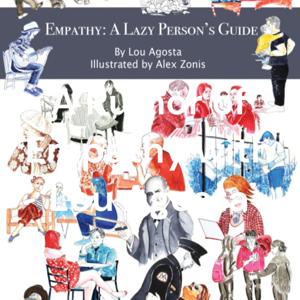


This is the first podcast in a series on empathy and bullying. The author, Lou Agosta, talks about "the biggest bully in my life" and how empathy is the antithesis of bullying. Bullying is precisely defined and how empathy can be used to deal with bullying is engaged. Inducing empathy in the bully by asking: "How would YOU feel if this [the violence or bad language] were done to you?" does NOT work because the bully is usually not in touch with his feelings. Rather the recommendation and response of empathy is to set limits - reestablish the boundary of dignity and respect between self and other which has been violated by the bullying. The devil - and the empathy - are in the details. Find out how to get your power back in the face of bullying in this podcast.
Arnon Rolnick and Lou Agosta discuss the work of Sherry Turkle. Professor Turkle gets off a good “Jeremiad” about the damaging effects of beeping, chirping, distracting, interrupting, messaging device. One of the main negative effects is a kind of acquired attention deficit on the part of large segments of the population/community. Key term: acquired attention deficit. The smart phone and text messaging is a significant disruptor to one's ability to be present with oneself and with others. One of the main effects of the digital revolution in everything is that we the community has an "acquired attention deficit" due to device interruptions. A lot of distance exists on the spectrum between "better than nothing" and "better than everything else." Turkle’s “from better than nothing to better than anything” is a straw man (person) to be shot down. Like Winnicott's "good enough" mother - therapy strives to be "good enough" - trying to be perfect is another source of pathology - becoming obsessive or borderline. Now how does all that apply to performing psychotherapy online via video meeting technology? Check out this engaging conversation between Arnon and Lou about Turkle's incisive and penetrating contribution.
Check out the original Youtube version: https://youtu.be/6OId-0QDFys
Check out the blog post for a complete transcript: www.EmpathyLessons.com
Empathy is supposed to be like motherhood, apple pie, and puppies. What’s not to like? A lot. People can be difficult—very difficult—why should empathizing with them be easy? Yet most of the things that are cited as reasons for criticizing and dismissing empathy—emotional contagion, projection, misinterpretation, gossip, messages lost in translation and devaluing language—are actually breakdowns of empathy. Find out how to practice and train one’s empathy to shift breakdowns in empathy to breakthroughs in empathic receptivity, understanding, responsiveness, possibilities of flourishing, enhanced humanity, relatedness, and building community.
This episode is also available as a blog post: http://louagosta.com/2021/06/19/resistance-to-empathy-and-how-to-overcome-it-part-2-individual-provider-and-receiver-of-empathy/
The qualities that make organizations successful are not always the qualities that enhance their empathy. Beating the competition in the market, overcoming technical and legal problems, and "getting your numbers," do not reliably expand your empathy.
It often seems that compliance and rule-making, not empathy, are trending. The organization drives out empathy by enforcing conformity to an extensive and contradictory set of rules, whose complexity is such that at any give time, the individual is technically (though unwittingly) in violation of one of them. What to do about it?
Empathy has a key role to play in organizations in reducing conflict, overcoming “stuckness,” eliminating self-defeating behavior, building teams, fostering innovation, developing leadership, and enhancing productivity. The empathy lesson is to use humor (and empathy) to undercut resistance to empathy in the organization. In this dynamic and engaging podcast, expand your empathy and find out how empathy is a source of creating possibilities, overcoming conformity through innovation, and leading from a future of possibilities.
This episode is also available as a blog post: http://louagosta.com/2021/06/14/resistance-to-empathy-and-how-to-overcome-it/
I know what you feel because I feel it, too, as a vicarious experience, not a merger. Without any prerequisites, this presentation engages the deep history of empathy, exploring the underground dynamics of sympathy, fellow feeling, vicarious feeling, in art, altruism, story telling, before the word “empathy” emerged. Without any prerequisites, empathy is engaged through the lens of selected methods of inquiry including phenomenology, hermeneutics, psychoanalysis, and linguistic philosophy. The secret underground history of empathy includes works by Hume, Kant, Lipps, Freud, Husserl, and, time permitting, Kohut. When all the philosophical arguments are complete, when all the Freudian transference and countertransference is analyzed, when all the phenomenological methods are reduced, when all the hermeneutic circles are spun out, in empathy, one is quite simply in the presence of another human being. Get present in this engaging and entertaining talk on empathy and expand yours!
The one slide hand out (to which reference is made in the podcast) is available at: https://wordpress.com/post/empathyinthecontextofphilosophy.com/2181
(c) Lou Agosta, PhD / [email protected]
Expand your empathy here-and-now. Empathy training consists in overcoming the obstacles to empathy that people have unwittingly acquired in being taught to conform and survive the day. When the barriers are overcome, then empathy spontaneously develops, grows, comes forth, and expands. There is no catch, no “gotcha.” That is the one-minute empathy training, pure-and-simple. The devil is in the details and the deep work and tips and techniques around eliminating, overcoming, defeating the obstacles, resistance, and blocks to empathy. Find out what are the Big Four empathy breakdowns. It turns out that break downs in empathy, when handled carefully (and with empathy), result in breakthroughs in expanding empathy in the individual and in the community.
This episode is also available as a blog post: http://louagosta.com/2019/10/27/empathy-the-one-minute-training-no-kidding/
To regulate your empathy, cross the street. This is an edgy and confrontational way of putting it, but it is literally accurate. Cross the street away from the neighbor to “down regulate” your empathy, and experience less empathic distress; and cross the street towards your neighbor to expand your empathy in the direction of creating an inclusive community of persons, who recognize the value of cooperation.
The empathy lesson is that the vicarious experience does not have to be overwhelming. Rather, with practice, and even if you are a natural empath, you are able to shift your focus from suffering to neighborliness; you are able to shift your attention from suffering to making a difference and enhanced self-esteem, expanding community and shared humanity.
The Natural Empath requires special attention. Most people need to expand - "up regulate" - their empathy; in contrast, the Natural Empath may usefully practice techniques of "down regulating" - setting boundaries to - her or his empathy. Find out how to do that in this engaging podcast.
This episode is also available as a blog post: http://louagosta.com/2021/06/06/the-natural-empath-meets-the-good-samaritan/
Three women a day die because of domestic violence (nnedv.org). What is gender violence? How many women and children suffer abuse? How to tell if you are in an abusive relationship? Why was Apna Ghar [Our Home] created? Join Lou Agosta and Radhika Sharma to answer these questions. We will also discuss how we as a society can support survivors of violence and prevent gender violence. Awareness of domestic violence – also called “intimate partner abuse” – has reached a level of Awareness where USA Today has a regular section on the latest perpetrations. Many who have been doing the difficult work for years are starting to be heard: Apna Ghar (Our Home) Inc., a 25-year old non-profit addressing the needs of immigrant and refugee women and their children who have suffered gender-based violence. Apna Ghar provides services to hundreds of immigrant and refugee women and children from Asia, the Middle East, Africa, and Bosnia. Find out how you can make a difference.
This podcast is a rebroadcast of a live, on the air conversation about domestic violence with the director of education and training, Radhika Sharma, at ApnaGhar. Due to the predicament of victim and survivors having to shelter in place during the pandemic, this matter is even more urgent than when originally recorded in May 2015.
A version of this episode with a different angle - a book review, not a conversation - is also available as a blog post: http://louagosta.com/2020/04/12/spike-in-domestic-violence-dv-accompanies-pandemic-shelter-at-home/
This gift of empathy shows up as a mixed blessing, since the natural empath experiences the pains and sufferings of the world more intensely and deeply than do other individuals. Less charitable people redescribe the “natural empath” as someone who is “irritable” or “overly sensitive.”
Granted, the natural empath brings a deep sensitivity to the experience of human suffering and joy, the natural empath also lives through the nuances and delicate details of the experiences intensely. Too intensely?
The properly empathic empath uses his or her empathic receptivity as to who the other person is as a possibility. The empath takes a walk in the other’s shoes with the other’s foot size, giving back and responding to the other individual her experience in a form of language such that the other person recognizes it as her own. As the empath learns to set firm boundaries and limits, her intuition is transformed into sustainable, usable empathy in the full sense from which both she and the community benefit. The devil and the guidance lives in the details. Get them in this engaging and empathic treatment of the empath's empathic struggles.
(c) Lou Agosta, PhD, and the Chicago Empathy Project
A scientist has not been burned at the stake in over 350 years - and even then it was Giordano Bruno, not Galileo. Find out how Professor Alice Dreger (PhD) become an advocate for survivors of intersex sexual reassignment surgery and she becomes a strong candidate to be burned in effigy by those for whom she was advocating.
This is a reposting of a book conversation from 2015, now included as a podcast (originally recorded on April 29, 2015 as a live, on air conversation with Alice Dreger, PhD, Professor of Medical Humanities, Northwestern Feinberg School of Medicine).
With transgender dynamics, identity, politics, and everything exploding in the headlines, the need for empathy around sexual identity and related issues are even more urgent and timely today than they when originally broadcast. Find out what happens to people whose sex was reassigned surgically at birth while they were still infants and they were not told. You can't make this stuff up. Empathy is no rumor in the contribution of Alice Dreger; empathy LIVEs in her work. Not to be missed.
This episode is also available as a blog post: http://louagosta.com/2021/05/28/review-galileos-middle-finger-speaking-truth-to-transgender-power-and-power-talks-back/
(c) Lou Agosta, PhD and the Chicago Empathy Project
From the publisher's feed