
Sign up to save your podcasts
Or



Based on Podcast App listening data
What does it mean to be seen—and to see yourself clearly?
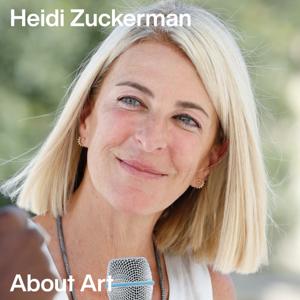
In this episode of About Art, Heidi Zuckerman speaks with Sarah Hoover about identity, perception, and the space between how we understand ourselves and how others experience us.
Their conversation moves fluidly between art and life, exploring visibility, expectation, and the emotional complexity of navigating the art world. Together, they consider what it means to belong, how perception shapes identity, and how moments of reflection can bring clarity.
This is a candid and nuanced conversation about the inner life of the art world—and the ways we make meaning within it.
In this episode of About Art, Heidi Zuckerman speaks with designer, maker, and HomeMade Modern founder Ben Uyeda about access, creativity, and the power of making.
After leaving behind a traditional architecture practice and academic career, Ben chose to share design directly with a global audience. His open-source approach has reached more than 500 million people and inspired builds on six continents.
Together, they discuss authorship, affordable materials, the difference between creativity and taste, and what happens when people stop seeing themselves only as consumers and start seeing themselves as makers.
This is a conversation about design as possibility—and why art matters because happiness does.
In this episode of About Art, I speak with Jeremy Deller, an artist whose work expands beyond museums into public space, where it is shaped by the people who encounter it.
Deller reflects on how he came to understand that art does not need to live inside institutions—and how some of the most meaningful work happens when the public is not just viewing but participating.
We discuss processions, music, and collective experience, as well as the unpredictability of working outside traditional spaces. At the center of the conversation is a simple but profound idea: the audience is not separate from the work—they complete it.
This episode is about openness, participation, and the power of art to create shared experiences in the world around us.
What is the role of art today—and does all art matter?
In this episode of About Art, I speak with Judy Chicago, a pioneering feminist artist whose work has transformed contemporary art and feminist art history for more than six decades.
Best known for The Dinner Party, Chicago has consistently challenged traditional narratives in the art world—bringing women’s experiences, history, and creative labor into focus. Her work spans painting, installation, textiles, performance, and public projects, addressing themes including feminism, power, education, mortality, and environmental change.
In this conversation, we discuss:
This episode is a candid and thought-provoking look at what it means to live and work with integrity—and how art can shape the way we understand ourselves and the world around us.
Listen to more episodes of About Art for conversations that make art accessible, relevant, and part of everyday life.
Most people feel intimidated by art history—until a podcast removes the "secret club" barrier. Tamar Avishai, creator of The Lonely Palette, reveals how storytelling and sound can transform our relationship to art, making centuries-old paintings feel immediate, personal, and even fun. Her approach dismantles the idea that art is only for experts, empowering everyday listeners to see themselves in the story and trust their own impressions.
In this episode, Tamar shares how she turned her love of art into a movement that reaches beyond academia to millions around the world. You'll discover how her innovative use of voice and descriptions turns passive museum visits into active, imaginative experiences. She breaks down simple yet powerful tactics—like starting with visitors’ own words—that build confidence and inspire a deeper, more meaningful connection with art.
We explore why most museum interactions are limited by fear of judgment and how audio can bridge that gap. Tamar discusses the importance of embracing discomfort in art—recognizing that true transcendence often begins with stepping into the unknown. She challenges the notion of “bad art” and reveals how purpose, context, and authenticity elevate timeless works—while shortcuts and superficiality diminish their impact.
This episode is essential listening for anyone who wants to see art—and themselves—more clearly. Perfect for educators, museum professionals, creators, or curious minds eager to unlock art’s transformative power through the most underrated superpower: sound. Get ready to reimagine art as a conversation, a story, and a mirror for your inner life.
What if architecture is not just about buildings—but about values?
In this episode of About Art, Heidi Zuckerman speaks with architect, curator, and cultural strategist David van der Leer, whose work sits at the intersection of design, public space, civic imagination, and cultural leadership. From his time at the Guggenheim to his leadership at the Van Alen Institute, David has helped shape global conversations about what cities can be—and who they are truly built for.
Together, they explore how design reflects power, how public space can become a site of equity and experimentation, and why imagination may be one of the most essential tools we have for shaping the future.
This is a conversation about architecture, culture, and the systems that define daily life—inviting us to rethink the world around us, and our role in creating it.
Unlock the transformative potential of art that invites participation, reflection, and collective healing. This episode features Molly Gochman, an artist and activist reshaping how we connect through shared experiences, public monuments, and community engagement.
Most conversations about activism and art overlook how deeply intertwined they truly are. Molly reveals how her work—whether literal land art shaped like borders or monumental sculptures—serves as a mirror for social values, collective memory, and the passage of time. She discusses the power of touch in art, the importance of invitation and curiosity, and how participatory projects foster empathy across communities. From her Ukraine-Russia border sculpture to the Memory Collage project, Molly illustrates how art can quietly challenge societal divides, honor memories, and inspire collective action—sometimes at a scale that outlives individual lives.
You'll discover:
Without awareness and intentionality, the stories we pass down fade, and social divides deepen. This episode makes a compelling case for art as a deliberate act of witnessing—building understanding in a world craving connection. If you're committed to social change, community-building, or simply seeing art through a smarter, more connected lens, this is essential listening.
Perfect for artists, activists, community leaders, and anyone curious about how art influences societal transformation. Molly's insights will inspire you to see your environment—and your role in shaping it—differently.
Leslie Jackson Chihuly is an arts executive, philanthropist, and cultural leader dedicated to expanding access to the arts and supporting creative communities. As President and CEO of Chihuly Studio, she oversees the global operations of artist Dale Chihuly, guiding a body of work that spans museums, exhibitions, public installations, and cultural partnerships worldwide. She is also the co-founder of The Dale and Leslie Chihuly Foundation, which advances access, equity, and innovation in the arts.
In this conversation, Leslie reflects on how art can build community, cultivate civility, and strengthen public life. She discusses sustaining a major artist’s studio, aligning philanthropy with impact, and creating cultural experiences that invite participation rather than intimidation. Leslie also shares insights into leadership, legacy, and the role of art in fostering connection across generations and perspectives.
This episode explores how creativity can shape more thoughtful communities — and why supporting the arts remains essential to a vibrant and humane society.
What makes a painting unforgettable? And how can art history become something that feels personal, clear, and alive?
In this episode of About Art, Heidi Zuckerman speaks with James Payne, writer, curator, educator, and the creator of the internationally beloved YouTube channels Great Art Explained and Great Books Explained.
James has reached millions by making art history accessible—stripping away intimidation while preserving depth, nuance, and emotional power. His videos have been shown at institutions including the National Gallery in London and the Albertina Museum in Vienna, and his mission continues to redefine what cultural education can look like in the digital age.
Together, Heidi and James discuss storytelling, accessibility, the emotional intelligence of art, and why understanding a work of art can be as thrilling as seeing it.
Elisa Nuyten is the founder and president of The Vega Foundation, a Toronto-based organization dedicated to supporting ambitious film and video art through commissioning, institutional collaboration, and long-term stewardship. Established in 2022, Vega has quickly become a significant force in the international moving-image ecosystem, partnering with leading museums and commissioning major new works by artists shaping the future of the medium.
In this conversation, Nuyten shares why she sees film as a powerful vehicle for awareness—one capable of holding complexity, ambiguity, and emotional depth without slipping into didacticism. She reflects on her evolution from collector to foundation founder, her appetite for artistic risk, and her belief that supporting experimental work is essential to cultural and social progress.
Together, Nuyten and Zuckerman explore how private foundations can operate as catalysts rather than gatekeepers, how to evaluate risk while remaining artist-centered, and why storytelling in moving-image art has a unique capacity to foster shared humanity. This episode offers a compelling model for collectors, arts leaders, and anyone interested in how bold artistic investment can expand what art—and philanthropy—can do.