
Sign up to save your podcasts
Or



After our episode on the Arizona heatwave, one listener wondered why this year's heat was such a big deal. Hasn't it been this hot before? Her thermometer says so.
The problem is, most home thermometers are not very accurate. Official temperature readings are made by carefully calibrated and properly placed weather stations. It's a big undertaking that's more complicated and time consuming than you'd think!
Dr. Kevin Kloesel, Director of the Oklahoma Climatological Survey, joined the podcast this week to talk about what it takes to maintain Oklahoma's network of weather stations, the best way to get accurate weather measurements, and why you shouldn't trust that temperature reading in your car.
We want to hear from you!
Have a question for the meteorologists? Call 609-272-7099 and leave a message. You might hear your question and get an answer on a future episode! You can also email questions or comments to [email protected].
About the Across the Sky podcast
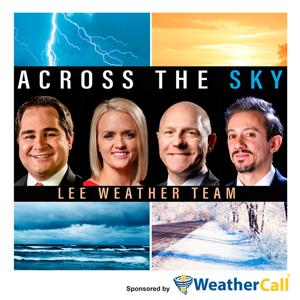
The weekly weather podcast is hosted on a rotation by the Lee Weather team:
Matt Holiner of Lee Enterprises' Midwest group in Chicago, Kirsten Lang of the Tulsa World in Oklahoma, Joe Martucci of the Press of Atlantic City, N.J., and Sean Sublette of the Richmond Times-Dispatch in Virginia.
Episode transcript
Note: The following transcript was created by Adobe Premiere and may contain misspellings and other inaccuracies as it was generated automatically:
Welcome back to this week's recording of the Across the Sky podcast, which is put on by Lee Enterprises and the Lee Weather team. Lee Enterprises is a national publication company with over 70 publications nationwide. And our weather team of meteorologist covers it from coast to coast. Each day on the team we have myself Kirsten Lang in Tulsa, Oklahoma, Matt Holiner in the Midwest, Joe Martucci in Atlantic City, and Sean Sublette in Richmond, Virginia.
Welcome back, guys. Hope everyone has had a wonderful week. You know, this is our first podcast where we're actually going to dive into a question or a comment in this case from a listener. And I want to note that this was made after we talked about the Arizona heat and how hot it had been for days on end.
Deirdre wrote in and she had more of a comment kind of question about this, and she said, hello, I'm a bit confused about the hype about the heat. This summer we visited Arizona in July of 2005, and every day was between 115 and 120 degrees. We were traveling in an RV that had no AC in the cab, so I'm well aware of how hot that is.
But locals told us that this is what summer is like in the Arizona desert. And it wasn't just the spike. The high heat continued for well over a month. So why is this year suddenly different? Yeah, so I thought that was a really interesting point. So I wanted to go back and look at the data from July of 2005 and when I did, I saw that her information wasn't very accurate.
I mean, it's always hot in July and Phoenix, I mean that that's what Arizona is known for and especially that time of year. But I went back and looked at the high temperatures. They were generally between 105 and 110. Again, not cool by any stretch, but the hottest temperature all of that month was 116 and it only happened once.
So I think I think the big deal for for this past July was that every single day was above normal for Phoenix. I mean, every day, no break at all. There were several days when it was, quote unquote, only 101, 100 to 103 in Phoenix, which is a couple of degrees below normal. I think that's that's the key here, is that every single day was hotter than normal and above 110, which is without precedent in Phoenix.
I think that really is is what got everybody's attention. And, you know, I to that point, Matt, I know you and I were talking about this also when she says 115 to 120, you know, where she taking that know she said in the cab. I mean and if that's the case, that's another whole thing, right? Yeah. So that's what got us thinking like, well, why did she think it was between 115 and 120 every day?
Where does she gain that data from? And so our best guess, we don't know this for sure, is that she was probably looking at even in 2005, a lot of vehicles have thermometers or the RV's have the monitors in the car and they give you a temperature reading the outside temperature reading. People look at that all the time.
I get pictures all the time from back home. People saying, look how cold it is or look how hot it is. It a picture of the thermometer on their on their dashboard or on their rearview mirror looking at that temperature. But the problem is, though, though, it's a very easy way to see what the temperature is outside. Those thermometers on cars are not very accurate and has a lot to do with the location where they're place.
And you'll also notice how quickly the temperature will change on those thermometers versus being parked versus moving. So they're not a very good representation of what actually was occurring in the real temperatures. And so that's why we got the perfect guy to come on and talk about how to take accurate temperature readings. What's the best way to get accurate data, What is used to feed our computer models that are making these forecasts and how there's so many issues when it comes to accurate temperature readings?
And so why not bring on the guy in charge of the Oklahoma maisonette and we get into the details of why it's such a great network and how we can expand it to more locations in the country. So this is a great episode. Yeah. You know, shout out to Deirdre because without her we wouldn't be doing this episode.
So yeah, Deirdre, if you're listening, thanks her. Thanks for listening and thanks for, you know, having such an interest in the weather here. You know, we appreciate you giving us the opportunity to talk more about temperature readings and what is accurate, what is in, and how we can go forward with somebody who knows a lot about temperature readings.
Because in the weather world, the Oklahoma Basin, that is a very, very big deal. So thanks again to your for the question comment. All right. So on the other side of that break, we are going to have Dr. Kloesel. They'll he'll be on here to talk with us more about this topic. Well, welcome, Dr. Kevin Kloesel. He is the director of the Oklahoma Kind of Survey, which operates the Oklahoma medicine that Weather Observation Network.
And he's also the university meteorologist for the Oklahoma University Department of Campus Safety and is responsible for providing weather forecasts and safety information to the campus of O.U. Which is right up the street from me here in Tulsa, Oklahoma. So welcome, Dr. Kloesel. How are you doing today? Doing well. It's good to see everybody. Well, we are excited to have you on.
And, you know, we wanted to talk with you about a couple of things. We're actually going to start with a topic that they came across to us from a listener about temperature readings. And what we wanted to do was that, you know, a lot of people may not realize that there's really a strict protocol for measurement on temperature.
And we wanted to see if you could chat with us a little bit about that and kind of tell us what that protocol might be. The temperature thing is really, really a struggle, right? Because so many people are exposed to temperature in different ways, right. When they see it on TV as a broadcaster, that temperature is likely the official temperature at a recording site with calibrated instrumentation and it may be, you know, 99, but at your place you have a thermometer in the backyard and it was 105 today.
Right? Me And I'm I was way hotter than than that or you drove to the grocery store and the bank is saying 112 or like just yesterday I walk out onto an artificial turf football field at Norman High School here in central Oklahoma, and it is 177 on the turf. Right. So how can it be 177 112 105 99 all literally in the same place.
And it just comes down to instrumentation, right? And and exposure. And it's very important to know that all of those temperatures are valid. Right? Because if we're dealing with heat injuries and possibly heat illness with a football team, that 177 is real. Right? That is a real temperature in sunshine on a football field where they're about to play.
But the 99, which was the official observation, is the only way to really say, okay, what are we doing with the air that is going by without really regard to all of these different surfaces that are underneath it? So you do it in a sheltered environment. You do it in an environment where the word the breeze is going through, that instrument is calibrated, and then you hope to have a whole lot of those around so that you can actually see what the ambient temperature patterns look like because that information is vitally important to prediction.
So we putting that into our weather forecast models to kind of understand if we started putting all of these 170 sevens in one twelves and all of those indoor weather models, they've never be able to handle that, we wouldn't be able to resolve the big picture of what weather is doing. And so those those are like the maisonette.
For example, you've already mentioned that ability to calibrate and make sure that the temperature in the panhandle can be compared to the temperature in southeast Oklahoma. That's incredibly important to doing research both in the climate realm and in the weather forecasting realm. And Kevin, it's Joe. So you said calibration earlier, right? A properly calibrated thermometer. Could you explain what that is and what the protocols are for that?
Oh, my gosh, Yes. And it's elaborate, right? Every one of our sensors in the measurement has a life history, a life story associated with it. Literally, it's biography. And so at the National Weather Center on the O.U. Campus in Norman, we have a laboratory with what are called calibration chambers. And these are two national standards. So when you have a national standard device that is reading 70, then you want to make sure that every instrument you put in is also reading 70 before you put it out in the field.
If anybody's ever gone to Wal-Mart or a box store and looked at the temperatures in the garden center, right, the thermometers, you get your pick right. You can lay out all the thermometers in the garden center and one's reading 84, one's reading 82, one's reading 81, one's reading. You know, they're all different. And it's like, okay, do I want the hot one?
Do I want the cold one? Which one do I want? Right? But there's no guarantee that any of them are correct. So what we do is we go through an elaborate it's a set of standards and those set of standards are applied to each instrument and just dirty little secret here, we love our instrument providers, but we don't believe anything anybody tells us, right?
They can tell us that it's calibrated to a certain this. We don't believe it, right? The measurement is we do it ourselves, we do our calibrations ourselves. And that way we know that if we have an entire state full of 72 degree readings, there is 72 at every one of those sites, not 71, not 69, whatever it is.
And that elaborate going through that testing and then what you do, you take it way up and you take it way down. And does that thermometer still perform Right? Does it perform all the way up to 115 and 120? And does it meet the standard there? Does it all the way to zero and minus five and minus ten?
And does it meet the standard there? So it's not just a single temperature calibration, right? It is against an entire scale of readings within that standard chamber that then becomes the basis for us to be able to say, you know what, if the temperature changed in the average for a half a degree over 30 years, that you can take to the bank?
Right. Because we know that each of those instruments are calibrated not like the one I have in my backyard. Right. Which is reading 107 right now. Right. You know, and it's like, okay, it's probably 107 where the thermometer is. But did that drift? I never calibrated that thermometer. And that's the big issue with bank thermometers. And, you know, you don't know how they've been calibrated or if it's against a standard or whether somebody chose the second one from the right at the Wal-Mart instead of the fourth one from the right, even though they were different when you bought them.
So those are the things that we have to eliminate because it's about trust. All right. You guys know this man. We get clobbered. If you utter the word climate, you get clobbered. And it's it's very real. And if we are going to say this is what the data show, we better be able to back it up. Because if somebody can say, oh, well, well, you changed the location, right?
You changed the location of your sensor, and if we did, then we've ruined the data for that location. So it's a little bit like real estate, right? Location, location, location, and then making sure that all of your instruments are calibrated back in covered, right? Oh, my gosh. Those little hand-held things that you go across your head with those.
Oh, we had so much fun with those. Are that them, isn't it? Because I could figure out that I was running a fever and not a fever simultaneously, depending upon which one I picked up. And you can't go on that, right? It's why you see the, you know, those blood pressure machines in the hospital. They better be calibrated.
You know, you can't have drift because you've got a physician making a life and death decision based upon that information. And we do. And take the same care with the instrumentation we have at the measurement. And Kevin, I think it's a little bit of discouraging for people who are listening to this. It's like, gosh, I thought I could trust my backyard thermometer.
So for people, you know, and some people may not care about, you know, how close exactly, but I know some people do, they would like really want an accurate thermometer. They want the closest thing to an accurate temperature as possible. So do you have any recommendations for when people are go shopping for a thermometer? Is there anything that people can look for to be like, oh, I can trust this thermometer a little bit more when they're standing there at Home Depot trying to decide on a thermometer.
Do you have any recommendations? Yeah, As far as buying a home thermometer, absolutely. What are your standing in the Home Depot looking at those thermometers, Download the medicine it out. And then if you got them, isn't it out? Now you've got statewide calibrated thermometers in every county and you can look at that map and take that to the bank.
You know, that's a little self-serving, but there are some really good devices that are out there and you can kind of read the reviews. And there I mean, every year there's new toys, right, for the particularly for the meteorology hobbyist community. But again, hobbyist community, if you're interested in a temperature in your backyard, then, you know, buy what you think is the right thing for you, Right?
I mean, that's that's I don't know that I have any better advice than that. There are some really expensive solutions and there are really inexpensive solutions, but it's going to be all about where you put it, where you site it. Is it in the shade? Is it in the sun, Is it on your roof? Is it on your shed?
Is it and all of those are going to make a difference. And I've got like 15 of these in my backyard and they're never reading the same thing. Well, let's go back to that, to deciding that because that matters so much in my yard, I have a little tempest and we have a very well shaded canopy. And I cannot count on this at all for wind.
But because of that, it does okay, because it's shaded with regard to temperature. But but talk about some of the siting challenges, whether it's maisonette, whether it's the FAA staff, whether it's the agencies, the the older generation in terms of trying to get the most accurate air temperature possible. How should you position in terms of distance off the ground, open space?
Can you can you speak to those points a little bit? Right. And some of that is application based, right? So we have a number of agricultural providers where they're interested in the temperature near the ground or even in the ground. Right. So we take just as many soil temperature readings as we do air temperature readings for growers, producers, ranchers, you know, those kinds of things.
And so siting sometimes is based upon the application. If you are looking at air temperature, usually that's human head height or something and pretty close to six feet, we have instruments that are higher up. We have that for different applications in the state of Oklahoma. And so the siting is going to depend on on what you're going to need it for.
And what we do with our measurement sites is we make sure that each and every one of them are sited with the exact same standards and the same guidelines. So same underlying ground conditions, same distance away from trees or, you know, blocking buildings or whatever the case may. We've had to remove sites because there have been in Oklahoma, we've got this industry that's really coming up quick that likes to put out big, huge tents and grow nice green plants in them.
And those have been a struggle for us because when you put those big green tents and those are the big white tents with the green plants in them, and you get them really close to maisonette sites, it changes the dew point, it changes the temperature, It essentially ruins the climate record and we have to decommission that site. And so we've had that issue in some places.
All right. Well, Dr. Fazio, we're going to come back with you after the break here. And welcome back to the Across the Sky podcast. I'm Christine Lang alongside Matt Hollander. Joe Martucci and John Sublette. And we have Dr. Kevin Kloesel along with us today. And, you know, we were just talking a little bit about temperature readings, but I wanted to get into something that we were talking about or that you were discussing a lot throughout your answers.
Is the Oklahoma Maisonette telling us a little bit about that program and kind of the back story on it? 30 years ago, there were scientists at Oklahoma State University that were working on agriculture that's there. They're calling card it at OSU and needing additional weather information to do a better job for farmers, ranchers, producers, growers, you name it, while at the same time we were having issues like the Tulsa flood and the Tulsa flood led the National Weather Service.
And at the time Ken Crawford, who was at the Weather Service, to think that you know, if we had just more rainfall observations, we might have been able to forecast and reduce the loss of life in the Tulsa flood. And so there were two groups of people both talking about a weather network. And what was amazing is that through just almost good luck, right, as many do.
Ron Elliott at Oklahoma State University and Ken Crawford at the Weather Service, who had recently moved to the University of Oklahoma to be the director of the climate survey at the time, started talking and said, you know what, All these other states, they have a forestry network, they have a transportation network, they have all these different disparate networks to do different things.
What if we in Oklahoma used one network to meet the needs of all of these stakeholders? So they brought in agriculture and forestry and emergency management and the Weather Service and university researchers and people working on climate and weather and said, What would we like to have? And we put all of that in one network. So there is at least one in every county.
We have 120 of those across the state. We have a calibration lab at Norman at the National Weather Center, where we do all the technical work. We have a research team, we have an outreach team. We provide the data to teachers, we provide the data to emergency managers, to the forestry, to ag, to fire to all of those various stakeholders.
And it has been we are so lucky over three decades to have the support from every governor along the way, from Henry Belman on to Kevin Stitt, who just signed our legislation into law. Again, we have to go defend what we do and up like all the other agencies do. But we've been at this for 30 years. It is the preeminent the American Association for the Advancement of Science called it the gold standard.
And now we've got copycats, right? We've got other state networks throughout the country that are all working towards what we hope to be someday, a national measurement so that we can do a much better job predicting weather and doing the monitoring right across all types of hazards. Yeah, I was going to ask in terms of building and business, right?
I mean, you talk about funding. It is it is something that does require financial commitment. What do you guys do in terms of public outreach to let people know that, hey, you know, we're in Oklahoma, You know, we have a maisonette here. You know, I'm in New Jersey. We have amazing that that's really good. Not as good as you guys, but really good.
So what do you do in terms of just letting people know, you know, throughout the state that, hey, this is what we're going on and this is the value provide you? So we have a very robust Web presence which provides data every 5 minutes across the board. And so the public loves it. We do it for irrigation planning, for landscape companies for how long concrete needs to cure for our construction company, for emergency managers, for EMS, for law enforcement, and the Oklahoma Bureau of Investigation, for forensic investigations after the fact.
I mean, every imaginable place we can find a place to put our weather information, we are usually at their front door and weather. And so we do we go out. I mean, it is a door to door grassroots campaign going to agencies, going and training them how to use it. Right. That's equally important. You don't just throw data in somebody's hand and let them use it.
That would be like Brant Venables throwing a football out on the field and say, Hey, go to it, right? And then you expect to have success. It doesn't work that way. So there is an extensive training program that goes on. We've covered forced us into developing online training modules and that's actually really helped us out because it's allowed us to reach places that maybe we didn't think we could reach before.
So between the gold standard of how we do our calibration and how we maintain the efficiency as well as our 99.999 ability to bring weather data into the hands of people that need it. We also spend a significant amount of time in local jurisdictions or in county courthouses, in vo techs, in schools, in, you know, EOC, you name it, across the board to train people how to use it as well.
We're thrilled that we're turning 30 in 2024 and we will definitely celebrate that. And Kevin, I wanted to follow up with the national measurement because that sounds real exciting. If we can spread this way in Oklahoma across the country, that would be awesome. And I know we're making progress with that. So what's the current status of it and when do you think we'll be achieving that goal of having a true national measurement?
So great question. In the national measurement is getting as much funding as we've ever gotten, which is a testament to the value that there is because the National Weather Service and the federal government, it's almost unanimously supported in U.S. House and Senate that is very difficult to achieve by the way, at this point in time is some sort of unanimous consensus on some sort of bill.
That just doesn't happen. But my goodness gracious, I cannot thank Congressman Lucas enough here in Oklahoma because he sees the value nationally. Yes, he's in Oklahoma. Yes, he's a rancher. He sees the value of the measurement, but he wants everybody to have one, too. So there's now funding pouring in to over two dozen states to help them along with things like calibration and siting and instruments and and that kind of stuff.
And I would hope that by the next, oh, ten years or so that we've got all 50 states with it with a measurement. That would be lovely. I hear Maryland is next. Yes. Here on our side of the Potomac. I'm not sure what the status is. I think we have a long way to go to start securing funding for doing that kind of work here in Virginia.
But, you know, we've got a we've got a big bay, we've got a lot of mountains, we've got a lot of valleys, we've got coastal plains. We got all that stuff. But I would love Amazon out in Virginia. But now back to Caleb, Maryland, to calibrate guns right now. So I know they are back to calibration real quick.
Recently, you know, we were under the big heat dome, of course, across the middle part of the country. A lot of the corn is in bloom. In the corn Belt. We've seen some exceedingly high heat, but also very high humidity. And there's been a little buzz on like how why is it so humid? You know, the part of that is what we call corn sweat, which I'd like you to explain when you can.
But is there any other kind of calibration issue that that we're concerned about generally with instrumentation when we're trying to figure out humidity? Right. And man, humidity is so hard. Temperature is easy in comparison. It really is. And the reason why moisture measurements are so hard is because moisture measurements in many instances are so dominated sometimes by what's coming up out of the ground.
So moisture at low levels, yes, you can have, you know, humid air moving in from somewhere else off of the bay, off of a lake, off of the stream, whatever it is. But at the same time, if you had rain in the past week and you know how summertime rain is, right, it rains across the street, but not at your house.
Well, that means that that green lawn across the street is going to transpire. Moisture into the atmosphere locally there that you're not going to have in your yard because you didn't get rain. So it's still brown. And so if I put a dew point sensor or relative humidity sensor in that yard versus my yard, I'm going to get two dramatically different readings.
So siding is also a huge issue as it pertains to moisture because moisture variability in soil is so high. If it's a clay soil, you get different moisture profile than a sandy soil. And in Oklahoma, we've got some sensors that are, you know, far apart and we get dramatically different because, well, it's a little sandy over here and it's a little more clay here.
But just above that, that means that the dew point will actually be different. So wherever your moisture sensor happens to be, that's what it's going to register. So in many instances, sometimes with our dew point and relative humidity sensors, we do get a lot of local variation involved in that reading, much like we talked about earlier with the bank temperature and the field temperature and you know, those things Now you mentioned calibration, huge.
Do you calibrate your moisture sense there's a temperature and you can calibrate them in a chamber and change the relative humidity and that's one thing. But are you also calibrating the moisture sensors and do they perform the same way when it's 110 as they do when it's 30? And so, again, going to great lengths to calibrate across the multitudes of parameters that you would see.
And does your sensor work in all of those situations. And I know with like many of our backyard things, man, the humidity sensor goes off the rails when it gets really, really hot. And that has nothing to do with the moisture sensor, but the moisture sensor is getting really hot. And when it gets really hot, it doesn't measure the same way anymore.
So you have to be careful again. And moisture, like I said, it is so difficult because of the variability, because of rainfall variability. And heck, once it rains, well, where does all the water go? The water flows downhill or soaks in or depending upon the soil, creates a puddle in your yard? Well, depending upon where I put that moisture sensor, I'm going to see those differences on a local scale.
And, you know, like we saw with the heat index in Lawrence, Kansas, just the other other day, which was actually a kind of a national sensor there, but it's on a gravel parking lot. Okay. That's almost no different than me going out to the football field with 177. Right. If you don't play football on a gravel parking lot, you are going to get really high temperature values, therefore really high heat index values.
We struggle with irrigation. You mentioned corn sweat, right? If we have in fact, we just flagged a bunch of data because we noticed in our our pictures and we take pictures every time we go to a site that we had corn encroaching on our site a little bit closer than it had in the past. So we actually flagged that data because we know it's corn doing the same thing we do when we get hot.
We perspire. Corn does the same thing and does it a lot and become, you know, you get Iowa and Illinois with those massively high dew points because of the corn fields as well as downstream. Right. So of wind blows that air downstream, then you see that there as well. So it's you know, we have an irrigation problem now.
I mean, if somebody is watering next door and it blows into your yard, well, your moisture sensor is going to see that. So I remember back in the day, right. I always grew up I grew up in Austin, Texas. And so the National Weather Service was sitting at the end of the runway at the old airport in Austin.
Well, that's where the sensor was. Every time a plane took off, you could see it because it was in the jet wash. Every time they watered the grass, the golf course across the street, and we had southerly winds. You saw it because now Austin has this massive heat index because of jet wash and golf course irrigation. Right. And those are combining literally over the sensor.
So, again, you have to be cognizant about your location. Again, that's you know, we try to control that in the measurement by where we put things. So I have I have two more questions for you. One of them you just mentioned, you're from Austin. I noticed you graduated from from U.T.. Does did everyone know you give you a little a little slack for that?
Not a little. A lot. That is that is the understatement of the year. Yes. In fact, I don't mean to interrupt, but this is the story about my becoming director of the climate survey. I had been working at O.U. For a pretty good period of time. My email address, Longhorn at O.U. Dot edu and of course, everybody was giving me grief and a lot of grief.
And so when I went through the interview process, they said, Well, Kevin, climate, climate, that's a that's a you don't use that word in Oklahoma, right? You know, those are those are you're too nice. How are you going to be able to take all the heat, all the criticism? And in my interview, I simply said, I have I'm a Longhorn grad in Norman.
Right. They can't keep on any more abuse than I have already taken. They all start laughing and they're like, okay, your job, you know, you have the job. It's so yeah, it's it's been a funny thing around here, but it's it's, it's hilarious sometimes. Oh, I bet. I bet the other thing I was going to ask you, too, as you mentioned earlier about the hasn't it turning 30 next year, can you just briefly explain why that is such a big deal for us here in the weather world?
So in the weather world, 30 years has significance. We have kind of looked at 30 years as a generation. And back in the agricultural days when climate was was really something that was important to agricultural growers and things like that. There was a sort of a group of people got together and said, you know what, 30 years is going to be our benchmark for how we determine climatology.
So our averages are all 30 year averages, whether that's rainfall, whether that's temperature, whatever the case may be. So against the background of people using 30 years as their standard for climatology, we become the first Oklahoma becomes the first regional state wide network with 30 years of data. And so therefore, we will have the most detailed look at a climatology in Oklahoma than anywhere else in the world.
And that will give researchers the opportunity to do things for decades with the data that we provide. And Kevin, I like your Longhorn pride because I went to you as well. Glad that you're here. You're sticking it out in Norman. I man, that is got to be tough. I cannot imagine the great insecurity, especially around oh, you weekend.
And before we wrap up, the last thing I want to get your opinion on and kind of inform people about, because one of the things I see the most common when people are talking about how hot is like when friends now that I'm in Chicago are telling me the temperatures back in Texas, the most common thing I see is people taking pictures of the thermometer in their car and showing that reading.
And it's usually a very ridiculously high reading, but there's a pretty big floor with those temperature readings in cars. Correct. And what is that flaw and what should people be watching out for and kind of take with a grain of salt when it comes to those car thermometers? I'm not advocating distracted driving, first of all. So you shouldn't be paying attention to that thermometer anyway.
Hopefully those pictures were all taken at a red light or stop sign. But at the same time, if you've ever driven around, you know that when you start driving, that temperature value goes down and when you stop, the temperature value goes back up again. And so where that thermometer is mounted on your vehicle, when you have ventilation, right, when you have air going by, you're getting more of a feel for what the air temperature is outside, but you're still exposed to the pavement temperature, the engine temperature and all of those kinds of things.
When you stop, that's when that temperature skyrockets because of where it's mounted on the vehicle. You are now contributing from the engine, from the hot pavement. In fact, if you want to try this at home, go drives blacktop versus sort of a gravel road versus sort of a, you know, a parking lot that's white or a lighter color and you'll see dramatic differences, even in the same town on your vehicle's thermometer.
Again, based upon location, location, location and where you put that thermometer. So, yeah, those are totally unrealistic, although it's real from a standpoint of what that portion of the car is feeling. Right. I mean, that is the temperature at that spot. So if you put a thermometer on your dashboard and of course, the other popular thing is to put cookies up there as well.
Right. And bake their cookies in the dash, you can actually get partially baked cookies from a car because it does get hot enough to do that. So, you know, if you want to make good use of that, that's that's another good thing to do. It just don't do it while you're driving. All right, Dr. Faisal, thank you so much for joining us.
We really enjoyed having you on this week. Absolutely. My pleasure. It was great to be here. Great to see all of you. All right. Great interview with Dr. Faisal. You know, he really knows his stuff. And I love how he explained things to you. You can definitely tell he's a professor because he really kind of gets into it in a way that you can understand, I'd say.
But, you know, it's neat to hear all the stuff that he's working on. He's a very busy man from, you know, working with you to the medicine. Ed, He was talking about working with Drum Corps engineers earlier. We were talking with him off off of the camera. But, you know, it's good just to get kind of the background on all of this because I think a lot of people just don't understand how much goes into it from the calibration and everything just to the environment being right for it, for a temperature to take readings.
Yeah, it's very tricky. It's a little more complex than than we might like. You can get a, you know, a general idea with with not without very high end calibration, but you know, when we start doing long term studies, we're trying to get high precision information, calibration, location, all those stuff. So important. Yeah. I just like how, you know, debunk to the car thermometers because people love those car thermometers, but those high temperature readings, I mean that just coming off the pavement.
But he talked about, you know, it's kind of alarming that you got that 170 degree temperature of a football field. I mean, the surface that you you measure temperature over matters so much. And so that's why you have to keep that in mind. He talked about location, location, location, when it comes to taking these temperature readings. And that's very mature, even though but the alarming thing is like those can actually be again, there's some debate about how calibrated the thermometers are, but it is true.
But it is going to be hotter overpayment that comes back to the whole urban heat island effect. That's why cities are hotter than areas in the country. If you have a lot of pavement and blacktop, it is going to be hotter. But for accurate temperature reasons, it should be over a natural ground service, a grass surface. Otherwise the temperatures are going to be hotter.
So take that a grain of salt. You see these really high temperature readings in your car and it doesn't match what the meteorologist on TV or on your favorite weather app is saying. That's why because it's a time to write off of the pavement and so that temperature is likely going to be hotter than the real official temperature of it's going to be recorded in the city that day.
Yeah, it was funny how he was talking about what was in Austin with the golf course, water watering the lawn. If there was a South when you could see the dew point go up in the air, there's you know, there's a lot of variables into what goes into a temperature reading, but the calibration is key. Like he and also do I mean you don't shout out to them for keeping this going for 30 years because, you know, it does take a lot of commitment to showing value to stakeholders.
Of course, you know, people in the political world who are, you know, providing funding for this. So to get this in Oklahoma for a number of states is is incredible. And I think, you know, just be as a consumer of weather, you know, you want to know what's happening. Oh, what's happening in my house. Right. That's always the thing.
Right. So the message on that is is a step closer to telling you, oh, this is exactly what's happening at my house. So if you think about it that way, it's definitely something that's beneficial for every state that has it across the country. And maybe the national one comes to. Yeah, now they're looking forward to that day. I know.
Let's, let's hope that, you know, a couple of things before we wrap up here. I Joe said it earlier than earlier, but we want to say thank you to Deidre for writing in and and you know, sparking this this topic. Joe, if people want to get in touch with us, tell us a couple of ways they can do that.
So you can email podcasts at Lee dot net if you want to check out or send us an email about what's going on, that's great too. We also have a voicemail line that we would love to hear you from Amstell for the next 5 seconds while I pull up that phone number because I forgot it off the top of my head.
But if you do want to give a call and try to figure out what's going on or ask this question, whether it's, you know, about climate or weather or yeah, something about us and what we're doing in the weather world. You can give us a call at 609-272-7099; 609-272-7099. It's very close to my work line number, so if you dial digital you may get me directly.
But but there you go. You can give us an email. She has the phone call as well. Whatever works. Awesome. And you know what? Next week kind of put ahead to what you can expect for next week's release. We sat down and we spoke with Sally Warner from Brandeis University, and Noel Gutierrez was way from the from UC San Diego.
And the two of them have some really interesting information on the warming that's going on in the deeper ocean currents. And it's all happening from hurricanes. I mean, it's something that's naturally occurring from hurricanes, but it's really quite fascinating. It was a great interview. So catch that. That'll be released then on September 4th. Labor Day On Labor Day.
Absolutely. So, yeah, Labor Day weekend, however everyone enjoys it. All right. Thanks again for joining us this week from Across the Sky podcast. Kirsten Lang in Tulsa with Matt Holiner and Joe Martucci. Have a wonderful week and stay safe.
See omnystudio.com/listener for privacy information.
Before cool fall days arrive, the first weeks of football practice and games come in the August heat. High-intensity drills beneath the hot sun can do serious harm to the body, even to those in excellent shape.
This week, the team talks with Dr. Douglas Casa at the University of Connecticut's Korey Stringer Institute about how to manage the heat and recognize heat illness before it’s too late. Casa also discusses the importance of high school teams having athletic trainers and weighs in on which is better: water or sports drinks like Gatorade.
Korey Stringer was an offensive lineman in the NFL for six seasons who died on Aug. 1, 2001, due to complications brought on by heat stroke during training camp with the Minnesota Vikings.
We want to hear from you!
Have a question for the meteorologists? Call 609-272-7099 and leave a message. You might hear your question and get an answer on a future episode! You can also email questions or comments to [email protected].
About the Across the Sky podcast
The weekly weather podcast is hosted on a rotation by the Lee Weather team:
Matt Holiner of Lee Enterprises' Midwest group in Chicago, Kirsten Lang of the Tulsa World in Oklahoma, Joe Martucci of the Press of Atlantic City, N.J., and Sean Sublette of the Richmond Times-Dispatch in Virginia.
Episode transcript
Note: The following transcript was created by Adobe Premiere and may contain misspellings and other inaccuracies as it was generated automatically:
Hello, everyone. I'm meteorologist Sean Sublette and welcome to Across the Sky, our National Lee Enterprises weather podcast. Lee Enterprises has print and digital news operations in more than 70 locations across the country, including my home base in Richmond, Virginia. I'm joined by my meteorology colleagues from across the sky, Matt Holiner in Chicago, Kirsten Lang in Tulsa, and my buddy at the Jersey Shore, Joe Martucci, with the Press of Atlantic City.
Our guest this week is Dr. Douglas Casa at the University of Connecticut's Korey Stringer Institute, where they research and advocate for athletes at all levels regarding safety and performance. Basically, we're talking about football practice in the heat this week. For those who not familiar, Korey Stringer was an offensive tackle for the Minnesota Vikings. He died from exertional heat stroke during the NFL training camp in August of oh one.
He played in 93 regular season games in his family, worked directly with Dr. Casa to develop the institute in the years that followed. He'll talk more about that in just a little bit. But I want each one of us to briefly talk about what we liked. I kind of liked the end when we had the all important Gatorade versus water question.
What are some of the things that that you really took home from from this discussion? We had. Let's start with you, Joe.
The Gatorade versus water ones. Good. You didn't bring up Powerade, though, Sean. Should have, you know, power ranked the three.
I'm of old school. There is there is lemon lime in orange and that is it. I am that Gen-X dude.
Oh, I love and light. Good and lemon lime is good. So you're going to hear the word wet bulb globe temperature a couple of times here throughout the pod. So it's a measure of heat stress. I'll let him talk more about it. But it's very important. And, you know, if you're an athletic trainer, you probably know what it is if you're not.
It's a newer concept that us meteorologists and those in the weather industry are trying to bring to light.
Yeah. And I think for me, the thing that stands out about this is everyone can relate to this because there's so many people involved with football with especially early on in the season and are used to this. You know, if you're not an athlete, there's so many people, the bands that go to the games, the cheerleaders is the fans, and there are a lot of games I can think of some Texas football games in Austin, Texas.
Usually that first game of the season, if it was a kickoff at 11 a.m. or 230, it's not just the players on the field that are feeling the heat, but the fans in the stands. So this is just so relevant to so many people in August and early September, because especially in the south and southeast, where a lot of these heat related deaths do occur.
With football, I mean, you can still have some really hot days. And this summer is a great example with all of the heat advisories. And heat warnings has been hot summer. And so it's probably could be an extra hot start to the football season as well.
And he talks to just about, you know, just the symptoms that you can expect if you are potentially coming on with heat exhaustion or heat stroke. But then he also goes into treatment and what they do on the field with some of these players, if they are starting to experience some of those symptoms. So be on the lookout for that as well.
Yeah, very good information coming with that. Let's get right to our conversation with Dr. Douglas Costa at the Korey Stringer Institute up at the University of Connecticut. And Dr. Douglas Casa is a professor of kinesiology at the University of Connecticut and the CEO of the Korey Stringer Institute. And this time of year, August, with football practice, is underway ahead of the season.
Heat, of course, is top of mind, causes passion for this line of research began in 1985 when he suffered exertional heat stroke while running a 10-K, thus motivating his career research. The study of exertional heat stroke, heat illnesses, hydration and prevention of sudden death in sports. Dr. Kaza, thank you for joining us on the Across the Sky podcast.
Honored to be here. Thank you for having me.
So let's get right into this. Talk to me about this time of year, the risks to heatstroke, specifically with football players, what happened with Korey and how this kind of worked into this this broader the institute that you develop.
Very as many people know, Korey Stringer passed away in 2000, one from exertional heat stroke, the only NFL player to die during a practice or a conditioning session or a game in the hundred year history of the of the sport. And I assisted his widow during some legal proceedings that took place as an expert witness for the next eight years.
And Commissioner Goodell and his widow, Kelsey Stringer, reached out in 2009, asked, and if we want to host a lasting legacy for Korey, because they knew my expertise and my passion for the topic and we open our doors. In 2010, we had three people and we opened our doors and now we have 80 people who work at KCI.
There's 25 staff and 55 volunteers and we're focused on health and safety issues for the athlete warfighter and labor and, you know, conduct research, do a lot of public health initiatives, advocacy testing of individuals. So I've been able to, you know, serve a pretty wide audience.
All right. So let's let's step back a little bit about what what conditions were like in this environment in terms of football practices and the like 20 years or so ago. Now, a lot of this stuff is kind of intuitive. It's hot. You need to take it slow, you need to hydrate. But what other kinds of things you know, we're missing, you know, 20 years ago and we still need to to improve on.
I mean, there's I think you and I remember a time where we were just told it's hot, drink some water. Keep going. Obviously, that's not the right answer. So talk a little bit about those things.
So we can put it into three buckets, things that prevent the heat stroke from happening in the first place, things you can do to recognize it as quickly as possible, and then things you would do to treat it affects each stroke does present itself. So first, from the realm of prevention, there are kind of five big ticket items.
One is heat acclimatization. That's the phasing in of activity across time in the first week or two. So going a little lighter, doing, you know, single day sessions, having dawn, having successive days of two days phasing and equipment. It's important for your audience to know that almost all heat strokes, more than 80%, happened in the first week of activity.
When people are returning or doing something, whether it be military training, a person at a job working in the heat or an athlete in football training. Second item is measuring the environmental conditions and making modifications to the work to rest ratios on more extreme days, having more breaks that are longer. Third item is cooling strategies, having cold wet towels available during breaks, having shade available during breaks or whatever else you can do to cool someone to limit the rise of their body temperature.
Fourth is hydration having fluid available, not having to have official breaks to access fluid, accessing fluid anytime you need a fifth. This kind of individual factors when people are on certain medications. Supplements have had previous problems in the heat, recent illnesses or injuries where they've been away from sport, they put them at greater risk. So those are the buckets that kind of fall into the realm of prevention of heat stroke.
Dr. Kaiser, I want to go back, if that's okay, and talk some about environmental factors, aside from what many would think, you know, just simple heat index, I spoke with some trainers here in the Tulsa area and and they said that the wet bulb temperature was really something that they went off of. When it goes to or when it comes to those environmental factors.
Can you talk a little bit about that and what you might have saw it?
Yeah, it's a great question. So we do something called the WBC, which is a wet bulb globe temperature, which factors in like a bunch of different key environmental considerations. One is obviously the ambient temperature, the relative humidity, the radiant heat load, which is key because heat index is really limiting and should never be used in sports because heat index by it's when it was originally developed, was done in the shade for people at rest.
And that's just not relevant for an athlete who's exercising in the sun and doing intense exercise. So what about globe temperature? 75% of the thermal load is the humidity, about 20% is the radiant heat load. 10% is the ambient conditions. It also factors and wind speed to some of those calculations so that we always we set up the work to rest ratio guidelines best based on the web of temperature measures that we get.
And it's also really important that you're measuring those on site and never, ever relying on weather station data that could be 20 miles away because the artificial turf or the black track with the pavement of a tennis court, all those surfaces are very, very, very different than what you would get from a local weather station.
Hey, Dr. Costa, I'm going to follow up on this because I really like using the Whipple globe temperature. But and this is more of like from a societal perspective, the one issue I have with it and I reason why I don't know how far this is going to take off using this on a public basis is simply because a lot of these temperatures are lower than the heat index or even the air temperature, depending on what it is.
I mean, you have I believe you would know better than I, but I believe when you're above 90, that's really significant. But someone might see 90 or 91 at the end. It's not that bad. So yeah, I see. I see you laughing a little bit over there. So how do you kind of blend those two together and, you know, go forward with this?
Yeah, that's a great, great point. If I started things all over again, I would have done a plus 40 correction factor for web temperature that just magically makes it higher because you're totally right, 92 web of globe temperature. You have to cancel all training in the military like you'd be court martial that you continue activity and that's by a 92 a person Louisiana years and this is the most mild day of the whole summer I'm right so but yeah so people in the medical field the athletic trainers who are working at the high schools, they understand those measures and they're just there.
They've proven to have great value for reducing heat illness load. And right now at the high school level, almost every high school in America now has a web temperature meter, which is really good in terms of progress. But I do get your what you're saying related to the numbers, not translating to the general society in terms of being as meaningful.
Yeah. And Doug, I think it's also just confusing for people because when we issue heat advisories and the excessive heat warnings, which have become quite common, particularly this summer, those are based on the feels like come to the heat index, which is just looking at temperature and humidity. So that's what people are most used to. I mean, at first it was just getting people educated about what the fuels like temperature really means and remembering that you have to include humidity.
And so then you add in other factors and people get real confused and it goes beyond even what the National Weather Service is warning for. So for people that are not used to dealing with wet bulb temperatures, it's good that people are, you know, especially those at high schools and at the training level, are educated on on what that means.
But for the general public, is there a particular feels like temperature or air temperature that should really start to raise kind of those alarm bells, like, okay, this is a type of this is a temperature where I do need to actually take extra precautions when it comes to just looking at the feels like temperature, is there a threshold that people should really focus on for when it could be can actually become dangerous for athletes?
Yeah, that's a it's a good question. It's tough because I don't really think there's a great metric really for the public necessarily because heat index is completely useless. I mean, I can't tell you how useless it is. It doesn't take into account sun or the radiant heat load. So if you're in Phenix in the middle of the day, and you know what that feels like, you feel like you're going to little cook or melt that sun factor is not factored into heat index unless you're doing that very arbitrary.
Plus 15 Are that like, you know, oh, sure somebody puts on their website that you should add on a full sun to the heat index measure. But that's completely arbitrary. So it's not really an objective measure. So it's a tough call in terms of, you know, having these metrics because you didn't, like I said, is a shade measure at rest.
And that's just not super useful for us. So we want something that really humidity and the radiant a fact of the sun directly are really the key factors that we want to have people consider.
Yeah, I think that's one of the things that really needs to be ratcheted up in terms of environmental and weather communications. I think we remember a time where we always would talk about, well, what is it in a shade and what is it in the sun? And we've kind of lost that in a lot of aspects in weather and environmental communications that the sun matters and it matters a lot in that summer.
The sun is higher up in the sky. Your skin itself is going to be heated by the sun way more than it is in a December or January day. Could you speak a little bit about that more in terms of it? When we look at what bulb globe temperature and we talk about the incoming solar or radiant, does that kind of fluctuate with seasonal ality in terms of sun angle?
Yeah. With cloud cover at a little, could you dive a little bit more into that?
Yeah. So the radiant heat load is not just the direct radiant heat load. It's also got remember how much we get from the reflection. You know, you're on a black surface or the turf surface, so a full sun versus a full cloud day could mean artificial turf being 150 degrees versus 115 degrees going to be very, very different in terms of what you're handling.
And most people don't realize, I mean, you have four ways you can kill yourself infection, conduction, radiation and evaporation. Three of those are completely dictate on how it relates to your skin temperature. So your skin temperature rises around 93 degrees. If it's higher than 93 ambient outside, you're absorbing heat from the environment via radiation conduction and convection. And the only way to cool yourself is with evaporation.
And that's what the sweat droplet evaporating. But if you're in humid conditions like in the southeast, where almost all of the heatstroke deaths take place in athletics, you have no ability to cool yourself because of the sweat drop. It doesn't evaporate then you don't actually cool yourself at all. You're only losing fluid. And so the radiant heat load is really, really critical because one, you can absorb heat, but you're also getting the reflection from the surface that you're playing on.
And that's why full sun versus full cloud is has so much influence on on the measures that we have and what influence it has for risk of heat on us.
Another thing about acclimatization, as you mentioned, most of these deaths in heat stroke, heat exhaustion, all of this tends to be in the southeast. How much in terms of acclimatization do we see with regard to people in relatively cooler climates, let's say in in coastal Oregon or Washington or northern New England, where it doesn't get as hot in general, but they do get a locally hotter day.
Just talk about how the body reacts if you live in a different climate, if you live in a northern climate versus a southern climate, how much does does the body kind of acclimate over over time as this climate, illogically?
I mean, it takes about 7 to 10 days to get about 90% of the physiological changes associated with heat acclimatization. And that can happen in Massachusetts or Oregon or Louisiana. I mean, you just need a football player practicing in August and it's 86 degrees in Massachusetts. Instead of like 102 on Louisiana, they're still going to get heat acclimatized.
I mean, they're still going to make those changes, those physiological changes. You get to heat acclimatized if your body temperature is over 102 for about an hour of activity and if that happens for five, six, seven days out of a ten day stretch. So you need to have that trigger. And for a football player to practice, especially any linemen, they're going to be over one or two for a couple of hours of the practice session.
So heat acclimatization can happen regardless of the climate you're in. It's happen a little bit faster if you're in a hot weather climate because obviously you're going to get a little more hypothermia because of the environmental conditions. But that's going to happen everywhere. And that's why we need we work for heat acclimatization guidelines in all 50 states. We work for WEP up temperature guidelines in all 50 states, because those are two separate things that people need to consider.
The phasing in of activity across the first week is different than making modifications based on the environmental conditions.
We're sure. All right. So when we come back on Across the Sky podcast, we're going to have more with Douglas Casa, specifically about football this time of year. So stay with us. And we're back with Dr. Douglas Costa from the University of Connecticut's Korey Stringer Institute, talking about heat, sports and especially football this time of year. The regular season kicking off very shortly, just another 2 to 3 weeks or so specifically August heat football practice this time of year.
We talked earlier in the podcast today about kind of working your way into it, starting off slow in the first few days of practice and then kind of building up as time goes on to get kind of acclimatized to the conditions. Talk a little bit about how, you know, and some of this is intuitive, but, you know, extra padding, how much how much extra heat the body is generating when it is exerting itself versus taking it more slowly.
One of the first checks we tell people is to get fit first before they worry about heat acclimatization. So if you can do conditioning, you know, through the weeks in July when you're in no gear and you're not specifically doing football practices, you can help your conditioning with them in the actual formal football practices start, We've made a lot of modifications to policy over the last 20 years.
The NCAA has done at the NFL most state high school athletic associations have adopted it and that is the first five or six days. There's no two a day practices. You phase in the equipment. So the first three or four days you might only have a helmet on. Then after those periods of times you maybe add some shells and then you can go to full gear, maybe after a week and then after the first week you don't have to have two days on successive days.
So there's all these modifications to intensity and duration and the general stress to the body over that first 7 to 10 days to really protect people. Because like I said, the first week, they're at the greatest risk. So what can we do to decrease risk in that first week? Again, you know, slowly enhancing increasing the stress is one thing you can do.
About how much more body heat, if you can quantify this, is generally when you're exercising, you know, at a level where you're doing wind sprints, when you're doing drills, obviously, I mean, again, some of this is intuitive, but is there a way to quantify how much more heat the body is generating?
It's a good question. So, I mean, that the biggest factor that dictates the rate of rise of your body temperature is the intensity of the activity. So, yes, if you can not do really intense conditioning sessions, having more breaks, that's going to decrease the intensity, especially in that first week. And the second biggest factor that drives your rate of rise of body temperature is the environmental conditions.
So obviously on more extreme days, taking more breaks, trying to have practices during times of the day when it's not as extreme. I'm having availability of shade during break periods and those are just like kind of tools we have available to us to decrease that risk.
Doug If someone wants, you know, they want information from you about how to reduce their heat risk, it's a let's say it's a I don't know, let's say it's professional team or we can even say it's a college team, you know, how do they go about reaching out to you? And, you know, what are your communications like with that?
So, yeah, I mean, I've worked with all 32 NFL teams, hundreds of college teams, some of the top pro teams around the world. I mean, people reach out to us directly, a Class I, we consult with some of them. We give advice, you know, more, you know, quick advice, like in an hour of phone call with some others.
So it all depends on the circumstances. We have a lot of people who have had problems in the heat in the past and they come to us for testing so we can figure out their sweat rate and their sweat electrolyte concentrations and give them strategies. We've had people who've had heat strokes and who are unfortunately not treated properly and who did not recover properly.
And they need help, you know, maybe getting back to their sport or their job. So, yeah, we have a lot of interactions with, you know, organizations governing bodies. But also the athletes themselves.
And it seems like a lot of people are reaching out to you and trying to become better informed about this. But my wonder is how many are really taking this seriously? I think a lot of you might be listening to podcasts like, Huh, I wonder if the school that my kids are going to are following these procedures. So how do you know if your school or your team is following these procedures?
And how do we know that, you know, people are really adopting this because it seems like there could be something like, oh, I can I can take advantage. We'll start the two days a week earlier than all those other guys and feel like they get a competitive advantage that way. So I can also see this as a way it's like, oh, this is our this is the way we're going to get ahead.
But that seems like that'll be, of course, a dangerous decision to make. So how could someone, you know, really find out if their school is really following these procedures and is sticking to this plan?
Yeah, Matt, that's I'm so really happy you brought that up. So the biggest thing I would tell any parent America of a high school athlete is make sure their high school has an athletic trainer. That's the licensed medical professional that takes care of medical conditions. About two thirds of high schools in America right now have athletic trainers. But if their kid is playing a sport right now at a high school level, especially the higher risk sports like football, soccer, basketball, running and really any sport, they should be concerned if they don't have an athletic trainer because they don't have an athletic trainer, then the coach is going to decide if their kid lives or dies
when there's a cardiac event, when there's a heat stroke, a cycling crisis, a head injury. And we don't want that coach deciding if your kid is going to live or die. So that's the most important thing I would tell any parent in America is make sure their high school has an athletic trainer there. During all the practices and games.
And that would be a great start because that athletic trainer is going to make sure they have the way they're meeting the state regulations for heat acclimatization. Or what about globe temperature guidelines for work to rest ratio issues for, you know, pre participation physicals that that a trainer is the steward, you know, to make sure all those things are taking place.
You don't want to rely on the athletic director or other coaches for medical care.
And Dr. Corso, this might be very kind of elementary, just taking it back to basics. But if we have any students that are listening to this podcast right now, can you just give them some bullet points on things to be aware of that could be leading to heat exhaustion or heat stroke? Just a couple of things that they may start to notice.
No, that's good. Yeah. About 50% of the cases of heatstroke have prodromal signs and symptoms, meaning they'll exhibit issues before the collapse. It's important for two things. One, you kind of notice things early, but two, sometimes you never notice things early. And the first indication is the problem is they're collapsed in front of you and we have to act quickly.
But some common signs and symptoms, the biggest ones is for heatstroke. Two, to make it different than heat exhaustion. You know, one dies from heat exhaustion, people die from heatstroke. And the biggest difference between those two is central nervous system dysfunction, meaning, and heat stroke. They might have confusion, combativeness, agitation, a lot of just not paying attention. I'm saying irrational things.
That's that's something that separates it from heat exhaustion. But then some of the common things would be like headache, nausea, vomiting, dizziness, lightheadedness. But those can exhibit themselves in both heat stroke and heat exhaustion. And so a central nervous system stop that separates that. And also extreme body temperature at the time of collapse is a big difference. Heat strokes are 105 or one of six or greater at the time of collapse, where heat exhaustion will be in the 102 to 104 range.
But obviously that athletic trainer would be doing that. The accurate core body temperature measure too, to know that they're dealing with a heat stroke.
About how long between the time that somebody starts to exhibit these symptoms of potential heat stroke before there is there is a you know, they collapse. So I'm assuming it runs the gamut that, you know, as soon as you recognize the symptoms, you need to act immediately. But have these symptoms been known to go on 20, 40, 60 Minutes before somebody collapses?
I'm always trying to think in my head these are the signs. This is how long I have. These are the actions that need to be taken.
Right? Yeah, it's a good question. I mean, when I say collapsed, it doesn't necessarily reach the point of collapse for everybody. It might be someone they walk back to the wrong huddle or they're screaming at the coach and they would never normally do that. Or they might be punching a teammate or they might be, I'm just going to sit near the bleachers and they're incoherent, you know, And they're still conscious, though.
So anything that's off like that, if someone had been doing intense exercise in the heat and you've ruled out that it's a cardiac event, we always tell people to assume it's heat stroke until proven otherwise. You have from the moment it presents itself, we have 30 minutes to get their temperature under 100 for if we want to assure survivability without long term complications to damage to their organs.
So if someone's starting a one hour wait or 129, which is typical, starts for a heat stroke and you want to get them under one of four. That's why almost every high school in America has cold water immersion tubs. Over 80% of high schools have them. All college football programs have them all. 32 NFL teams have them because cold water immersion has the best cooling rates.
So if we can get someone in a tub after they show signs of heat stroke, you can get them under 104 within 15 to 20 minutes. And that's the window. And there's a concept called cool first transport Second, even if there's an ambulance there, you don't put them in the ambulance. You finish cooling in the tub because that has the best cooling rates and then you send them to the hospital.
And Doug, I wonder if you have any numbers on the number of heat strokes that are associated with sports and then also the number of fatalities. Are there any specific numbers that are associated with it?
Yeah. So the National Catastrophic Center for Sports Injury Research Center did UNC-Chapel Hill that we partner with them on the Exertional Division here at KCI. And we generally see for the high school level like four or five deaths a year on average if you took it over like a ten year stretch. But obviously there's many hundreds of heat stroke that happen every single year at the high school level.
Most of them are in either cross-country running or football, with football being the leading sport. And the big thing is, like I mentioned before, someone can have a heat stroke and have permanent damage, like they can have damage to the liver, their kidneys, their brain, their heart. So they might survive the heat stroke so it doesn't get recorded as a death, but their life is never the same after.
And that happens to most people who are not treated properly, have long term or permanent complications.
Doug, we're going to wrap it on up and we really appreciate all the time, but I got one last question for you here on that question. So you got your master's degree from University of Florida and then you got your Ph.D. in exercise physiology from UConn. So who's going have more football wins this season, UConn or Florida? The trickier question if people might think it's so.
It's a good question. My university of Florida, I'm going to guess, is going to have more obviously a little more of a football tradition. But UConn had a decent season last year, hoping to, you know, build back to where we were some years ago. But yeah, so UConn is my my basketball school and university of my my football school because.
Area.
That makes.
Perfect sense up there for the fall in the winter. You're good until March.
Yeah. My wife and I are alums of both schools so we we got to have an assortment of of teams to cheer for.
That makes perfect sense. For sure. For sure. Oh, one more question for for we sum up Gatorade versus water. Man. I still hear this all the time. Does it really matter or is just water just fine, though?
In most circumstances, water is fine. But if you're doing more than an hour of activity and it's intense exercise in the heat, I would always encourage you to have sodium in the beverage because it helps with retention of fluid and it encourages the thirst mechanisms to someone will voluntarily drink a little more to minimize their dehydration. So if it's intense exercise in the heat, it's going to be a few hours practice.
It's a soldier labor or an athlete. I do encourage some people to have some sodium in the beverage and to get some calories in the beverage.
Excellent. But I get that all the time. So it's great hearing it right from you. Anything else you wanted to to bring forward before we wrap up?
No, I think it's been great. I really appreciate this opportunity to get to another audience.
Thank you so much. Where can people online find out more about the work you're doing there at KFC?
Yeah, it's simple. KFC, dot, UConn, dot, edu. They're UConn's Yuko and wonderful.
Dr. Casa, thank you so much for joining us. Hope everybody stays safe. And remember, it's not just a little bit hot. It can be dangerous this time of year.
All right. Thank you.
No, guys, it's for me, it's really amazing to see how things have changed regarding heat and football and practices. You know, since the time I was in high school back in the eighties, showing my age and how things are handled now, especially as unfortunately, we do see the weather tending to turn a little bit hotter. August has always been hot for sure, but man, we're not seeing that the two days as much.
We're not seeing full pads as much anymore because, yeah, it's you don't want to think about especially kids going out there and truly suffering or worse, dying from something that's very easily preventable. So very glad to have had Douglas on for today.
Yeah, totally. You know, we did get to talk a lot about that wet bowl globe temperature, you know, and just how important it is for so many in sports and even in the military. I like how he brought that up, too. You know, at a certain time, military stops exercises as well, depending on the sunlight, you know, how strong the sun is, the dew point, temperatures, etc..
So, yeah, he's definitely done this before. You could tell he's he's very well versed in this and what they let people know. So it was a nice tape podcast. I hope you guys enjoyed it. You know, we try to keep this one short for you, but there's a lot of info in there. But it was a for podcast for us as well.
But one thing that stands out to me is how he mentioned the importance of athletic trainers. And I do think they're a very overlooked person on these football teams because they have such an important role trying to look out for the athletes because the coaches are all about winning and the coach knows that he's going to lose his job if he doesn't win games.
So he's all about, how can I make these guys better, How can we win games and might in the process of doing that, overlook the safety of the athletes? I mean, we certainly hope not, but we see how quickly a coach can be fired if they have one losing season. Even so, there's a lot of pressure on the coaches just to win.
And so you need somebody there is a wait a minute. It's not all about when you need to make sure these guys are safe because this could impact the rest of their life. So I think the importance and one thing that's got a little bit scary is that there are a lot of high schools that still don't have athletic trainers.
You only talk about two thirds of high schools, even having athletic trainers. I think there should be a real push to make sure that every school, even the small ones, have somebody who's really looking out for the safety of the athletes.
Yeah, And he was able to, I guess, you know, for those who don't have those trainers, you know, to give a little insight on what, you know, you may be experiencing, if you are coming on with some symptoms you may be experiencing, if you are coming on with the heat stroke or heat exhaustion. So good to hear from somebody, you know, right from the source, I would say, because he sure is in the thick of it and he sure does know his stuff.
Yeah. And I also like this idea that I become a little bit frustrated with with the heat index and the feels like temperature. And Joanne, with you, if I could just turn the switch and go back in time, I would love to introduce to what Bob Globe. But as you alluded to here in earlier, it's you know, you hear 90 it doesn't sound that bad, but, you know, a 90 wet bulb globe temperature, that's black flag conditions for the military, they're not going to have operations.
And the other thing I did not know is that your skin temperature is 93, so that if you're outside and just a regular old temperature is 93, you're going to be taking on heat unless you were sweating like just crazy and losing heat that way. All right. With that, we'll wrap then for for this week in the coming few weeks, we've got some more really good topics.
We're going to talk about the infamous bouncy houses and the weather. We're going to talk more about football and fantasy football. We're also going to talk a little bit more about the deep oceans and and the warming waters of the devotions as the climate warms, as we're getting into the into the course of hurricane season. But for all of my meteorology colleagues from across the sky, Kirsten Lange and Tulsa, Matt Holiner in Chicago and Joe Martucci at the New Jersey Shore, I’m meteorologist Sean Sublette at the Richmond Times Dispatch.
We'll talk with you next week.
See omnystudio.com/listener for privacy information.
Heat this summer has not been normal for most of the world. Globally, July 2023 was the hottest month on record, mainly because the oceans are at record-high temperatures.
This week the team talked with climate scientist Zeke Hausfather about the short term and long term reasons why. They also discuss how we get the ocean data, whether that be from satellites, remote controlled ocean floats, and in some cases — seals. Yes, seals.
We want to hear from you!
Have a question for the meteorologists? Call 609-272-7099 and leave a message. You might hear your question and get an answer on a future episode! You can also email questions or comments to [email protected].
About the Across the Sky podcast
The weekly weather podcast is hosted on a rotation by the Lee Weather team:
Matt Holiner of Lee Enterprises' Midwest group in Chicago, Kirsten Lang of the Tulsa World in Oklahoma, Joe Martucci of the Press of Atlantic City, N.J., and Sean Sublette of the Richmond Times-Dispatch in Virginia.
Episode transcript
Note: The following transcript was created by Adobe Premiere and may contain misspellings and other inaccuracies as it was generated automatically:
Hello everyone. I'm meteorologist Sean Sublette and welcome to Across the Sky our national Lee Enterprises weather podcast. Lee Enterprises has print and digital news operations in more than 70 locations across the country, including at my home base in Richmond, Virginia. I'm joined by my meteorologist colleague Matt Holiner in Chicago. My pals Kirsten Lang and Joe Martucci out of the office today.
Our guest this week is Zeke Hausfather, a climate scientist. Very deep into the data, has a wealth of information about how much warming is taking place globally. And we really wanted to pick his brain about what's going on in the oceans this year in particular. There has been so much buzz, Matt, about how hot the oceans are right now.
So we wanted to kind of get into some of the reasons for that. Yeah, that's the headline I think grabbed people's attention. Of course, you know, as soon as there was those 100 degree temperature readings off the coast of Florida, then immediately all the headlines were Hot Tub water and everybody knows what a hot tub feels like. It's like, yeah, I don't think the ocean should just be naturally that hot if it's, you know, not being artificially heated.
But I mean, it is just getting warmer. But I also think that sometimes, you know, and that's the challenge, you know, where there's, you know, still doubt, unfortunately, that comes up with climate change because then certain things get exaggerated because there is something because they're also following that. Lots of headlines about the thermal hailing circulation shutting down. And what I liked in our discussion coming up with Zeke was he really dived into that and explained how likely it is and what's really going to happen, because immediately all the means of the day after tomorrow came and it's like, oh, the ocean current shuts down.
It's going to be a global ice age, you know? Whoa, whoa, whoa. Let's talk about what's really going to happen, how likely the circulation shutting down really is. That was just one of the things that we discuss about with them. But it's always good to come back to the experts that really know what's going on rather than just people just throwing stuff out there on social media because there's a there's still a lot of bad stuff on social media.
Yeah. And he talked about, you know, if you've never heard of the thermo heal hailing circular ocean, sometimes it's called the MOOC. It has a lot of different nicknames, but he talks about what that is why it's important. He also addressed that 101 degree water temperature, some some things that are going on with that. And we just talked about where we're climate changes now and how much more warming we should expect.
So lots to get to with our conversation with Dr. Zeke Zeke Hausfather, let's go right to it. Dr. Zeke Hausfather father is the climate research lead for STRIVE and a research scientist with Berkeley. Earth is a climate scientist and IPCC author whose research focuses on observational temperature records, climate models, carbon renew, removal and mitigation technologies. Zeke also serves as science science contributor to Carbon Brief and was previously the director of climate and energy at the Breakthrough Institute, the lead data scientist at SS, the Chief Scientist at Sea 3ai and Co-Founder and Chief Scientist of Efficiency 2.0.
And on top of all that, in his spare time, whatever spare time he has, he runs a very excellent substack with Andrew Dessler over at Texas A&M called the Climate Brink. So we are just pleased as punch as Mama used to say, to have Zeke Harris father with us on Across the sky. Thanks so much for joining us.
Noah is excited to be here. All right. So let's jump right into the whole oceans thing. This has been on top of everybody's climate weather minds for several weeks now about how warm the oceans have been this year with regard to the longer term record. So before we get into the specifics about why they're so warm this year, talk a little bit about, I guess, the metadata, the data sets that we are using and why we are so confident about making such a statement about the oceans being as warm as they are right now.
Sure. So we've collected ocean data for a long time. It was, in fact back in the 1840, as there is an international convention to standardize the collection of temperature data from ships, in part to better understand shipping routes, weather conditions to make ship journeys more predictable. In fact, the reason we start global temperature records like those we produce at Berkeley Earth or NOAA's or the UK Met Office record in 1850 is because that's when we start getting enough ocean data to at least, you know, with reasonable errors, estimate global temperatures.
So in the early days we used to measure ocean temperatures by throwing wooden buckets over the sides of ships, pulling them up, sticking a thermometer in and writing it down in the captain's logbook. Funny story that actually had some biases because as you're pulling a bucket up the side of a ship, it evaporates. Some of the water evaporates off the top and that cools the remaining water in the bucket.
And so you actually get slightly cooler temperatures with buckets around World War Two. We switched primarily to ship engine room and take ballast where the water goes through the whole of the ship to cool the engine. You know, these are steamships or, you know, more modern diesel ships. And it turns out engine rooms are a little warmer. So you have some biases there and translating from buckets to ship endurance.
And then starting around 1980, we really transitioned in large part to automated systems that, you know, there's thousands of them. They float around the ocean, they send data up to satellites. And in more recent years since the nineties, we have satellite radio monitors that can measure the ocean skin temperature directly. And it turns out that all these different sets of instruments largely agree with each other.
You know, you have to correct the biases when you switch from one to the other, of course. But if you do that, you get a pretty good consistent, high quality record of ocean temperatures since at least 1850. And certainly, you know, we have incredibly good records, you know, for the last few decades when we have satellites and buoys and ships and these awesome robots called Argo floats that float around the ocean and dive down to 2000 meters and sample all the ocean heat content and other variables on their way up.
So we're really in the golden age of climate data, particularly when it comes to the ocean today. Real quick, before we talk a little bit more about this year, just for my own thing, in my own mind, I know the Argo floats have become very popular recently. Off the top of your head, an approximation, the you know, to a first order of magnitude about how many of these Argo floats are kind of out there right now.
The latest number I heard and it's a couple of years old at this point, but it's about 3500 Argo floats and they're pretty well distributed around the ocean. There's a few areas they don't get, so they're not great at going under sea ice. In fact, scientists have figured out a pretty cool hack for that. And they actually put thermometers on the top of SEAL's heads like wild animals.
And they dive under the sea ice to get temperatures there. The Argo plates can't go easily. Wait, wait, wait. They put a thermometer on top of the head of a seal. Yep. A couple hundred seals have thermometers on their heads and they're taking measurements. They're very small there. I'm guessing this is a very tiny electro radio transmitter is not something like that.
Yeah, it's a liquid and glass thermometer sticking on there, Ed? No, no. There's a like a little transmitter on the SEALs head that's, you know, pretty small and unobtrusive, but takes measurements when the seals under the ice and then sends it off to a satellite when they get back to the surface and they track the seals and, you know, take it off their head after, you know, a year or so and then, you know, rotate new seals into the the seal temperature monitoring core.
So that's one area that scientists had to fill in the gaps a little bit. The other is the deep ocean. So our current Argo network mostly goes down to about 2000 meters or, you know, 6000 feet or so below that. We haven't had as many measuring systems historically. But there's a new deep Argo program that's trying to fill in some of those gaps.
That's amazing. Matt, you want to jump in with anything? Yeah, I'm still wrapping my mind around seals taking temperature readings for us. That is, if you Google it, there's some very, very adorable pictures of seals with little instruments on their heads. I'm sure. I'm sure. You know, my my question is, you know, as far as the coverage goes and I mean, we're talking about, you know, it seems like in many locations, you know, sea surface temperatures on the rise.
I mean, a combination of El Nino and but also in the Atlantic, seeing the sea surface temperatures on the rise. But I'm trying to kind of get into more of the details about instead of just saying sea surface temperatures are on rise everywhere, are there certain locations where we're really seeing a particular rise more so than other parts of the planet?
Yeah. So historically, you know, over long term changes, you know, some parts of the ocean warming slightly slower than others, like southern oceans. Ocean is always a bit wonky because it has, you know, a lot of overturning circulation and a lot of deep mixing. There's a weird cold patch off the southeast of Greenland that may be related to a slowdown in the thermal handling circulation, though there's a lot of debate around that.
But historically, the oceans have generally warmed at similar rates. This year, though, we've seen this really crazy warmth in the North Atlantic that is far beyond, you know, the level of warming we're seeing in other ocean basins. And so that's that's been really remarkable. And a lot of people have, you know, focused on that as a, you know, very unusual thing and tried to look at different potential explanations for it.
And I kind of want to follow up with that thermo hayling circulation, because immediately when you talk about that, I think of the movie the Day After Tomorrow and how the ocean currents shut down and then suddenly there is this mass blizzard. We went into an ice age. So can you talk about the likelihood of this ocean currents shutting down and what would actually happen if it did happen?
And is it going to be at the scale of the day after tomorrow? Sure. So let's start with the likelihood and then we can talk about the day after tomorrow. So scientists have historically thought the likelihood of a shutdown this century is quite low. You know, most of our climate models show it slowing down, in part as you have a lot of freshwater runoff from Greenland.
So to back up a little bit the way the thermal handling circulation fundamentally works is that as water is traveling north in wind driven currents in the Atlantic, more and more of the water at the surface evaporates, which means that what's left over gets more and more salty because the salt stays when the water evaporates. And as it gets salty enough, it gets denser.
And once it gets dense enough, it starts to sink. And so that drives one of the big ocean circulations is the sinking of saltier water in the North Atlantic. But it turns out if you start melting Greenland really quickly, you dump much of freshwater into the North Atlantic and that can make it less salty, which then makes it not sink, which then can slow down and eventually shut down the circulation.
So climate models historically have not expected a shutdown this century, though they had expected to slow down in the last few years. There's been a couple more speculative papers suggesting that the models might be missing some things and that, you know, the possibility of a shutdown this century is is higher than previously anticipated. That said, this is still a very much on the bleeding edge of science.
So I don't think any of us can say with confidence what's likely to happen this century. We just can't rule out a shutdown. Now, if a shutdown were to occur, it's important to emphasize this doesn't mean the Gulf Stream is shutting down. The Gulf Stream is driven by the rotation of the Earth and winds. It's not going anywhere, but the thermal healing is still very important for heat transfer, particularly to northern Europe.
And so if we were to see a shutdown, we would see temperatures drop, you know, over, you know, coastal northern Europe, probably by, you know, three or four degrees centigrade on average. Some parts around Iceland, you know, you might even get to like eight degrees C drop compared to current temperatures. Not quite day after tomorrow levels, you know, we're not going to see the oceans freeze or, you know, New York become a a winter permanent winter arctic.
You know, we're really talking more about the European side of of the North Atlantic, where the biggest effects could be felt. And over the long term, you know, the effects of warming for most countries in Europe would outweigh the cooling issues associated with the shutdown. It still be bad. You know what affect rainfall patterns a bunch in problematic ways.
You know, it would mean it was a lot cooler, particularly in places like the UK. It wouldn't be a good outcome, but at this point, you know, we're still very much digging through the data and modeling and and trying to get a clearer picture of what exactly is happening with it and what is likely to happen as Greenland melt picks up.
Yeah, I know there was a lot of buzz about this in the last couple of weeks with that I think was a nature communications paper that came out to kind of reignite that conversation back to the to the North Atlantic and the overall global oceans. Well, obviously, climate change is a big issue, which kind of the overall background driver.
But talk a little bit about a couple of these other things that have kind of bubbled ahead or forward. On top of that, you know, obviously El Nino is going on, but there are there's discussions about an underwater volcano in the South Pacific, how fuels and shipping lanes in the North Atlantic might have changed. Could you just talk a little bit about those other kind of mitigating factors and what how much they may or may not be playing a role?
So let's start with the volcano and then talk a bit about sulfur. So there was a very large eruption in Tonga in 2022 of of an underwater volcano. And it affected the climate not by providing key to the oceans because the amount of heat provided by volcanoes, the oceans is actually pretty negligible on a global scale compared to the amount of heat that's being trapped by greenhouse gases.
But what this volcano did that was really weird compared to most volcanoes we see is it shot an incredible amount of water vapor, incredibly high into the atmosphere. It put about 150 million metric tons of water into the stratosphere, which is a part of the atmosphere that doesn't have much water vapor in it usually. And that matters a lot to the climate because water vapor itself is a strong greenhouse gas, But because water vapor, you know, rains out, if you get too much in the atmosphere, it it doesn't last for long.
So it can't really accumulate. But the stratosphere is a little different because there's so little water vapor up there. If you put water vapor up there, it doesn't rain out. And it can stay in the stratosphere for a lot longer than you'd have water stay in the lower part of the atmosphere. It takes a couple of years to clear out, you know, water vapor and into the stratosphere.
And so while most volcanoes actually cool the planet by putting sulfur dioxide into the stratosphere, if they're really big volcanoes, this one unusually actually likely warmed the planet by putting a lot more water vapor in than it put in CO2. Now, there's been a couple of papers on this that estimated that globally, the magnitude, the effect is probably somewhere in the range of 0.15 Watch per meter squared.
That's a very wonky number. We used to estimate the amount of energy trapped in their system, but to convert them to numbers, people might understand, You know, we're probably talking about somewhere in the range of, you know, five hundredths of a degree centigrade of warming associated this volcano. So 0.05 C, which is not nothing but is not nearly as big as the, you know, excursions and temperature we're seeing globally.
Is there a limit to these temperatures? Is there a threshold like, you know, is there a certain level where the oceans can't get any warmer or are we going to continue to just sled? You know, now an X is going to be 101, 102. I mean, is there a threshold about a limit to where we're going to go and just kind of talk about how exceptional that 100 degree temperature really is?
Yeah. So I think the provisional record was actually 101. Now, granted, it was in an area of very shallow water with a lot of like biomass in the water that can absorb sunlight. So those areas do get in the high nineties pretty frequently. But this was very, very high. And we've seen, you know, high 90 degree temperatures around the Florida Keys a lot this year.
So I think that's, you know, another sign of this exceptional thing that's happening in the North Atlantic in terms of temperatures as far as like how hot it can get, you know, there's not a functional limit that says like when the oceans reach, I don't know, 102 degrees, they don't increase anymore. But what you do have is this sort of relationship where the hotter a surface is, the more heat it radiates.
And it actually radiates heat at the fourth power of temperature to get a little wonky. So you have this Stefan Boltzmann equation at work. And so what that means is that the hotter it gets, the more heat it's getting up to the atmosphere, the harder it is to warm up further because it's giving off more and more heat as it gets hotter.
And so that there ends up being a bit of a negative feedback, as we call it, a countervailing factor of it's just hard to get things that are already hot, hotter compared to getting up cool things. And so that does help provide a bit of a limitation to how hot it can get. I guess on some point it it's a limit of diminishing return once you gets to a certain temperature profile, I'm assuming.
Yep. All right. Good deal. It's one of the reasons why climate change doesn't run away as easily on Earth, which is a good thing. Yes, we like to tell people the planet's not going to turn into Venus any time soon. We got to take a quick break. We'll have more with Zeke House father when we come back on the Across the Sky podcast.
And we're back with Zeke House Father, a climate scientist with numerous organizations. There's a lot of work. Also has a wonderful substack for for folks who aren't very deep into climate science. He runs out with Andrew Dessler over at Texas A&M called the Climate Brink. I want to go back to the the current state of the oceans. We talked a little bit about the underwater volcano in the South Pacific, but there's been a lot of buzz on how fuels used in shipping.
Traffic in the North Atlantic may have played a role. Can you talk a little bit more about that? Sure. So when we think about climate change happening more broadly on Earth, you know, we know that the greenhouse gases we're putting in the atmosphere are warming the planet, but it's not the only thing that humans but the atmosphere. We also put a lot of sulfur dioxide into the atmosphere.
You know, it comes as a byproduct of burning fossil fuels, primarily in sulfur dioxide, it turns out, is actually a strong cooling effect on the climate. And that's through two different mechanisms. The first is what we call the direct effect, which is that it's very like sulfur dioxide particles are very reflective. So some sunlight hits those particles in the atmosphere.
It bounces back up to space and it just dims the sun essentially at the surface. You know, some people call it global dimming and in areas that are very polluted because of that. The second is the indirect effect where sulfur dioxide particles and aerosols in the atmosphere can serve as cloud condensation nuclei and so can increase the amount of cloudiness in regions where you have a lot of CO2.
And you see this, you know, in contrails from planes and ship tracks, from ships that are going over the ocean where you see like clouds forming in the wake of the ship because of all the CO2 that's coming out of that stack. And it turns out those sort of clouds are good at reflecting sunlight and cooling the surface.
So historically, we've used pretty dirty fuel for ships. You know, it's sort of the fuel that's leftover from oil distillation that's too dirty to burn on land because it would tell us how old are clean air rules. We actually call it bunker fuel. So it's very like tarry goopy stuff that's leftover at the bottom of the stack after oil distillation, and it turns out is a very high sale for content.
And the reason ships are allowed to burn it is because they're mostly far from shore. And, you know, you have less air pollution concerns in the middle of the Atlantic or middle of the Pacific. But unfortunately ships are still using it near port. And a bunch of studies in recent years have found that it has some pretty nasty health impacts on people who live near shore.
There's one study estimated that something like 60,000 people worldwide die prematurely a year because of ship based sulfur pollution. And so because of that, there's been a big push over the last decade to try to phase out sulfur in marine fuels to reduce the harmful human health impacts of burning it. But about 10% of all global sulfur emissions come from ships.
And in the year 2020, the International Maritime Organization put in a new set of rules, essentially reducing the amount of sulfur that ships could emit by 90%. So if you think about 10% of all of our sulfur emissions globally coming from ships, we reduce that 90%. You get, you know, somewhere around a 9% reduction in all global aerosol CO2 emissions, sulfur dioxide emissions.
And that's a pretty big deal. You know, in the recent IPCC report, our best estimate was that, you know, aerosols cooled the planet by about half a degree. C And so if you have a 9% reduction in one year going forward and all of aerosol emissions, you know, 9% of half a degree, C is still a pretty big number.
You know, it's like .05 C And so there is likely roughly that level of additional warming globally from reducing these aerosol emissions. But the thing is, these ships are not emitting globally. They're emitting in particular regions, particularly the North Atlantic, in the North Pacific. And so in those regions we expect a much bigger climate effect from removing these aerosols, reducing the amount of ship tracks and cloudiness in those shipping corridors.
So my colleague at Berkeley Earth, Robert Rohde, he did an analysis where he looked at essentially what's the difference between the temperatures we're seeing over the shipping tracks after the year 2021, the face of this fuel and the other parts of the ocean. And he found that after 2020, those regions warmed about 0.2 see more than the rest of the global ocean.
And so we can say, you know, the sort of shipping track regions in the North Atlantic, North Pacific are probably had at least 2/10 of a degree warming in the last few years because we phased out this low sulfur or sorry, we based off the high sulfur fuel required muscle fuel. All right. So I'm going to turn this over to Matt before I do, I have two quick follow ups.
One is for my own mind, when we think about CO2 being kind of reflective, are we are you saying the CO2 molecule or as as an aerosol with other impurities and too, what is the the the general lifetime of CO2 and those aerosols in the atmosphere before they finally settle out? The reflectivity is primarily the sulfur molecule itself, but it is in an aerosolized form when it's sort of moving around the lower atmosphere, the troposphere, the lifetimes are generally talking about on the order of weeks.
You know, it falls up pretty quickly in the troposphere. If you were to put it in the stratosphere, as we see with like large volcanic eruptions like Mount Pinatubo, there you have the resonance time in the short years. You know, most probably about half of it falls out in the first year. But there's a bit of a tail before it all falls out of the stratosphere.
That's why, you know, we saw something like half a degree C cooling globally the year after Mount Pinatubo erupted. It's because it put so much CO2 up into the stratosphere and that hung around for, you know, couple of years after that, suppressing temperatures. And while we're looking at these other issues that are that are playing into this, you know, another story and that's what I want to kind of focus on.
It is a completely separate story, is it's tied together is the plastic pollution problem in the oceans. We keep hearing about the increasing amount of plastic in the oceans. And of course, there's lots of negatives associated with that. But I wonder if there's been any research at all. Is the plastic, the amount of plastic in the ocean having an impact on the sea surface temperatures, whether lowering them or raising them, or does it seem to not have an impact and it's just a separate environmental issue?
It's a great question. You know, I haven't seen any research on no beetle effects of plastic. I think that even places like the Great Pacific Garbage Patch, which is a very evocative name, you know, it's not that dense. It's not like if you're going in a boat through there, it's just the surface of the ocean is covered with plastic.
It's like there's pieces here and there. So I'm sure it has an effect because seawater is dark and absorbs sunlight. Plastic is generally not as dark as seawater and reflects sunlight. You know, there probably is on the margins, a cooling effect, but I suspect it's not particularly strong. But it is a big issue, obviously, for for wildlife. And I'm sure a lot of your listeners have seen, you know, David Attenborough's documentaries of like seabirds and remote islands with plastic in their bellies.
And you know, these tragic pictures of, Yeah, let's think forward a little bit. We have made globally some progress in terms of of emissions at least regarding coal. Coal is in decline, at least in a lot of places. My understanding is that China is throwing everything out there, solar and coal and everything. But the demand for coal isn't as high as it used to be.
Having said that, we still are burning a lot of fossil fuels that aren't necessarily coal. So some of the worst case scenarios we imagined 15, 20 years ago don't appear like they're going to be coming to fruition. It doesn't mean it's not going to be bad. But when we look at where policies have kind of evolved to now, how much warming you know, now in the pipeline should we kind of expect in the coming several decades?
And that's a broad question, but let's just just kind of attack where we've come, how far we've come in the last ten or 20 years and and how that might translate forward. Yeah. So so a decade ago, things looked really dire for the Earth's climate in terms of where we were heading. You know, global coal use had doubled over the course of a decade.
China was building a new coal plant just like every three days. And the idea that the 21st century could be dominated by coal, where we'd, you know, double or triple our emissions by 2100 didn't seem that far fetched. You know, today we're in a very different world. Thankfully, you know, clean energy has gotten cheap, but most of the new energy being built worldwide is renewables today, or at least clean energy.
That's it's low carbon. And, you know, global coal use has pretty much flatlined since 2013 or so, which also means that global emissions of CO2 have more or less flatlined over the last decade. The problem is that when I say emissions of flatland, it sort of makes you think, oh, that means global warming is stopped too, Right? But it doesn't quite work that way.
The world is going to keep warming as long as our emissions of CO2 remain above zero. That's really the brutal math of climate change, is that it's not enough just to stop emissions from increasing. You actually have to get them all all the way down to zero to stop warming. If we just line emissions like we are today, what that means is that warming continues at the rate that we've been experiencing for the last decade or 2.2 C per decade or so.
And so if you look at a bunch of different assessments of where we're headed today, and it's been done by the International Energy Agency and the United Nations Governmental Program and groups like, you know, Climate Action Tracker, they all more or less agree that, you know, we're headed for a world of of around three degrees C, maybe slightly below by 2100.
That compares to a world of, you know, four or five C that seemed possible a decade ago. And so that does reflect progress. You know, if we've bent the curve downward of future emissions, we've, you know, made some of these really, really catastrophic high end scenarios a little less likely. But a3c world is still a really bad one.
I mean, we're experiencing a lot of severe impacts of climate change already in terms of heat waves and wildfires and, you know, extreme precipitation events just at 1.2 degrees today. And so if you, you know, more than double that, it's it's a pretty terrible world for for a lot of people and for a lot of nature to, you know, the natural world is a really tough time adapting to very rapid changes in temperature like we'd see.
So three degrees is certainly a lot better than where we're headed, but it's by no means anywhere close to where we want to be. The good news, for me at least, is that the fact that we have started to make some progress means that it's a lot easier to imagine a world where we actually do make more progress.
We continue to these positive trends and accelerate, and we actually do manage to limit warming to at least below two degrees by the end of the century. And I think unfortunately, 1.5 degrees is probably in the rearview mirror at this point, unless we, you know, do some crazy scenario where we pass it and then remove, you know, ridiculous amounts of carbon into the atmosphere to bring temperatures back down.
But but certainly, I think you could say that limiting warming to two degrees or below two degrees is quite possible from where we are today. It would involve getting all of our emissions of CO2 to zero by, you know, 2070 or so globally, which is a big lift, but it's by no means impossible. And it's good to hear a little bit of good news because it is definitely by far mostly bad news.
It comes to climate, but it's good that we're going in the right direction and hopefully the trend will continue. I want to kind of look in the short term, though, you know, we're in this El Nino and that's what's contributing partially to the high sea surface temperature that we're seeing and high global temperatures in general. But looking ahead to 2024 houses, El Nino going to play out.
And what impact is it going to have on 2020 for us? Temperatures? Sure. So there is a growing strong El Nino in the tropical tropical Pacific right now that's really developed rapidly in the past few months. What was interesting is that we switched quite quickly from an unusually long La Nina event. We called it a triple dip, Nina, because it's when you sort of started to come out of La Nina conditions and then dipping back in.
And that happens, you know, two more times after the initial one. Nina But because we rapidly transitioned from La Nina, conditions down, you know, conditions, you know, it's really added a lot of heat, particularly to the oceans. We expect the current El Nino events to continue and strengthen through the end of the year and, you know, stay fairly strong at least through early to mid 2024.
There is some differences in the various modeling groups looking at El Nino, the dynamical models, the more like climate models tend to predict a stronger nino than the statistical models, which are more trying to infer based on you know, the statistics of past El Ninos. What's likely this time around. And that divide is actually kind of remarkable this year compared to the most past years.
I, for one, probably would bet on the dynamical models because they think they capture more of the underlying processes like statistics only bring you so far. But in terms of the effects of the El Nino, you know, it's going to bump up global temperatures as well as sea surface temperatures for the remainder of 2023. You know, it means that this year is now the odds on favorite to be the warmest year since records began, since 1850.
But it's really going to have a big effect next year. And so for 2024, it's likely to be even warmer than 2023 for the year as a whole. And we've seen historically that there tends to be a bit of a lag between when El Nino conditions peak in the tropical Pacific and when the global temperature response to that El Nino event peaks.
And that lag is about three months. So three months or so after you hit peak El Nino conditions, then you have the peak surface temperature response globally across the land and the oceans. And that's been a pretty consistent relationship for the past, you know, 80 years or so at least. So if that holds this time around, you know, and the El Nino peaks in the near the end of 2023, we expect sort of the biggest push to be on early 2020 for temperatures.
So what we'd probably be looking at is a particularly warmer end of winter and into the spring months. So I guess, you know, the groundhog would be predicting an early spring might be what we're seeing in a lot of places would be kind of an idea if this El Nino plays out as it's expected to. Yeah, that's globally like, oh, Nino has very specific patterns of heat and cool associated with it that may affect different regions differently.
So you can't necessarily say like every part of the planet is going to be warmer because of the El Nino. It really ends up depending a bit. Like in California, we tend to get a slightly cooler and Rainier weather with an El Nino years, for example. So the overall pattern of what the impacts that El Nino bring is going to be overriding.
But looking at the big picture, that's probably when temperatures are going to peak would be late winter, early spring. Yeah. All right. Let's go back south again. I was looking at a plot today, I think you actually shared about the Antarctic Sea ice and how it is way below the last 45 years of records. Is there anything that we should take away from that?
I mean, it's kind of a frightening plot or is it just one of those things like we really don't understand the Antarctic ice surrounding the continent as well? It's a signal, but we we really shouldn't panic about it. I mean, what is your take when you see that that kind of graphic of what's going on in the sea ice around Antarctica?
So it's it's definitely disconcerting. Like we've never seen anything like this in the historical record for Antarctic ice. At the same time, Antarctic sea ice has always been a lot more complex, heated and unpredictable than Arctic sea ice. The Antarctic sea ice. If you look at the data since 1979, which is when we first got good satellite coverage to get high quality Arctic wide records, it's pretty much been going down consistently.
Like some years are higher, some years are lower, but there's a very clear linear downward trend as the Arctic warms Antarctica at least through 2020 or so, was bucking that sea ice was increasing overall in Antarctica between 1979 and 2020. And there was a lot of work among scientists to explain why that was. You know, part of it has to do with prevailing wind patterns, part of S2 actually, with the hole in the ozone layer over Antarctica, which has a cooling impact for the region.
And so, you know, it was always sort of a much bigger question mark of the climate impacts on Arctic sea ice compared to the Arctic words. It's much more straightforward. And so then we get to the last three years where that slight upward trend in sea ice, Antarctica suddenly reversed. You know, it went down, you know, pretty far in 2021 and 2022 and then 2023 hit.
And we really have been at unprecedented lows for the entire year, particularly now, when sea ice should be growing rapidly. And it really isn't. And so there just needs to be a lot more work by scientists to untangle, you know, what are the drivers of this? You know, is it unusual warmth in Antarctica? Is it warm sea surface temperatures?
Are air temperature is is it changing wind patterns that might be breaking up sea ice in ways that we haven't seen before? Like part of the problem is we only have a record going back to 1979 for this region. And so it may well be that there's some modes of variability that could lead to big shake ups in Antarctic sea ice that might have happened before, but just hasn't happened since 1979.
So, you know, I don't think we can rule out that it's primarily caused by human activity. And certainly we expect long term as the Antarctic region warms to sea less sea ice there. But this is so far below what we'd expect to that. I think, you know, we need to take a close look at it and figure out all the different potential causes.
And before we wrap up, every time we get someone on, you know, talking about climate change and what we're seeing out there and all the various issues, I think when it always comes back to is, you know, people read all these articles and it's all doom and gloom, but then it's like, well, what what can I do? What what can I do to make it better?
I think when it comes to the oceans, this is a particularly unique because we don't live in the oceans, we're on land. And so people kind of see the impacts of what's happening on land and where. So I think so many of us are ignorant about what's going on in the ocean. So if you're if someone's listening to this and is alarmed and wants to make an impact and wants to again look at the whole issue, but let's just look at the oceans itself and what are things that individuals do if they want to see these sea surface temperatures not be as extreme?
What are some things that are some proactive things that are people just reading this and saying, well, what do I do? What is your answer for when somebody asked that question? So I think one of the and it's fun, funny to use the word comforting in this environment given everything happening. But one of the more comforting findings out of the recent IPCC report was that if we can get emissions all the way down to zero, warming will stop.
There's not a huge amount of warming in the pipeline that is inevitable, which means that ultimately, like humans are at the drivers wheel here, you know, are in the driver's seat. We get to determine based on how much fossil fuels we burn over the next century, exactly how warm it gets. You know, we're sort of stuck with what we have today regardless.
But we can determine, you know, if it just gets a bit worse or if it gets catastrophically worse. And that's mostly on us in terms of how quickly we reduce our emissions of CO2 from burning fossil fuels and how quickly we switch switch to the clean energy alternatives. So as an individual you know, obviously it's a huge problem that requires collective action globally.
But at the same time, you know, you can do a lot by supporting clean energy technologies because the more people who buy things like heat pumps or electric cars or put solar panels on the roof, the more the price of those technologies go goes down and the more other people can afford to adopt them and know we've really seen that with electric vehicles, which ten years ago were incredibly expensive and today are actually cheaper to own than a gas vehicle over the lifetime.
You know, similarly, solar panels were nine times more expensive a decade ago than they are today. And a big part of what's driven those cost declines is just economies of scale, more and more being built, people learning how to build them more cheaply. You know, it's not fundamental breakthroughs in the physics. It's learning by doing. And so individuals making decisions to, you know, you know, pay a small premium to get clean energy in their personal lives.
But hip hop and electric vehicle solar panel, you know, is an important way to to make it easier for other people who might not be as motivated to be able to adopt those or just make it the default because it's the cheapest thing for people to do. I think the other thing I'd say is that at the end of the day, individuals voluntarily taking action can only take us so far.
You know, we need a stronger policy response by governments to make clean energy cheap and to hold polluters to account. And so I think, you know, at the end of the day, one of the most impactful things you can do on this issue is vote. Tell politicians what you think because they're going to have to help us address this.
So I think you you hit the nail on the proverbial head. There is nobody can fix this all by themselves. But collectively, we can we can make a lot of progress. And there's a lot of good reasons to be optimistic. Before we let you go, in addition to people reading your stuff on Carbon brief and and the Substack, where else can people find your work if you know they're not true wonks or they're not policy wonks or they're not deep into the science, where else can people find what you have to say?
Yeah, so you can you can always follow me on Twitter or whatever it's called this week, right? Or on Threads, which is the new matter owned Twitter competitor. You know, if you can also just read the coverage of climate that's going on in places like The New York Times, The Washington Post or the BBC, it's it's all quality.
And, you know, they they talk to me occasionally and a bunch of other climate scientists, period of of mine who also a great insights in the stuff. So it's a you know it's hard to find good discussions of climate on TV these days. But you know if you turn to the news, you know it's it's dominates the headlines and a lot of it is really well written and really good.
Yeah. One of the things that we've seen in polling is that people trust climate scientists, not so much people on TV. So that's why I always try to refer people directly to you, to Andrew, to Katherine, and have those kinds of folks ask again. Thanks so much for joining us. We appreciate it. And we hope that we get a chance to talk to you again soon.
Definitely. It's great to chat. That is so much good information, Matt. I mean, every time I talk to see I've talked to him two or three times before this and I've been following him on Twitter and you heard me just kind of going on and on about the subject. But he has so much good actionable information. He's able to put so many myths to rest very quickly.
And I could just talk to him all day long. But a lot of a lot of wonderful information about where we've come and where we're going. And he's got the data to back it up. Yeah, it really is a fascinating discussion because we re so, so much of the focus is on land and what people are experiencing. But the majority of the planet, 70% of the planet is the oceans, and they're absorbing a lot of heat and they're getting warmer as well.
And when you're calculating these global temperatures, we talk about, you know, this is the warmest year on record, which 2023 seems to be on track to do. So it's not just all the thermometers on land that we're calculating, that we're using all of these booties to measure the temperature of the oceans. And that has a big impact. And that's why the fact that we're having an El Nino, it's an El Nino year when I mean, already we're talking about sea surface temperatures getting warmer and warmer.
But during El Nino, they get even warmer than normal. And so that's what's going to contribute to seeing the high 2023 is going to be so warm. And then it was also interesting how we're kind of teasing ahead to 2024. There's potential for 2024 to be even warmer because we're especially going to start 2024. It seems so warm.
And how even if El Nino starts to wind down the lag in the global temperatures because it has a global impact, will continue. So that's going to be something to watch. You know, it was it was disheartening to hear that about getting even warmer. No, but at the same time, I did like the where he did bring back, you know, it's good to find the positives where we can where we're at where it looks like though, his most dire predictions for what could happen not to play it down and so not to let people's guard down because he has emphasized, you know, three degrees of warming would still be really bad.
But if we're going in the right direction, maybe avoiding that four or five degrees of warming by 2100, at least, that's progress. So let's not let our foot off the pedal. Let's let's keep working. Let's see if we can bring that trend out. How about two degrees instead of three degrees? I mean, the more we can do, you know, it's good to get some good news.
But remember that three degrees is bad because we're already seeing, what, less than one and a half degrees is doing it. It's not good. Yeah. And that's three C, which is five and a half Fahrenheit. So we need to remember that sometimes we are deep into the science that we we kind of fall into the metric, the metric system, which is great.
I love the metric system as a scientist, but a lot of people aren't as familiar with that. So yeah, three C that's about five and a half degrees Fahrenheit. And I was also very grateful that he went back and talked about how we know what the oceans were 150, 175 years in the past when we had some ocean temperature records directly.
But now we get so much of it from satellites and these cool Argo floats spend a little time in Google, Argo floats because they're really, really cool pieces of equipment. Help us see what's going on into the oceans. Matt. You know, next week we've got, you know, football seasons coming. So let's go back on land. Right? But we're into August now and football practices are full tilt at this point, getting ready for four opening opening day in a few weeks and it's still hot.
So we're going to talk to two Douglas Cossa at the Korey Stringer Institute up there at University of Connecticut and talk about the impact of heat on on football players. It can be a very sneaky killer, unfortunately. So we're going to talk to him about that and some of the best practices to keep our players safe so we can enjoy what they do a later on in the fall.
Anything else? But before we take off, then I'll also be interested the impact of folks on the stands, because I've been at some awfully hot, late August, early September games in Texas. And, you know, especially if it's a middle of the day game, I mean, the crowd is in bags. Well, of course, the players absolutely the most, but the crowd as well.
So that'll be an interesting discussion. And then also, you know, we're going to promote it again, if you ever have any questions for us, weather questions, things you'd like to hear us discuss, ideas for the podcast, shoot us an email podcast at Leeds dot net or begin to comment on the show we love to hear. All right, that all sounds good.
I with that we are going to wrap for this week. So for Matt Holiner in Chicago, I’m meteorologist Sean Sublette in Richmond, Virginia at Lee Enterprises, thanks so much for listening. And we will talk with you again next week.
See omnystudio.com/listener for privacy information.
It has been a hot summer and there's a good chance you might be taking a trip to the beach, whether that's the ocean, one of the Great Lakes, or a smaller body of water.
So we've brought in ocean and coastal safety expert Bruckner Chase, who talks about how to stay safe while swimming in waves and water temperatures where hypothermia could become a concern — and it's not as cold as you might think.
Chase works with lifeguards, government agencies, and organizations from all across the globe. He is the host of NOAA's Wave Safe video series and has been featured on the Weather Channel many times.
We want to hear from you!
Have a question for the meteorologists? Call 609-272-7099 and leave a message. You might hear your question and get an answer on a future episode! You can also email questions or comments to [email protected].
About the Across the Sky podcast
The weekly weather podcast is hosted on a rotation by the Lee Weather team:
Matt Holiner of Lee Enterprises' Midwest group in Chicago, Kirsten Lang of the Tulsa World in Oklahoma, Joe Martucci of the Press of Atlantic City, N.J., and Sean Sublette of the Richmond Times-Dispatch in Virginia.
Episode transcript
Note: The following transcript was created by Adobe Premiere and may contain misspellings and other inaccuracies as it was generated automatically:
Welcome, everybody to the Across the Sky podcast, our Lee Enterprises National Weather Podcast. I'm meteorologist Joe Martucci based at the Jersey Shore here. Summer, of course, in full swing, although fall is creeping around the corner. But we're talking about wave safety. We have Bruckner Chase. He is a coastal and ocean safety expert. I know him personally. He is fantastic.
AC really loves his craft. But let me ask you guys, Sean and Matt, have you guys been to beaches here?
You know, I have not been to the beach this year. I think I've told you all I'm saving my pennies and going to Italy in September. So I have not done the beach this year. But nonetheless, I do love the beach. I love the Outer Banks in North Carolina. And I really liked what Bruckner had to say about the differences between some of the hazards on the East Coast versus the West Coast, not having been really spent a lot of time at the West Coast beaches.
It's nice to see this this broader, broader scope that he was able to do to bring us in on.
And I have not made a beach trip either this summer. Of course, I am in Chicago now. We do have beaches in Chicago. There does lake beaches. And if you've never been on the Great Lakes, never been to Chicago, when you are standing on Lake Michigan, you think you're at the ocean or somebody just dropped you down, Maybe like I'm at the ocean, right on it.
No, the lake is just that big. It is the ocean. You get wave action on it. So I have been to a Chicago Lake Beach, but not an ocean beach this summer. I've always been a little bit nervous. I got to be honest about going to the beach. And I feel like oftentimes I think, well, if I just want to swim, I'm just going to get in a pool because there is the uncertainty about the ocean course.
There's the everything that gets overblown about sharks, and I'm not worried about that. But there is the unknown about, you know, what is in the water. Are there rip currents out there? What are other things? You know, this is this is the wild. You're not in a controlled situation. You're exposed to the elements and everything that's out in the ocean.
So talking about beach safety and the hazards at the beach again most of time is going to be fine. But it is always in the back of your mind, like, I just like one more thing to be concerned about. So I think that's why it was just great to bring him on. A guy, talk about all the different things you do need to keep him out.
You can definitely have a great time at the beach, but things to keep in mind to make sure you stay safe.
Absolutely. And without further ado, we'll jump into it. Let's talk to Mr. Chase about ocean and water safety. And now we welcome on Bruckner Chase. He is an ocean and coastal safety expert who works with lifeguards, government agencies and organizations from all across the globe. He is the host of NOAA's Wave Safe Video series. He's been featured on the Weather Channel many times.
That's how we first got to knowing each other a little bit here. He's also an ocean adventure athlete who has weight for this, swam 25 miles across Monterey Bay, across Lake Tahoe for 22 miles. And maybe the most impressive part has the world record for swimming without a wetsuit in Alaska. Bruckner is also a chief in an American Samoa village.
He's from Memphis, Tennessee, and lives in my home state, the great Garden State of New Jersey. Bruckner, thanks for being on the Across the Sky podcast. We appreciate it.
It is great to be here. And I would suggest taking a boat across Monterey Bay is probably far easier if you check the weather first than swimming across it.
I could imagine. And I do want to get into some of those adventures that you have taken, but I just want to say, you know, I'm glad just personally what we've done over the past couple of weeks with you being so close to being along the Jersey Shore and promoting wave safety here. My first question for you is, you know, I know you're not a meteorologist, but what interest do you have and weather and how did that start?
You know, I've got a lot of interest in weather right now and really involved with the American Meteorological Society as well. I've spoken at their last two conferences for broadcasters and communicators. And I think one of the things when I began originally my career with NOAA's started working with Natural Sanctuaries, which oversees the country's marine protected areas, when over the last several years I've been working with National Weather Service on coastal safety and the near-shore environment, as all of you know, is so impacted by weather, whether it's wind gradient portraits and waves and small craft advisories.
If you're going to be in on or near the water or on the shore, the weather is really going to impact your experience there. It's going to make it a great day. It's going to make it a safe, Danny, or it can make it a dangerous day. And you need to be aware of all those changing conditions are going to impact where you are and what you're planning on doing.
So tell us about the The Waves Safe series that you've been doing. If you're listening through one of our newsroom websites, you can see Bruckner's videos on there. We have them up. But what is waves safe? And tell me about the process of making it because you are talking about the whole country with this, but you're making it a little regionalized, which I think is makes you different here.
When I came in with National Weather Service, you know, we had released The Ripcord Survival Guide, which focused on one specific beach hazard, which was rip currents. And we recognized, though, that rip currents were not prevalent in all of the shorelines around the U.S. in U.S. territories. And we also realized that there were a lot of other households that impacted people at the shore, not necessarily fatal impacts, but non-fatal life changing impacts as well.
So National Weather Service and I, we got together saying we need to kind of expand the narrative about what people need to look for on the shore. So Wave Safe was meant to take kind of a social science approach added to the oceanographic meteorological approach of what is the science of the shore. And we wanted to take a demographic and geographic specific look at hazards.
So I was charged with writing the series and then became the host of the actual video content and had the opportunity to speak to weather forecasting off to those within National Weather Service all over the country. We knew we wanted to target five main areas the East Coast, the Pacific Northwest, Southern California, Hawaii, in in American Samoa. And we wanted to look at the hazards that those forecasting meteorologists needed to communicate to that group specifically in, say, the Pacific Northwest.
So here we'll talk a lot about, you know, hurricanes and how they impact the coastal environment. But you sit at Northwest, you had log rolled, you had sneaker waves, you had cold water immersion, you had pocket beaches that were, you know, could become more dangerous as tides changed significantly. So the Wave Safe series was we spent two or three years really looking at what are the hazards in specific areas, how do we communicate those not just so that people would watch the videos, but so how could we convey actions in awareness that would actually help protect individuals and communities?
Because it wasn't just about impressions, it was about changing behavior to have a positive impact on fatal and nonfatal incidences out the shore. Yeah. Rutger I think that's real interesting how your really dive in and looking at differences and really across the planet, but just looking at the U.S. as well, because I think it's oftentimes does get oversimplified.
And you just talk about beach safety in general, but there actually are regional differences. And I'm curious about that because you talked about the threat of rip currents. Are there certain areas that are more prone to rip currents and where we see more rip currents in other locations? Yes, as you guys know, rip currents are very determined. And now National Weather Service has a forecasting model so they can predict where it's more likely or higher risk for rip currents.
It a record is a very localized event, 25, 50 years Y and really depends upon both wave action, idle action and limit what's going on underneath there. And so when you've got sand beaches like you have along much of the East Coast or around the panhandle of Florida or the Gulf Coast, they're going to be more prevalent to high out rip currents kind of forming because of the way that bottom can be shaped.
But when you've got really steep drop offs close to shore like you may have in the Pacific Northwest, or you've got a rigid reef bottom that doesn't contour the way our sands do, rip currents may not be as much of a risk. And we often look at our surf Lifesaving Australia, which is kind of the gold standard around the country, or not just protecting the beaches, but really gathering information about beach growing communities and putting that towards actionable stuff that their surf lifesaving clubs can implement to keep people safe and what their research ground and what they push out in their annual reports.
Up to 80% all when we start waiting. Answers are not rip currents. It's a lot of the other hazards that happen along the coastline. And I think that and just talking about rip currents are leading me to believe that rip currents are the only dangerous birds we miss the opportunity to protect people, say, in the Pacific Northwest or it might be something very different.
Yeah, to that point, we hear about rip currents all the time here and and I have my eastern bias as well with that. But what are some of the other you know, once you go after rip currents, what are some of those other those other risk factors? And obviously they're going to be greater in some locations than others.
But what are two or three of these things that do come to mind right after the rip currents?
Well, I'll tell you, one of the biggest risk factors, because in looking at risk, you need to look at both the people involved and then the physical element that you're discussing and a risk factor. And one of the things that we're trying to address in this next phase of work with National Weather Service is people that aren't from the shore missing, interpreting their swimming ability with the conditions in front of them too often.
And you see this in the early drownings in Panama City, Florida, where you've got people coming from anyone say Memphis, Tennessee. I used to come from coming down to the shore, not understanding that even though they know how to swim in a backyard pool or country club pool, the conditions near shore could be completely different. And often the risk factor that's really high is how do we teach people to understand what a two or three foot wave really means for them, or perhaps their seven or eight year old child?
And I think as far as just hazards, which can be dangerous, is breaking waves and understanding that even a 2 to 3 foot wave packs a really strong punch if you're not prepared for it. And often what can happen is if you look at some of the nonfatal and fatal drownings, combinations of wind direction, wind strength, wave direction and wave size, knocking people over what an immediate condition in a near-shore environment.
That's not what they expect deeper than they expect. And then realizing that, according to Surf Life Saving in Australia, 48% of people that visited the beach said they could not swim at least 50 meters in the ocean without touching the bottom. So if we talk about surviving a rip current, if you pulled out, if you take numbers like that, where 50% of the people cannot even swim 30 meters in the ocean, then it doesn't take much as far as wave and wing box to really make even swimming out of a rip really dangerous and difficult.
So I think that really kind of turbulent, unpredictable conditions in a car or near shore or swagger become as deadly or more so than rip current because they can lead to catastrophic events warming. From there.
So frightening. So with all of this, you know, we've said it before, you you want to make this a positive experience when you're talking about wave safety, it's not to scare people. It's to empower people. So in these videos. Right, right, right. That mindset instead says saying, hey, like, don't do this, you know, say in a way that empowers you to, you know, tackle the ocean appropriately.
Keep in mind, I started working with Noah, talking about our marine sanctuaries, these amazing, beautiful places that are really kind of the place where we kind of protect our wildlife and our our shore environments, our coastal environments, our coral, our marine heritage. And every one of the Waves Safe series, we wrap it up because we want people to have a lifetime of positive experiences that the shore you know, we live at the shore here and and that's an important part of both our culture, our community and even the economy.
And I think that we can make any of these dangerous elements like rips or waves a positive experience. And we focused on three main right wanted people to respect the ocean, which really means kind of respect that it's dynamic and changing and it may be stronger than our swimming ability that we can wear. The second is situational awareness.
Be aware that things are always changing tides, currents, weather, wear, whitening. It's always evolving and changing, and often you can keep it positive by recognizing that, hey, it was really glassy and calm this morning. Lunch time you come back, the winds are switched. Now it's a little bit more dangerous. So that positive experience this afternoon, we need to stay on the beach or this is the day to go up to the boardwalk and recognizing those changing conditions can impact how safe things are.
And finally, you know, take ten. We want to give people the skill set and take ten is focused on rebounding second victim drownings and getting people the skills that it may wind up in. Almost a loved one who is in trouble when they see someone trouble while we give them the tools so that they can live to be the hero, that they'd all become a tragic second victim.
Because again, a lifetime of positive experiences at the shore is our number one goal. And brother, I want to shift gears a little bit, but I kind of want to still, I think, is relevant for people who are not boaters. But I do want to talk about boating a little bit because one of the most common things I see get issued by the National Weather Service are small craft advisories.
And often the question I get is what exactly does that mean? What does it take to get a small craft advisory and what do they mean by small craft? So for boaters, but I think there are also just a lot of people that will see that on their boat. A small craft advisory and they're not boating. They just want to go to the beach and swim.
But like is there, that's something I should be concerned about, that there's a small craft advisory. Does that impact swimmers as well? Absolutely. I think it's a really important question. And some people we we've talked about that, you know, a weather forecast will kind of tell you what is going to happen across a general area. Often before we head to the beach will shop for small craft advisories, will also look at surf reports and surf reports.
Often if you look at somewhere like surf Line, where they drill down and beach specific or small craft advisories, it'll be drilled down to a specific county or area. A swimmer or someone going into the water is pretty much a small craft. You know, there's a a small entity that's in the water. And what delineate it's a small craft advisory or triggers that is really is something that probably is is set by National Weather Service, accepted by the weather forecasting offices and has templates that they follow.
And I would encourage everyone to look what up to know what triggers that warning were your area. Well, what it often will mean is turbulent, disorganized conditions near shore, driven by wind and swell, and a combination of how they interact that make it not, you know, hard to navigate or control if you're running a small boating craft, a motorized boat.
But imagine if it's hard to control or dangerous for someone in a motorized watercraft. How much worse that could be if you're on a stand up or or on a kayak or your swimming, that impact on you in those situations can be much, much worse. Even if you just look at offshore winds, that often would be a component in a small craft advisory pushing someone further away from the beach into dangerous situations in which they cannot get themselves bound for.
All right. Well, we're going to take a brief break. And on the other side, we're going to have more with Proctor Chase. You're listening to the Across the Sky podcast. And we are back with the Across the Sky podcast. New episodes come out every Monday where ever you get your podcast or on your favorite newsroom website. We are back here with Brock near Chase.
Well, we were talking a lot about wave safety. He is the host of the Wave Safe Program with Noah here. I want to switch gears a little bit and talk about yourself. BRAWNER Here. So, you know, when I was writing your biography, the first thing I had to ask you about was your swim in Alaska, your record setting, no wetsuit swim first.
Why did you want to do that? And then secondly, how do you how cold was the water when you were swimming?
So so the well, we'll start with the water Temperature of the water temperature was 54 degrees. Okay. Which I think that time was slightly warmer than the air temperature. So you probably got in. There were snow on the mountains back lined up. I you know, I grew up in Memphis, Tennessee, and got rescued from drowning twice before I was ten.
I learned to swim in a country club pool and I I moved to Santa Cruz, California, several years ago, and I guess I just fell in with the wrong crowd. You know, They go, yeah, we're going out to swim in Monterey Bay. And I was like, Wasn't that where all the great white sharks research and they grew? Yeah, yeah.
But, you know, we're fine with them. It's, it's a symbiotic relationship. And I'm like, what? You give them your first warning. That's a symbiotic part of it. So I, I started I had been a swimmer in college and found that swimming in cold water in the ocean was something that for some reason I was really a well-adjusted to and had done some some long swims and kind of pushed the envelope a little.
But I'd been an endurance athlete on land for four decades, and I heard about a eight and a half mile swim around Pennock Island in Alaska, and I had never been up there before and going up to Alaska to do a swim around the island at the time sounded like a really kind of unique challenge and ended up just fell in love with the place and had one of the best swims I've ever had.
My wife was on a kayak supporting me around. We had a orca swim past while we were on the back side of the island and ended up winning the race, beating all the relays and setting a course record that I think still stands today. Incredible.
Wow.
What kind of background precautions in a situation like that? I mean, I know there's you know, you're not probably tied to a kayak or anything like that, but I mean, are there any kind of background safety things in place and what are they in a situation like that?
When I first started working at National Marine Sanctuary, I was working with them as an extreme endurance athlete and swimmer that was doing these kind of unique swims across parts of the sanctuaries. Monterrey Bay is one of the National marine sanctuaries. I did a swim between a couple of islands in American Samoa. I did a swim from the underwater research lab, El Dorado, back to the to the land, the Florida Keys National Marine Sanctuary.
And so, you know, the base in Alaska was a race. So there was protocol and safety boats throughout the course. And there were young and old people. Not a lot of people apparently line up to go and do swims in Alaska. Go figure. But there are people quolls on there on an aquatic estimate. And then most of people don't even they're more remote on of adventure swims.
I've done we have a pretty extensive support crew. We've done a lot of our own work. We know the waters. I've done an extensive amount of training to prepare. And then we we talk to a researcher who's in weather and wildlife and water to kind of as best as possible learn what to expect. So, you know, kind of look at the risks of some of these things no one had done before.
And we kind of address each of those points and we get to a point where we feel, you know, this is safe and we can do this. And then it's just up to me and my training and the crew to see if we get all the way across.
Real quick before I turn this one over to Matt, is there we hear a lot about hypothermia for for people who are boating, especially in the spring. The water's too cold. I'm imagining there's not like a magic number, but is there a range for people who aren't acclimated or where you are? Sure. Like a water temperature that's like, wow, this this is this is legit, too cold.
If I fall into this, I'm going to you know, I could go into shock, hypothermia or something like that.
Absolutely. In fact, I work with National Weather Service and I would encourage people to go to the cold water safety segment in National Weather Service on on post on beach Hazards. And we have some standards of what to expect. But there are examples of a warm water, hypothermia. Even someone who falls off a boat in Florida in the water, that's 76, 77 degrees, they can eventually become hypothermic.
They can lose function or they can, you know, die and drown people that aren't operated. In my estimation, once you get water below 70 degrees or so, it causes a physiological kind of shock to the system. And often in that one minute to minute window where you're trying to get your breathing under control, you kind of been kind of shocked into kind of a frantic respiratory rate.
People often get into trouble just with that immediate response and then the hypothermia. You know, they say that you've got a handful of minutes to kind of get your breathing under control. And then with most people through acclimated, you've got maybe 10 to 15 minutes of functional motion control where you could get yourself out of a dangerous situation.
Many times, obviously, if you fall through a frozen lake and get really cold water, that's 30 to 33 degrees. The effect is going to be even faster. But even in 55, 58 degree water in the Pacific Northwest, someone who gets knocked off of a say by a wave fall into that water bay, don't have a lot of time, get out of that water and self-rescue before they end up becoming a victim.
And that's you know, I spent some time working with the Customer Rescue SA program. And really what they try to do is some of them can stay calm and afloat. It gives rescuers time to get to them and sadly, cold water really cuts down on that, that time that someone can keep themselves above water and safe and kind of sticking with the time theme, even when we're not talking about water temperatures, they're a recommended amount of time.
And I think this is especially important when it comes to, you know, parents and their kids because they see their kids having a fun time at the beach, playing in the water, you know, everything looks good. But at some point you don't want to interrupt the fun. But is there a time amount that the kids should be in the water before they need to come out and at least take a break?
Like what kind of a time window should parents be keeping an eye on? Like now? Maybe my kid's been out there a little bit too long, might be getting a little bit too tired, might become more susceptible to the waves or, you know, you know, just, you know, reaching that point of exhaustion, what is kind of like a time window.
People should kind of keep in mind when they're in the water before they need to come out and at least take a break for a while. Really. The question for asking really draws on some of my training as a wilderness first responder and just hypothermia set up, whether it's water or air and looking for the early warning sign of that, which is, you know, uncontrolled, shivering, loss of motor control, you know, a discoloration and lips and fingertips and stuff.
So parents watching those early signs in the hypothermia continuum and getting your kids out of the water and warming them up so that that doesn't, you know, it kind of progressed. But that's also, you know, the same with surfers. I mean, you can get to the point where you can lose control and maybe not be able to paddle back.
Yeah. And then so really kind of intervening, recognizing the early stages of hypothermia, if it's because you're at the shore in the water or just along the shore and the wind and cold temperatures are kind of impacting you or recognizing those early signs that hypothermia and intervening before it progresses to a dangerous point.
Hey, Bruckner, I'm going to turn to lifeguarding a little bit. I know you do a little bit of lifeguarding work here at the Jersey Shore. And, you know, you said you're someone you've done a lot of work with Australia. I'm kind of curious, like you compare lifeguarding here in the United States to Australia, like what are some best practices that we're doing?
What are best practices that people in Australia are doing? And have you been able to bring over some, you know, concepts from Australia to the U.S. and vice versa?
Well, I've been really lucky and with the upper township Beach Patrol and Strap here in South Jersey, I'm also with the Mooloolaba Surf Lifesaving Club in Australia. I've worked with Surf Lifesaving Australian Surf Lifesaving Queensland, all on a larger level on some programs. I've also spent some time in Poland working with their lifesaving community, so I've been able to kind of absorb and look at how people protect the community and help people some very diverse shorelines with very varying resources.
And I think that the main thing is lifeguards need to do a good job of educating the community, clearly, indicating where there are dangerous, that people should be aware out. And then hypothetically, the bus case is intervening so that, you know, lifeguards don't need to get wet, but a preventative approach to guarding some of these areas will keep everyone safe.
I mean, there are instances of lifeguards being injured or passing away tragically during rescues. I've spent some time in Hawaii, and while we were filming waves safe, we actually had a rescue, a patron that was visiting from Minnesota that got into trouble. And I help one of the lifeguards bring them in at Waikiki. But I think the best practice is really communicating to the community what the dangers are for that specific beach are being consistent with how you communicate.
And I think one of the best practices that I really appreciate, Australia is their national organization that sets the standard for all the surf lifesaving clubs. So you have a very uniform process of communicating beach hazards, uniform behavior and operations across each surf lifesaving pop. And I find that it's a little bit different in the U.S. because it's not as mandated across the entire country.
So there are a lot of regional differences, which often falls to the beachgoer to recognize and look for. What do I need to know and how is it communicated at this specific agency and at this location? Yeah, and before we wrap up here, I just kind of want to go with your big takeaway. I mean, if you have that one message that you want to get out to people when you're talking about safety at the beach, what is what is that big takeaway message?
You know, I spent a lot of time working on it for the Wave Stage series and knowing that lifeguards are going to go off duty after Labor Day, you're going to see a lot your ramen there. The takeaway three things respect the ocean, and that is respecting the dynamic environment that may be stronger, more powerful than what you've experienced.
It can change from day to day, from year to year, the kind you visited last year on your vacation may be different this year because of the way storms of the winter reshaped the beach. Respect the ocean. It changes. It can be dynamic and can be dangerous. It can't be situationally aware of the weather of the water, of the people around you or the people in your party that are there with you.
Be aware of changing conditions. You can buoy dangerous situations and finally take tent, which is really kind of our call to action. Protect yourself first to save others. We want to prevent both primary drownings. And too often when someone charges in to see someone in trouble and we end up with two backups. So those two the three things respect the Ocean state situationally aware hey ten to protect yourself and save others.
Awesome. Very helpful stuff. Brockmire, as always, tremendous resource of what you're doing with Noah and with other organizations, bringing forth, you know, safety and, you know, communications and beachgoers who are going all across not only the Jersey Shore but all across America this summer year. So appreciate you coming on, Bruckner and we'll talk to you soon. Thanks again.
Looking beyond the atmosphere, here's Tony Rice with your astronomy outlook. The Perseid meteor shower peaks this weekend, and it's one of the three most active meteor showers of the year. But this one has the benefit over December's Geminids or January's Quadrantids, peaking at a time where you don't have to bundle up to see them. Nearly every article on the Perseus mentions the number 100 when discussing how many meteors might be seen.
Some use the only slightly more accurate phrase up to 100. The reality is most of us won't see nearly that many. That century number comes from the zenith hourly rate or is the h.r. This is a handicapping system of sorts used to correlate reports of meteor activity from around the world. That zenith part means it's being calculated on the radiant or point in the sky where the meteors appear to be coming from being directly overhead, something that's only possible to happen at one latitude and only for a brief time.
Z are also mathematically eliminates light pollution and clouds the real enemy of seeing the most meteors. All that being said, though, the Perseus are definitely worth going out to see. And to see the most look to the darkest part of the sky. And meteors can appear anywhere, not just around that radiant point and those hours before sunrise. Those are the best because the radiant point is in the highest point in the sky and that hides the fewest meteors below the horizon.
But above all, be patient. The longer you look, the more you'll see. You'll also be amazed how many more stars you'll see just after 15 minutes of letting your eyes adjust to the darkness. And on that, leave that phone inside. Each time you look to a light, the 15 minute timer starts over. That's your astronomy outlook. Follow me at RTP hockey for more space.
Stuff like this.
Thank you again, Bruckner for hopping on the podcast. 54 degrees Ocean waters and Alaska. Not my cup of tea, but it's definitely Bruckner's and I'm glad it is for him. But on a serious note, lots of good stuff in there. I mean, we say that every podcast, lots of good stuff. I think what what Bruckner Or what separates Bruckner here is that he actually goes out to these places and actually does talk about the weather hazards in those locations.
He is an expert not just for, you know, the East Coast, but the West Coast, Gulf of Mexico. He's been to American Samoa many times. So he really has all of the United States, you know, in terms of the shore and what hazards that can bring on lock and how to empower all of us as we go, you know, to the beach, to the bays for the rest of the summer here.
Yeah, I mean, it's funny because I can't imagine swimming in 50 degree water. I mean, I would just lock up in a hurry once it gets below 70. I'm just not a very happy, happy dude. I've swam in some sixties upper sixties, you know, when I've gone to the beach and I'm stubborn, I'm just going to wait in it, maybe ride a couple of waves, and then that's done.
But, you know, you've got to acclimate to that stuff. And the idea that that you could go, you know, hypothermia could set in at 74, 75 degree water, that's a little shocking to me, to be honest.
I think Bruckner is a candidate for our most interesting man in the world. Right? This lady is that that bio you read, Joe, at the start? It's like that raises that raises your eyebrows. Like this guy has some stories to tell. It stirred up. I mean, we barely got into it with him. But I think, you know, you know, he's using that hash of all these things on the water that he's done to spread it.
I mean, clearly, they're going to be people that haven't done nearly as much as what he's done and maybe have no desire to. But for someone who's been in the water that long, I mean, you learn a lot about it and the fact that he's you know, now his main mission is spreading safety and awareness. I think there are a lot of good tips that he's spread there out there.
And I really like, you know, when you go to the beach, he talks about how excited you get. And, you know, you're especially when you have kids with you. And so sometimes you you know, you're just focused like get in the water. But like, you know, I think what he mentioned was that take ten like just take a quick pause.
Look at your surroundings. You know, look, are there any signs of rip currents in front of you before you run into the water? So as much as the emotions can get the best of you when you're having a fun day at the beach. Keep in mind that safety in taking some pause is taking a break, even just getting out of the water to take a break and looking at the water before you get in.
Like that's real good advice.
Respect the ocean.
Yes, respect the ocean. The ocean will respect you. All right. And we are going to wrap it up here for another episode of the Across the Sky podcast. But we have many more episodes lined up for you here. Next Monday, you're going to hear from Zeke Hoare's father about warm ocean waters. You might have heard about that 101 degree ocean water temp off the coast of Florida and one of the bays we're going to talk about the warm ocean waters we've seen.
We have Douglas Cossa coming on August 21st talking about heat and football. By the time you listen to this. The NFL's Hall of Fame game will have already happened, kicking off the preseason. So that is coming up. And then on Labor Day weekend, we're going to Sally Warner talking about warming the deep oceans from hurricanes. And that is very important as well.
So we have a number of episodes lined up here.
See omnystudio.com/listener for privacy information.
You've heard the saying: At least it's a dry heat. That might be true when comparing 90 degree temperatures in Arizona to Texas or Florida, but when dealing with truly extreme heat, hot is hot.
With more than two weeks with temperatures above 110 degrees, ABC Arizona meteorologist Jorge Torres talks with the team about the impacts of this record-breaking heat wave on the people, the power grid, and everyday life in Phoenix.
We want to hear from you!
Have a question for the meteorologists? Call 609-272-7099 and leave a message. You might hear your question and get an answer on a future episode! You can also email questions or comments to [email protected].
About the Across the Sky podcast
The weekly weather podcast is hosted on a rotation by the Lee Weather team:
Matt Holiner of Lee Enterprises' Midwest group in Chicago, Kirsten Lang of the Tulsa World in Oklahoma, Joe Martucci of the Press of Atlantic City, N.J., and Sean Sublette of the Richmond Times-Dispatch in Virginia.
Episode transcript
Note: The following transcript was created by Adobe Premiere and may contain misspellings and other inaccuracies as it was generated automatically:
Hello, everyone. I'm meteorologist Sean Sublette. And welcome to Across the Sky, our National Lee Enterprises weather podcast. Lee Enterprises has print and digital news operations in more than 70 locations across the country, including my home base in Richmond, Virginia. I'm joined by my meteorology colleagues from across the sky, Matt Holiner in Chicago, and Kirsten Lang in Tulsa. Our pal Joe Martucci, away from the office today, July 25th.
And we bring that up we often don’t talk about a specific day, but we bring that up because our guest this week is Jose Torres, a meteorologist at the ABC station in Phoenix, Arizona. They have have had more than two consecutive weeks with temperatures of 110 degrees or hotter. And we want to talk about how the city has been handling it, how the people have been handling it.
And, you know, Matt, Kirsten, some of the things you talked about are things that we normally never have to think about here in the central United States or the eastern United States. And some of it was very eye opening.
Yeah. Listen, when he starts to talk about what part of the hospital is actually seeing capacity during this time, because I think that was something that really was surprising to me.
Yeah. And we got into the discussion because, you know, I've seen some people kind of dismiss the heat in Arizona and the Southwest, like, oh, it's just a dry heat and or he's from Texas, but I'm from Texas. So I was like, I want to talk to a guy who has experienced both the heat and humidity and the dry heat and really get an idea of which is worse.
I just the same. So diving in and hearing his description, comparing Texas and Arizona, I really enjoyed that.
Oh, yes, we hear that all the time. Oh, but it's a dry heat, so he'll get into that. I'll talk about power grid, I'll talk about water supply, infrastructure, all that stuff coming up. Or he is a native of Texas, as you alluded to, as a graduate of Texas A&M before he was in Phenix, he worked on the air in El Paso and Albuquerque.
So let's get right to our conversation with Jorge Tourists. Meteorologist Abc15 in Phenix, Arizona.
Jorge, thank you so much for joining us to talk about this brutal heat you've had in Arizona and in Phenix in particular. First off, I want to talk about Phenix. For people who aren't from around Phenix and Arizona and the Southwest, they had this idea. Well, of course, it's hot. It's Phenix. But but talk a little bit about how it is different this year, both in scope and how long this heat wave has been going on.
Yeah, shot. So a lot of people outside of Phenix, the Valley in Arizona think of Phenix as a brutally place which for most the summer it is. The difference this year is the longevity of this excessive heat wave. Now, we actually have to start with the beginning of the year. What it was a cooler and wetter start across the west, including here in Arizona.
We didn't really start seeing the one tens until late June. And we usually get them in mid-June. In fact, June tends to be on average the hottest month of the year in Phenix. But July of 2023 is going to beat that by a landslide. We have had now 25 consecutive days with highs at or above 110 degrees. That blows the all time record of 18 days that was set back in June of 1974.
That's just one aspect. The other aspect is just how warm it stays even at night. That's the other thing we're noticing a lot more nights where lows don't even get below 90 degrees. We are now on 15 straight days with lows at or above 90. So the city and much of the valley doesn't even cool down at night.
So that's what's made this particular stretch not just extreme, but also dangerous and unfortunately even deadly.
So, George, you mentioned that it's been dangerous and it's been deadly. You know, working in the news business. I'm sure you've heard a lot of stories. You know what? How how are you seeing people cope with the heat in different ways than maybe they wouldn't have in the past just with this unrelenting heat wave that you've had.
So one of the things here at ABC 13 that that we we promote is obviously people are trying to stay inside for as long as they possibly can safely between the hours of usually we would say from 10 a.m. to 6 p.m., but it's already around 100 degrees by 9 a.m. here. So we're telling people to stay inside at from essentially 9:00 until six if they can.
Obviously, not a lot of people can because you have to be outside their job makes them be outside. So another thing we always say obviously is stay hydrated, drink plenty of water, electrolyte drinks. But we are also encouraging people to go to their nearest cooling centers. So one thing that the city of Phenix and Maricopa County has done very well is provide cooling centers for people to find an adequate location, not only to stay cool if they can, for a long period of time, but also to get water.
And that's one thing we're seeing a lot here is a lot of cooperation between government agencies and entities to keep people who don't really have the luxury or the necessity or to buy a shelter to find a cooler space. And it gives them that opportunity, along with obviously malls being open, movie theaters, large places where people can go in and stay cool and.
HAURI I'm curious about how disruptive this has been on everyday life there. Have there been certain adjustments to workers who have to be outside adjustments in their hours or maybe more frequent breaks or more water provided? And have there been any outdoor activities? I mean, we're talking about summertime here when people want to be going out and doing stuff.
Have there been any events that have been canceled because of the heat?
There was one just recently. There was a concerts by the group Disturbed that was canceled as a result of the Heat because it was in an outdoor amphitheater that in July temperatures begin to cool down a bit usually. So it's okay for the most part. But obviously this July has been unprecedented when it comes to this relentless heat.
So that is one event that was canceled as a result of the excessive heat. We've had a lot of other events where people have raised their concerns or voiced their concerns regarding temperatures with a few concerts, but they've still gone off as far as other events. Now we're starting to see more schools open back up because a lot of schools here in the valley, which will be referred to the Phenix metro area, are year round.
So they're beginning to open up. They're still adding practices, but yes, they are. They're giving their players a more breaks for water, obviously, along with many crews who work outside. We're talking construction workers, we're talking landscapers. They're still in it, starting very early. A lot of these crews start before sunrise when it's obviously still hot, still temperatures in the nineties.
But they, from what we're understanding, are getting the breaks in order to stay cool and still do the job that they've been tasked to do.
Yeah, but the stuff that has to be done outside, I get that entirely. But also they get in this kind of heat. Are there things happening to infrastructure? I've heard, you know, you hear the horror stories about pavement starting to melt. When it gets a certain temperature threshold, it takes a lot longer or a lot more running room for aircraft to get going because the air density isn't sufficient to get lift on the wings.
Any of that kind of stuff starting to happen. From what you've seen.
Nothing that's widespread, at least from what we have been reporting. Now we heard of a lot more air conditioning units go out because they're all in for such a long time. So we're seeing a lot more of these air conditioning companies. The backs going to repair a lot of these residential areas that don't have AC working. And in a place like Phenix in the middle of summer, that can be dangerous and that can be deadly.
So we are seeing that. Something else we're noticing not so much from the infrastructure standpoint, but from the public health standpoint. A lot more burn victims going to the Arizona birds that are as a result of falling on the pavement. So we're hearing reports of first degree, second degree, even third degree burns from just being on the pavement, not just falling on it, but for those who unfortunately don't have a home to go to, are sleeping on it at night and throughout the day.
So some of the birds, the Arizona birds that are are at capacity, a lot of them due to, unfortunately, some of the burn victims as a result of just how hot the pavement and the asphalt can be in excess of 150, even 160 degrees. So that's something we're noticing a lot, too.
All right. So as you mentioned before, as we get into July, that's normally when the temperatures tend to back off. And I'm assuming that's because it's about the time of year when when the monsoon circulation is expected to show up. Talk a little bit about that in terms of the Phenix climate, when when you oftentimes expect the worst, the heat to break and the latter part of the summer, talk about the monsoon circulation, why it's important.
And and I'm imagining people are really itching for it to show up soon.
Everyone here in Arizona is waiting for the monsoon to wrap up. And yes, for those of you who are watching outside of Arizona in the southwest, a part of the United States does have its own version of the monsoon. It's not as intense as the one you're used to hearing about, say, in India. But we do have our monsoon season.
We have our seasonal. Winship that starts to occur mainly in July, specifically for Arizona, but the onset starts in June in northern Mexico. What happens is that once you start to get those temperatures in the southwest really beginning to heat up, which is around June, we start to see that wind shift from the south and we get more moisture coming in.
And then by July, mid-July is when we really begin to see that monsoon flow really park itself over Arizona and the southwest. And that's when we start to see those thunderstorms in the afternoon producing some of those famous videos. You see it up walls of dust called haboob. So that we had, what, about a week ago, and then we start to see more storms develop.
But that's when we get a lot of our rainfall that being said, because most of the early summer months were cooler than average, the monsoon was delayed. So that's why July has been one of the hottest months on record and may actually be the hottest month on record for Phenix because we really haven't had the monsoon moisture and the storms to go with it to really drop those temperatures.
And we're still waiting. But there are signs here in the next week or two that finally we could start to see some signs of life with the monsoon statewide.
Yeah, that was something that that I was looking at prior to talking with you. Is that that long term forecasting kind of, you know, when when relief was inside, there was a lot of promise. Yeah, of course, it can't last forever. But, you know, looking at that, how what is it looking like is you look like August is going to be a little bit better month for you guys there then.
Yes. As of now, it does appear that August looks a little more promising as far as a if not a wetter than average red, at least a near normal, which we will take obviously starting off with July being bone dry. And actually when it comes to rainfall, we have already exceeded 120 days without measurable precipitation at Benue State Harbor, which is where the official observations are taken.
And that's already about to approach the top five list as far as long as stretches without rape. Also, you add on the 110 degree days, we've had the 90 degree days we've had and no rain over a span of months. So everyone's already like we're we're tired of this. We want some relief. But it does appear that that August is looking, if not where we should be on in a given month for August during the monsoon, maybe above.
Yeah. I'm imagining where you should be for this time of year will will be a welcome relief. We're going to take a quick break then we'll have more with George Torres from Abc15 in Phenix, Arizona. And the blistering heat wave they're going through on across the sky will be right back. And welcome back to the Across the Sky podcast.
I'm meteorologist Sean Sublette along with Houston Lang and Matt Hollander and our guest this week as well, he tourists from Abc15 in Arizona, Phenix, Arizona, where they are in the midst of an absolutely brutal and record shattering heat wave already I know 25 days above 110 and counting. This heat wave so bad, so prolonged. How what is kind of the feeling on the street as we're in terms of how people are perceiving this?
Do they kind of see this as like, you know what, maybe this climate change thing is starting to show up? Are they kind of seeing it as well? You know, it's just Arizona and we're used to it. What's kind of the feeling out there in the public as you kind of mingle around and and hear people talking about this heat wave?
Well, I'm getting different reactions from from different people. You have those who are lifers here in Arizona, specifically here in the Phenix Metro, and they're like, it's Phenix in summer. It's going to be hot. It's going to be 110 degrees every now and then. The the issue is that it's so prolonged and we keep breaking these records essentially daily, not just during the afternoon works out or ten and 15 or hottest temperatures so far this year, 190.
It's happened twice already, and that hasn't happened since about 2017. So a lot of these temperatures haven't happened in a very long time. And so you have those who are like, you know what, this in 2020, we thought that was bad, where we had to be three days that entire year with highs and above 110. That's still a record.
But you're seeing this happening more frequently, especially since the early 2000s. So people are also taking notice like, you know, I don't remember it being like this for so long. And then the other group that some people tend to forget about are those that just moved here. The one thing about four years is it's a vastly growing community and we have people moving in from the Midwest, from California, from all parts of the country and the world.
And for them, this is their first summer in Arizona and they are experiencing one of the worst on record. So for them is like, is it normally like this? And we're like, it's not normally like this, but it may be a new normal if we continue going the path we are worldwide In.
HAURI, I want to talk about the kind of heat. So you're from Texas? I'm from Texas as well. And so we are used to the heat and then one of the arguments that comes up are people in Texas and the Southeast is like, well, we deal with the humidity. It's the heat and humidity out west. And Phenix and Arizona, it's a dry heat, so no big deal.
So is that true? Is a dry heat really better? Does the humidity make a difference or is hot? Just hot?
It's hot. It's hot everywhere. When it's 100 degrees with no humidity, obviously that feels way better than 100 degrees with so much humidity like in Texas, which I don't miss going up there and and the summers were just brutal. But when you get to 110, when you get to 115, even when there's little humidity, it hurts like you feel it.
It's a you know, it's a dry heat. But so is an oven. So is a jet engine. You don't want that in your face all day long. As as much as I don't miss that humidity in Texas, 100 degrees or 95 degrees with humidity, I'll take that over 115 hundred and 1718 degrees, even close to 190. It's a different kind of heat and it's a heat that that no one wants to be in.
But yeah, millions of people that are in it every day, myself included.
And just to follow up on that, too, I'm curious about the wind situation in Phenix, because one thing that was I noticed a difference when I grew up in San Antonio for my three years living in the Rio Grande Valley in Texas, which is near the Texas coast and the valley compared to San Antonio, there was a lot more wind.
We got a lot more sea breeze activity. So we had a lot of hot, humid days, but there were quite a few days where it was breezy and that did make a difference when there was a breeze and you could like at least below the sweat of your body, it seemed to make a difference. The wind can help too.
So what is the wind situation like thing, especially during this heat?
Well, during the summer, it doesn't really get super windy unless you have storms nearby. We we've had a couple here and there, but in the afternoons we do get some occasional breezes. Wind speeds around 10 to 15. Well, we have 10 to 50 mile an hour wind speeds from a dry place with temperatures at 110, 115 degrees. It feels like a furnace is blowing in your face.
So it doesn't give you that cool feeling like you would on the on the Texas coast here. It's just like a furnace is on and it's blowing hot air in your face. So it's really not comfortable even though we do have breezy days.
And something else I was just curious about was how are things going, I guess with the electric grid there? You guys seeing any sort of power outages due to the heat?
We are seeing power outages here and there across the valley, but they're not really prolonged. It is not a major outage issue across the valley and we don't expect it to be. The grid here is is different than than there is the one people know about in Texas with ERCOT, where they've had their issues and their concerns regarding demand over the past few years.
We don't really have that concern here. But we do have those occasional power outages in certain communities and they can go on for a couple of hours, which is concerning. But the local energy and utility groups here, APS or SRP, they are on top of it for the most part when it comes to getting the power back on for those communities that are dealing with the outage, whether it be short term or long term.
One other question I had kind of kind of dovetails off of that going back to water supply. I mean, I know it was a little bit wetter at the beginning of the year. Water supply. Okay. You know, we hear a lot of the horror stories here in the United States about the West is in deep trouble running out of water.
It was a wet winter, so I'm guessing that that's helped everybody out a fair bit, at least for for a summer or two. But how is the water situation this summer there in Arizona?
You're right in that the winter it was a wet one across the west from California to Colorado, where a lot of Arizona's water supply comes from the Colorado River and the lake levels at Powell and Mead have gone up quite a bit over the past few months. So that is a welcome sight for us here in Arizona, where a lot of our water supply comes from the Colorado and also the Salt and Verde rivers, which are more local, and they haven't really been impacted as much, thankfully.
The other concern, obviously, is our groundwater supply. And that's where we've had more concern because the majority of groundwater in the state of Arizona is unregulated and you have a do a few places, including Phenix, that has a regulated groundwater supply. In fact, earlier this year, the governor of Arizona, Hobbs, announced that within the Phenix AMA or active management area companies who are only going to use groundwater as far as the water supply for certain communities within the Phenix metro area have to show proof of another form of water.
And it can't just be solely groundwater if not, and that they're building a large enough community residential or subdivision, then they cannot be approved to built. So that is something that is brand new as of this year, some companies will not be allowed to build if they are only showing groundwater as their only source of water for the project that they are building.
So that's something that's new that our governor has imposed here.
Yeah. I'm curious about what other long term discussions are happening since over the last few years we've seen these extended heat waves. This seems to be something that is going to be an issue moving forward. The heat situation getting worse, perhaps extended droughts. What are some of the other discussions that are going on as far as long term planning, preparing Phenix?
Cause you're obviously not going to move the entire city of Phenix out of their population. It's just been going up. So what kind of long term discussions are happening about what can be done moving forward in the future to be.
Better prepared for these heat? Well, one thing when it comes to the heat waves, City of Phenix is the first city in the country that has its own Office of Heat and Mitigation. It was put into place a couple of years ago, and it's looking at ways to mitigate the the extreme heat that we deal with here in Phenix, you know, one of the hottest metropolitan cities in the country.
And so the office is coming up, ways to try to be resilient when it comes to allowing the valley to cool down a bit by making more parks with trees, things of that nature. So that is something that the city is really, really putting an emphasis on because the Phenix is growing and it's going to grow quite a bit.
People for the most part, for the most part, love Phenix and Arizona. When it's not 100 to 115 degrees. You have the rest of the year where temperatures are very comfortable. And so our our weather conditions. But in the summer months, obviously, it can get dangerously hot like like this summer so far. So that's one thing that looking long term the city is working on, too, to find ways to make the city a bit cooler than it has been.
Yeah, I understand that for sure, because I think we all know the planets in the cities are only getting hotter. We've got urban heat to contend with on top of the the planetary warming signals. So it's good that they're thinking ahead for for the long term planning or anything else you wanted to share before we turn you loose and let you get back to your day job.
Mean one thing we're constantly doing here at Abc15 is is talking about these issues, whether it be extreme heat, whether it be air quality, whether it be, as you guys talked about or asked about the water concerns here in Arizona and across the west. And we are continuing to tell the public that, you know, this is something that we're going to have to deal with unless changes are made, not just at the local level or in your home, but also at the government level, higher up from state and federal.
And, you know, the more report on it, the more people are understanding the issues and the more we could see some change. I mean, it's not stuff that we're asking for. We're just saying, you know, this doesn't happen. That's going to happen. But if this happens, that'll happen. So that's all we're doing here at ABC 15 is just talking about the important issues when it comes to climate specifically, but pertains to Phenix and Arizona and let the viewers know what's happening.
Good man, good man. So sorry. Thank you so much for taking the time with us today. And do your best to stay cool to all of our all of your colleagues there at Abc15, too, to stay cool as well. And hopefully we'll talk with you again soon.
All right. Looking forward to it. Hopefully by then, temperatures here will be much, much cooler.
Yeah, we'll see. We'll see if we'll get a good haboob going for later this summer. Hit the fall. Take care, man.
Hurry. I'll take care. Thank you.
What a great conversation with Foray today in the midst of a heat wave that, frankly, is very hard for me to even imagine. And one of the things I'm glad you all brought up was the power situation, because it's really hard to imagine going without electricity, an air conditioner, air conditioning in a situation like this. I remember as a kid, you know, in the seventies and eighties, we didn't have air conditioning in the hot Virginia summers.
And that was that was bad enough. I really can't fathom what it would be like to to be in a house without air conditioning in Phenix, Arizona, right about now.
Well, it just got me thinking about, you know, beyond, you know, the southeast and southwest, where, you know, most folks at least have air conditioned. Now, there is the issue where the cost is so high this people are not running their air conditioners in this extreme, which is a scary thought. But to me, you know, we're seeing the heat expand to more places farther north.
And these heat waves aren't just limited to the southwest, but they're happening in the Midwest. The northwest, the northeast, and places where some people don't even ever do this. And again, that was the biggest shock to me moving from Texas to Chicago. How there are apartments here, there are homes here that don't even have air conditioning. And I think moving forward, you're going to see less and less than that and a pivot where, you know, so much of the focus has been on the heat or the cold winters and making sure people have heat to a more of a shift that in the summer we got to make sure people have air conditioning and no
longer is it okay to not have air conditioning in a lot of places. With the temperatures on the rise, that's becoming a necessity, not an option.
Yeah, And you know, we have in Tulsa, whenever we have such hot conditions and I'm sure they have it there too, you have those cooling stations which, you know, you got to have those across the city when you have temperatures like this for some people who, you know, forget the the fact if they have it, their power is going out.
Some of them, you know, may be homeless and don't have a spot at all to to receive any kind of AC. And so those cooling stations are really important as well in situations like this just to you know, just to stay healthy. It'll hit you hard and it'll hit you fast. That heat I visit out there quite often.
I know I've talked about this before, but I've been was out there and it is different. You know, he described it as feeling like you're in an oven. And I think that was like spot on.
Yeah, we're going to stay with heat as the theme there. Our next podcast. We've got Zeke House father coming up next time. He's a climate scientist who's written a lot extensively for both carbon brief and Berkeley Earth there on the West Coast in California. We're going to be talking about the hot ocean waters. You know, we've heard a lot about how how hot the oceans have been this season.
We're going to talk a little bit about what's causing that. It's not just the the warming climate, but there are other things going on. He's he's really good at that. So looking forward to having our Zeke. And then we're going to a couple more more kind of ocean and and safety kind of things whether it's, you know, coastal safety or then returning to hurricanes before we get into we're getting close to football season, right?
So we're going to have somebody from the Korey Stringer Institute or Korey Stringer Institute excuse me, Doug Kass of there to talk about heat and football practice. Because you put those pads on, you drawn the wind sprints and the August heat, and that puts you at risk as well. So now we're going to close up shop for this week.
So for Kirsten Lang in Tulsa, Matt Holiner in Chicago, and our pal Joe Martucci in Atlantic City, I’m meteorologist Sean Sublette, thank you for listening to the Across the Sky podcast and we'll see you next time.
See omnystudio.com/listener for privacy information.
Whether you live on the coast fulltime, own a vacation home or are considering a move to the coast, you know that there is an annual risk from hurricanes for homeowners, particularly along the Atlantic and Gulf coasts.
Our guest today is George Siegal, a filmmaker and podcaster, who directed the documentary "The Last House Standing." He says knowledge is power when it comes to protecting your home. Listen to understand the questions you need to ask when talking to your realtor or contractor about preparing your house.
We want to hear from you!
Have a question for the meteorologists? Call 609-272-7099 and leave a message. You might hear your question and get an answer on a future episode! You can also email questions or comments to [email protected].
About the Across the Sky podcast
The weekly weather podcast is hosted on a rotation by the Lee Weather team:
Matt Holiner of Lee Enterprises' Midwest group in Chicago, Kirsten Lang of the Tulsa World in Oklahoma, Joe Martucci of the Press of Atlantic City, N.J., and Sean Sublette of the Richmond Times-Dispatch in Virginia.
Episode transcript
Note: The following transcript was created by Adobe Premiere and may contain misspellings and other inaccuracies as it was generated automatically:
Welcome back, everybody, to another episode of the Across the Sky podcast brought to you by Lee Enterprises. I’m meteorologist Joe Martucci. I am here with meteorologist Sean Sublette, meteorologist Matt Holiner. Kirsten Lang is not here today as we talk about hurricane preparedness in your house, we are going to use the heat of hurricane season really starts to ramp up in August, the peak of about ten stands and interest will drop through mid-October.
So I think we're in a second quarter of hurricane season here. But as we get into the peak, we have George Siegal here to talk to us about it. He does a lot of work in home preparedness year. We think it's very valuable as we go into the season, especially for those of you who are living on the East Coast or on the Gulf Coast.
I have a second house there. So let's hop on into it and we'll talk to George Siegal on the Across the Sky podcast. Okay. We are here with George Siegal . George is currently in the Tampa area in Florida. He is a filmmaker, a podcaster and a former local news reporter. And Weather Castor will talk about that as well.
But we really have him on today to talk about hurricane preparedness in relation to owning a home. You know, as we get into August and September and October, especially if you live in Florida or if you live on the coast, you're thinking about hurricane season, what you need to do to prepare yourself now and what you need to do when we do get into those hurricane and tropical storm watches and warnings.
George also directed the documentary The Last House Standing has a podcast as well. So we welcome John George to our Across the Sky podcast. Thanks so much for joining us here today to talk about hurricane.
Hey, thank you for having me on. I appreciate it.
Yeah, you're very welcome. So, you know, first I want to talk a little bit about your weather career here. First, what got you interested in weather and where across the country have you been forecasting a lot?
You know, probably easier to tell you where I haven't been. You know, it just it was a fluke how I ended up doing it. I used to I grew up watching Pat Sajak when he was a weatherman in Southern California, and I went to audition for a job in Bakersfield for a sports job. And the guy said, Oh, can you do weather?
We have an opening for a weather guy. I said, Sure, I can do weather. And I didn't know anything about weather, but I was good at talking. And so I got the job and, you know, I did it for the next 14 years. Couldn't get away from that job. You know, I never I wasn't a meteorologist. I learned how to do, you know, read the maps and do forecasting.
I was doing it more for entertainment value. But it was it was a lot of fun. You got to meet a lot of interesting people. I've worked with some really talented people at different stations around the country. I worked from San Francisco to Seattle. I started in Bakersfield, went to Fresno, Detroit and San Antonio. So I got to live some fun places.
And it was it was a good experience.
So, you know, you said, you know, entertainment of, you know, couple of seconds to go there. But now you're really working on, you know, more serious topics, right?
So now that you get closer to hurricane season, it's more about what can I do now to be prepared? Absolutely. Make check your insurance policy. Make sure that you have the coverage that you think you have. Have somebody explain it to you. You know, the insurance policy is 50, 60 pages long. Sometimes most people read the first page where their name is and they sign something.
And so you really need to understand it is are there exclusions for storms? But most insurance policies aren't going to cover flooding at all. And if you need to get an inch flood insurance policy, it takes 30 days for that to go into effect. So when you look at the hurricane maps now and you see something cooking in the tropics and you go, that could be ten days away, that could be 15 days away, you're not going to have flood insurance for that.
So then you have to go, okay, well, what are the things I can do right now? Take pictures of everything in your house and document it so you know what you have.
Yeah. I'm curious about when you get into this short time span. I mean, within a week and you're in the cone. And of course, there's still uncertainty where the worse impact everybody you know, for people in Florida, anywhere in the US East Coast, once you're in the cone and you're down to a week before a potential landfall, what should people really focus on?
Because there's so many things suddenly that you feel like you have to do, but what are the most important things people should do now to prepare their home for a potential hurricane or tropical storm making landfall?
Well, first of all, you really have to know how your home is built to withstand something like that. So, for example, you know, we were talking before we went on about Saint Petersburg. A lot of Saint Pete would be underwater in a major storm. So you have to know what is the flooding potential for where you live, whether you even want to stay there, if you've ever seen those videos of people getting rescued off the roof of their house or I have a guy I interviewed for my podcast who was in Tin City, which is down in Naples, and they had 20 homes in their community and they all flooded during it.
And he evacuated. One of his neighbors did not. And she was killed in the hurricane. She drowned. And it's just frightening to see those things. So you really have to know where I'm living. What is the risk here? And then you have to know when to go in Florida because it's a peninsula. If you wait too long, you could be sitting on the highway when the storm is hitting.
The gas could all be out between here and wherever you're going. So you have to know when to leave and you have to know what you're leaving behind. And how safe is your house going to be there. It's like, you know, are people going to break in and steal everything you have? What if your roof is leaking and you have to stop it from leaking?
But the commitment has to be to protect your life and your family first. That has to be the number one thing. And when the experts tell you to go, I mean, as critical as I can be of weather forecast, I think those guys do a phenomenal job and I think first responders do a terrific job. But when you stay behind and are caught in a storm and they have to come get you, now, you're risking their life.
So it's a whole level of responsibility. But the main thing is understanding what what you think your house will do in a storm, what your neighborhood will do, what's the flood potential like? We did something in our house. We have a double front door with I have a newer house, but those double front doors are pretty worthless if it's really strong wind because they'll just blow right in.
So what I did is I bought a Kevlar blanket that's made where they screw it in around the frame of the door, and you could try to shoot a cannon through that and it wouldn't open. So I know my front door is safe. I know we're at ten feet elevation. So when Ian was coming, we were told it's going to be higher than ten feet.
And, you know, that was a really scary time. And I just wanted to go back to the forecasting thing. I don't want to keep beating on that, but the forecasters had everybody here so scared, okay, this is going to be bad. This is the worst case scenario, blah, blah, blah. And then when the storm turned, they all acted like, well, they usually turn when they approach Florida like that.
And it's the news media mentality of they always give themselves attaboys even when they're wrong. I my boss used to say, don't ever tell him to tell people. Tell people why the forecast was wrong. Don't talk about it. So when it would rain on that picnic on Saturday, on Monday, the anchors would go, George, you nailed another one.
That was great. And I used to go crazy. I go, People aren't stupid. The people that just got poured on at that festival hate me at this time. Why don't I go on the air and explain what happened? Why don't I explain the convergence zone shifted or this storm developed quickly, You know, tell them why. And we weren't allowed to do that.
So you see a lot of patting on the back and the most accurate forecast, even when it's wrong.
I think in recent years that that mentality has shifted. I feel like with the advent of just democratization of news, that you need to kind of be honest with yourself because people will, like you said, they'll realize that the forecast is wrong. You go somewhere else. It is really interesting by Ian. No, I mean because, you know, to your point, right, it did look like, you know, Tampa, Clearwater, St Petersburg was ground zero.
But as we know, Fort Myers was still always at a risk or it just wasn't in the center of the cone like you saw. So what are your ideas about, you know, making sure when you're talking about a hurricane forecast cone that we could say, you know, in the case of Ian, hey, look, if you're in Fort Myers, you still got to pay attention to this, even though Tampa is Saint Petersburg.
Clearwater was, you know, three, four days out looking to be you know, they were in the center of the cone, but that didn't mean that they were doing to thoroughly, you know, the worst case scenario for it either.
You know, that all boils down to how people don't think anything bad is going to happen to them. We all we you know, every year we see when and whenever a hurricane is headed towards New Orleans, all the people partying on Bourbon Street, you see the people that put up signs saying it's not going to affect me, the storm's not going to hurt us.
I think people just live with that. So when you're in the corner of the cone, you have this false sense of security. And those people absolutely should have been preparing. But then places like Sanibel Island and Captiva, there's one way off of that island. So if you think you need to get out, you don't wait till the last minute or you're not getting out.
And we saw how bad Sanibel and Captiva were damage. We used to go down there every year and it's heartbreaking.
All right. Well, we have George Siegal here on the Across Sky podcast. We're going to take a brief break and the other side will have more. Welcome back to the Across the Sky podcast. Ah, Lee Enterprises National Weather Podcast. New episodes come out every Monday. Wherever you get your podcasts, we are joined with George Siegal again here. We're talking about homeownership, hurricane preparation.
One talk a little bit about what you've been up to. You have a documentary set that's been on Netflix or trying to get it on Netflix. You've been on PBS as well. The last House standing here. And what I like on the cover here is you say hope is not a strategy and that is certainly true. So tell us about the last House standing where people can find it.
And, you know, how relates to the work that that you're trying to convey out to the public.
Sure. The film is about how we blindly buy homes and build homes in places without truly understanding the consequences. And then we seem surprised when they get wiped out every year. And the house we themed it around was on Mexico Beach from Hurricane Michael. It was truly the last house standing in that area. And I actually came up with that name from watching Talladega Nights, the Ricky Bobby movie, where if you're not first, you're last.
And it's like, okay, sometimes you want to be last. I want to be the last house standing. I've actually had people argue with me. I wouldn't want to be the only house left if everybody else was wiped out. So what's wrong with you? You'd rather just be wiped out to now build a safe house? And that's what the film is about.
And we explore tornadoes and tornado zones, hurricane areas, fire areas. And with the hurricanes that we saw and it's what do you have to build that will survive the hazards in that area? And there's always something you can do to be safer. And so that's what the film focuses on. It's on to be TV, which most people have with if they have a newer television, you can get to be as you have to sit through some commercials.
But it's a great way to watch a lot of different films. And it's also on my website, The Last House Standing, Dawg, where you can go on there and rent the film. And it really is a wake up call for people, and it's all part of the theme of what drives my podcast about Tell us how to make it better.
It's what can we do to improve our chances? Because if we're waiting for somebody to change the building code or to come in with some master save for us, it's not going to work out too well because we can't even agree as a country what's what color the sky is. So to say, Well, let's change the building code.
That's tough to do. It happens. We have some examples in our film, but it doesn't happen easily. And you know, people have houses where the builder goes, He boss said. The house is built to code and I've interviewed architects on my podcast, but they say a good builder is building for the future. Not to code to code should be a four letter word.
It's like, well, code is not good enough. In Mexico Beach where they were wiped out, they're not even rebuilding to the standard that would survive another hurricane. Michael And that's the same story with with the rebuilding for me. And so that the film is designed just as a wake up call and I hope people check it out. We're working on another version of that.
So hopefully in the next six months or so called Built to Last Home buyer Beware. And it's just about all the things that go on behind the scenes in the houses that we end up in that we don't know about. And, you know, there's a whole lobbying industry that builders have to keep the code as low as possible.
Right. Following up on that, George, I was going to ask you this. I mean, everybody loves being near the coast, right? We just kind of intrinsic it's a intrinsically human kind of thing, right? But but aside from the idea of like, well, is just not going to happen to me, what do you think needs to be done? And I don't I want necessarily mean physically, financially or socially.
What do you think can be done to convince people, you know, have you're running to build things at the shore. You do have a risk, you know, to to emphasize to people, yeah, this legit can happen to you instead of just going, yeah, well, you know what happens to other people? Is there anything we can do? Messaging code, stronger code, obviously, but anything else that comes to mind to to really drive home this point.
In a brief short answer that that's depressing is no, there's probably not much because people have freedom in this country. They want to do what they want. Nobody wants to tell you where to live and what you can do. So now people are flocking to those areas. What we're seeing in Florida, you know, I live in Tampa and we want to switch homeowners insurance.
We can't even find a company that'll cover us and that happens to most people. And so you look at where the risk is the greatest. All those people that live right by the water, we're paying for that when we don't live by the water. So who should share that risk? And I think once it gets down to the point where you can't get insurance for living there, maybe things would have to change because right now that risk is spread out for everybody and it's hurting everybody because you can't get homeowner's insurance.
Auto insurance is leaving Florida like crazy. I'm sure that situation exists in other states. Building code is key. South Florida has the toughest building codes probably in the country, and you see a lot less damage down there when there are hurricanes. They saw those from in in southwest Florida. The newer structures did a lot better than the older ones.
Even the ones that weren't necessarily flood proof are strong enough. Newer is better than older, but we have a huge, older building stock in this country and you see it clean places out like Mexico Beach. You see what it did to Sanibel Island where all those things were would right on the water that just got obliterated by Ian.
And that's kind of a way of, okay, now you have a chance to rebuild. How are you going to rebuild? And they the example I told you about in ten City in Naples, they didn't do anything differently, but they fixed 20 houses in that neighborhood. Now, their flood insurance went way up. But if there's another hurricane this year, it'll flood again because there's nothing new that was done.
So I don't know what it's going to take, but I'm willing to stand on the Hill and keep screaming, Wake up. But it's it's it's it feels futile sometimes because it's hard to get people to change and accept it.
But I want to go at this from the perspective of a home buyer. If you're in the market and you want to be prepared or a hurricane, you know you're in a place that might be vulnerable. But also, you know, we're just seeing a lot of severe thunderstorms, too. And the wind, high winds that come with severe thunderstorms.
And is your home prepared? I mean, we're not just about tornadoes. We're just high winds from a strong a thunderstorm. You know, what are the questions that a prospective homebuyer should be asking the builder or the seller about? How is this home prepared for severe weather? The questions that you should be asking to see how well that house is prepared to handle severe weather?
You know, the first question I would ask them is what disaster did you consider when you were building this house and what have you done to cover those? I think you'll eliminate a lot of people real quickly with that, because I think the answer first of all, some of you may not even know, but they're going to look at you with a blank look and say, well, we built this house is built to code.
And it's like, okay, but are the is the roof bracketed to the walls? Are the walls bracketed to the foundation? Do you have hurricane windows? Are these double pane windows? Are they what wind rating does this house have? What is there foam sprayed in the attic that can give you that extra barrier of protection for wind? What's the garage door rating?
What's the door and the front door rating? You know, we had a friend when we first moved here. We went to their house and the door opened out. Not in. And I looked at I'm like, Why would you do this? This is so unwelcoming. And then I did a little research and realized those doors don't blow in. Brilliant.
But most builders don't want to do that because it doesn't look good when the door opens out into the face of the person that's knocking on your door. So there's a lot of things that you can ask and ask questions. And I got to tell you this for someone who made a film, I don't even know who the owner of the company who built my house, that's how bad a job I did because I dealt with the salesman and then the foreman, the guy that was out there working with us.
So I didn't get to ask a lot of those questions. So I'm somebody who knows these things now. I'd love to go back and do that because those knuckleheads couldn't answer any questions. They probably don't know anything. And then when you go in and you find things I had a guy on last week or he's on my podcast this week is a home inspector and he found a couple in the foundation that they left when they poured it and he pulled the cup out.
So now there's a little hole there that's not going to destroy the integrity of the house. But if the trash was that obvious, right by the end of the foundation, that entire house is probably filled with garbage. And if they didn't clean it and do that, what other lack of detail went on on that job site? So if you're buying a house, first of all, go around the neighborhood and see that builders, other job sites, see what their work looks like, how clean it is, how thorough they look, because most builders will give you a list of three or four happy customers that they have and say, talk to these guys.
They love me. They have a great house. Nobody gives out the bad guys. They're not going to say, Yeah, go talk to Phil. He sued me and I just had to pay them $1,000,000. You're not going to get those. You have to do your work. You have to ask questions. Don't get lulled into the eye, Candy, of the granite countertops and the wood floors.
Ask about the safety features and beat them over the head with it. If they don't want to deal with you, don't deal with them. Don't reward mediocrity. And that's what we always do, because we need a house quickly or we fall in love with it because it's a great backyard for our kids. Another thing I like to do and a lot of people don't have access to this, but I would ask you, the subs worry that worked on the House and find out if those guys were any good because your house is only going to be as good as the total of all those people that worked on it.
So I know the pool builder that my builder hired probably couldn't blow up an inflatable pool. This guy was a moron and we have problems with it all the time. You want to know who these people were? When you have somebody come to to look at your electrical and they go, Wow, that doesn't look right, then you have to think about all that other stuff.
So ask a lot of questions and get access to the people who can answer them. And if they don't go find something else.
Good info, George. Yeah, I agree with you there. You know, I think we're going to wrap it up. I mean, we had a lot in a short period of time, but I just want to leave the floor open to you. Your message to our podcast listening audience here across the country about hurricane and home threat and how we can follow you.
Before we wrap it on up.
My main message is ask questions and be as prepared as you can. Don't be quick to make a deal and do your work because people aren't going to do it for you. And ultimately, it's only your fault if your realtor doesn't tell you something. Well, you could have researched it if your builder doesn't tell you something that maybe you didn't ask enough questions.
So I want people to ask more. Be inquisitive. You can. I told you where you could watch the last outstanding. You go to the last outstanding, dawg. And my podcast is Tell us how to make it Better and that's it. Tell us how to make it better. Dot com. And it's warning signs and solutions for homeowners. And I have guests every week to talk about things you should be paying attention to for your house, things you should know about, things you should be involved with in the building process and the design process, because your knowledge can make all the difference in the world.
And I'm telling you, I'm guilty of lack of knowledge. Don't make mistakes that I've made. So I try to point out things to people because, you know, you want to avoid those mistakes. My dad used to always lecture me and I go, Why are you telling me this? Because. Because I don't want you to make the same mistakes I did.
And I realize how smart he was. I see that blank look on my kids faces when I tell them that. And you go, Come on, just take some of this knowledge. It can only help you. It's not going to hurt you. And that's what I want people to come away with.
Awesome. Well, George, thanks so much for the time and the insight here as we get into the heart of Hurricane season. Thanks a lot again, We really appreciate it.
Thank you for having me on.
We'll be right back. Thanks again, George, for hopping on here. You know, he lives in the Tampa area, so he sees a lot of this firsthand, at least the threats for hurricanes firsthand. I do really like what you said about asking questions. I'm currently in the trying to buy a home market. And now I'm thinking as I look for houses, I should probably be asking more questions that I am already.
Sean, I think you how do you know? Bought a house, looked at the houses. Have you asked a lot of these kind of questions when you go into homeownership? I really kind of feel like a little afraid to ask these guys. It's just, you.
Know, it's it is hard. I mean, you do want a house. You're excited about being a homeowner for the first time or second time. And you're I've never bought one that was new. I've always bought one that somebody had been living in. And you double check that it's up to code, which is what he alluded to. But no, by my own admission, I haven't looked that deeply into this rating or that rating right.
So it's true. I mean, it's a hard it's hard to sit there and ask those questions. But if you do live in a place that is especially vulnerable. Now, having said that, if I were to be fortunate enough to start looking at property near the coast, I mean, with actually near the coast, I don't mean oceanfront, I mean within five or ten miles of the coast, I absolutely have to stop what I'm doing and think about that because only that there's insurance like he said, homeowner's insurance.
Suddenly you're having trouble getting that in Florida in the first place. We've also seen that in California because of fires. And this goes back to the whole climate thing, which you alluded to, Matt. So, yeah, it's there's a lot to unpack as the as the expression goes.
I just want to say one thing too. You know, with the insurance, you know, in Atlantic City, New Jersey Shore where I cover, you know, day in and day out, a lot of talk is about discounts on your FEMA flood insurance. There is something called the community rating scale where, you know, it's a combination of paperwork done actual things in the towns that help you accumulate points and get discounts on your FEMA flood insurance.
You can get up to 45% off on your FEMA flood insurance if you live in a town that takes these tests seriously about mitigating coastal flooding. We have a town here, Avalon in New Jersey. Beautiful area, beautiful town. They get 35% off. And that's the only town in the state that gets that kind of percentage off and that saves, you know, across the whole town over $1,000,000 a year just by the the increase in the rating there.
You know, so they it's called the community rating scale. You can check it out. It goes from level ten, which is no percent off the level one, which is 45% off. But if you live along the coast thinking about buying along the coast or along a waterway, rivers, check that out because you know your town, you know, you may want to talk to your elected officials a little bit more about, hey, maybe we should be doing some of this, you know, as you go forward.
Well, one of the things that stood out to me is, you know, you can ask the question, was this house built to code? And the answer is yes. But then the follow up question is, well, what is the code? And, you know, I think that's something that has to be looked at because are we building homes the right way?
Are we building them to withstand increased extreme weather? And extreme weather is happening more frequently. It's becoming more likely that your home is going to be impacted by a hurricane or impacted by a severe thunderstorm. And so the code that we were building to may not be up to par now. I think we really have to look into that.
But the problem is in order to build a safer house that can withstand strong winds, it's going to cost more. And we already know there's a big problem with the cost of housing. And so when you tell people, well, now we have to increase the home costs to build it safer, but that shouldn't be we shouldn't compromise safety, you know, for cost.
So I think what we need to look at is ways to improve the safety of homes and make them be able to withstand extreme weather better, but not have this huge inflated cost, because that definitely will turn a lot of people. Well, you don't want people to say, well, no, I'm going to pass on that. I'm going to build a little less safe house just to save money.
You don't want it to come to that. So that's something we really have to look at moving forward, I think is making sure that we keeping things affordable, but also improving the quality of. Yeah, absolutely. All right. Well, another episode in the books here. We will be back with you next Monday as well. And before we do that, we want to tell you you can, if you have any questions, whether question the climate questions, questions about us, you cannot give us a shower all on social media.
You can find us there or if you are interested, we still have our hotline that you can check out. That phone number is 609272. I keep forgetting this 7099. So you check us out there and you can give us a phone call as well as we get an email. I'm sorry. Podcast. Podcast. Sadly, dot net you want to send in.
There you go. If you don't feel like calling it is 2023. People always feel like calling you. You can go to podcast. Yes, I leaked that as well. Taking a look at what we have down the road. We got a nice mix of people. We have. We have Zeke, Hoss, Father Sean. They say that right.
As Father Yep.
House Father We're talking about the near record or record warm ocean waters. The August summit episode is going to be Bruckner Chase, who does a lot of stuff nationally based in my home market here, here, Atlantic City, about ocean and coastal safety. And we have Sally Warner talking about warming of the deeper oceans from hurricanes here. And then on August 21st, heat and football.
So we have you scheduled out with plenty of Across the Sky podcast episodes for the next couple of weeks. So plenty of listening to you. I hope everyone's enjoying what it's putting out for you over summer and tell friends old friend, about our podcast. We think they're interested in what we have to say, so meteorologist Sean Sublette, meteorologist in the corner, I am urologist Joe Martucci signing off for another episode of the Across the Sky podcast.
See omnystudio.com/listener for privacy information.
With this being the week of the 2023 Open Championship at Royal Liverpool Golf Club in Hoylake, Merseyside, England, we thought it would be a good time to talk about weather and golf.
When thinking of the two, the first thing to come to mind might be the danger of holding up a golf club during a thunderstorm. But that's oversimplifying things. How does the roll of the putt change when there is an early morning dew covering the greens? How does temperature and humidity impact the game?
University of Oklahoma meteorology student and avid golfer Peyton Galyean joins the podcast this week to talk about how weather and golf are connected. She also shares how the Texas hurricanes of her youth impacted her path into weather and the story of how ABC Chief Meteorologist Ginger Zee became her mentor.
We want to hear from you!
Have a question for the meteorologists? Call 609-272-7099 and leave a message. You might hear your question and get an answer on a future episode! You can also email questions or comments to [email protected].
About the Across the Sky podcast
The weekly weather podcast is hosted on a rotation by the Lee Weather team:
Matt Holiner of Lee Enterprises' Midwest group in Chicago, Kirsten Lang of the Tulsa World in Oklahoma, Joe Martucci of the Press of Atlantic City, N.J., and Sean Sublette of the Richmond Times-Dispatch in Virginia.
Episode transcript
Note: The following transcript was created by Adobe Premiere and may contain misspellings and other inaccuracies as it was generated automatically:
Welcome this week’s Across the Sky Podcast. I’m Kirsten Lang here with the Tulsa World, here with my colleagues Sean Sublette and Matt Holiner. Joe Martucci off this week, but he'll be back next week. And our guest this week, a very impressive young lady. Her name's Peyton Galyean. She is a University of Oklahoma student and an avid golfer and has some really interesting stuff to talk to us about when it comes to the two she calls it her two loves.
Today, we have a very special guest. Her name is Peyton Galyean, and she is an Oklahoma University of Oklahoma student in her junior year. She's studying meteorology, but then also an avid golfer. And I got to meet her at the AMS Broadcast conference, a couple of weeks ago back in Phoenix. Peyton, you gave an awesome speech when you were there and it was so nice to meet you.
And we're just so glad that you're here on our podcast with us today. So welcome. Yes, thank you for having me. Yeah. So tell us a little bit about your background because it's kind of a neat one. You know, just kind of how you got into meteorology and golf and and the two loves how you brought them together.
So I'm originally from Houston, Texas, and I grew up on Galveston Bay and 28 Hurricane Ike made landfall in Galveston and I was seven at the time. And I didn't really know what was going on. We don't learn about hurricanes in school, and my grandmother lives on Galveston Bay. The storm surge produced five feet of water in her home.
And at the time, my dad was transitioning from being a law enforcement officer to the city emergency management coordinator. So I just started tagging along with him to different work events. And through that I was able to meet so many National Weather Service officials, broadcast meteorologists throughout the Houston area. And I realized I wanted to be a meteorologist.
And as I got older, I really fell in love with broadcast. Being able to have that connection with your viewers, especially being through multiple hurricanes Ike Harvey, Rita, just to name a few, you know, what people are going through. And you can really have that connection. Like, I know what it's like to have everything, you know, sit on the side of the curb.
It's going to get better, I promise. But at the same time, my dad also introduced me to golf. I was in middle school when I started playing golf. I played seventh grade in eighth grade. And then I got to high school and I made my varsity team and I still don't really know what I was doing, but I started taking it more seriously.
And then I started getting scholarship offers. But I always knew I wanted to go to O.U. Is O.U. Has such an incredible meteorology program. And so I was kind of in the in between, like, do I still continue playing golf? That's something I really love. But I've always wanted to be a meteorologist. I decided to go play golf for a junior college in Oklahoma just to kind of help with the financial aspect of it, get some credits out of the way that would transfer.
I applied for a semester, Seminole State College, in the fall of 2019 in just realized college golf was not what I thought it would be. So I decided to transfer to O.U. And then a pandemic hit eight weeks later. So right before the pandemic happened, I had joined the club golf team at O.U. Because I didn't want to give it up completely.
Even though I had a bad experience. I had to close that door with my previous school and I wanted a new opportunity. And then with the pandemic happening, it just never went anywhere. But soon after, I realized I needed a job to kind of help pay for school as well. So I applied to golf courses at Norman, and I've been working at one and more for about three years now, and I absolutely love it.
And that's when I kind of started realizing whether has such an impact on golf that people don't realize, like, yes, it's an outdoor sport. Yes, you have to deal with all the lightning protocols, but when you realize that if there's mourning, do on the ground, your ball's not going to roll as far as tiny water droplets are going to have an impact on your ball, especially when you're putting That's why you need to clean your ball Every so often in the wind is a huge, crucial factor.
And I was like, No one's doing this. So on a whim I just decided to start posting up on social media and the golf teams are, Oh, you, the coaches loved it. They reached out to me. They're like, I love how you're doing forecasts for all our tournaments and it's something I started doing for fun, but I've kind of thought about this.
It's kind of like my dream job. There is no one that does this for a living. Sure, there's private meteorologists that do this behind the scenes, but how cool would it be to work for the PGA or Lib Tour or the Golf Channel and be able to go to all these tournaments, the browser up and not only explain to them, but the people watching at home how the weather's impacting their scores?
Wow. That that's amazing. I had a colleague in in college. He did a couple of summer interns. This is back in the early nineties with the PGA. He did a lot of forecasting for the PGA on tour with them for a while. I learned a lot about golf and weather and obviously those big impacts when kind of obvious admittedly I would not have thought about to do first thing in the morning for the early tee times.
But what other things are out there that aren't immediately obvious? Obviously, you want to get out of the way when there's lightning showing up, but outside from wind, lightning, rain, do what other kinds of environmental things are out there in the weather that that play into the game that may not be as obvious.
So temperature so when it's actually above 95 degrees, your ball can travel farther. And when it's below either 55 or 45 degrees, your ball won't travel as far just due to the heat transfer between your club base and the ball, which not a lot of people realize when it's super hot outside. I notice my drives are a lot longer, my iron shots are a lot longer and when it's colder, I always thought it was just my body trying to conserve heat and everything and try and be more stiff.
But it's actually just the air temperature not allowing the ball to travel as far you say.
Is that more of a contact or is that more of the air moving to the the density of the ball, moving through the density air, or is that more of a control like with the club face and the ball?
It's a little bit of both because you rely on that contact to give you all the energy to travel farther. And when there's not enough energy being transferred, you don't have as much energy to travel through the air.
And then, you know, we've talked about this with baseball, too, I guess, as humidity comes into play as well. If the humidity levels are higher, I'm guessing the ball is probably going to travel higher, just like we talk about home runs going up and there's higher humidity levels in addition to the higher temperatures. I guess humidity plays a factor as well.
Yes, Like yesterday when I was at work, I was on the car and there was a kids tournament and I was just noticing how high their shots were traveling. And even when I'm on the range, how high my ball is going, especially being from Houston where it's always humid, my shots are so incredibly high and I try to control it and get it back down.
Because when your ball is higher in the air, you don't have as much control of where it's going. Whereas if you keep it kind of level, you have more of that control. And Peyton, what about what about altitude? How does that affect your game? So I went to Colorado last summer and I played golf and I have never hit a ball farther.
I don't know if it was just luck or if it was the altitude. I never really looked into it, but I was pleasantly shocked by how far by drives were going, how high I was getting this into the air. So I believe altitude has played a role in it. I haven't really thought about it, especially I grew up under sea level in Oklahoma is relatively flat, but exactly like we know and I feel teens, when they go and play in Mexico City, they go to Denver to get their body immune to it.
I think that altitude also does take a toll on your body itself, not just the sport.
So what do you want to do after your you graduate? I mean, you doing a lot of weather communications on social media. Do you think you want to continue to go in to weather communications or do you think you might skew more toward the golf forecasting and getting in with with the golf organization? Have you made that decision yet?
Are you still kind of keeping it all out there?
I don't really know. I'm kind of just putting my feet into everything right now since I still have time out. Do you? I'm minoring in broadcast meteorology. Local news will always be there. I'd love to go back to the coast and talk about hurricanes. I'd love to stay in Oklahoma just with the severe weather here. But if the opportunity did present itself to excuse me, say, do some affiliate work and kind of freelancing with NBC Sports and the Golf Channel in the 2 hours, I would not turn that down.
You said that your dad was an emergency manager. Is he still doing that now as well? No, he retired when I graduated high school. Both my parents retired from law enforcement and moved to Oklahoma. My mom's family is from the state, so they decided to come here and live out retirement life. Are you the first in your family to pursue the meteorology track?
Yes. My brother is a project manager in the Dallas Fort Worth area, but I'm the weather nut. All right. Well, we will be back right after this break with more with Peyton Galli. And you're listening to Across the Sky.
Welcome back. We are here with Peyton Galion and University of Oklahoma student, an avid golfer. Peyton, we're just so glad to have you on today. You know, I wanted to talk with you, too. When we met at the AMS broadcast conference, it was pretty quickly obvious that you and Ginger Zee from ABC have a pretty good relationship. She even had pictures of you in her speech that she was giving, which was pretty cool.
So tell us a little bit about how that started and you know, kind of how it's going. So when I was in middle school, when I realized I wanted to do broadcast meteorology, you know, in the Houston area, it's a top ten market. There wasn't a lot of females and yes, there was females every station. Now obviously the presence is a lot better represented.
But I was like, there's not really someone I could look up to that looks like me. And I remember coming home from school and the more tornado had just happened and I turn on my TV and the Houston stations were taking ABC coverage from Oklahoma City and I saw gender and I was like, That's who I want to be.
She's a meteorologist. She's out in the field. She is reporting on what just happened. And so I just I wanted to be just like her. She was my idol. And then after my freshman year of high school, my family sort of planning a family vacation to New York. And at that time, ginger ale on Dancing with the Stars.
And so my mom, on a whim, I didn't even know this. She emailed her. I was like, Hey, my daughter loves you. Basically, she wants you just like you. She wants to go to, Oh, you study meteorology, she wants you on a broadcast. And she responded. She was like, Yes, Dancing with the Stars will be over at that point.
I can't wait to meet her. And so it was June 6th of 2016. We went, we are part of the outside audience for GMA, and Ginger came outside and she came up to me and she was like, Are you Peyton? And I was like, shell shocked. I was like, OMG. And I had a sign I made and it said, Hey, Ginger Cocker caged next to Coco, which is Houston.
Galveston, right, are to New York. So that showed that I traveled from Houston to New York to be there and she signed it. And I still have it today, however many years later, seven years later. But what I thought would be just like a quick interaction turned into a mentorship the state and contact through it all. Harvey dumped 52 inches of rain in my hometown and threw out everything.
She was checking up on me. She's like, How's your family? How are you doing? How are how's your neighborhood? And I was just sending her pictures of everything. And once I got to college, she I had I was like, I just want to do journalism with a minor meteorology. And she was like, You want to do this so on.
Just stick with meteorology. It's going to be hard. I know it's hard. I've been through it, but you can do it. And so she's always been in my back pocket, just kind of pushing me and wanting me to succeed. And she is just someone I can talk to all the time. I texted her the other day all my news stuff we do nightly.
I send her everything and I get feedback from her in just knowing that she is such an advocate for women in STEM. The next generation of female meteorologists. She is someone I admire so much and I'm so excited and happy. I know her.
It is so wonderful to hear. She is tremendous and she has been a wonderful advocate, no question about that. I'm very happy to see somebody with her caliber at ABC. Let's go back a little bit. And you said that, you know, the hurricanes and your youth are really influenced. You do? Let's talk about that a little bit more.
Are there two or three, you know, specific events, regardless of which hurricane they were, that kind of are etched in your consciousness, that that kind of led you a little further down this path?
I would definitely say like in 2008 and Harvey in 2017, I just because it impacted me so much, my grandmother has a two story house on Galveston Bay and the entire first floor had to be gutted. And I remember there was a table that she had on the first floor and it had little angel statues because my grandfather had passed away the year before and at the table rose up and the five feet of water.
And then it went right back down to where it was. And none of the angel statues fell over. And we could see, like on the table, all the debris and like chip marks where water had been. And so that was something that stuck out to me. And you still see it like today, there's these random things that state and whether that it's just mind boggling.
But knowing Ike impacted me so much, my school district became one of the refuge school districts for all the Galveston kids to come to. We had to bring in portable buildings for the additional kids, even though my school took on water. And again, with Harvey, I woke up to a boat going down my street. Like, you don't see that on an everyday basis.
And just knowing I was out of school for so long, my school was damaged once again. Every school in the school district was damaged. So many of my friends and principals and even our superintendent, their house flooded and there was there was so much you could do, but not enough at the same time. And everyone was just really nice to one another.
Like it didn't matter where you came from, who you are, what you do, Everyone is just with one another and it sucks that it was a time of crisis, but seeing the aftereffects and going through that not one but multiple times just kind of makes hurricanes my favorite because everyone can talk about what they're like. But once you go through them and you're impacted by them, it's a different sort of feeling.
Yeah, you know, it's probably the one good thing about these hurricanes is the way people do come together after the event passes. You know, everybody, you know, it seems like there's so much division especially you get on social media and all the arguments and bickering, but it seems to suddenly go away when they're saying that everybody can unite and focus on and recover from.
Yeah, that is, you know, the silver linings. And people do seem to know out a little bit and are a little bit friendlier to each other. Bring it back to golf. I let's talk a little bit about, you know safety on the golf course. You know, of course when we're talking about thunderstorms but also we were talking about how good it is.
You know, when it's hot and humid, your ball will travel farther. But think about golf. And I think the especially for people who don't play regularly, I mean, if you're playing a full 18 holes, you are out in the heat and humidity for quite a while. So let's let's talk a little bit about safety on the golf course, what you're going to be doing.
So obviously lightning kind of the rule of thumb is 8 to 10 miles within the last lightning strike. Have the 30 minute really because lightning strike outside of any thunderstorm and you don't want to be walking around with 14 metal sticks in Iraq, Let's just say, jeez, number one priority. But definitely the heat. I mean, yesterday, Oklahoma was in an excessive heat warning and I was on the car selling drinks yesterday.
And I was out there for hours and it was boring. Well, I had one of those towels around my neck to keep me cool, keep my neck cool. And I always wore those when I played. I'd have multiple and I'd switch them out after every few holes. And yesterday there was a tournament going on and so many kids were just dropping.
They could not keep up because walking 18 holes is hard. The stamina of your body has to have if you're carrying a £50 bag or yours in pushcart, you're a sheet of £50 bag. It's so much more toll on your body and especially in the dry heat, you don't really realize you're adding as much, which means you can get dehydrated a lot faster.
And walking 18 holes, that's about 4 to 5 hours of play. And if the pace of play is slower, that's an additional hour, making it six. And when you're outside for that long, it's crazy. I I'm not built up to as much as I used to, but when I was in high school, I was playing like ten tournaments a summer and it was no big deal to me at that point because I had paced myself so much.
I had been drinking so much water. It was usual for me, but so many tournaments. I would go to girls and boys would drop out just because their body couldn't handle it. And it's not that we're pushing our bodies so much in this heat. It's just we are preparing enough because, yes, especially right now that massive heat wave going on from Oklahoma City down to Dallas, Houston, Arizona, it's crazy.
Arizona's anything over close to 120 degrees. Now, El Paso's recording so many days above 100 degrees, it's just insane. And people don't think about the heat factor because they're like, oh, even though I'm driving a cart, it's fine. I was on a car yesterday for 6 hours and I was still sweating tremendously. I was downing water just to keep myself there and present, because then you deal with the mental side of golf, which is a whole nother spiraling event we can talk about.
But when you are having the ongoing effects of heat illness, your mind starts to function differently and then you can lead down that low and that will start affecting your game.
And I think the other thing that people forget about, you know, is when you're out on a golf course, there's usually not a lot of shade. There might be trees on the side, but where you are not going to get much shade. So, yeah, I the when it comes to heat, especially what we're dealing with this summer, I mean, I think you really can't underestimate it.
The amount of time that you are in the sun to the elements and you know it it it's definitely something that we we try and studies, you know, like the you know, when you start feeling the impacts, you know, you really got to, you know, hopefully you do have a car that would help rather than walking the void holes.
But you know, it just comes back to the general heat safety. If you can plan on, you know, playing in the early morning or the evening hours, that's going to be the way to go to avoid the hottest part of day when the sun is highest in the sky and yet keeping the water, the Gatorade handy and carry it with you and bring more than you think you're going to need.
I think that's the best advice.
And thanks so much for joining us. We really enjoyed having you online. And, you know, it was really awesome to hear a little bit too about weather and how it pertains to golf, because I think we all kind of learn something from that. So thanks so much for being here with us this week. We appreciate it. Yes. Thank you so much.
All right. And if anyone wants to follow you or get any golf updates, do you still do that on your social media? Yes, all my social media is my TikTok, my Instagram, my Twitter, my Facebook. It's w X, which stands for weather with Peyton. Perfect. All right. Well, thanks so much, Tatum. Thank you.
All right. Welcome back, guys. She was a real sweet girl, wasn't she? And she has got a very impressive, I think, future ahead of her with, you know, combining some of the two things that she loves and and just very smart.
She seems very forward thinking as well. I mean, she's she's doing a lot of weather communications, science communications, golf communications, showing how these things merge on her social media accounts. You know, she's already made very good contacts with Ginger Zee, who's doing fabulous work at ABC, very bright future for her, no question. I think when I see the younger professionals like this, it makes me feel good that science communications, whether communicate actions, impacts those kinds of things.
We're in good hands going forward.
Yeah, absolutely.
And I won't hold that against her too much that she's going to the University of Oklahoma. I went to the University of Texas at Austin and I met your love for you. So I was going to bite my tongue a little bit when she's talking about the IOU stuff, but they do have a good meteorology program. I'll acknowledge that it is a good school to go to for meteorology and I like that.
You know, she's into golf. I do. I wish I could play golf more often, if you like. Always So busy now, but I'm in Chicago the long winter. Well, it's the brain for playing golf a little bit, but I do love playing golf. You know, when the weather is nice, it is fantastic. You know, just go out there and play a round of golf.
But keep in mind, weather, safety, you know, when you hear that rumble of thunder, don't risk it. Don't try. They all just finish this hole. Now, it's not worth it because if you can hear thunder, you can get struck by lightning. So just go ahead. Go ahead to the clubhouse, grab yourself a drink, wait it out, and then wait 30 minutes after the last rumble thunder and then you can resume the game.
And of course, remember, they need safety as well. So it was it was a great chat with her. And even though she's a shooter, it helped.
But well, you know, as a Penn State or we also kind of have a love hate relationship with Oklahoma because we we understand that there are certain things they can do in Oklahoma that we can't do at Penn State. And we acknowledge that. But, you know, it's still Oklahoma. So sometimes I'm kind of with you. I have a lot of friends here, went to O.U.
So it's all good. And I've been in the National Weather Center. It's gorgeous. I mean, it is gorgeous straight up. It's a wonderful facility and it's a wonderful program.
The pain you say that.
It's a little painful. It's a little painful. But you know what? If I'm going to go study tornadoes, man, that that's that's where you go. It just is.
You know, I should have asked her to why she was so close to Bryan College Station growing up in Galveston right there. Texas A&M.
Mm. Yeah.
But she but she chose O.U. But I'm sure, you know, program wise, I mean, I don't you know, I'm sure that had something to do with it, but yeah, no, I going back to the light and safety to the thing that was kind of funny that she she's right is that, you know, you're walking around with much metal sticks in your in your hand.
So, you know, probably don't want to be out there but but it was great to have her on and and coming up next week.
After weather and golf, of course, we've got hurricane preparedness for homeowners. The oceans have also been crazy hot. We've heard a lot about that. I've got Zeke has father are from from multiple different agencies. He's climate scientist who does a lot of good work And looking at at the impacts of climate change in the oceans. Gardener Chase will be joining us in a few weeks.
Ocean coastal safety. We got football and he coming up. Doug Collins is going to join us from the Korey Stringer Institute to talk about that. So there's lots lots of good stuff coming up in the next few weeks.
That was good. And Joe will be back next week. I'm out on vacation next week, headed to Colorado with my my husband and my little kids. So I won't be here, but Joe will be back. So should be fun. All right. Well, thanks again for joining us this week on Across the Sky podcast. And we will catch you next time around.
See omnystudio.com/listener for privacy information.
Whether you already live near the coast or are traveling from the interior of the U.S. to visit an ocean this summer, it's always important to be safe and aware of your surroundings.
Randy Townsend is the chief of the Harvey Cedars, New Jersey, Beach Patrol and an accomplished surfer. He discusses how to spot potential dangers lurking beneath the surface, the differences between rip currents and undertow, the best time of day to swim as well as stories from his time catching waves as a surfer.
We want to hear from you!
Have a question for the meteorologists? Call 609-272-7099 and leave a message. You might hear your question and get an answer on a future episode! You can also email questions or comments to [email protected].
About the Across the Sky podcast
The weekly weather podcast is hosted on a rotation by the Lee Weather team:
Matt Holiner of Lee Enterprises' Midwest group in Chicago, Kirsten Lang of the Tulsa World in Oklahoma, Joe Martucci of the Press of Atlantic City, N.J., and Sean Sublette of the Richmond Times-Dispatch in Virginia.
Episode transcript
Note: The following transcript was created by Adobe Premiere and may contain misspellings and other inaccuracies as it was generated automatically:
Welcome, everybody to the Across the Sky podcast, Lee Enterprises National Weather Podcast. New episodes come out every Monday. Hope you all enjoy your 4th of July. It got a little dicey there with the 4th of July hot dog eating contest. Of course, that was our last episode on Across the Sky. They were in a lightning. The for, I think was the first time ever.
But they they came through this week. Our episode here a little bit different. We're not talking about hot dogs. We're talking about the water and we're talking about ocean safety and making sure that you're enjoying whether it's the bay, the ocean, and making sure you're staying safe as well. Being that it is July and August, we're all taking off.
We're all going on vacation. So we have Randy Townsend. He has the Harvey Cedars, New Jersey, lifeguard chief, also an internationally known surfer, to talk all about that. But we have Kirsten Kirsten lying back on the podcast as well. She is joining us after a couple of months away on maternity leave. Kirsten, it's great to have you back.
How's it going? How is the family?
Well, thanks. You know, it's good to be back. It's good to get kind of back in the saddle and start working again. And, you know, being here with the podcast, I'm happy. Glad I missed it. Missed you guys. And doing this every week. And things are going good here in the house. I mean, it's a little chaotic. We just added our third kid to the mix.
So that's, you know, it's a lot to juggle. But overall, everything's going very, very good. We're pretty blessed here.
Awesome stuff. You know, we we certainly missed you in your way, but we know you were, you know, enjoying some time with the family as well. With that being said, we're going to get right into our interview here with Randy Townsend on the other side. And I am pleased to have on Randy Townsend today to talk all about marine and ocean and wave safety.
Randy is a friend of mine. He is based right here in New Jersey. He is the beach patrol chief for the Harvey Cedars Beach Patrol. He's also been a competitive surfer going all across the planet. Really. You can check out some of his videos on YouTube. And he is an ocean safety expert. Randy, great to talk to you here.
We're talking the year right after the 4th of July. How are you feeling now that we're really getting into peak, You know, summertime, people headed to the shore. How are you feeling? How your crew's feeling over in Harvey Cedars?
Thanks for the wonderful introduction, Joe Tickled to be here again with you on your podcast and another interview as well, how I'm feeling and how our staff is feeling here today. We're absolutely elated to be up there on the beach providing, you know, public safety to, you know, the public up there on a daily basis. Conditions, obviously, you would know the best since you are a meteorologist.
Saba In my eyes, we just turned the corner here for us a little bit late into the game. Waters finally warming up here today and the seven seats up there on the beach. So we're absolutely elated to be up there, especially on such a beautiful day.
Yeah. And, you know, we have a big Jersey flair with this, but it has been it's been chilly until about the middle of June. And then we did turn the corner and finally the smoke is gone, too. Yeah, you know, just for people because we have people listening here all across the country. Tell us where Harvey Cedars is and how big of an area of beach you cover and how many people you have on your beach patrol.
Harvey Cedars is a stretch of a beautiful seashore community down here on Long Beach Island. It's roughly 2.2 miles long. For tip. Tip are bookends here. And RV Cedars are also Municipality of Long Beach Township on both ends. One is North Beach, which is to our south and to our north. We have ever so much loveliness, and that's where we're at here on Long Beach Island, roughly six miles at sea from the Garden State Parkway to as well here in central New Jersey.
Gotcha. And you've been with the beach patrol for almost all of your life, Brandy?
Yeah, 25 years. You know, it's been quite some time. I haven't worked for any other agency. And I am elated to be here for another summer season, you know, occurring on an elevated level. As the lifeguard chief for our six new lifeguards that we have here on an annual basis, perfecting lives here at Jersey Shore.
And Randy, you know, we wanted to talk with you a little bit, too, about rip currents. They've been in the news a lot lately. Could you just kind of give us an overview on what rip currents are and then, you know, why they're so dangerous to, you know, to swimmers?
Yeah. So a rip currents, a powerful channel of water rushing away from the shoreline. You know, it's usually caused by, you know, floating wind and, you know, currents that we've had from other swells that are in the area for that day were that have asked through our region as well. They can also be caused by tide, you know, large surf, so forth.
And so and I read somewhere to Randy, I don't know if you know the answer to this, but, you know, there again, there have been a lot of there has been a lot of news about rip currents. Of course, there's been a lot of people that have been either saved or have unfortunately passed from it. But, you know, to put it into perspective, you know, my husband is terrified of sharks.
I mean, just downright terrified. But I read somewhere that there are twice as many deaths from rip currents than there are from shark bites each year. Do you know if that happens to be true or not?
Yes, I think, you know, statistically speaking, you can definitely say that there is a higher chance or probability that you would being swept away in a rip current and would be, you know, bitten by a shark or even, you know, fatally injured by. Sure.
Hey, Randi. Sean, here down in Virginia, a lot of times I go to the North Carolina Outer Banks as well. I spent some time, the Jersey Shore, I love the Atlantic Coast. I was introduced to rip currents long, long ago, back in the seventies, when I was a lad. But for people who don't go very frequently, what's a good way?
They can spot a rip current before they go out in the water? Are there any kind of telltale signs yet?
You know, some telltale signs would be, you know, discolored water. If you're looking at the ocean and appear to be you know, we were green. You also see, you know, white water or sand mixed throughout the water, and it will be rushing directly away from the shoreline. And that discolored water and, you know, extend thousands of feet past where the actual waves are breaking on the sandbar and, you know, up to a mile or so, too, as well, from really strong rip currents that are out there on some of the most extreme days.
How wide are the rip currents? Because oftentimes here you swim perpendicular to the current to get out of it. But but how wide can some of these these currents be?
It would have to, you know, depend on the biochemistry, The other water contour of the, you know, sand and shelf that's there. Also, there's other variables that, you know, could come into play. Rock jetties, Piers, you know, storm drain, so forth and such. And that would depend on a, you know, case by case area on where you live.
But they can be very wide. We'd see, you know, you know, two, three, four blocks wide, some instances where we have, you know, gaps in the sandbar, so forth and such. And if there's equals next to, you know, piers or storm drains, those ones can tend to be wider and more extreme, too. The water pressure builds up against those, you know, solid features that are permanent there.
Do they tend to be more more common near jetties?
Yes. I would like to think that they would be more prevalent near, you know, big structures in the water considering, you know, the tide and or swell direction is going to run one way or another off the beach. And it's just going to have increased pressure on those areas. You know, as you now, if you're piling water up in the corner of a tub, it's got to go somewhere else now.
Yes, definitely more prevalent in those areas. Rock piles generally support rain.
You know, you know, here on the East Coast, we got lifeguards are usually patrolling up and down the coast here. You know, that's not always the case depending on where you are and especially on the time of year. Right. Once they get the September yellow, even here in Jersey, you know, we're we're really reducing the amount of beach patrol coverage we do have here.
We've had 62 deaths, unfortunately, due to something in the surf zone. Yeah. When you think about the weather aspect of things, you know, for people who are, you know, they're going to the beach, there might not be a lifeguard around there living a part of a country where there's not what kind of weather conditions, you know, are you looking for, you know, that saying, hey, you know, this is a day with a high risk of rip currents.
You can apply this principle to any aspect of your life. The one most important here that we're talking about today is, you know, rip, current, rip currents and, you know, creating awareness around those. If you're unaware or you're uncertain of the conditions, if you don't have an experience, you know, being at the shore, whether it may be the New Jersey Shore or North Carolina or Florida, where you may be in the world, you know, if you're onshore, you always want to ask somebody, most municipalities, towns and cities have social media outlets that have weather up information available on rip currents above and beyond that, You know, when in doubt, I would ask questions to somebody
who would be close to me if there wasn't a lifeguard within the vicinity. But if it's, you know, obviously rough, there's definitely going to be an elevated chance of rip currents in the area. You know, you can basically look at the surf. If there's waves coming in, you can almost guarantee that. And on any given day, you're going to find rip currents at some point throughout that day, Best thing you can do is educate and inform yourself prior to heading to the shore destinations in the summer months or whether you may be visiting, you know, an area that has warm water in the winter, you know, educate, inform yourself on rip currents and awareness, because
with awareness you have a choice whether to go out or not or find that safe.
So to know when you guys are going out, you know, in the morning, you're setting up your stand and you have the flags, you know, you have the red flags and the yellow flags. Are you actually picking spots that are the safest places at the sea or are you picking spots that might be just down the street? That's an accessible point for people.
Yes, That's a that's a great point of conversation here, Joe. You know, we have morning muster every day where all of our lifeguards gather collectively and, you know, exchange information. A lot of this information comes down from our management staff to inform and educate our lifeguards, the employees, the individuals who are in charge, you know, public safety on a daily basis.
So allow them to occur on an elevated level for the end user and anything we can do to inform and educate public through our social media outlets or, you know, one on one conversation or by our signage on the back of our lifeguard stands to get the message out there for, you know, the conditions at and that day, once we have this information, you know collectively amongst our group, first thing in the morning, our management staff will work hand in hand with the lifeguards up there on the beach for proper, you know, flag placement each set up to ensure the safest area for swimming and recreational activities as well.
So in short, we're not just, you know, passing flags and, you know, the sand on some random spot on any given beach on any given day. There's a method to our madness and we're very meticulous about it to ensure, you know, the public safety.
So I grew up going down to the Gulf Coast, I grew up in Texas, and so we were in that part of the country and I felt like the term undertow was used quite frequently. How were those similar or different? Do people get those confused a lot?
Yes, they do get it. They do get them confused. Undertow would be considered or classified ads. You know that down sucking motion that you would have from a wave passing by you, but you also can be sucked underneath by a very strong recurrent to if there's any structure underneath you too as well. So that same type of sensation, although undertow would be that, you know, when you're getting pulled under from wave that as asked if the water's actually going down towards the bottom of the ocean.
And again, you know, during rip currents, too, if there's some type of underwater structure that would indicate that that type of crime is there as well.
Hey, Randy, is there a particular good or bad time of day to be in the water with regard to water safety? And a lot of people want to go in early in the morning or late in the evening. You know, tides changing, coming in, coming out, or is there any any logic to that at all in terms of this time?
Traditionally as good or bad?
Yeah. I would like to start off by saying the best time you can, you know, enjoy the ocean, what weather doesn't matter what beach that you're at, you know, it's going to be between the hours at 10 a.m. 5 p.m. when lifeguards are staffed typically on most beaches throughout the country, often we do get water rescue calls after 5 p.m. and 4:10 a.m. You know, I would advise obviously not swimming prior to lifeguards being on duty and or after they've left for the day.
You know, some beach patrol agencies offer extended hours or about 6 p.m. as well as some other agencies offer, you know, roving patrols up and down the beach like we do. And so about 8 p.m. ever again. When in doubt, go out and actually can, you know, swim with somebody who's a proficient swimmer, know your limits, you know, definitely don't want to be out there by yourself with no beach.
Awesome. All good stuff so far. Randy, we're going to take a brief break and then the other side, we're going to have more about rip currents, the surf zone and all good things. You're talking about the water with Randy Townsend, chief of lifeguards here in enhancing. You're listening to the Cross.
Unknown
The Sky podcast.
We are back with the Across the Sky podcast. New episodes drop wherever you get your podcast every Monday. It's also on your favorite news website as well. We are part of LEA Enterprises over 70 newsrooms across the United States, including here in Atlantic City, Ron Bass, Randy Townsend, also in the process of Atlantic City coverage area chief of lifeguards here in Harvey Cedars.
Randi, let me ask you, you know, what got you interested in the water?
Oh, my my dad, my dad and my mom. I had the fortunate opportunity to grow up a stone's throw away from the bay and beach and a town that resides, you know, just slightly to the south of where I'm currently working here in Harvey Cedars. I was born and raised in Surf City, New Jersey, Long Beach Island, where I still resides there with my family.
And for people who don't know Long Beach Island, you know, I don't know hundreds of thousands of people during the summer and then during the winter, you know, it's really only a couple thousand that are there. It's a much quieter place during the winter, like many places along the northeast coast here. But a beautiful place to just visit out your Barnet Lighthouse on the northern tip of the island as well.
Some some really good sites here. Randi, let me ask you this. You know, you mentioned just on the other side of this, the first half about, you know, the best time to swim is when, you know, there are lifeguards present. A question I have for you is, you know, a lot of times you're seeing surfers out there at seven, eight in the morning before the lifeguards are present.
You know, you're someone who serves and is a lifeguard. So how do you how do you balance out, you know, the fact that, you know, surfers want to get out there at certain times, but we're also trying to keep everybody who's in the water safe as well.
That is, you know, a double edged sword that I do walk as a lifeguard chief here. But it's very, very yes, the number of individuals who are enjoying the beach on a daily basis, it's general the general public for that that matter. We do have surfing areas outside of our flags where the safe swimming zone is. You know, typically the sandbar where the safe swimming zone is, though, is also where the great waves are because of the sandbar itself, too, as well.
But given, you know, the 2.2 miles of beach here, there's no doubt in my mind since you can surf outside the flags on any beach here in our seniors, that, you know, there's more than an ample, you know, space for everybody to enjoy, you know, whether it's just swimming or bathing or if you're out there on a kayak, stand up paddleboard or a surfboard like like the Job for Tots.
Well.
Yeah. And Randy is an illustrious surfer who has traveled all across the world surfing. Randy, I don't know if you can give us an elevator pitch of your surfing experience, but if you could try to boil it down, just explain where you've been and you know, some of the awards and accolades you had over the year, you could check them out on YouTube.
You can type in his name. You see a bunch of a bunch of videos there as well. But but this man that we're speaking to is somewhat of a legend in the surfing community.
Thanks, Joe, for the awesome introduction to that other aspect of my life. Naturally, somewhat. Thank you. Thank you. Yet, you know, I was recently inducted to the New Jersey Surfing all fame at the age of 44. I work with multitude of 501 seat threes, you know, to assist kids with special needs and learning through surf therapy. I also run Northeast Conference, the National Scholastic Surfing Association, which links, you know, schooling with surfing, which is really, really gratifying.
I am I still search team coach for the iSchool that I attended and my youth over there at Southern Regional across the bridge at Manahawkin won numerous pro surfing events here in the state and throughout the country and internationally. Internationally traveled the surf that's the way through Southeast Asia, Africa, the Caribbean, Central America. I mean, been around the world for sure.
My favorite favorite place in Surfers Southeast Asia, that little chain of islands about a hundred miles off the coast, all the mental wise and internship, some of the world's best surf there for sure.
That sounds absolutely phenomenal, man. So I want you to riff on that a little bit more. But the other thing I wanted to to get for my own edification, what are some of the bigger differences between the Atlantic beaches in terms of waves and sand and like versus the Pacific Coast? Beaches, waves, sand and periods and wave heights and that kind of stuff.
And then go on, man, and tell me about this beautiful beaches in South East Asia. So I want to hear all about that.
All right. So differences between East Coast and West Coast, I'll start off with the the most obvious, you know, typically up, up and down the eastern shore here, except with the exception of the northeast and doing when we pretty much have, you know, sand covered beaches, there is a structure until you get up into like Long Island, New York, out there on Montauk, Rhode Island, you know, Maine and those areas up there in New England, they have a lot more structure up there and do have similar characteristics to the wave types that are out.
California. You know, on the other end of the spectrum, on the West Coast, there is a lot more structure leading into the water. There's, you know, wait breaks where it actually has, you know, rock or cobblestone shells that leads into the water where the waves will actually, you know, peel in symmetry down the rock cobblestone reefs or shells out there.
We typically don't get that in, you know, our waters here in New Jersey and south. We won't find that again until you get to the Caribbean and respectably up in the Northeast, up and new went above and beyond that, differences between the East Coast and the West Coast as far as it pertains to, you know, small forecasting and the actual Sir and Joe, you'd be able to comment on this one too, as well.
Is that typically here, you know, when we get storms, they're coming from land based here in New Jersey and throughout the East Coast as well, whereas out on the West Coast and in California, the storms that they get out there, you know, are coming from ocean to the shoreline. So there's a huge difference in, you know, the actual quality of surf when it arrives and how quickly, you know, it dissipates as it needs to as well.
So on the West Coast, you know, when you get a storm system coming in, you'll have a gradual increase in surf with pristine surfing conditions until the actual storm makes landfall on the West Coast. Whereas out here on the East Coast, conversely, you would have, you know, the storm system typically being coming from the land, going out into the ocean where you would have really rough conditions until the surf or storm passed where and then you would have, you know, very clean, pristine conditions for surfing as the storm departed.
You're on the East Coast and it would dissipate very, very rapidly, whereas on the West Coast, the swell, the K would, you know, so to speak, stick around for a lot longer due to the fact that the storm has been generating waves out the ocean for that much more of an extended period of time? You know, typically speaking, again, you know, I've had extensive experience out there on the West Coast with the, you know, Rocky Mountain being so, so close in proximity to the shore there.
You know, and the fact that the water temperatures annually are much more on a daily basis out there, they get a lot less wind than we typically do out here on the East Coast, you know, and respectively. The converse is also true. You're on the East Coast as well due to, you know, the multitude of convection that we get all throughout the country.
Here on the East Coast, we had typically our much windier days, more powerful sea breezes and storms, too, as well when they are prevalent in the areas that we are enjoying.
I think you covered it all there, Randy. I don't know if I even need to chime in on that one.
You know, I tried to make it clear and concise as possible without getting into too much detail. I'm sure there's a plethora of other, you know, differences between East and West Coast surfing. But a few of the most obvious I had mentioned where you.
You don't really get as many of those epic days on surf line out on the East Coast as you might on the West Coast.
Now, definitely they aren't as prevalent, but when we do get them, they are absolutely world class. Otherwise, I would have moved away from New Jersey a long time ago.
So, Randy, tell us, you know, if you've never been to the beach before, right. Or you're one of those. Yeah, I was. People might go once a year, right? You're taking your trip down? Yeah. You're flying down to Florida, you're coming to New Jersey, whatever. What advice would you give to make sure that you know, you're enjoying the beach, you know, and staying safe, too?
If you're stepping on the sand for the first time in years.
So if I'm coming down to the Jersey Shore for the first time and I haven't been here for a long time, I would, you know, immediately reach out to, you know, the this story that I am going to be visiting. They would be the most up to date, you know, source of information that it would pertain to the conditions that and being up on the ocean front.
I want to believe at this point in time with the, you know, technology that we have, everybody's moving forward at the same rate to be able to provide this information to the public on a daily basis, you know, above and beyond that, you know, NOAA's a great resource as well as a multitude of other weather media outlets out there that can provide you with, you know, current up to date information on out to ABC.
Raney, anything else you want to add here before we wrap it on?
The most important thing you can do is just, you know, be aware of your surroundings and, you know, know your limits. And when you're on shore now, seek out the individual who may be able to provide you with the pertinent information that you're looking for and or point in the right direction to be able to acquire that information to ensure that, you know, you have a safe beach standing, you return to your residence at the end of the day.
And if anybody wants to follow you, follow, see what's going on with Harvesters Beach Patrol. Where can they do that?
Yeah, social media at Harvey Cedars Beach Patrol, as well as you know, on Facebook to know were there as well. Harvey Cedars Police Department does a great job of, you know, following up with our tweets and posts and social media posts that we have out there to inform and educate the public, make them aware of the conditions here.
It's about one more quick thing before we go. What what's lightning protocol? You know, thunderstorm protocol there at the beaches, Randi.
Yeah. So if lightning is within proximity of us, we you know, there are beaches and don't return to the beach for 30 minutes from the last lightning strike within proximity of, you know.
Where we're at. Awesome. Well, Randi, thanks again for hopping on and talking about this, my man. It was great to have you on. And we hope you and everybody in Harvey Cedars has an awesome and safe rest stop. We'll talk to you soon.
Thank you so much for having me again.
Speaker 6
Looking beyond the atmosphere, here's Tony Reyes with your astronomy outlook, Morris points the way to Regulus, the brightest star in Leo this week. Look west. After sunset, you'll see Venus. It's at its brightest this week up and to the left, look for a slightly orange point of light. That's Mars, some 211 million miles away. Now, the White Star, that's about a finger's with blue.
Speaker 6
That's Regulus. It's also known as Alpha Leo because it's the brightest star in that constellation. Regulus is the bottom most star in the backwards question mark that forms the front of Leo. These subsections of constellations, they're known as Asterisms things like the Southern and northern crosses, as well as the big and little dippers. They're all asterisms constellations. On the other hand, those are more official things.
Speaker 6
The modern list of 88 constellations was recognized by the International Astronomical Union, the professional organization of astronomers back in 1922. Few years later, borders were drawn around each one of those constellations, and it's those borders that serve astronomers By defining neighborhoods in the sky, they can be used to easily describe where new discoveries can be found. That's your astronomy outlook.
Speaker 6
Follow me at RTP hockey for more spacey stuff like this.
Randi, as always, good. Got to speak to you. Very knowledgeable and articulate as well. And really good breakdown of Atlantic and Pacific coach beaches and there their differences when it comes to the swell in the waves and surfing and the storms and all of that. You know I feel like, you know, if you're in lifeguarding or surfing, it's almost like, you know, you know, half weather already, you're halfway to being a meteorologist, you know, and vice versa.
So it was nice to have Randi on and, you know, talk about what to look for, you know, for rip currents in the surf zone. Shawn, what do you think?
Yeah, it's great. I mean, you know, meteorology, oceanography there entwined from the get go, that's for sure. So that's always nice to have have those two kind of things merged together when we do a podcast. But yeah, I mean, I kind of intrinsically kind of thought that idea about the Pacific Waves versus the Atlantic waves, but it was good to hear from somebody who's lived it, who has seen it.
And the other thing I was really glad you brought this up, Kirsten, about about safety. Right. We hear so much about onshore rigs, but rip currents are way, way more of a threat than sharks are to people at the beach. And I think any time we can kind of repeat that message, it's the rip currents y'all need to sharks.
I think that's a good idea.
You know, And before we did this podcast, I went online to just kind of do a little bit of researching about rip currents, too. And they Noah has a good video out there in case you do plan on heading out and doing some swimming. They have a good you know, sometimes I feel like people always say make sure that you swim parallel to the shore.
And I feel like sometimes in my head I'm like, would like parallel perfect. Like, you know, you're trying to put it all together and really think about it. But if you go to know his website or kind of Google, you know, rip currents. Noah They have a nice little video that they made, a little animation that shows exactly what to do in case you do get caught in one of those situations.
So it's worth the it's worth giving it a look in case. For some reason I happened to go swimming on one of the Gulf Coast or one of the, you know, Atlantic or Pacific coasts over the next couple of years. Now I feel prepared.
Are you saying you're not planning on making a visit to the Atlantic or Pacific Coast person?
Maybe not to go swimming anytime soon?
You know, it's so different. The idea where you know, where you are and what your experiences are with the beach or with the mountains or anything, you know, like like for me, like going to the mountains, like is just like a foreign concept. The little mountains in New Jersey don't count, but going to the beach is like, Yeah, everybody does that, but it's vice versa.
Depending on where you are. All right. So good episode with Randy here. Kirsten, you're working on our next podcast guest coming up next Monday. Tell us a little bit about what we have going on.
Yeah, so kind of playing off of this too. You know, we were talking about how, you know, weather impacts, of course, the ocean then and and and surfing and, you know, it also impacts sports. And we've talked about that a bunch in the past too, I think. And and so what we have going on, we're going to be speaking with an OSU student.
She is she's a really cool girl. You know, I'm really very inspired by her, too. I think she's doing a lot already just at her young age, but she is also an avid golfer and with oh, you want a golf scholarship initially, too, and has put the two together. Her two loves golf and weather. And so we're going to hopefully sit down and chat with her a little bit on, you know, how much the weather does impact the golf game.
Awesome. Well, we're looking forward to that. We have the open championship coming up, too. So good timing as well. But we are going to wrap it up for this week's episode of the Across the Sky podcast. Remember new episodes every Monday. Check it out wherever you get your podcast and we'll be with you soon. On behalf of Sean Sublette, Kirsten Lange and Matt Holiner, who cannot be with us this week, I'm Joe Martucci.
We'll talk to you soon.
See omnystudio.com/listener for privacy information.
This week we're celebrating Independence Day, which means it's time for cookouts, fireworks and, of course, Nathan's Famous International Hot Dog Eating Contest.
In celebration of the big event that happens each year on the corner of Surf and Stillwell Avenues in the Coney Island neighborhood of Brooklyn, New York, we have special guest George Shea, chairman of Major League Eating and the energetic public address announcer for the contest.
Since this is a program about weather, climate, and meteorology, the hosts discuss how weather comes into play for the competitors such as Joey Chestnut, who has won 15 of the last 16 competitions, and defending women's champion Miki Sudo. Shea also talks about how he prepares for the big event as well as how the weather plays into his wardrobe decisions.
We want to hear from you!
Have a question for the meteorologists? Call 609-272-7099 and leave a message. You might hear your question and get an answer on a future episode! You can also email questions or comments to [email protected].
About the Across the Sky podcast
The weekly weather podcast is hosted on a rotation by the Lee Weather team:
Matt Holiner of Lee Enterprises' Midwest group in Chicago, Kirsten Lang of the Tulsa World in Oklahoma, Joe Martucci of the Press of Atlantic City, N.J., and Sean Sublette of the Richmond Times-Dispatch in Virginia.
Episode transcript
Note: The following transcript was created by Adobe Premiere and may contain misspellings and other inaccuracies as it was generated automatically:
Happy 4th of July, everyone from our Across the Sky podcast team. I’m meteorologist Joe Martucci. Join me from Chicago is Matt Holiner. We have a maybe our most unique episode of the Across the Sky podcast. We managed to snag an interview with George Shea. You may not know the name, but you definitely know his suit in the hat at the Nathan's 4th of July eating contest.
He is the chairman of Major League Eating. He is the host of the contest. We have him on to talk all things hot dogs. Sean Sublette, who is the meteorologist at the Richmond Times-Dispatch. He balked at this interview. I don't think the hot dogs agreed with him there. Kirsten Lang is on maternity leave, so she has a little say.
What do we think, Matt? A more valid reason for not being on the podcast? Because I knew I knew we were in trouble when when this all started, when we were talking about our sports betting episode, how weather impacts sports and you brought up, you know, hey, what about the hot dog eating contest? What about major league eating?
And as soon as you the hot dog eating contest, the look on Shawn's face over Zoom is a record. This over Zoom is priceless or a look of horror you describe. It just crossed his face. And I was like, I don't think he's going to do that episode. Right. So only the strong survive here. Matt and I, we're here and we'll just get into it.
Let's talk to George Shea about the Nathan's hot dog eating contest.
All right. And we are here. A 4th of July is coming up on Tuesday. And when I think 4th of July, the first thing I think of is the Nathan's hot dog eating contest. So who better to have on than the chairman of Major League eating and the host of the Nathan's hot dog eating contest, George Shea? George, it is great to be here with you.
Happy early 4th of July to you. How you feeling? And as we get into the event here, that will be coming up on Tuesday. Well, thank you very much for having me, both of you. I appreciate that. We're very excited. Obviously, the tension high, the 4th of July is on us, but we're you know, every year it's crazy.
You're up and down. You have different things to deal with. But we are ready to rock and roll. And I think it's going to be a great event, always a great event. On the corner of Surf and Stillwell in Coney Island. I was there in 2011 when Sonya Thomas won the women's event. Joey Chestnut was doing his thing.
There. It was. It wasn't too hot that day, but it was humid. I remember we had about a mix of sun and clouds with some haze. You did a great job, George, as always. You know, I I'll say this in the intro, too, but kind of a personal hero of mine. No one hypes up a crowd quite like you, George.
So it's truly an honor to have you here today on the Across the Sky podcast. I want to get into why I'm having you here, because last year and the year before, I was hearing on the Twitter verse, you know, the weather is perfect. Well, Joey beat the record. Couple of our sports betting friends were wondering about this, too, just with the conditions being so perfect.
He had 70 I believe he had the record in 2021 with 76 hot dogs and buns. Did he do it in 2022? But I said, hey, you know what? Maybe there is something to this when it comes to weather in the hot dog eating contest. So my question to you is, what are the athletes saying? Is there a something to this?
Is there a correlation? Well, there absolutely is. So there are a couple of factors, but weather is certainly very high among them. So ideally, you want it nice and cool and not too humid and certainly not sort of oppressively hot in 2020 because of COVID. We did it inside with a temperature controlled environment. It was not particularly cool, it was not hot, but we had to we had to air conditioned a big warehouse in the top of Nathan's at Coney Island and know a big space.
So it was okay, but it wasn't great. But everybody said, you know, you need an asterisk because it's indoors and in, you know, an environment that's controlled. In 2021, we just happened to have perhaps the most beautiful 4th of July ever. I've been doing this since 1988. And, you know, we've had all variety of weather circumstances, but it was about 74 degrees.
It was a little breezy, which just kind of cool and lovely, an early June day kind of situation. And the audience was just like, this is perfect. But the eaters obviously were in really good shape as well and performed as you might expect, However, last year, hotter, less comfortable. But there's another issue that affects all of this, and that is how long have the hotdogs been prepared and how long have they been waiting for the eaters?
Last year I noticed that the hotdogs came up early. That allows the buns to dry out a little and it allows the hotdogs to tighten up. It is equal across all competitors at fair, but it does slow the eaters down. So there are a bunch of different factors that are at play. Okay, George, so since you mentioned the buns being dry, not being a good thing, I'm wondering if rain might actually be a good thing.
You know, I often see people watching these dunking those buns and the soda and the water. So if they're already a little bit damp from some rain, would that be a good thing or is there a threshold? Is there a perfect amount of rain? Is there too much rain or too little rain or is no rain really bad?
So I think on balance, for the eaters, rain would be good if it was a light rain. So and then how long are the dogs out there, etc.. So if there's a torrential downpour, that's going to be a problem. But I think you're right. If it's not super dry and super hot and if there were almost like a light drizzle, that would make the buns easier to meet if it was really, really raining cats and dogs, you're going to have a situation where the buttons are just mush and then you have to manage those that would actually slow you down and I one of my favorite contests ever, I think we only did it once
was the hard boiled egg eating contest in Kentucky. And it was absolutely torrential downpour. And the eggs, the hard boiled eggs were served in a tin. It would be like a cake tin about two and a half inches tall around the side, you know, the straight one. And there was so much rain that it was literally going over the sides of the of the tin.
But that was not an issue because an egg is not going to absorb a hard boiled egg. It's not going to absorb any water. So it was just a very dramatic event. And Miki Sudo eight 104 hard boiled eggs. Joey Chestnut eight 144 But really all eyes will be on the weather on the fourth and it does matter.
I don't think I've ever a morning like six hardboiled eggs in one setting. So I mean 140 is I'll keep dreaming about it. How what's with that. Why George are you talking to any meteorologist before the hot dog eating contest. What is your weather diet going into an on the 4th of July itself? Well, as you can imagine, I am never not nervous about rain and rain.
Look, this is this is what I say to everybody, including myself. And it's a lot I don't care if the weather's good or bad. We're just going to hold this event and it's all good, right? We're going to get the media. We're going to have an audience. They come in the rain. It is they in fact, a lot of people just sort of say, well, what are we going to do today?
We can't go to the beach. Let's go to the outdoor concerts. We get a very big crowd. But it matters to me a lot. I worry constantly. I always tell myself not to do it. But I started looking at the long term forecast and I read over it. So it is always bothers me. And and the reason for that, to be honest.
Right. I'm sharing this is a safe place. And it is a safe place. Yes, absolutely. We've done this many times on the podcast. I can be vulnerable here. I hope so. The reason is because it's my favorite day of the year, because I love doing the event that is about a two and a half hour show. I do all these silly things, you know, Rap with Badlands Booker.
I cannot sing. I often sing a song like Hold On by Wilson Phillips with a backup band, thinking of doing Fernando this Year by Abba with a backup. And I cannot sing. But can you hear the drums, Fernando? I mean, how can you? It's so emotional, but so the event itself for me is really fun and it is much more fun if it's sunny and everybody is into it.
So, you know, the event will go on, the event will not be affected by the weather ultimately. But for me, the show would be because it's not quite as fun, it's not beautiful. So so that's my own personal take on it. On balance, again, I don't think the the eaters much care unless it's super, super hot, which is very difficult.
So I'm guessing the hot dog eating contest has never been delayed because of weather and would there ever be a situation where you would delay it? So here's the thing. We had lightning sweeping in over the New York Harbor one year and ESPN is there. And there was a great deal of concern that we would not be able to do it.
And what happened is we were able to get the contest and this would have been, oh, boy, it's somewhere around 2000, eight, nine, ten, 11. So somewhere in there, that sort of earlier, you know, a good 15 years ago, we were able to get the contest in. And then as soon as we finished it, it, it crashed, right.
Like where everybody's running, it rained, but we got the contest event. And I've been in Buffalo one time and we do the chicken wing contest in on, on Labor Day and that's a great amount. You get about ten 20,000 people. It's a great festival and really fun. And then we saw and everybody could see it. We were at the baseball stadium up there.
These storm clouds that looked like out of a movie, right. Like Thor was coming and, you know, like and I said, the garlic bread and all, but we got our event. And then and once again, everybody ran and it just opened up. But we we would have to postpone if there were any threat from like yeah I think you're, you're pretty blessed to be in Coney Island for this because you know you don't always you will get some hot day but being by the water you know water taps usually in the sixties and Coney Island 4th of July never gets super high.
Can get humid, though. I'm wondering what you know, what was your worst weather experience of what year that was? Was it what you were just saying in 2007, 2010 timeframe? And then the best one that you had as well, you mentioned it, the best one was 2021. That was just a gorgeous day. That was like a day. Do you know what's funny?
I just you know, over Memorial Day, we had absolutely stupendous weather in the New York region. It was just lovely beyond any any major. And it stayed that way for days on end. Please forget the siren if you can hear it. Where I mean, I'm in New York City and the so it was like that on the 4th of July.
It's kind of like one of those days where you go, you got to enjoy this day. So that's very rare on the 4th of July to have perfect weather like that. I would say the worst days and I think most of them probably came in the 2000 teens where had super, super hot 90 plus. Right. As you said, you usually get a a certain amount of movement and breeze off of the ocean.
It makes it a little bit better. But you can get these hot days and those are very difficult for the eaters and for the audience and for me, for that matter. But but I'm paid to be there. So it's just put on the hat and go. But, you know, these people are out there in this brutal weather for hours and hours because the show, they start lining up at about 730 or eight and then the show starts at 1030 and the men's contest is at 1140.
Right. So that's you know, they're there in that sun. And it can be very difficult for, you know, I'm wondering for you, before I toss the break, you are in the suit and the hat. You must get a little hot in there on 4th of July. So I have learned I generally and this is this is sad as I get older, I'm a little bit more affected by the heat.
I hate to say it in my eyes, by the way, are hot, but generally heat does not bother me. It really doesn't like some people just really are uncomfortable in the heat sweat a lot, but they're just generally you get malaise and everything. Generally. That has not been the case for me. So I can endure it. But I learned never wear a blue shirt if you're in an environment like that, because if you perspire a lot, it will look atrocious.
So I learned in like 2002 or something, three just always wear a white shirt because you'll never notice it. And you I don't ever remember using anything other than shirt. Yes. But that's why I. That's right. Because I've gone for for two decades with a white shirt. I learned I'm slow, but I learned. And then also don't go for red Gatorade or blue Gatorade because your tongue is going to look like very weird and also like the gray Gatorade that that's pleasant enough on the front.
You don't get this anywhere else, folks. This is in on, you know, 4th of July. You only hear this on the Across the Sky podcast. We are going to take a brief break. And the other side, we're going to talk with George some more about the hot dog eating contest happening on July 4th in coffee. And we are back with the Across the Sky podcast.
You can check out new episodes every Monday, Every Monday evening. We have new episodes for you, spanning across the wide range of weather, climate and beyond, including hot dogs. And it is 4th of July. So we have the chairman of Major League eating, George Shea here with us, maybe America's best. HEITMAN As we're getting into the 4th of July and the event here, George, I have to ask you because and the reason why I said you're kind of a personal hero of mine is because you are so, like precise with your hyping of all of the contestants.
It's just so well performed. How long do you spend working on that script? I'm imagining it's a script. If you do it ad lib, you got to become a meteorologist because, you know, you're just standing at the screen talking about the weather without any script. But I'm curious. I know I do write a script and in fact, it years ago I would sort of start putting thoughts together the night before, I mean, just insane and try to memorize them.
I'd be up until three or 4 a.m. trying to memorize stuff once again. Slowly I get there slowly, but eventually I got towards it. I'm going to do it, so why not do it before? And so that's what I've been doing lately. And so I always work on the Joey intro and the other big intros and and then I memorized them, right.
And but it's, it's one of my favorite things to do. It's not, it's not easy for me. Sometimes I think of things and they just it's just there and and then sometimes you just have to do the work and really get there and then see what works. But for me, you know what? You went to the event, but most people don't know that there's an event for two and a half hours and we have an opera singer and I introduce him.
I do a rap out with Badlands Booker. We do all kinds of things. You know, I sing these songs. I cannot literally sing, but I sing with a backup band and and all this kind of stuff. Very silly, but it takes a lot of work to prep. So I have a very long script that begins with, you know, ladies and gentlemen, are Coney Island citizens of the world, you know, bah bah bah.
All the way to we have had a wild rumpus, but now our rebels are ended. I will see you next year. Right. And so it's a very, very long script. A lot of those components are set pieces that I do all the time, like it's go time. It's got to it's going to go lock and load 11. And we've, you know, on and on that.
So I know those things and, you know, but but most of the intros are all new and require memorization. So that is, that is always I start about three weeks before and I'm never comfortable until it's done. And then even then I sort of like like groan inside if I think I could have done, you know, something better or more poetic or more funny.
And George, I know you're most well known for the hot dog eating contest, but how many others do you do throughout the year? And do you have a favorite? Is the hot dog eating contest your favorite or is there another one that people may not know as much about that you enjoy a little bit more? Well, the hot dog contest is by far and away my favorite because there's so much pressure and so much focus, there's so many media, so many fans that it just amps it up into a whole nother level.
However, I do do a lot of other events, and I did just a little while back the maintenance mania, which is a maintenance tech contest where they do all these things like fixing a sink and all these things that you can do it the fastest. It's actually enormously fun. It's at it's at the National Apartment Association Conference. And so I do that.
It's not an eating thing. I've introduced a ton of or a lot of NASCAR events. You'd introduce the top drivers. So that is very exciting. You know, there are good 40,000 people. There can be very, very fun. And so so I would Nathan's is, without question, my favorite. But there are a lot of other events. You know, corporate events.
You know, you introduce the board or you introduce the executive suite, you know, ending the CEO or chairman gets a Joey style intro and you find someone who who's finally who can be teased. But it brings up another thing which is interesting, perhaps only to me, but when you're doing 15 intros, you have to have a balance in the mix, right?
So you need some that are just straight like so and so from Aurora, Colorado, you know, and you need some that are sort of grand like that, you know, the crucible, you know, our humanity is put through the crucible of competitive eating or something like that or once in every ten generations IQ rises. And so he stands before you now.
So and so, you know, a couple of grand ones like that. You need funny ones very hard for me because it either comes to me or it doesn't. I have trouble writing jokes. I do write these jokes, but I always where it'll be a joke or people are, you know, like and not a real funny joke. But sometimes you really do want a funny one.
You want one that's really fantastic and outrageous and and like, you know, just just more poetic. You want one that's like about, you know, some like, the evil, pure evil, you know what I mean? And we, you know, George Chigurh, who will not be competing this year, I described him as the red horse of death. And I spoke in the language of hell.
And you know, this like, say, Good George, ten day West Yorkshire joy, you know, like all this kind of crazy talk, talk or whatever. And I had a lot of fun with that. So I'm sad he's not coming back. But then obviously, Leigh, you end with the Joey Chestnut intro, which is more epic than anything could ever be epic.
Talking about freedom itself, Joey Chestnut is freedom itself. You know, the rock on which he stands. It's not Iraq, it's the United States of America. And, you know, on and on and on. And now really where I am is it has been for the last couple of years is more like universal. But whoever is the champion is going to get an intro like that because they are the champion of the 4th of July, you know, So so that's for me, developing that mix is actually a task, you know, and then delivering it by that time of memorize it.
It's fun, but but it definitely doesn't it's not right off the top of my head. Do you ever wake up in the middle of night and jot something down? Has that happened before? CUTTER Percent. And so I used to I used to carry a book and then I would email myself, I'm dating myself here, and now I just have a Google doc and I just put stuff in all the time, you know, like all these just things that strike me as funny, you know, and, and or interesting and epic and, and I have certainly appropriate a lot of stuff.
You know, I don't rip anybody off, but I definitely appropriate like, for instance, look, on his work she might be in despair for he has surpassed the kings of Egypt. That first part is a believe Percy Bysshe Shelley you know, from Ozzy is and you know what I'm saying like so so if I find something that I think is just, you know, wow, that's great, I will think.
What would be your version of that? How do you start from there and go somewhere else and stuff like that? And George, you bring up Joey Chestnut and I just want to get your take on him. Do you think he's the best there's ever going to be or is there going to be somebody that's going to come along and one day supplant where is he ever going to reach his his his threshold?
What is your take on on Joey Chestnut? Well, look, I think I think it's obvious that that Joey is not going to be here forever kind of thing. So so, you know, there will be a post Joey World and he will his number will be surpassed. It's just that simple. No one thought Kobayashi was ever going to be beaten.
And and he was and he was beaten badly and again and again and again. And he quit. Right. So, you know, no one thought 55 zero could be achieved. Kobayashi did that. It blew up the whole thing. It was amazing. He's an amazing competitor. But Joey could beat him repeatedly and and Kobayashi would never be able to beat Joey.
Joey's at 70 call 76 in that range above 70. Kobayashi is not going to 76. It is never happening. Right. And Kobayashi Best was like 68 or 69 or 66 in that range, depending on because he did some contest beyond us. And people said the numbers weren't right, but call it high sixties. That was in 12 minutes. Joey he's doing this in ten, he's doing 76 in ten, you know, So so those kind of records are not going anywhere any time soon.
But every record. What the why did we change from 12 to 10? What was the reasoning behind that? I forget we filed some documentation and there was a big time story on this new York Times that the contest early in the twenties was 10 minutes long. So we switched to that kind of a dramatic thing to do. But we were honoring that.
And I don't know when it went to 12, when I started in 88, it was 12. Not only that, this is bizarre, Max, Rosie now dead. All right, great guy ran the contest at 6 minutes. Halfway through, you say, okay, time out and take a break. And then for 5 seconds, then you go, okay, we're back at it.
I don't know what that a cop with you because they didn't clear their mouth. We didn't take a ten minute break. Right. What was he even thinking? But wasn't perhaps his specialty. But, you know, so. But it's been 10 minutes for a long time. And all of the records now are perceived as being 10 minutes. But remember, prior to, you know, in the Kobayashi era and before it was 12, it got it.
Got it. Okay. So what can we expect with this year's event? Do we have how many new in terms of new contests dance? Do we have any new wrinkles in the programing that we'll see. If you're watching it on TV, what do you expect? Well, what can people expect? Me? Yeah, let me skip the obvious and get right to sort of the inside track, if I can.
Let's do it. So I'm I'm sharing the year because it will give people who are considering betting and and looking at this some insight Look for Jeffrey Esper because this guy is a monster, okay? He's ranked number two in the world and he is just absolutely relentless and he is spectacular. All right. So, Jeffrey Esper, keep an eye on him.
It is the prospects for him going forward are amazing. Also, we have to see what happens with two Japanese seaters. Okay. We have Max Suzuki has always come from Japan, but we have two new competitors, which I can't pronounce the name for, which I won't try. But we have a male professional coming and I've seen his YouTube stuff and I've seen his web stuff and social stuff and the quantity of food is astounding and a female eater will be taking on Miki Sudo Likewise the quantity of food, it's like it's just enormous.
It's like Max. Matt Stoney level buckets of food, but the question is duration. So 10 minutes is not really what they try to focus on. They're more like 20 minutes or 30 minutes, right? And they do these quantities of food that are just astounding, but not for speed. So it's always a wild card of what they will do.
But as I look at this, I look at Nick Fury, okay, ranked number four in the world, married to Miki Sudo, your son Max, are the two greatest eaters around. They marry and have a child. Their son Max, was ranked number 42 while still in the womb. Okay, that's. That's how good his parents are. And it's now the mashed banana eating champion of Tampa Bay, Florida, right as it is.
So you must be happy for the long term prospects. The major I'm quoting him now. I'm recruiting him now. I don't know if it's appropriate. We should probably let him get out of grad school. But but, you know, they are an amazing couple and Nick is absolutely fantastic. And he knocked down in in the qualifier in Orlando, Florida.
He knocked down 44 on a bad day. All right. So he was having trouble. The hot dogs have been there for a while. It were tough. He was off and he knocked down 44. And I said, oh, my God, Nick, that's a great grade number. He is very disappointed. So keep an eye on Nick. Keep an eye on Jeffrey Esper.
Keep an eye on the new Japanese folks, because Max Suzuki is going to be in that 40 range. It's not likely to go about 40, but and Mickey, I would never bet against Mickey win. And then, you know, like but, you know, you have to make your own choice. You know, can anybody beat the guys at the top?
Top, top. I don't think that anyone's getting to 76 and I don't think that Mickey is going to be beaten. But but those what I'm looking at are the folks I just mentioned. I love the inside baseball. There's that. It's some great insight. I want to quickly touch on the history here a little bit. I don't know why.
Hot dog, why were hot dogs chosen over another popular fast food hamburgers, for example? Is there a reason why it is the hot dog eating contest versus something else we have done hamburger eating contest, Right. So when the the original as you mention, we did crystal hamburgers, we've done other hamburgers. I do think this boils down to this.
All right. And and it's it's they they talk about live golf and the PGA and they say money is always going to win. All this talk about about, you know, our principle and all that is garbage. Money is going to up is going to corrupt everything. And and commerce is going to is going to rule the day. The reason that this was done is because Max Rosi and Mortimer Matz, the two Coney Island press agents who ran the contest, you know, from 1972 until I took it over.
And you want first was 88, but I took it over. And what they represented Nathan's, and they were looking for something to get on TV or in the paper on the 4th of July. And they originally started it on, you know, a couple of years, rather did it on Memorial Day, but it was always a 4th of July contest.
They were just looking for that photo. So that is, you know, if you ask why hot dogs, it's because always it was this promo version of Hot Dogs for Nathan's, which is the original hot dog. And it's in Coney Island in New York City on the 4th of July. Right. Immigrants at dogs, baseball, apple pie, America. That's really and seen through the lens of marketing.
Okay. So that's you know and promotion that's that's why in this case, hot dogs. But as I said, we have gotten the increase and do events chicken wings, hamburgers, pizza, everything but somehow hot dogs on the 4th of July is different and better. I think also two hot dogs are very relatable to eating fast like anyone can like Scarpa log in 2 seconds, you know?
But doing 76 of those is a whole nother story. George, I got two more questions for you and we're going to wrap on up. And this one I'm genuinely curious about and we kind of touched on it. How do you get that excited for the intros and during the contest? Because we're talking right now, you're pretty calm, cool and collected, but it's like you turn it to like a love it when it comes time for the contest.
So what's the secret formula there in the morning on it's go time, right? It's just go time And I got to do it. One thing, you flip the switch, you know, I tell my kids, you know, I was always had this may not seem like this would be the case. I had a lot of social anxiety and still do.
But I realized you just go big, just go big. And with competitive eating, it's start big, go bigger. Right? So so there is never a time on July three, the night of July three, the morning of July 4th, that I'm not extremely anxious and nervous. But the issue is when you get on the stage and your people are there because these people come, they love it, right?
The brothers are down front. They've been there since eight In the old days, they had been drinking since eight. Now you can't bring beer in. Not my okay, not my city in New York, but. And that energy that you put out comes back and becomes It's a feedback loop that just builds and builds and builds. And so by the time I get to the interest, I am so amped up and my hands shake.
Anyway, I have a genetic tremor, so my hands shake anyway. And when I'm amped up, I can hardly hold the mike. Right? People say on online just Georgia Park. And it's like, I don't. I checked it, but my hands go crazy. I'm so amped up and when I get to deliver something that I like and then the audience likes it, right?
They you feel it when you deliver one of these big intros. There is just nothing like that. It is met many times. Made me say, you imagine what it would be like to be Mick Jagger or for that matter, Taylor Swift and have 70,000 people like it would be a drug like none other because I'm an you know, this is a, you know, ridiculous hot dog eating contest and crowd is much, much smaller.
But that energy, it's it's just it's electric and it's really like a drug. Yeah, I kind of can relate with you because I've I've always been anxious and talking in social settings growing up but I found a way to like channeled that anxiety energy into positive energy, you know, when doing a weather forecast or something like that. So I can emphasize with you it's it's a very important thing, really.
And it took me far too long to learn. If you go into a room and you're you just feel like, oh, my God, I'm going to stand against the back. If you just go and go, hey, suddenly everybody ignores you because you're the guy who doesn't care. You're the guy who's comfortable and then suddenly it takes away everything.
So that is true of public speaking and it is true of dating. I told my son you the the the if you don't ask, that's the embarrassing. Getting rejected is not an embarrassment. And, you know and it's it's very true. It's like go forward go big and it the rewards are huge and that but it very much so when you're doing a presentation if you have that energy, everybody quiets down.
If you don't have the energy, they get anxious. Now, your last question here. What does George Shea do on the evening of July 4th? All right. So this is first of all, I'm going to add that I told you I this is a very honest I'm being very honest. So we love it. I have to tell you, I'm never honest.
I'm a liar. I'm a liar all the time. So I'm being honest. I usually sit there and look at social media and I look at what happens on social media and I search Joey, I search Emily, I search Badlands Booker, Mickey, Nick. I search myself and I see. What are people saying? Like one time last last year, who's the guy who used to be or he's connected somehow to wrestling?
He has a big podcast. What's his name? Joe Rogan. No, I'm Spaceman. Anyway, he's got a very, very big podcast. And then he goes, I thought George's interest there were okay, but they weren't quite as good. I was like, devastated, right? Like, and if someone is like, does a it did George missed the line like, like other people are are going over my lines or something like that.
But I just sit there like anybody looking at social media and if everybody's happy on that, you know what I'm saying? And if they're not, I'm not. But, you know, last year they were had the protester and the protester jumped on stage and Joey got him. And then I grabbed him and it was like it went crazy on social media.
So it just exploded the contest on social media. And that's that's really what I want to do. I say, how are we playing out there? You know what I'm saying? And then you get the media reports later of traditional media. But I just want to see, you know, typically trends and stuff like that. So that's that's generally what I.
All right. So you're being a businessman after the event and trying to see how how you did so obsessed and a businessman. Yes. That that that's quite all right. You know, you got to keep thing going. So George Will, thank you so much for the time. Let everybody know where they could check out the hot dog eating contest on the food check.
ESPN is going to be on multiple times. You can go to, you know, the best thing to do, go to if0ce dot com or major league eating dot com and we will have everything right there. You want to go to the event. We have the trains to get there if you want to watch it on TV. We have all of the airings and what will happen is this.
It will air a bunch of times on ESPN, you know, throughout the afternoon. And it's awesome. All right, George, thanks so much for joining the Across the Sky podcast. Have a great event on the fourth. I'll be watching and hopefully we'll talk to you soon. Thank you. Thank you very much for having And we are back Matt I have to say I really enjoyed George Great Guy Very nice, very articulate.
Yeah. If you only watch him during a hot dog eating contest, you wouldn't know it's him. He's like almost there. But people calm, cool and collected. But I loved it. I love George. I've been following him for years. The hot dog eating contest. I always enjoyed the event and I he has a large part to do with it, so I it's definitely a personal honor for me to have him on.
But what did you take, Matt? I just loved his honesty with us. You know, he said multiple times like this, I feel like this is a safe space. I'm going to I'm going to be honest with you. And how he said, it's like I just get on social media. I want to see what people are saying after then I think that's something that you think about.
You know, again, you know, people get on social media and they tweet about people, but it's like, remember that those people and see your tweets if they want to. And there's there's your proof. You tweeted sports say he's going he's going to see it. And the other thing that that stood out to me, I you know, I think I like the end of the interview the best because again, with his honesty, he talked about how he gets nervous before these I mean, you wouldn't know it watching him.
It gets so hyped. It seems like he's the most confident guy in the world. But he actually there's a little bit of anxiety, a little bit of fear. And I, I can relate to that, too. When I'm doing my workouts, there's always that little, you know, those butterflies in your stomach that you get. You know, when I was on TV and I'm even when I'm recording things that aren't going out live, I'm not livestreaming there is that since I'm nervous because, you know, there's an audience and you want to give it your best.
And so there is a little bit of nervousness that comes with it. But I liked how he talked about how he channels into actually improving is in form It's actually a little bit of nerves is is good. It makes you a little bit more loose, not too stiff and certainly works for me. It puts on quite the show, amazing show.
I also like to Miki Sudo and Nick really have a child. That child is going to be quite the competitive eater. So if you want to start placing your future sports bets for the year, I don't know, maybe 2043 he might be your guy. The child there. So that was actually that was actually pretty funny. But it was great interview.
I hope you guys watch the hot dog eating contest on the 4th of July on ESPN. If you're in New York City area or want to go to New York City for the fourth, I have been to the contest. Definitely get there by about 10:00. It starts get pretty crowded after that. But it's just a fun time. I mean, it's it's 4th of July ads.
America, keep it loose. Have fun. You can go to the boardwalk afterwards. There you go. The Nathan's place and need a hot dog. I did that, too. And the line isn't ridiculously long. You can get a hotdog. You just got to wait maybe 5 minutes or so. But it's a really cool time. So happy 4th of July. Everybody will be back with you next Monday with a new episode.
See omnystudio.com/listener for privacy information.
From the Midwest to the Northeast, many in the U.S. have been dealing with the smoke from the record breaking Canadian wildfires for over a month now. Hazy skies have been common and extremely low air quality has occurred in spots. Why is this happening and will it be more common in the future?
Dr. Emily Fischer, an associate professor at Colorado State University and a member of Science Moms, studies how climate change impacts wildfires. She joins the podcast this week to explain why this year's Canadian wildfire season has been so bad and how wildfires and their smoke will behave as the planet continues to warm. She also talks about her research flying in airplanes above wildfires and shares the harrowing story of how she and her family had to flee from the Cameron Peak fire in Colorado in 2020.
We want to hear from you!
Have a question for the meteorologists? Call 609-272-7099 and leave a message. You might hear your question and get an answer on a future episode! You can also email questions or comments to [email protected].
About the Across the Sky podcast
The weekly weather podcast is hosted on a rotation by the Lee Weather team:
Matt Holiner of Lee Enterprises' Midwest group in Chicago, Kirsten Lang of the Tulsa World in Oklahoma, Joe Martucci of the Press of Atlantic City, N.J., and Sean Sublette of the Richmond Times-Dispatch in Virginia.
Episode transcript
Note: The following transcript was created by Adobe Premiere and may contain misspellings and other inaccuracies as it was generated automatically:
Hello, everyone, and welcome to another episode of Across the Sky, our national Lee Enterprises weather podcast. I'm Matt Holiner, covering weather for Lee’s Midwest news sites and apps from Chicago. But of course, it's not just me. I'm joined by my fellow meteorologist Joe Martucci in Atlantic City, New Jersey, and Sean Sublette in Richmond, Virginia. The fourth member of our team Kirsten Lang is also home on maternity leave.
But she'll be back in just a couple of weeks. And we're definitely looking forward to it. Now, for this week's episode, it's something that if you haven't experienced yourself, I'm sure you've heard about it. The Canadian wildfires and all the smoke associated with them. Now, we've been dealing with this story for weeks, but the worse was on Wednesday, June seven, when the Northeast and mid-Atlantic were absolutely covered in smoke and New York City recorded its worst air quality ever.
Now, Joe, you're awfully close to New Jersey, and I know you were impacted as well. So for those of us that weren't there and you describe what that was like. Well, I'll tell you, when my wife said because she works in New York City, it looks like Mars out there in New York, it was orange everywhere. Smell like you wanted to roast a marshmallow.
That you know, that's what she said. Even down by, you know, our office closer to Atlantic City. It was a it looked like a cloudy day out. I mean, like with no sun whatsoever. It looked just like a dark, a dreary day out there. You could still smell the wildfire smoke as well. And you know, if you smell the wildfire smoke, it's kind of already through like those those articles that aren't good for you to breathe in are already getting into your system.
You can smell the wildfire smoke. So. And a New York City in northern well, say north Jersey, we won't get into the central north south Jersey debate, but it was definitely a once in a generation type of area. Yeah, we certainly hope once in a generation because, man, I just saw the pictures and those pictures were just incredible.
I mean, the images that were coming out and I think that's why it just becomes such a national story because you just never had seen these things over New York City, these orange skies. And you're right. I mean, that's what I assumed because the pictures I saw, it really looked like like Mars. It's like, whoa, we've seen pictures like this from California before and in Colorado.
But up in the Northeast like to see these images. It was it was pretty incredible. So I can imagine it was a it was quite the experience. Yeah, definitely. Quite. Did you experience anything? We get into this in the show, but yeah, it's really been about, you know, five, six weeks of it at least. Wildfire smoke in the sky might not be smelling it every day, but it's just been persistent here across the area.
Yeah. And you know, well, we we just wanted to dive into all of this deeper so, you know, why are Canada's wildfires so bad this year? Why has so much of the smoke ended up over the U.S.? What are the short term and long term impacts from this smoke exposure? And, you know, we found the perfect guests for this episode helps answer all our questions.
Dr. Emily Fischer from Colorado State University. She's an atmospheric chemist who studies wildfire smoke, and she's even flown over wildfires to collect samples of. So it was a great conversation and one we'll bring you right after this break.
Welcome back, everyone, to the Across the Sky podcast. Our guest this week is Dr. Emily Fischer, an associate professor in the Department of Atmospheric Science at Colorado State University. Her research focuses on how climate change is affecting wildfires and the impact of wildfire smoke on people. She's also a member of Science Moms, an organization of climate scientists and mothers.
We're helping other moms better understand climate change. She earned her bachelor's degree from the University of British Columbia, a master's degree from the University of New Hampshire, Ph.D. from the University of Washington. And we are thrilled to have her on the show. Dr. Fischer, welcome across the sky. Thanks so much for having me, Matt. And so as we do with all our guests, I'd like to start by asking you what got you interested in whether what made you want to start studying the atmosphere and specifically how it interacts with wildfires?
I have been interested in the weather from the time I was a child. I was ten when Hurricane Bob came through Rhode Island. I'm originally from the East Coast, though. I live in Colorado now, and I was fascinated, impressed, amazed at the ability to predict something like that and to and to prepare for that level of a natural disaster.
And I was a kid who I mean, I called my local weatherman, who was John GLASSIE, and I feel like I should reach out to John Garcia and tell him, look, it turned out I got a Ph.D. in atmospheric science, but he called me back. He was on air when I called, Right. And I asked him what made wind.
So I've just been fascinated in the atmosphere and I care deeply about air quality. And I think we all have issues that we care about and we don't always control what things we care about. Some of us are interested right, in health care, access to health care, and some of us are interested in environmental issues and some of us are interested in animals like.
And I just happen to care about air quality. And so as soon as I figured out that that was a thing that I could study, you know, as I started as an undergraduate, I never looked back. So and then if you spend any time living in the western U.S., fires are a thing. And I like to work on projects that have a global relevance, but a local component.
And I think that really helps me understand them more deeply. So I, I experienced the phenomenon. I have sort of this local understanding of how it's impacting people and it's sort of connected to a broader picture. So fires fall in that category. And some of the other things that I work on also fall in that category. There they stand this local to national to international space.
But, you know, if you live in in the West, anywhere you're going to interact with fires and smoke. And it it's a thing that will draw your attention. Yeah. And I know most of your research on wildfires has been focused in the United States, but of course, this time they're occurring in Canada and having impacts here in the U.S. So, you know, what can you tell us about why the fires in Canada this year have been so much worse than in previous years?
So this year it comes down to aridity or dryness. And so it has just been very dry. Wildfires are very responsive to environmental conditions. And so just imagine tossing a match into a dry brown fire of old versus tossing that match into a well-watered lawn. Right. And or a snow covered area. And so if you have a very dry, dry conditions, that's exactly what will lead to the chance of wildfires.
And then it's just a matter of whether you have an ignition source and leads show here. So I am in New Jersey. Yes. And a couple of Wednesdays ago, we had New Jersey turning into more. For some reason or another, it's orange everywhere, at least in the northern half and state with the wildfire smoke. New York City, you still have the worst air quality in the world.
Where I am in South Jersey. It wasn't quite orange, but it was very, very easy. And it has been really since the middle of May, both with Alberta wildfires. And then what's happening in Quebec and Ontario, in Nova Scotia here, I guess that is 360 view like what actually caused the smoke to recede? Unprecedented levels, you know, in the northeast, because it's not like we haven't seen wildfire smoke before, at least here in northeast.
There's a few issues and one is the fires that are occurring are large and they're so large, some of them, that they're creating their own weather right there. These are big, big, big wildfires and fires that are that large. They create very, very dense amounts of smoke. So much so that when you fly through them and maybe we'll talk about this earlier, I mean, you can't see anything, right?
It's it's ten times as dense as what you saw experiencing have experienced in New Jersey. There's been just very efficient transport of the smoke to these populated areas in the northeast. And it's new for to the northeast, but it's not new for the western cities. So San Francisco, Seattle have been experiencing these kinds of smoke filled conditions quite frequently over the last couple of years.
And it's just a matter of when the wildfire is extremely active. The winds just happen to push that smoke in a certain direction at that level of the atmosphere. And so the, you know, faster and more efficient and more narrow, that smoke plume is the more concentrated it's going to be when it gets to its receptor region, which, you know, was your neighborhood this time.
So that's as simple as it is. And the smoke from wildfires is injecting in various levels of the atmosphere throughout the day in the early morning. And, you know, overnight it's injecting lower in the atmosphere as it grows throughout the day, it tends to inject higher. But if you have conditions where that smoke, you know, mixes back down into the lower atmosphere, you can get, you know, really concentrated plumes moving very efficiently and and at all levels of the atmosphere, actually.
So so, yeah, I'm sorry about that. I'm sorry. I have family in New Jersey, too. So. So I feel your pain. Well, apology accepted. So it's no problem there. But yeah, it was definitely a generation, you know, this type of event for us here. I wanted to ask one brief follow show. I know you're going to ask, but I just wanted to, you know, ask in May.
So we hear the wildfire smoke in bay, but it wasn't as hazy. And then, you know, early June came and it became a lot thicker. Would you be able to just talk about the differences between what we saw in May as opposed to what we, you know, the more notable world wide event that happened in early June when it's more concentrated, you're receiving smoke that's fresher, more dense, and you're getting it a more direct a direct transport pathway.
And I think because I wasn't there at all during that more recent event, you were even able to smell the smoke, right? Yeah, you are absolutely right. Yeah. And then a few months maybe it's just a few weeks ago, months ago, a month and a half ago, the prior smoke event. Right. You couldn't smell it. Right, Right. Yeah, right, exactly.
Yeah. So the compounds in smoke that you can smell, they have a lifetime of about a day. So when you can smell the smoke, it's often more concentrated and fresher. And when you can't smell the smoke, but you see that haze, it usually just means it's been processed in the atmosphere for over a day. So it's it's taken longer than a day to get to you.
And if something is taking longer to get to you, there's also more opportunities for dilution, for deposition, for for the things that are in smoke to come out. And so that's really the difference between those those two events is, is the distance. And I sort of duration of time that passed between the fire and the smoke coming to your neighborhood.
Yeah. And to follow up about the transport of that particulate matter, as Joe knows, and most of us in the weather field know, the the upper level winds or the steering winds were kind of unusual for this time of the year anyway, which is part of the reason the smoke got got this far south. Even here where I was in Virginia, we had a fair bit not as thick as in the Northeast, but we got some here.
And as you mentioned, this is something that is much more common in the western United States. Can I get you also to speak a little bit more about how this does fall back in to the warming climate? Oftentimes, I hear that, well, somebody started a fire, but I try to remind people and you jump in, if I'm a little off base here, that the the origin of the fire isn't isn't the important thing.
I mean, it's not that it's not important, but the conditions of the land that surround it will really govern how much how fast it spreads and how far it spreads. So can I get you to riff on that just a little bit? Is that kind of kind of the right idea? Yes, on you're totally right. And in fact, my group has has worked on this and I can talk a little bit about that.
So I'm not with Canadian fires, but with wildfires in the western U.S. and in the southeastern United States is where we've specifically focused on this link. And other other people have worked in Canada. And and so in general, you can look back at our fire records over the last 30, 40 years and that interannual variability and burn area is linked to environmental conditions.
And which environmental condition is most important depends on the ecosystem. So in some places it is the precipitation that is the best explainer that we have of that year's burn area and other places. It is the aridity that that best explains in the Rocky Mountains, where I live, that interannual variability and burn area is really very tightly linked to our our aridity and so we have also looked at this as a function of ignition source and human started fires and lightning started fires both they're there year to year burn area that they produce the sort of severity and extent of the fires that are started by both of those ignition sources, lightning or human ignition
sources, they vary with environmental conditions. So you are absolutely right. It's it's not net it's not the ignition source. Right. That we are priming the environment or conditions that will facilitate large fires. And so as we look forward with climate change and I mean, climate change is happening right now also. But one thing we know very well is that temperatures will continue to rise.
And one thing the second thing that we know very well over North America is that in general it will be drier. And so that just that alone will facilitate more periods of time where large fires could occur. And and yes, so it's interesting, you know, in the West, there's been a lot of work, right, to educate people about fire safety and and to be careful with ignition sources, but particularly in in certain times of year.
And probably more work needs to happen in, you know, other parts of the world where where typically we haven't been so vulnerable to fires. Yeah. It's not what we want to hear. We talk about climate change and how we could be seeing more of these types of events. And what I want to dive into now is, is some of your research because it sounds really cool.
I know some of it is involved actually flying over wildfires to sample the smoke. So can you tell us about this and what is actually snow smoke made out of? That's kind of a key question. What are the components that are actually in wildfire smoke? Sure. So in 2018, I led what was at that time the one of the largest yield missions in atmospheric chemistry to study wildfires.
And we worked with the National Science Foundation, National Center for Atmospheric Research, C-130 research aircraft. And so we filled that research aircraft with so many different instruments. It was like a flying chemistry lab. And we took that facility and we visited more than 20 different, very large wildfires. And if you remember, 2018 was a very active wildfire year.
So we're talking about like the Carr Fire, the Mendocino complex, some of these really, really big wildfires. And so what we would do was go behind the wildfire or upwind of the fire and see what was happening and figure out the background atmosphere that the smoke was, that the fire was injecting the smoke into. And then we would come around downwind of the the fire and we would as soon as it was safe.
So outside of the updraft, you know, these are large fires They're making very large, very large updrafts. We would turn the plane directly into the smoke, directly into the outflow, and then we would go out the other side. And it's like many minutes pass. It's a little unnerving. It smells like you can't see anything. It's very red. It's very eerie.
As a parent of small children, I was like, What am I doing right now? Why am I doing this? And then you come out the other side, you know that, get a sample of that, the air on the other side, and go right back in. And we we mow the lawn or shoveled the snow, I guess is the time of year where you'd mow the lawn, mow the lawn through the smoke plume.
And we we did that again and again and again to understand how the smoke changes in that very, very close to the fire in that first couple hours and really understand what's happening and what's what's in the smoke. So what's in smoke? It is a very complex mixture of gases and particle jets. And so the fine particulates are very different than a typical urban air pollution mixture.
They are generally what we call organic carbon. So these are chemical compounds with urban carbon bonds. It's a we don't have perfect characterization of of chemically of exactly all of that, but most of the aerosol has organic carbon and then you have a lot of carbon containing gases. So there's lots of carbon monoxide, for example, anytime you have incomplete combustion.
So there's a lot of carbon monoxide, there's a lot of carbon dioxide, there are a lot of what we would think of as hazardous air pollutants. So things like formaldehyde, benzene, these are all organic compounds that you don't really want to be breathing. Those are in there. There's also quite a few nitrogen containing compounds is nitrogen in the wood and in the material that's being burnt.
And so that's what my team studies. So so that's what smoke is made out of. And it every single one of those compound, every single one of those chemicals, they all interact differently with sunlight and with water. So they have different solubility, they have different deposition rates, they have different what we call fatalis rates are how quickly they're broken down by sunlight.
They react differently with other compounds in the smoke. And so it's a very interesting mixture. It's very chemically active, particularly in the first couple of hours. And then some of the chemistry slows down with with time as it and it becomes it's ever evolving because it's going from concentrations concentrated to dilute and that that will change the composition a little bit too because it changes the chemistry.
Does that help? Yes, I figured it was going to be a little bit more complex than we think. I know there are a lot of different elements that make up smoke, but also when you were describing flying through the smoke, it reminded me a lot of some of the hurricane hunters that we've had on this podcast. It's been very similar going back and forth through the hurricane, back and forth, through the wildfire smoke.
And honestly, I think kind of just as scary as well. That would be a pretty nerve wracking experience. I'm not sure I'd be up for that, actually. But I mean, these are wonderful pilots, very safe activity. I would say. It just feels it feels like you shouldn't be doing it. And, you know, we're very careful not to interfere with the firefighting teams and the firefighting teams aren't trying to fly in the smoke where you can't see anything.
So it it it's you know, there's lots of aircraft around wildfires. And the key thing for us was to stay out of the way of the firefighters. But, you know, you you operate in very safe conditions. You're you know, you remain 2000 feet above the ground. And and because you can't see anything, so you don't want to run into Mount St Helens, for example.
So so but it it yeah, it was unnerving for me, but I don't think the pilots were nervous. The other thing that we did on that field program, which was really difficult but so fascinating, was try to sample smoke cloud mixtures. So in those cases we would be looking for these. I know this is a weather podcast, so I'll just get it into a tiny bit of detail here.
There were these beautiful cumulus fields, right? And we would go sample the smoke under them and then move up into these little puffy clouds and try to collect the cloud droplets. So we were taking the plane and going zooming cloud to cloud. And, you know, I was in the cockpit. So not getting as sick as I would have gotten.
I always medicate on these planes, but the back of the plane was definitely getting sick. But it was kind of amazing to, you know, try to capture the cloud particles that were impacted by smoke. Yeah. Just one other thing that you can do while you're up there in the smoke and take advantage of it and sample the clouds as well.
Okay. Well, we're going to take a quick break, but coming up, we're going to chat more about wildfires, smoke and the impacts of climate change is having on them. So don't go anywhere. More across the sky in just a bit.
Welcome back to the Across the Sky podcast. Everyone released new episodes every Monday on all our early news sites and apps, but also on all podcast platforms. And we even have a new YouTube channel. So really, wherever you like to get your podcast, you can find us there. We're back with Dr. Emily Fischer from Colorado State University chatting about wildfires and smoke.
And Emily, one of the things that came up in my research for this episode is that you and your family actually had to flee from the Cameron Peak fire while backpacking in 2020. Now, I assume is pretty scary. So can you describe that experience? So 2020, right. The pandemic summer, we were looking for things to do with the kids we had.
We had taken them to Rocky Mountain National Park a few weeks prior and had this great backpacking experience. So we, you know, kind of at the last minute said, let's go up near Cameron Peak, because that's just a little bit to the north of where I live. And so we we camped out one night and the next morning we got up and my kids were very whiny and we didn't make it that far.
So we had, you know, we stopped a little early for lunch and I said, okay, we can just sit and paint or do something if if you guys don't feel like walking very far. And so we sat down by a tree to have lunch and I came, you know, stood up after lunch and there was a big bubble, big bubble on the back side of Cameron Peak.
And I just looked at my husband. I was like, That's not a cloud like that. That's not a cloud. And I know that because in 2018 I had been flying all over the place looking at many wildfires, knows that we have to go now. And so we had to make a very quick decision of whether we were going uphill, which would have meant we had to have to cross like ten, 11,000 feet with the kids or to go back down the way we came.
And so we just grabbed our children's hands and we ran out. And my daughter, who's eight now, was five at the time, and she ran six and a half miles and about two and a half hours. And it was this. Thankfully, the smoke was running parallel to us so we could see the massive plume. And I didn't know what was going to happen.
Right. I mean, but we did make it out. But there was no we were we were about between one and two miles from the start of the of the fire. And when we got out, the Rangers, they the fire didn't have a name. Right. So I like finally get out. We get out. I turn the key of the car over to make sure everything's going to be okay.
Kids in the car, I tell them, you can start crying now like you can. You can do whatever you need to do now, because it had been, you know, a few hours of like, here's a saver. You get one sip of water, watch your ankles, no talking, right. Just just running, running out. And they and this is quite rugged terrain where this is and that you could tell because it was very hard to fight this fire.
And so we got out and I was like, what's the name of the fire? And the fire had no name. And actually the pictures that my husband took were used by the the Forest Service and some of their investigative work about the cause of the fire. And so so the Cameron Peak fire turned into at that time, Colorado's largest.
And it just you know, I watched that every incident management report every single night for that. And it burns, you know, right through in October. And it basically burned until it snowed. And so we it started in August and it just continued on. And that smoke was sort of covering Fort Collins. And it would was just very smoky here.
There was ash falling on us all the time and your 2020. So you could really only be with people outside. So we were sitting, you know, in the backyard with my brother, just like ash falling on us. And it's like what the world says so dark. And so that summer one, my kids are quite traumatized. It's very hard to get them out hiking now unless it's actively raining.
And so actually, I'm going to come to the East Coast this summer and I'm excited to take them a little bit to the New Hampshire mountains and sort of introduce them to hiking again in a non-Western way where the sort of threats are smaller. But I also that summer, like lived my grass, right? So I had a student at the time I actually had coffee with this morning, Steve Bry, and he had been working on the link between climate and wildfires.
And, you know, summer 2020 was incredibly dry and it was not surprising that from August to September we had an extreme fire season here. And so I felt like I was living in those graphs. I felt like I understood those calculations. And in a much deeper way. And I would, you know, honestly cry some days that summer because I was like, this is what climate change feels like.
This is what this feels like. And at the same time, there was some really great work happening to try to understand the return cycle for events like that and that maybe 6 to 8 years. And that's a horrible type summer to have every six years. So, so I feel like that experience. Yeah, it helped me understand fires and their impacts in a in a new way, in a very nonacademic, nonacademic way and also kind of taught me and it inspired some of my more recent work to think about how we communicate about wildfires so that people can protect themselves and their loved ones and they're sort of vulnerable members of their family.
When smoke comes to town. So. So yeah, that's what that experience was like. Not great. I'm happy everybody was okay. It's certainly possible that we wouldn't have been had the winds been different. Yeah, that is absolutely harrowing. And so congratulations on on getting out with the kids and that they were all right. My kids are 24 and 20 now, so that's no longer an issue, but better communication.
And you talking about coming back here to the East Coast to do some hiking, is there a way or have you found any kind of good way to communicate what that risk is like in the western United States for people who have not been there? Obviously, we had this big, big plume of smoke in the northeast a few weeks ago.
Would you say like, yeah, this is what we deal with all the time? Or would you say like you know, this is something that we're accustomed to all the time? How do you kind of convey the risk and what you what you contend with there in the West United States versus someplace that is, you know, in the east, it as a more a more humid climate and tends to be more forested in the first place.
Well, there's a few things to think about with respect to this general question. And the first one is, while I do not want to diminish the risk of these fires and my family has run from a wildfire, and there's incredibly sad loss of life and property associated with wildfires. So I do not want to diminish that. But more people are impacted by the wildfire smoke and the health impacts are driven by the smoke because just the sheer number of people that are impacted by smoke is much larger.
And so as you think about preparing for wildfires, that preparation really needs to happen across the U.S. with respect to the wildfire smoke, because the fire seasons are bad, fire seasons are very severe fire seasons. The frequency of them is going to increase. Unfortunately, and that's due to climate change and a legacy of land management decisions. And so we have to invest in our forests and work on preventing further climate change in order to address that.
So we have to prepare for more smoke. And so preparing for more smoke will look different depending on your work and your home and your lifestyle. And whether you have someone in that is you yourself are sort of a member of a vulnerable group or not. So vulnerable groups are people with preexisting respiratory and cardiovascular issues and or the very young or the elderly and so in my family I have an older house, but I have a portable AC unit that I'm ready if the smoke comes so that I can close the windows and have it not be blazing hot.
And I have a number of air filters that are ready to go and I don't need them all the time. But I have a sort of kit, the like now wildfire smoke is coming Kit and I would encourage families to do that. And in fact, my mom in Rhode Island, I she was hit by smoke. And, you know, she's funny.
She's like, I have the windows open. And I was like, nope, no, no, you don't like close those up. And I'm in the ship. Use some air filters and this is how you're going to make yourself a clean air space in case those winds shift that plume a little bit further north. Because at the time it was just a little bit in southern Rhode Island and was more to the south.
So I think sort of working with people so that they know what to do and how to protect themselves and whether they need to protect themselves is what we actually need to do, because the smoke is not going anywhere. It's coming more and more. Emily, changing gears a little bit here, you might tell us a little bit about more of the work you do with science moms here and where people find more information about it.
Sure. Science Moms is a group of scientists who are also mothers. All of us work on some something tied to climate change. So for me, that's why my work on wildfires, which are very tightly linked to climate change. And so what we're aiming to do is in a nonpartisan and we're not politicians, right? Most of us many of us are academics, nonpartisan way explain the fundamentals of climate change and help mothers understand what this issue means for their families, for their children, and also to give them confidence to speak out about the issues.
So you don't have to understand every little bit about climate science in order to understand that this is, you know, one of the most important issues of our time. And we absolutely have to take action now. We have about ten years to do a what needs to be done to slow this thing down. So so that's what science moms is.
And we're trying to offer information on fires, on drought, on all the way to what do I do in my own home, to decarbonize it. We're offering, you know, all of that in one sort of space for mothers. And so you can find out about that at science moms dot com and there's videos of me and my colleagues, you know trying to explain things and trying to offer helpful advice and we, you know, showcase some of technologies too, and show how we use them.
For me, like I'm a big fan of the E-bike that reduces my transportation and car carbon use substantially. So kind of show that and how we might go about that. So I even have done some videos on how do you call somebody that represents you and what are the things that you can say if you are concerned about climate change and its impact on your kids?
And and so those are that those are the kinds of things that we're doing in it in an educational sense. Yeah, I really like the stuff that comes out of science on I'll do great work, you know, And as we wrap up here, you know, I'm sure being involved with science lives, but also your research, you know, people come to you, you know, and trying to understand it a little bit better.
So when somebody comes to you and they're and they're worried about the future and climate change and the impact it's going to have on wildfires, you know what? What do you tell them? You know, you try and relax them because it is a stressful thing. We talk about climate change because there's so much negativity around it and we think about all the bad things that can happen.
But what's kind of a silver lining that you see to trying to help relax people and focus on solutions and what we can do to help mitigate the risk if we're going to see increased wildlife or what kind of stuff can we do to handle that situation. You know, what is your response to somebody who's feeling a little uneasy?
How can you hopefully make people feel a little bit a little bit more relaxed? Yeah, I think it helps to just work on the issue. So and there's a very hands up. You feel better once you start working on something that that applies to everything, right? Sometimes starting the job is the hardest piece of doing something right. So so, you know, I'm telling them to do what they can do.
So that might be share information about climate change, swap things in their home and speak up to people that represent them. And then I am also telling them that there is there is. Oh, right. So we caused this problem. We understand what the solutions are and we have the technical capacity to change the way we produce and use energy.
And so we just need the will to do that. And so there I think things could be much worse if we didn't know how to solve the problems. Right. But but we actually know how to solve the problem. We just have to decide. And so I encourage people to put that pressure on people that represent them at all levels of government, because that is one of the most important things that you can do.
And it's very, very important and it's something that anyone can do. So, yes, it's the only thing, you know, I would say if you have children, be careful about how you talk about climate change to children. With my own kids, I tell them this isn't a weight that you have to carry right now. This is an adult problem and I'm working on it.
And that is helps to reduce the anxiety in my house that that I'm not ignoring it. Right. I'm not pretending it's not an issue. And these are these are the ways that I'm working on this issue. So so those are those are my little pieces of advice I would give you. Yeah, I think that's great advice, you know, and focus on the solutions rather than I think you can.
It's easy to focus on all the negativity and then focus on the worry about all the bad, but like are things we can do and focusing on what can we do that actually you can turn that anxiety a little bit into positive outcome and maybe actually lead to a solution to this big problem. Well, and this has been a great conversation, but where can people find out more about your research and size bombs?
So I'm in the atmospheric science department at Colorado State University. I'm the only Emily professor there, so it's easy to find me there. And you can find out more about science moms at science moms dot com in that building YouTube videos and Instagram and all the ways that you can follow that. Awesome. I'm sure people will definitely be expecting that out.
Well and we thank you so much for joining the podcast and hopefully we can have you back on again soon. I would love to. This has been really fun. Great. Well, going to take one more quick break, but we're going to be back with some closing thoughts in just a second. So stay tuned. More across the sky. I mean, and we're back on across the sky.
And I can say I have a better understanding of how wildfires and wildfire smoke work after that conversation. Guys, what about you? Yeah, for for me just to hear that harrowing tale of her having to pick up the kids and literally run for hours to get out of the way of this thing in northern Colorado really puts it all into perspective.
And the important thing here to remember, I think sometimes we forget, we focus on the fires themselves so often and the flames. But it's the smoke, which I think so many of us saw, because a couple of weeks ago that is far more pervasive and does more long term damage and affects more people in terms of health impacts.
I think that's the other thing. We we need to be cognizant of, even if we don't live in an area that is especially close to two fires in and of themselves. And I just, you know, keep going back to her story that she had in Colorado when she was backpacking through there with their kids. I mean, you have kids, her her husband running, you know, away from the fire.
And I you know, like she said, it was the biggest fire in Colorado's history. I mean, you know, that's something I lose a deer for a while. And she definitely made mention of that. Yeah, That was, you know, really a great story. And just the you know, the kind of take away for me is that, you know, after we dealt with what we saw over the Northeast, but again, we've been dealing with it in the Midwest as well, just all the talk, it just seems like, you know, never at this level.
We're talking about so many days with the hazy skies and the reduced air quality. But now, unfortunately, it looks like that's that's where we're headed. These things are becoming more common, whether it's in the West or up in Canada is the conditions for wildfires, because the weather is getting more extreme. The conditions that cause wildfires, again, we've seen these things are becoming more common.
So this is just one more thing we have to add to the list of things that we need to be prepared for and things we need to be working on. Solutions for, which actually ties back into last week's episode. We really want to thank you, our listeners, for checking out last week's episode, which was all about climate change solutions with Project Drawdown.
Dr. Kate Marble And we actually did get some listener feedback on that episode, including an email from Steve who wrote More Electric Cars, High speed Trains and nuclear energy, as well as sealing methane, sources will cut most of the greenhouse gas emissions. All this needs to be done ASAP. We cannot wait for everyone to get on board. Tomorrow is not soon enough and see if I couldn't agree with you more.
So thank you for the email and if you have a comment about the show or have a weather question you'd like us to answer, send us an email at podcasts at Lee Dot Net Podcasts at we dot net. Or if you'd like to hear your voice on the podcast, fix a voicemail by calling 60927270996092727099. We'd love to hear from you.
And finally, before we wrap up, it is almost here perhaps the most anticipated episode of The Cross the Sky yet the Nathan's hot dog eating contest. And I can't believe I just said the joke. You've been hyping this one for weeks, so I'm going to give you one more chance here. Why do people need to do it in?
If you love hot dogs, if you love New York City, if you love America, you'll love this episode. I love you, Joe Martucci. God bless you, brother. It's going to be great, George. George's great. Tremendous. Yes. If you see him up there on stage, you know, he's all energy. He was much more, you know, what shall we say, preparing, you know, definitely a little more subdued, which is a good thing, Not a bad thing.
A good thing as we go into the hot dog eating contest, he's definitely saving up his energy for the fourth. So check it out. I think Sean is going to be absent from that episode. That's what I heard. I might take that one off. You like Hot Dog Shore? I do. I do. But I. I prefer bratwurst because I can enjoy it a little bit longer.
No offense to Nathan. He makes a great hot dog and all, but I prefer the Johnsonville stuff, which I think is made up by you there. Matt, About the Johnsonville brats, the John Civil rights. Very good. They are very tasty. Well, maybe there was a brat eating contest. You know, we talked about I think it was an ad eating contest.
There are other eating contests that are going to discuss in this episode. So it's going to be an experience. I hope you join in. This will be probably certainly our most unique episode of Across US Yet. But for now, that's going to do it for this week's episode of Across the Sky. If you like the show, please give us a rating or poster review on your favorite podcasting platforms and episodes out.
Then of course, we appreciate the Love War we enterprises and my fellow meteorologist Joe Martucci, Atlantic City, and Sean Sublette in Richmond. I'm Matt Oliver in Chicago. Thanks for listening, everyone. Have a great week and we'll catch you again real soon.
See omnystudio.com/listener for privacy information.
From the publisher's feed
The Lee Weather Team hosts a fast-paced weekly podcast that tackles hot topics (and cold!) plus what’s trending in meteorology, science and climate. The show isn't limited to hard science as our…

10 Listeners

48 Listeners

8 Listeners

4 Listeners