
Sign up to save your podcasts
Or

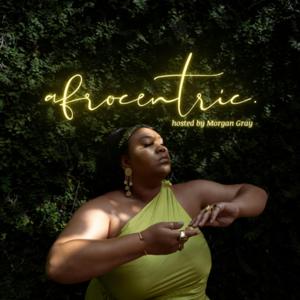


In this episode of Afrocentric Podcast, Spoken Word: He Got Five On It, the poem unpacks a familiar phrase and flips it into a deeper reflection on value, effort, and accountability. What starts as a simple declaration—“I got five on it”—becomes a lens for examining intention versus action, and presence versus performance.
The piece challenges the idea that contribution is defined by what is said or shown outwardly, emphasizing instead the importance of consistency, follow-through, and mindset. Through layered examples, it reveals how even small offerings can grow into something meaningful when backed by purpose, while larger amounts can fall flat without commitment or vision.
Listeners are encouraged to reflect on their own “five”—whether it represents real investment, shared responsibility, or appearance. The poem draws a clear line between those who contribute to build and those who contribute to be seen, ultimately calling for a deeper level of integrity in collective efforts.
At its core, this episode is about substance over symbolism. It reminds listeners that true value is not in the declaration, but in the demonstration—and when it’s time to build something lasting, what matters most is not how much you claim to bring, but how consistently you show up with it.
In this episode of Afrocentric Podcast, Spoken Word: That’s Tiddy Money, the spoken word piece dives into the cultural judgment placed on money earned through nightlife and performance-based work. With wit and unapologetic honesty, the poem calls out the hypocrisy of those who shame the source of income while still benefiting from its use.
Through vivid imagery and rhythmic storytelling, the piece reframes “tiddy money” as honest labor—earned through effort, endurance, and emotional intelligence. It highlights the physical and mental demands behind the work, pushing back against the idea that such income is lesser or illegitimate. What some dismiss as “easy” is revealed to be a form of labor that requires discipline, adaptability, and resilience.
The episode also explores the fluid nature of money itself, emphasizing that currency carries no moral identity despite the judgments people project onto it. Once it circulates, it becomes universally accepted—exposing the contradiction between social stigma and practical dependence.
At its core, this episode is about respect: for labor, for choice, and for the diverse ways people survive and thrive. It challenges listeners to examine their biases, recognize the dignity in all forms of work, and understand that value is not determined by perception—but by the effort it takes to earn it.
In this episode of Afrocentric Podcast, Spoken Word: Pocket Watching, the poem unpacks the mindset of constantly monitoring others’ success, resources, and perceived gains. With sharp wit and layered metaphor, it critiques the fixation on external appearances—where people “count coins through fabric” without understanding the deeper story behind what they see.
The piece highlights the unseen realities behind progress: the sacrifices, discipline, and resilience that are often hidden beneath visible success. It calls attention to the imbalance created when individuals invest more energy into analyzing others than cultivating their own path, leaving their own “ledger” neglected.
Moving beyond finances, the episode reframes wealth as multidimensional—encompassing mindset, movement, and discernment. It challenges listeners to rethink value, emphasizing that true growth happens in spaces not easily observed or understood by outsiders. Silence, strategy, and self-awareness are presented as forms of power that cannot be easily measured or imitated.
Ultimately, this episode serves as both a critique and a redirection. It urges listeners to shift their focus inward, to build rather than compare, and to respect the unseen labor behind success. The closing message reinforces a key truth: what someone carries—materially or mentally—is not for public consumption, and real wealth often exists beyond what the eye can calculate.
In this episode of the Afrocentric Podcast, Reflection X: Somebody Almost Walked Away with All of My Shit, Morgan reflects on a season of loss, theft, and spiritual realignment, turning a painful experience into a lesson about awakening, detachment, and renewal. What begins as a story about nearly losing everything becomes a meditation on the difference between material attachment and deeper consciousness, showing how even disruption can open the door to transformation.
The episode traces a journey from disconnection and instability to a renewed sense of self, highlighting how loss can strip away false security and reveal what truly matters. As possessions, work, home, and relationships fall away, the host confronts the emotional toll of losing access, support, and identity, while also discovering that letting go can create space for growth, clarity, and spiritual expansion. Ultimately, Reflection X frames loss not as an ending, but as a turning point: a wake-up call that pushes the soul toward resilience, self-discovery, and deeper connection to life itself
In this episode of Afrocentric Podcast, Spoken Word: When There Is No Ruth, the spoken word piece examines what happens when compassion disappears and survival becomes the dominant code. Through sharp, evocative language, the poem contrasts a world rooted in ruthlessness with one shaped by the quiet strength of Ruth—whose story represents devotion, sacrifice, and covenant over convenience.
The narrative moves through images of hardened hearts, fractured relationships, and communities stripped of empathy, where kindness is dismissed as weakness and people are reduced to transactions. It highlights the cultural and spiritual cost of abandoning care—where even abundance becomes barren because no one chooses to leave space for others to survive.
By invoking the biblical and symbolic presence of Ruth, the episode reframes her not as passive or fragile, but as a revolutionary force of love and loyalty. Her decision to stay, to bind herself to another through uncertainty and loss, becomes an act of resistance against a world that normalizes disconnection. Through her, listeners are reminded that true strength is found in choosing people, purpose, and principle—even when it is inconvenient.
The episode ultimately positions Ruth as a living archetype—one who still exists in those who choose compassion over cruelty, generosity over scarcity, and covenant over self-preservation. It closes with a message of restoration: that even in a time where ruthlessness feels dominant, mercy still moves through those willing to embody it—and through them, redemption and legacy are reborn.
In this episode of the Afrocentric Podcast, Morgan performs When There Is No Vision, the poem unfolds a powerful reflection on what happens when individuals and communities lose sight of purpose, direction, and divine alignment. Drawing from ancestral wisdom and prophetic tone, the piece explores how the absence of vision leads to spiritual decay, social division, and generational disconnection.
Listeners are guided through vivid imagery of dimmed spirits, weakened discipline, and fractured communities, where truth is traded for comfort and survival replaces intentional living. The poem speaks directly to the erosion of cultural memory—where elders fall silent and the youth are left without guidance—creating cycles that repeat until vision is restored.
At its core, this episode reframes vision as more than imagination; it is portrayed as sacred sight, a divine blueprint that anchors identity, fuels purpose, and restores order. Through this lens, vision becomes a tool of liberation—one that reconnects people to their higher calling and collective responsibility.
The closing message is both urgent and empowering: to awaken, to speak life into what feels lost, and to reclaim the birthright of clarity, purpose, and forward movement. This episode invites listeners not only to reflect, but to realign—because where there is vision, there is light, and where there is light, the people rise.
In this deeply contemplative installment, Morgan Gray invites listeners into a heightened awareness of the living intelligence embedded within the natural world. Reflection IX: When the Earth Responds explores the idea that wildlife, plant life, and entire ecosystems are not passive or inanimate, but conscious entities actively reacting to parasitic energies and environmental disruption.
Morgan examines the hidden intelligence of tree root systems, presenting them as communicative, responsive networks that mirror forms of awareness often denied within Western frameworks. This reflection challenges the listener to reconsider the boundaries between consciousness and matter, urging a shift away from the illusion of separation.
The episode also highlights the responses of animals as their habitats are destroyed, their bodies altered, and their natural rhythms interrupted. Rather than viewing these reactions as random or instinctual, Morgan frames them as intentional, communicative signals—evidence of a broader ecological consciousness under stress.
Grounded in an Afrocentric perspective, Morgan emphasizes the importance of melanated people recognizing themselves as integral participants within Earth’s ecosystems—not rulers positioned above them. This reframing calls for a return to relational awareness, balance, and respect for all living systems.
Ultimately, this reflection serves as both a warning and an invitation: to listen more deeply, to observe more closely, and to attune oneself to the subtle and overt ways the Earth is responding.
The Preliminary Emancipation Proclamation of September 22, 1862 was Lincoln’s warning that, unless the Confederate states returned to the Union by January 1, 1863, enslaved people in the rebel states and rebel-controlled areas would be declared free. It did not end slavery everywhere, but it changed the Civil War from a fight only to preserve the Union into a war increasingly tied to emancipation and Black freedom.
What it meant:
For people born to enslaved women in America, the proclamation had a limited but major meaning. If they were born in areas still in rebellion after the final proclamation took effect, the federal government declared them free as Union authority expanded, but it did not automatically free everyone born into slavery in loyal border states or in places already under Union control. In other words, birth to an enslaved mother no longer meant the same legal future everywhere, because freedom now depended in part on where a person lived and whether Union military power had reached that place.
Why it mattered:
The document gave hope and legal force to the idea that slavery was being pushed toward destruction, even though it was not fully abolished yet. It also opened the door for Black men to serve in the Union forces, which helped transform enslaved families from being treated as property into people recognized as participants in their own liberation. For children born to enslaved women, it marked the beginning of a new reality: their status was no longer fixed only by slave law, but increasingly challenged by federal wartime policy and Union victory.
Important limit:
This proclamation was a wartime measure, so freedom depended on Union success and was incomplete until later constitutional change ended slavery nationwide. That means it was a crucial turning point, but not the final end of bondage for all enslaved people in America.
In this introspective and free-flowing episode, Morgan and Anyiar invites listeners into a deeply personal stream of consciousness where spirituality, modern reality, and cosmic identity intertwine. Framing herself as a “cosmic noodle,” she explores existence as something fluid—stretching across dimensions, timelines, and energetic planes—challenging the idea of being fixed in a single reality.
This episode pushes into provocative territory, questioning the hidden forces that may influence perception and experience. From discussions of frequency, energy, and solar activity to reflections on power outages and environmental disruptions, both Morgan and Anyiar examines how everyday occurrences might be interpreted through a spiritual and energetic lens. Rather than offering definitive answers, she opens space for critical thought around how systems of power, technology, and collective belief shape human awareness.
Blending cosmic philosophy with grounded observation, the conversation explores themes of the sun as a life-giving and symbolic force, the impact of environmental and energetic shifts on the nervous system, and the role of stillness and self-awareness in uncertain times. Listeners are encouraged to reflect on how fear, perception, and information influence both individual and collective consciousness.
Touching on cultural memory, ancestral identity, and alternative interpretations of history, this episode also considers how narratives about origin, power, and identity are formed—and why questioning them can feel both unsettling and liberating.
Raw, abstract, and thought-provoking, this monologue is designed for listeners who are comfortable sitting with big questions. It invites you to examine reality from multiple angles, remain grounded in your own discernment, and explore what it means to stay conscious in a rapidly shifting world.
Kaycee J’s Monologue: Food, Energy, and Balance explores the deep connection between spiritual awareness, physical nourishment, and energetic alignment.
The conversation unfolds into a powerful discussion on sustaining personal energy through natural and holistic means. Kaycee highlights the importance of consuming high-vibrational foods such as fruits, alkaline, and whole foods that support clarity and vitality. She also touches on the role of herbs and natural supplements in cleansing and uplifting the body, emphasizing ancestral and plant-based knowledge systems.
Water is framed not just as hydration, but as a vital conduit for energy flow, while detox practices like sweating and sauna use are discussed as methods of releasing stagnant energy and restoring equilibrium. The episode closes with practical daily habits that help maintain energetic balance, offering listeners a grounded yet spiritually aligned approach to living with intention, clarity, and vitality.
From the publisher's feed
Mission: To redefine and expand the understanding of Afrocentrism by illuminating the deeper, often untold histories and lived experiences of the Black Aboriginal peoples of North America—those later labeled as African American. The podcast bridges these truths with the ancestral narratives of Africa, South America, and the Caribbean, fostering a renewed global appreciation for Black heritage, resilience, and cultural continuity.
Purpose: This podcast exists to challenge limited historical frameworks, such as the dominant 1619 narrative, by restoring depth, dignity, and context to the story of the original dark-skinned, swarthy peoples of the Americas. Through dialogue, storytelling, and scholarship, it seeks to empower listeners to see the continuum between ancient ancestry, contemporary identity, and future potential.
Embrace the Movement.
Join the Movement.
Afrocentric.