
Sign up to save your podcasts
Or

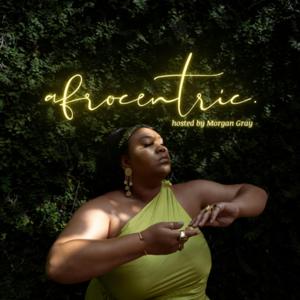


This episode of the Afrocentric Podcast, “Morgan and the Energy Readers ft. Kaycee J.,” explores the concept of energy from both a spiritual and practical perspective. The conversation breaks down what energy really is, how it shows up in everyday life, and how people can become more aware of it through their natural senses—such as sight, feeling, intuition, and emotion. Morgan and Kaycee J. share how energy can be interpreted and understood without overcomplicating the experience, making it accessible for beginners and those deepening their spiritual awareness.
The episode also dives into how intuition plays a key role in reading energy and how to stay grounded and protected while doing so. Tarot is discussed as a tool for interpreting present energy rather than predicting the future, offering a fresh and empowering perspective on card reading.
In this episode, host Morgan Gray reads the Code Noir in full, bringing listeners face-to-face with one of the most chilling legal documents of the French colonial era. Issued under King Louis XIV in 1685 and later adapted for places like Louisiana in 1724, the Code Noir was designed to regulate slavery, control Aboriginal life, enforce Catholicism, and protect colonial order across the French empire.
This episode examines the who, what, where, when, and why behind the code: who authored it, who it targeted, where it was enforced, when it was created, and why it mattered so deeply in the architecture of racial domination. The significance of the Code Noir lies not only in its brutal restrictions and punishments, but also in how it legally transformed enslaved Aboriginals and their descendants into property while giving colonial power a moral and religious cover.
In this episode, Morgan reads The Virginia Racial Integrity Act of 1924, a crucial primary source that exposes how race was formally reclassified in Virginia during the early 20th century. The document reveals the legal push to relabel Aboriginal and Black people native to America under the category of “Negro,” while enforcing a rigid racial hierarchy that shaped identity, law, and social status.
The reading also highlights how Virginians of the time were aware of racial mixing and the changing labels being imposed on people of color, and how these classifications were often treated with judgment and contempt. The document specifically shows the use of racial categories such as “mulatto” and “octoroon,” illustrating how the law attempted to control and define Black and mixed-race identity through language, blood quantum, and social separation.
This episode invites listeners to examine the history of racial classification, the legal erasure of Aboriginal identity, and the long-lasting impact of these systems on Black and Indigenous descendants in America. Leaving Americans to wonder: what have they forgotten, and what do they remember?
In this episode, Morgan reads A Letter from William Penn, Proprietary and Governour, a powerful primary source that offers a revealing look at early colonial America through the words of William Penn himself. The document describes the original melanated beings in America—the Aboriginal peoples—depicting them as black, swarthy, and copper-colored, while also showing how they lived, governed, and interacted before and during the beginnings of colonization.
Through this reading, the episode invites listeners to reflect on the historical presence of Indigenous and melanated peoples in America long before the dominant colonial narratives took hold. It challenges erased histories and restores attention to the lived reality, identity, and cultural presence of the original people of the land.
In this thought-provoking episode of The Revelations, host Morgan delves into the concept of “To Fortify,” centering the discussion on strengthening the mind as a vital component of spiritual and personal resilience. Through an Afrocentric lens, she explores the intricate relationship between mental discipline, nervous system regulation, and overall well-being.
Morgan emphasizes the power of metacognition—the ability to observe and understand one’s own thought processes—as a foundational tool for self-mastery. She breaks down the different aspects of the mind, encouraging listeners to become more aware of how thoughts are formed, processed, and influenced. This awareness, she explains, is key to reclaiming control over one’s mental landscape.
The episode also ventures into more complex and controversial territory, addressing the idea of external forces, including directed energy technologies, that may impact cognitive and emotional states. Morgan invites listeners to critically engage with these concepts while reinforcing the importance of mental fortification practices such as mindfulness, grounding, and intentional thought regulation.
Blending practical insight with esoteric inquiry, this episode serves as both a guide and a call to action: to strengthen the mind, protect mental sovereignty, and cultivate a deeper understanding of consciousness in an increasingly complex world.
This episode centers on Morgan Gray’s spoken word piece “Mary the Rebel,” which reframes one of the most mischaracterized feminine figures in spiritual history. Through poetic cadence and layered symbolism, Morgan challenges the passive, sorrowful image traditionally assigned to Mary—especially Mary Magdalene—and instead restores her as a revolutionary force.
Episode Overview
Morgan opens with a personal reflection on walking a path of individuality and spiritual conviction, only to be labeled rebellious, chaotic, or disruptive. This sets the tone: “rebellion” is not framed as disorder, but as divine alignment outside of societal control. The poem gradually reveals that this same mislabeling has been imposed on Mary.
The narrative builds toward a powerful realization—what society condemns as rebellion is often sacred defiance. Morgan draws a parallel between her own awakening and Mary’s misunderstood legacy, positioning both as figures punished for stepping outside imposed boundaries.
Reclaiming Mary’s Identity
A central theme is the critique of how religious and historical institutions have softened, distorted, or diminished Mary’s image. Morgan references:
The idea that Mary was “rebuked for having seven wicked spirits,” a biblical framing often used to discredit her.
The reduction of her identity to grief, tears, or moral failure.
The erasure of her spiritual authority and proximity to divine knowledge.
Instead, Morgan reframes Mary as:
The line “Mary’s name meant rebel” becomes both poetic device and ideological anchor, suggesting that her true essence has been hidden in plain sight.
Interweaving Mary of Nazareth and Mary of Magdala
Morgan subtly merges the identities and symbolic weight of multiple Mary figures—most notably Mary of Nazareth (the mother archetype) and Mary Magdalene (often misrepresented as fallen or possessed).
Through this interweaving:
Mary of Nazareth represents purity, obedience, and divine selection.
Mary Magdalene (reimagined through an Afrocentric lens) represents wisdom, embodiment, and spiritual rebellion.
Morgan collapses the false dichotomy between these two portrayals, suggesting they are not opposites but reflections of the same divine feminine force—both nurturer and rebel.
The episode invites listeners to reconsider:
Through vivid imagery and unapologetic tone, Morgan transforms Mary from a symbol of sorrow into an icon of resistance—one who has been rebelling, in truth, all along.
In this powerful episode of The Revelations, Morgan Gray explores the sacred meaning of the adjective sanus, sana, sanum means healthy, sound, or sane, and pairs with the verb esse (to be) for infinitive phrases like sanus esse. She opens up a necessary conversation about wellness in the spiritual community, the ways modern systems of care often fail melanated people, and why reclaiming knowledge about the body, herbs, and natural healing matters now more than ever.
Morgan also shares her personal favorite supplements, herbs, and vitamins she’s discovered over the past year, breaking down their spiritual and physical benefits, how they support the body, and why they’ve become part of her wellness practice.
In this immersive and short episode, host Morgan delivers a powerful reading of "The Bribe Made Ready," a profound invocation drawn from Sheba's Wisdoms within the Ethiopian Bible's esoteric canon. This spiritual text fuses Queen Sheba's legendary discernment with Revelation's bride imagery, rejecting worldly bribes—temptations of illusion and compromise—to prepare the soul for divine union. Listeners are guided through ancient Ethiopic wisdom.
In the latest episode of The Revelations: Secretum, The Secret Covenant, we plunge into the shadowy realm of elite manipulation through a full, unfiltered reading of The Secret Covenant. This mysterious manifesto—often linked to the Rockefeller lineage—exposes an alleged master plan for worldwide control, from corrupting bodies and minds to forging a docile "nation of workers, not thinkers."
The episode delivers a pure, continuous audio presentation, allowing Morgan's listening audience to hear the manifesto's raw power unfiltered. No interruptions, no analysis—just the voice bringing the words to life for deep, meditative absorption.
Gray delivers a meticulous line-by-line narration of the Covenant's ominous vows, such as "We will keep their lifespan short and their minds weak while pretending to do otherwise" and the notorious demand for laborers over independent thinkers.
This potent audio ceremony—ideal for meditative listening or communal reflection—empowers us to unearth truths concealed in the open. Catch it now on Spotify and YouTube, with the next installment previewing Frederick T. Gates' authentic Country School of To-Morrow for stark comparison.
In this gripping episode of the Afrocentric Podcast, Morgan Gray delivers “Yts on the Moon,” a modern spoken word reinterpretation inspired by Gil Scott-Heron’s iconic critique of inequality- Whitey on the Moon. With a steady, unfiltered voice, this piece draws a stark line between the spectacle of space exploration and the lived reality of rising rent, broken healthcare systems, and economic strain in everyday communities.
Weaving in references to private space flights, celebrity astronauts, and livestreamed launches, Morgan reframes a timeless question: how can society reach for the stars while so many are still struggling to survive on the ground?
Bold, reflective, and unapologetically grounded, this episode invites listeners to confront the imbalance between progress and justice in the modern age.
From the publisher's feed
Mission: To redefine and expand the understanding of Afrocentrism by illuminating the deeper, often untold histories and lived experiences of the Black Aboriginal peoples of North America—those later labeled as African American. The podcast bridges these truths with the ancestral narratives of Africa, South America, and the Caribbean, fostering a renewed global appreciation for Black heritage, resilience, and cultural continuity.
Purpose: This podcast exists to challenge limited historical frameworks, such as the dominant 1619 narrative, by restoring depth, dignity, and context to the story of the original dark-skinned, swarthy peoples of the Americas. Through dialogue, storytelling, and scholarship, it seeks to empower listeners to see the continuum between ancient ancestry, contemporary identity, and future potential.
Embrace the Movement.
Join the Movement.
Afrocentric.