
Sign up to save your podcasts
Or

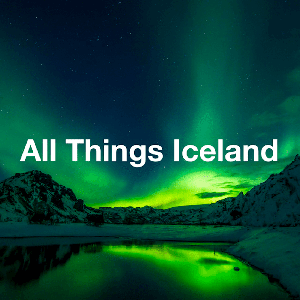


The Northern Lights season in Iceland is almost upon us! I’ve packed this episode with loads of information to help you have the highest possible chance of seeing this spectacular natural phenomenon. While it is possible to take a tour to see them, I am a big fan of seeing them on my own. I’ll be sharing some awesome places that you can drive to in the country to view them.
I decided to also share some background information about the northern lights, including why they appear, the best time of the year to see them, factors that impact you seeing the lights, how to know if the aurora borealis will appear, the best time of day to see them, and my recommendation when it comes to clothing, as well as tips on how to capture the Northern Lights with your phone or camera.
Before I jump in, I want to thank Go Car Rental Iceland for sponsoring this episode. They are a great local car rental company based in Reykjavík. As I mentioned earlier, I like to go on adventures at my own pace and having a car allows me and others to do that.
Go Car Rental Iceland already has competitive rates but what‘s awesome is that renting a car during winter is way less money than in summer. On top of that, you can save 10% off your entire booking with them when you use my code Iceland10.
When charged particles from the sun collide with atoms in the earth’s atmosphere, the electrons inside of atoms move to a higher energy state. When the electrons come down to a lower energy state, they release photons, which is light. That light is what we see as the Aurora borealis or Northern Lights.
The strength of the Northern lights, or how strong the light show up, will depend on the solar activity and the speed at which these particles are coming toward the earth. This is one major factor as to why you may or may not see the Northern Lights during your trip.
The color of the Northern Lights depends on the ionization of gases in the earth’s atmosphere when the charged particle (electrons) collides with them. The altitude at which the particles collide is a major factor as well.
Because different gases are present at different altitudes and in varying concentrations, you might see only one color or many if the Northern Lights appear. Green is the most common color. You might also see blue, purple-ish, yellow, pink and even red.
Red is normally associated with intense solar activity, which is rare, so you’ll be quite fortunate if you experience that.
Undoubtly, the best time of the year to see the Northern Lights in Iceland is during the winter. Northern Lights season officially kicks off in October and runs through March. During this time, we have long, dark nights and that provides ample opportunity to potentially see the lights. Please know that there is no guarantee you will see them, even during winter.
https://www.youtube.com/watch?v=TeWycMNVm3M
The reason you can’t see the Northern Lights in Iceland during summer (June, July and most of August) is because there is too much brightness. We experience 24-hour bright nights during the height of summer, and this makes it impossible to see Northern Lights in the sky.
It isn’t that solar activity is necessarily any less or more during this time. One thing to note is that I have seen the Northern Lights in late August and September. However, because the days are still relatively long at that time, I normally just suggest visiting from October to March.
The factors that can impact you seeing the Northern Lights during the winter in Iceland are the weather, clouds, light pollution, and solar activity. Ideally, there are none or few clouds in the sky during the evening, relatively good weather, no or little light pollution, and decent solar activity.
For those wondering what light pollution is, it is basically any light source that would make seeing the northern lights harder to view. For instance, city lights are a big source of light pollution, so getting away from the city to spots to view the lights is advised.
If there is a full moon, that can also make the lights appear fainter. With that said, I have seen the Northern Lights a decent number of times while strolling the streets of downtown Reykjavik.
Knowing when the Northern Lights will show up or how strong the lights will be is crucial. Thankfully, getting access to that information is simple. The Icelandic Meteorological Office has a webpage dedicated to showing the forecast.
They have a number system from 0 to 9. Zero is no activity visible and 9 is insanely intense. I’ve yet to encounter a 9 but I hope that I do one day. They also have a map that shows the cloud coverage in different parts of the country. Here is the link to see what the northern lights forecast is for the night you are looking to hunt for them.
I also recommend joining the Northern Lights Alert FB Group because people are often posting when they see them and what part of the country they are in.
Even though the nights are long in Iceland, it seems the typical time to see them is late in the evening, such as between 10:00 – 3:00 AM. This is not exact and they can definitely show up earlier or later but that is what I’ve found to be the case over the years.
It’s a good idea to periodically check out the window if the forecast is moderate to very active. Even better is to drive out to a nice, dark spot and chill out until you see them.
To be fair, I think most places in the countryside are great when it comes to seeing the Northern Lights. However, if you want to photograph some or just be in a picturesque place away from light pollution, here are some places where you can enjoy the show.
Here are some helpful tips if you plan to capture the Northern lights:
In the past, I have used the Night Cap app to capture a timelapse video and I will continue to do that. However, the newer versions of the iPhone and other phones make capturing the lights so easy.
Clothing wise, it is best to have your winter clothing. Parkas and warm outer layers with water resistance will come in handy. Layers, such as a warm sweater like an Icelandic lopapeysa is great, and a base layer such a long johns will go a long way in helping to keep you from freezing.
Of course, hats, gloves, thick socks, maybe even hand warmers, are great. My Ultimate Packing Checklist for Iceland, which is linked in the show notes, has a winter packing checklist, so feel free to download that.
You might also want to have something warm to drink, some snacks, and a lot of patience. You might see them right away or it they can take a while to appear if they do at all. Sometimes they put on a show for a long time but don’t be surprised if they show up, disappear, and then show up again.
Before I jump into the random fact of the episode, I again want to thank Go Car Rental Iceland for sponsoring. Make sure to use my code Iceland10 when booking so you can save 10% on your booking.
The first time I saw the northern lights was so magical. They were faint but I was still awe-struck! I always get excited when I see them and will often peek out the window on a night when the forecast is decent to see if they are out. What’s fascinating is that there is folklore in Iceland and other parts of the world about the Northern Lights and I plan to share more about that in a future episode.
Norðurljós – Northern Lights
I hope this episode has been helpful and happy Northern Lights hunting!
Facebook
Þakka þér kærlega fyrir að hlusta og sjáumst fljótlega.
It seems that the eruption that started in early August in Meradalir valley on the Reykjanes Peninsula is already over! After about a month of volcanic activity and people flocking to the site to see an amazing display of molten hot lava spew from the earth, the show has coming to s screeching halt. It’s been a few weeks since there has been any detectable activity
The eruption last year, which is pretty much right next to this one, lasted about six months. I know many people were hoping the eruption would last at least until the fall. The eruptions the last two years are considered “tourist eruptions” because they didn’t pose any threats to any towns and people could safely access them. Thousands of people visited the last two eruptions.
I thoroughly enjoyed hearing and seeing people’s first reactions when they saw the lava spewing from the earth for the first time in lives. I remember the awe I felt the first time and I stopped in my tracks when I saw this one. If you can safely see an eruption in your lifetime, I highly recommend it.
The Chief of State Police and the Chief of Suðurnes Police have decided to remove the danger alert connected to the Meradalir volcanic eruption due to no recorded unrest in the area.
Even though the eruption has stopped, authorities decided to finish paving the trail because the terrain was very rocky and long. While it is still long (about 14 km or 9 miles round trip), at least it so much easier to walk because it was a challenging terrain for many people.
If you decide to still visit the eruption site to see the new earth that has formed, please DO NOT step on the new hardened lava. Authorities say that it’s still warm and that molten hot lava could still be underneath what looks like solid lava. It’s not
People have been walking on the lava! It was shown on the news several times because people were shocked to see.
Hraun – lava
Facebook
Þakka þér kærlega fyrir að hlusta og lesa. Sjáumst fljótlega!
I’m focusing on F-roads in this episode because they provide access to parts of the country that most visitors to Iceland never see. While that might sound appealing to most people listening, driving on these roads are often challenging and can even be dangerous if you don’t know what you’re doing.
I hit on this topic a little bit in my Ultimate Guide to Renting a Car in Iceland episode. I recommend checking that episode out so you can be as prepared as possible when you go to book.
To start out, let’s talk about what F-roads are. The “F” stands for Fjallvegur in Icelandic, which translates to mountain road. The roads literally start with an F and are followed by a number. An example is F-910. These roads are not paved, are uneven, often have lots of potholes, and rocks (big and small). I’ve been on some F roads where it was not that challenging to drive on but later I encountered very large rocks and an uneven surface, so it required me to go much slower and maneuver carefully.
Many of these roads have rivers that you need to cross to get to your destination. I will share some tips on how to cross rivers safely in a little bit.
In my mind, it is so worth it, even if it is just a day trip into the Icelandic highlands. The raw beauty, varied landscape and lack of people make it so much fun to travel here. Of course, precaution and some planning is needed but such is life in Iceland.
F-roads provide access to different parts of the Icelandic highlands, a large area of Iceland that is uninhabitable and where you can find raw, untouched nature. However, the roads are only open during the warmer months. When they open and close depends on the weather and if the road is passable due to snow, ice and/or storms.
The Icelandic Road and Coastal Administration determines each year when it is safe to open the roads. It is normally expected that the roads will open by late June. However, if we’ve had a particularly cold winter, it could be later.
Therefore, most people who want to travel into the highlands are advised to come in July or August. While it’s not a guarantee that the roads will be open at the beginning of July, it is a much more likely than earlier.
Here is a link to a page on road.is that shows the earliest, latest, and median for opening dates for F roads in the country.
While it all depends on weather, the closing of F-roads can be in September or mid-October.
4WD vehicles are the only things you should drive on an F-road for two reasons. The first is that 4WD are the only cars that are insured for this type of road.
If something were to happen to you in a 2WD on an F-road, you are responsible for the full cost of repairing or replacing the vehicle. The other reason is that the conditions of the road, including steep inclines, and crossing rivers require a car with 4WD.
Not all 4WD vehicles are created equal. First off, if you plan to cross rivers you need to a car with enough clearance underneath the car because we don’t flood the engine. Also, some 4WD cars have been modified for crossing very deep rivers like þjórsá, which you cross to get to Þórsmörk.
Some modifications you will see on 4WD are snorkels for the engine, huge tires, and sometimes even tires that can be inflated and deflated. Deflated tires allows for car to drive more smoothly over really rough surfaces.
Typically, you will find unmodified 4WD cars for rent in Iceland because modifying one is quite expensive and not necessary for everyone that wants to explore the highlands.
What’s key is finding out the amount of rivers you need to cross, if any, to get to your destination, the conditions of the rivers (sometimes they can be higher or lower due to glacial melt), and if a similar vehicle like yours can do it safely.
Your rental car company should be able to help you with any questions about that. Also, a google search of where you want to go can be great too because there are a decent number of blogs
I have partnered with Go Car Rental Iceland for this episode. I wanted to partner with a local Icelandic car rental company for three reasons.
One is I like to support local businesses whenever possible. The second is that I often get asked who I recommend as a rental company here. Because I have personally used them and continue to use them when I need a car for adventures, I feel comfortable recommending them. Lastly, they have competitive rates, many cars to choose from, and great customer service.
If you plan to rent a car in Iceland, you can use my code Iceland10 to save 10% on your entire rental car cost.
Subaru XV 4×4 automatic is a good small 4×4 is you plan to cross small or not very deep rivers or none.
Hveradalir is an example of a place that is great to use this type of car.
Dacia Dustur is great for crossing a lot of rivers but not the deepest ones.
F910 to Askja, the F225 West Of Landmannalaugar are examples of places you can use a Dacia Duster to get to.
Jeep Wrangler Rubicon
F249 to Þórsmörk is a place you can get to with a Jeep Wrangler Rubicon
The road can often be narrow for people driving in opposite directions, so you or another driver might need to pull over to let the other pass.
It’s best not to drive too fast when passing another car because you can potentially kick up a rock and damage the other car.
Sometimes there are blind hills, blind curves and sheep who decide to cross without warning. Be mindful of them and slow down to avoid a collision.
The conditions of the road can change drastically as you drive along. You can go from a relatively easy to drive on road to being on fine black sand, to navigate around big holes and rocks to cross a river and even feeling like you’re bouncing around because the road is so rough. It’s an adventurous ride for sure.
Highland summer only lasts a month and a half. While I have been fortunate to be in the highlands during mid-September, I was surprised at how fast the weather changed that day. It was blue skies and sunny for most of the day, but then it just started to snow.
Luckily, it didn’t last long, and I was able to enjoy the brief snow shower while soaking in a natural hot pool, but it was just a reminder that winter comes early in this part of the country.
jeppa
Facebook
Þakka þér kærlega fyrir að hlusta og sjáumst fljótlega (Thank you for listening and see you soon.)
Like the south of the country, north Iceland has plenty of amazing natural sites to visit. All of the places I’m sharing are free of charge and will provide hours, if not days, of fun activities. If you’re not familiar with north Iceland, there is a route up there called the Diamond Circle.
If you think that sounds familiar, then you might be thinking of the Golden Circle, which is in the south. The Golden Circle came first and I have a theory about why the north has called this route the Diamond Circle but I’ll share that in the random fact of the episode.
Personally, I love going north. There is a lot of gorgeous nature and one of my favorite places in the country is there. Don’t worry, I will be sharing about what that place is in this episode. If you are planning to visit north Iceland, I recommend staying over at least one night.
I was on a road trip from Reykjavík, and I stayed over two nights but that is because I arrived late in the evening the first day. You can stay as long or short as you like, but just know that there is so much to see in the north and this list is just the tip of the iceberg.
Before I get into the stunning places in North Iceland that are worth visiting, I would like to thank the sponsor of this episode.
I partnered with Go Car Rental Iceland to make this road trip to the north possible. Go Car Rental Iceland is an awesome local car rental company that has transparent pricing, great rates, unlimited mileage on their rentals, and friendly staff. They are my go-to company when I need a car for my adventures, which are many.
I was delighted when one of my listeners of the podcast reached out to me via email after listening to the Ultimate Guide to Renting a Car in Iceland to say that she had saved $400 by switching her rental from a company that is a big brand name around the world but has a franchise in Iceland, to Go Car Rental Iceland. The most amazing part is that she was able to get more features, like an additional, and extra insurance while still saving!
I highly recommend booking with them. You can use my code Iceland10 to save 10% on your entire rental cost, which is a good deal of savings.
Akureyri is the known as the capital of the north. This stop is about a 4 and a half hour drive from Reykjavík.It’s the second largest urban area in the country and it has a population of 19,642. That’s according to Statistics Iceland data from January 1st, 2022.
To put that into perspective, the population of people in the Reykjavík area is 135,688 according to the same source.
Akureyri is such a lovely place to walk around and explore. Some fun things to do right in the center is walk downtown, which is easily walkable. You can visit Akureyrarkirkja, which is the church at the top of the hill. There are a decent number of steps if you want to reach the top if you are walking from the main street downtown. For those in a wheelchair or that have a hard time with steps, there is wheelchair accessible parking lot and entrance.
You can also visit the botanical garden, take a dip in their epic swimming pool (it has one of the best slides!), walk along the shore and admire the gorgeous view of the fjord, attend a cultural event at the Hof culture center.
If you are looking for some delicious food, I highly recommend Pylsuvagninn Akureyri and Brynjuís. Btw, I’m not sponsored by them or anything like that. I’m just going to both of these places.
Pylsuvagninn Akureyri is a well-known hot dog stand in the center of town that sells delicious traditional and vegan Icelandic hot dogs! I was stunned to see that they have 8 vegan hot dog options on the menu. That is the most I’ve ever seen!
One day, I plan to do a vegan Icelandic hot dog taste test showdown that includes all 8 because why not. LOL. It’s funny to me that I’ve yet to find a vegan hot dog at a regular hot dog stand in Reykjavík but I have the choice of 8 in the north.
Brynjuís or Brynja ice cream is an ice cream shop in the town. They have vegan and dairy based ice cream. Whenever I head north, I always make it a point to stop there because I like how creamy their vegan ice cream is.
My go-to order is a bragðarefur or a tasty fox. It’s vegan coconut-based ice cream with peanut butter, blueberries, and oreos. It hits the spot every time. Just know that if you get a small, that it’s almost the equivalent of a pint of ice cream. When it comes to ice cream, Icelanders like to have big portions.
These are just some things to check out in and around downtown. One important thing I have to point out is the traffic lights. If you look closely at the red light when you are driving or riding in a vehicle, you will see that there is a heart shape there. It’s adorable!
Apparently, the hearts were placed there during the financial crisis to lift peoples spirts, encourage positive thinking, and remind them of what really matters. After the impact of the crisis started to ease, they decided to keep the lights.
When you drive out of town, you can either take the short route, which is through the Vaðlaheiðargöng tunnel that costs 1500 ISK each way or take the longer, scenic route. Regardless of what you choose, a stop at Goðafoss waterfall is totally worth it. Goðafoss can be translated as waterfall of the gods but I have also heard waterfall of the goði. Goði were priests or chieftans way back in the day.
It’s said the waterfall got its name after Icelanders decided to convert t Christianity in the year 1,000 AD. The chieftain that was trusted to make the choice as to whether Icelanders would stay pagans or convert to Christianity, chose the latter. A
fter this decision, he returned home to the north threw the statues of the pagan gods into the waterfall. After that, it was called Goðafoss.
You can walk on either side of it and even walk down a little path to get closer. Just be aware that the wind can shift the spray of water and you can get quite wet.
As we continue on our roadtrip in the north, Húsavík is our next stop. This quaint town is often referred to as the capital of whale watching in Iceland. I didn‘t go whale watching on this trip but I have done it in the past there and it was a lot of fun. We saw a few majestic whales and a playful group of dolphins.
If you saw the Eurovision Song Contest: The Story of Fire Sage movie with Will Farell and Rachel McAdams, you might recognize that Húsavík is where they Lars and Sigrid, their characters, are from in Iceland. There is now a Ja Ja Ding Dong restaraunt there and the little fake elf houses that were in the movie. If none of this makes sense to you, I recommend checking out the movie on Netflix. If that’s not of interest, then you can just ignore this information.
Húsavík also has a unique looking church that I think is beautiful. One of my favorite things to do here on a clear day is to take a dip in the GeoSea baths. They have an infinity pool setup and gorgeous views of the sea and mountains.
Onto talking about Ásbyrgi, which I can literally do all day because I absolutely love this place. It’s a horse shoe shaped glacial canyon in north Iceland that has stolen my heart. It’s full of trees, which is rare for Iceland, has a still, drop-dead gorgeous pond called Botntjörn or bottom pond, and you easily walk up some stairs to get a nice view of the canyon. If you want a view from high above the canyon, you can go on a moderately challenging hike but that is about 3.5 hours roundtrip. However, it might be difficult for those who are afraid of heights.
Personally, I love just walking around here because it feels like a magical oasis. Also, the high rock walls seem to shelter it from lots of wind. According to Icelandic folklore, Sleipnir, Óðin’s enormous eight-legged horse put one of his hooves down on earth and formed this huge canyon.
After Ásbyrgi is Dettifoss, Iceland´s most powerful waterfall and the second most powerful waterfall in Europe. It‘s average flow rate is 6,816 cubic square feet per second and has a drop of 44 meters. The color of the water is grayish white because it is full of sediment.
You can view Dettifoss from two sides. I normally go on the east side, route 864, because I like the view more from there. Also, it seems that the mist from the waterfall is normally being pushed to the other side. The east side is a bit more bumpier of a ride because it is a gravel road, so just be mindful of that.
One lovely stop is Hverir geothermal area under the Namafjall mountain. It has vibrant orange, red, and yellow colors because of all the geothermal activity. There are bubbling hot pools and steaming vents everywhere.
I highly recommend wearing boots when you walk around here because it‘s quite muddy and can be a little slippery. Also, be prepared for an intense sulfur smell. It feels and looks like an alien landscape, which is what makes it so appealing to me.
While I didn‘t stop there on this trip, not far from Hverir is the Mývatn nature baths. It has icy blue water like the Blue Lagoon and is nice for a soak. Some people say they like it more than the Blue Lagoon but I don‘t feel that way.
I have nothing against the place but there are other nature baths that are higher on my list of places I enjoy. I always say that it‘s best to try it out for yourself because you might find that it‘s right up your alley.
Last but not least on the list is Mývatn Lake or Midge lake. The lake is named after tiny annoying flies that swarm around you during the summer. I always recommend bringing a fly net when you come here because these little flies can make it unbearable to be there during summer. If there is a lot of wind, you won‘t have to worry about it and they are only there during summer.
This shallow lake was created by a large basaltic lava eruption that happened 2,300 years ago! It‘s lovely to walk the different paths to see volcanic landforms, lava pillars and pseudocraters.
Some nice paths include the one at Skútustaðagígar, Dimmuborgir lava field, the Hverfjall Volcanic crater, and the northern shore of the lake.
Just know that there is so much more than this to do in the north and I plan to share more in future episodes.
Before moving on the Icelandic word of the episode, I’d like to thank Go Car Rental Iceland for sponsoring this episode. As a reminder, you can get 10% off your full rental car cost when you use my code Iceland10 at the time of your booking.
Norðurland – North Iceland
There is a little bit of a rivalry between the north and south. Northerners often say that the weather is much better there.
While I have never heard this, I think it is funny that this route in the north is called the Diamond Circle and the famous tourist route in the south is called the Golden Circle. It feels like a bit of a one up happening.
Facebook
Þakka þér kærlega fyrir að hlusta og sjáumst fljótlega.
As a native New Yorker that has traveled to a decent number of places in the United States before moving to Iceland in 2016, I’ve noticed some fascinating differences between the cultures.
In this post, I’m pointing out 5 things about USA culture that confuses Icelanders. These are things I’ve specifically been asked by Icelanders about the US.
Iceland and the USA have some similarities when it comes to government. For instance, both have split the government into three parts – legislative, judicial, and executive. However, it kind of ends there.
On a federal level, the US is split into only two political parties, which is seen as very limiting by Icelanders. Icelandic Parliament is made up of 63 politicians but there are many different parties that make up the government.
In fact, it is an important part of Icelandic Parliament for there to be multiple parties. Even as I have been living here, new parties have popped up and have been voted into Parliament.
Currently, it seems almost impossible for new political parties to make it to the federal level of government in the US, which clearly confuses Icelanders.
https://www.youtube.com/watch?v=8fO1O4a9LV4
This one has been funny to me because I never assumed that Icelanders wouldn’t have distinctive words to describe niece, nephew, aunt, cousins, and uncle. In Icelandic, these family members are grouped together by gender.
For instance, the Icelandic word frændi is used to talk about an uncle, male cousins, or a nephew. The word frænka is used for aunt, female cousins, or a niece. When I speak to an Icelander in English and they are describing their mother’s brother, I will say “Oh, that’s your uncle” and they are like “Sure, or my frændi.”
Due to the variety of raw nature and intense weather conditions, Iceland can be a dangerous place. Icelanders grow up learning about respecting nature and to keep in mind that if you are not aware, that you can get yourself into a fatal situation.
However, they expect people to use their common sense when it comes to exploring the country. For instance, not going too close to an edge of a cliff, or not stopping in the middle of the road to take photos.
The explosion of tourism meant that Icelanders needed to start putting ropes and signs in places where it might seem like overkill. Because the USA is a litigious society, it has become a default to put up signs, ropes, and warnings even in places where it is obviously dangerous. While this does confuse Icelanders, they prefer for people to stay safe.
Surprisingly, there are a lot of guns in Iceland (about 70,000), which has a population of almost 370,000, but there is hardly any gun violence.
One main reason for close to no gun violence in Iceland is that guns are seen as being used for hunting and sport, not for protecting yourself. The other main reason is that there are very strict gun laws here.
To become a gun owner in Iceland, a person must take courses, pass a test, get a background check, and show that they know how to properly store the gun. There is not a federal law in the USA that controls who can and can’t be a gun owner.
Not surprisingly, when Icelanders hear about the ongoing gun violence in the USA, they are confused why there are not stronger gun laws that govern the whole country.
In Iceland, people who work in the service industry are paid a living wage. It’s not encouraged to tip in Iceland, and it’s certainly not seen as a way to supplement a person’s wage so that an individual can pay their bills.
Obviously, it is confusing to Icelanders that so many people in the US rely on tips to make ends meet. Also, the % of what is expected for people to pay wait staff at restaurants is confusing too.
Facebook
Þakka þér kærlega fyrir að hlusta og sjáumst fljótlega.
Hveradalir is one of Iceland’s largest geothermal areas, but it’s tucked away in Iceland’s highlands. To access anywhere in the highlands of this country, you must drive on F-roads, which are unpaved, rough and often require you to cross rivers.
I’m planning to do a whole episode on F-roads because it’s important to understand how to navigate them safely, but just know that some rivers that run across F-roads are so deep that they can drown the engine if you don’t have a snorkel and a modified vehicle to cross them.
Thankfully, access to Hveradalir geothermal area does not require a large river crossing. I dare to say that it is more like a small stream that you need to drive over but it’s totally doable for a regular 4×4 vehicle.
Before I get into why Hveradalir is more than worth a visit, I would like to thank the sponsor of this episode. I partnered with Go Car Rental Iceland to drive into the highlands so you can see an example of an F-road and to feature a drop-dead gorgeous place that is easy to access in this part of the country.
Go Car Rental Iceland is an awesome local car rental company that has transparent pricing, great rates, unlimited mileage on their rentals, and friendly staff. They are my go-to company when I need a car for my adventures.
You can use my code Iceland10 to save 10% on your entire rental cost with them, which is a good deal of savings.
If you need a guide on what car to rent in Iceland and tips on what to know before, during, and after driving around the country, check out my Ultimate Guide to Renting a Car in Iceland. It’s a thorough guide that has already helped one of my listeners to save $400 on their rental.
https://www.youtube.com/watch?v=kBOWnle7PdU
Hveradalir geothermal area is nestled in the Kerlingarfjöll mountain range in the central highlands of Iceland. I also created a YouTube video that has a lot of insanely beautiufl drone shots, so feel free to check that out too.
The various colors of Hveradalir – yellow, green, orange, and red – make this place look like a painting. But what really brings it to life is the steam rising from the earth and the warm water flowing throughout the area. All of it combines in a magical way that makes you feel like you stepped onto another planet.
The most important thing to know is that you must drive a 4×4 vehicle for this adventure. The only way you can visit Hveradalir in a vehicle is if it’s a 4×4 because you must drive on the roads F-35 and F-347.
Only 4×4 cars are insured for driving on F-roads in Iceland. If you drive a 2WD car there and something happens to your car, you are fully responsible for the cost of repairing or replacing it. I highly discourage you from taking that chance. F-35 road runs from north to south in the highlands, so you can access this place regardless of you drive from either of those directions.
I used a lovely blue Jeep from Go Car Rental Iceland to get there from Reykjavík. In addition to the cool features in the car, I love blue, so that was a cool cherry on top.
It takes 3.5 hours to access Hveradalir if you drive from Reykjavík
It takes 4 hours from Akureyri, which is in north Iceland
If you are driving from Reykjavík, you take the same route for the Golden Circle, which includes Þingvellir National Park, Geysir hot spring, and Gullfoss waterfall.
You can make a busy day out of it, if you have not been to the Golden Circle, and go to all these sites. Most people who drive this route stop at Gullfoss because they don’t have the appropriate car to keep going and/or they don’t know where the road that keeps going leads to. I feel like it makes Hveradalir a hidden gem.
Once you have passed Gullfoss waterfall, you notice less and less cars. It probably feels like what Iceland used to be like before a lot of tourists. At some point, you will see a sign called Kerlingarfjöll F-35 pointing to the right. That is where you are going. Also, Google Maps is accurate, so you can just follow that.
There are gorgeous mountains and at one point you can see Langjökull glacier in the distance. I stopped at Gýgjarfoss waterfall. It’s right next to the road and is a nice place to stretch your legs and enjoy the sounds of gushing water.
You’ll see a bunch of huts and houses called the Kerlingarfjöll Resort. They were doing construction when I went but it looks like they will have a decent amount of accommodations available next summer for people who want to stay overnight. I didn‘t have time to do it on this trip, but just about a 1 mile walk from the lodge is a geothermal hot pool.
You drive past these lodge and continue up the hill for some time until you get to Hveradalir. One thing I must point out, is the canyon to your right as you drive up the hill. I‘m not sure what the name of it is, but it blew my mind. I legit stood there in awe and couldn‘t believe that I‘d not heard or read anywhere about this gorgeous nature stop when I was researching more about this area.
The road can be pretty rough and a little steep in some spots. What‘s lovely is that you can see Hveradalir appear in the distance. It almost felt like I was dreaming when it came into view.
Conveniently, there is a parking lot there. You‘ve arrived!!
You don‘t have to be an avid hiker to enjoy this area but some level of hiking experience is recommended. There are clearly marked paths and some steps installed in places where it‘s a steeper incline.
There are many paths available, so you can hike for hours or just for 30 minutes. It‘s totally up to you but you get a great view of the place in almost every direction that you go.
This place will remind you of Landmannalaugar but it’s even easier to get to and the hike in the rhyolite colored mountains begins instantly. Don’t get me wrong, I absolutely love Landmannalaugar but it is a different vibe and both places are worth a visit. Plus, Landmannalaugar is the start to the famous Laugavegur trail, which attracts many hikers from around the world each year.
I even saw some people that drove to the parking lot of Hveradalir and only walked to the edge to look at the area. They never actually hiked. While I personally prefer to hike in places, I understand that not everyone enjoys it or has the energy for it, depending on what they have already been up to that day.
I just feel like you get the full enjoyment out of this place by exploring the different paths and walking over foot bridges that have steam wafting up from the warm water stream beneath them.
Always expect the highlands of Iceland to be cooler in temperature. It’s higher up altitude wise and the weather can be even more volatile there. Because it‘s a geothermal area, there is a decent amount of mud. The moisture from the steam and any rain/snow contributes to some intense mud in certain areas.
I remember walking and feeling my boot get a little stuck in the mud as I walked. I was able to pull it out but it made walking slightly more challenging. Of course, it was a little slippery too.
I recommend having hiking boots with some water resistance and really good tread. Also, pack layers with you. If you need any help with what to bring to Iceland, you can download my free Ultimate Packing Checklist.
Before moving on the Icelandic word of the episode, I’d like to thank Go Car Rental Iceland for sponsoring this episode. As a reminder, you can get 10% off your full rental car cost when you use my code Iceland10 at the time of your booking.
Hveradalir – valley of the hot springs
Kerlingarfjöll – old woman or old woman troll mountains
Mt. Kerlingarfjöll got their name from a troll woman, Kerling.
Kerling in Icelandic is both a derogatory name for an old woman, but also a troll woman.
Kerling might have been the daughter of the fire-giant Surtur in the Surtshellir Cave from Norse Mythology but I have seen that written anywhere besides at the on-site location.
Facebook
Þakka þér kærlega fyrir að hlusta og sjáumst fljótlega.
After thousands of earthquakes and lots of speculation, a new eruption has happened on the Reykjanes Peninsula. It’s in the same area as the eruption last year and it is not posing a threat to any people or towns. Well, that is the current situation. The authorities are constantly monitoring the site. People have been discouraged from going there because it’s not yet been deemed safe. However, people have shown up already.
While there is no idea how long this eruption will last, it’s exciting that a new one has sprung up after this volcano had gone dormant. The eruption last year when on much longer than anyone expected. So, we shall see what happens.
https://www.youtube.com/watch?v=HHkwYIbdDII
Knowing what to pack when visiting Iceland is crucial, regardless of the season. It can get very cold on the hike to the volcano, so please make sure you have proper clothing and hiking boots.
My Ultimate Packing Checklist for Iceland provides all the essentials you need to keep warm and dry on your adventures here.
Iceland’s Search & Rescue Teams are volunteer organizations that help people who find themselves in any type of danger here. They were at the eruption last year and are at the new eruption now to monitor the gas levels and see what routes are safe for people to take to view it. If you would like to contribute to their trainings and equipment, you can donate to them directly here.
Facebook
Þakka þér kærlega fyrir að hlusta og sjáumst fljótlega (Thank you for listening and see you soon.)
Originally published July 31, 2022 · Last updated August 20, 2026
After helping thousands of travelers plan trips to Iceland, I can confidently say that renting a car is one of the topics people ask me about most. And honestly, I understand why. Between choosing a 2WD or 4×4, understanding insurance options, navigating F-roads, and keeping up with new rules like Iceland’s road tax, there is a lot to consider.
That’s why I created this guide. It provides you with information I wish every traveler knew before picking up their rental car. I’ve combined my experience living in Iceland with the questions I hear most often so you can avoid costly mistakes, drive safely, and make the most of your time exploring this incredible country.
I personally use Go Car Rental Iceland when traveling around Iceland, and recommend them to my readers because they have great customer service and a large variety of cars.
Affiliate disclosure: There are affiliate links in this article. If you book through my links, I earn a small commission at no extra cost to you. Your support helps fund All Things Iceland and allows me to continue creating free Iceland travel resources like this guide. Thank you for supporting my work! 🙏🏾
As a person that loves to explore and do things at my own pace, renting a car is the best option for me. If that same feeling resonates with you, then you’ve come to the right post. I’ve broken this post into different sections. First, I will go over when you should consider booking your car, then I talk about what to know when picking up your vehicle.
Next, is what is important for you to keep in mind while driving in Iceland. After that is what to do when returning your car, and lastly is ways in which you can save money when renting a car in Iceland.
Of course, I will also have my Icelandic word of the episode/post and the random fact about Iceland sections at the very end.
I’ve noticed that the same rental car mistakes come up again and again. In fact, if you spend just a few minutes browsing Iceland travel forums or Reddit threads, you’ll quickly see that many visitors run into the exact same problems.
The good news is that most of these mistakes are completely avoidable with a little preparation. I also go into each of these more in depth in this guide.
It’s tempting to choose the smallest and cheapest vehicle available, especially if you’re trying to save money. However, many travelers underestimate how much luggage they have or how much time they’ll spend in the car.
A compact vehicle might look perfect online, but after squeezing in four adults, multiple suitcases, backpacks, and winter clothing, many visitors wish they had upgraded to something larger. If you’re traveling with several people or carrying a lot of gear, it’s often worth choosing a vehicle with extra space and comfort.
This is probably one of the most common regrets I see from travelers after their trip.
Many visitors assume that because they plan to stay on paved roads, they won’t encounter gravel. The reality is that gravel parking lots, pull-offs, and side roads are incredibly common throughout Iceland. Even a small rock kicked up by another vehicle can crack a windshield or chip your paint.
The money saved by declining gravel protection can quickly disappear if damage occurs.
Visitors often focus on snow, rain, or ice when checking the weather, but Iceland’s wind is frequently the bigger concern.
Strong gusts can make driving difficult, especially for larger vehicles, camper vans, and SUVs. In extreme cases, roads may become hazardous or temporarily closed. Wind can also damage vehicle doors if they are not held securely when exiting the car.
If the forecast is calling for strong winds, take it seriously. Icelanders certainly do.
Every year, travelers end up stranded, fined, or facing expensive repair bills because they drive a two-wheel-drive vehicle onto an F-road.
As mentioned earlier in this guide, F-roads are mountain roads that require a 4×4 vehicle by law. Rental agreements specifically prohibit driving non-approved vehicles on these roads, and insurance coverage may be voided if you do.
If your itinerary includes Highland destinations such as Landmannalaugar, Askja, or Þórsmörk, make sure your vehicle is approved for the roads you’ll be driving.
Roundabouts are one of the most common driving situations that confuse visitors.
Many countries follow different roundabout rules, and travelers often assume Iceland works the same way as their home country. Iceland’s two-lane roundabouts have a unique rule where the vehicle in the inner lane generally has priority when exiting. Visitors unfamiliar with this system can create dangerous situations by changing lanes unexpectedly.
Before picking up your rental car, take a few minutes to learn how Icelandic roundabouts work. It can save a lot of stress once you’re on the road.
Everyone loves saving money, but choosing a rental company based solely on the lowest price can sometimes create bigger headaches later.
Before booking, read recent reviews, understand what insurance is included, check the company’s reputation for customer service, and review how they handle fees such as the new road tax. A slightly more expensive rental can often provide significantly better value if it includes important coverage, transparent pricing, and reliable support.
One of the biggest mistakes visitors make is assuming road conditions will remain the same throughout their trip.
Weather and road conditions can change rapidly in Iceland, especially outside of summer. A route that was completely clear in the morning may become difficult or even closed later in the day due to wind, snow, flooding, or other conditions.
I recommend checking road conditions every morning before heading out. It only takes a few minutes and can help you avoid delays, dangerous situations, or unexpected route changes.
Most rental car problems in Iceland don’t happen because travelers are reckless. They happen because visitors simply don’t know what to expect. By choosing the right vehicle, understanding insurance options, respecting weather warnings, and checking road conditions regularly, you’ll avoid many of the mistakes that show up repeatedly.
I‘ve personally used Go Car Rental Iceland and I highly recommend them. They have transparent pricing, a great selection of vehicles, and great customer service.
With my discount link for Go Car Rental, you’ll save 7% and get free 4G WiFi with your rental. After you click the link, enter your dates for the rental and the 7% discount will be automatically applied.
When you get to the extras section, select 4G WiFi. You’ll see the price stays the same, even though it has been added.
I‘ll be getting into the cost of car rentals in Iceland in this article, but be sure to keep in that discount link in mind.
When to book your rental car in Iceland will, of course, come down to when you plan to visit. If you haven’t already booked your trip, then here is what I advise for you to think about. The peak season in Iceland is the summer (June, July, and August).
Because renting a vehicle allows you to have more freedom, many travelers choose this option, which means that the closer you get to the peak season, your choices of rental cars diminish quite a bit. Additionally, the cost of rental cars in Iceland is much higher during this time.
This is not meant to discourage you from coming to Iceland during summer, but I think it’s important for you to know. From September to May, there are usually more rental cars available, and they are not as expensive.
If you plan to rent a car during the summer here, I recommend booking your car as soon as you have that plane ticket. Some people get their tickets as early as six months ahead of time, but I find that most are booking within a few months.
To give you an idea of the difference in cost between summer and the off season, like fall /winter. I went to Go Car Rental Iceland’s website to see what it costs to rent a VW Polo Automatic
From July 27th to July 30th, it’s $556
From October 11th-14th, it’s about $189 for three days.
If you’ve been researching car rentals in Iceland recently, you’ve probably come across discussions about the country’s new road tax. This is one of the biggest changes affecting travelers in 2026, and understandably, it has created some confusion.
Starting on January 1, 2026, Iceland introduced a new kilometer-based road tax that applies to all vehicles, including rental cars. The fee is designed to help fund road maintenance and infrastructure and replaced a portion of the fuel taxes that drivers previously paid at the gas pump. The important thing to understand is that this is a government-mandated fee, not an extra charge invented by rental car companies.
For standard passenger vehicles and SUVs under 3.5 tons, the government rate is 6.95 ISK per kilometer driven. However, rental companies are allowed to collect the fee in different ways. Some companies charge the exact amount based on the number of kilometers you drive during your trip. Others simplify the process by charging a fixed daily fee that is calculated using the average distance traveled by rental customers in Iceland. As a result, you may see the road tax listed differently depending on which rental company you choose.
To give you a better idea of what this means in practice, let’s look at some common Iceland itineraries. If you stay mostly in Reykjavík and make a few short day trips, you might drive around 200 kilometers during your trip. At 6.95 ISK per kilometer, the road tax would be approximately 1,390 ISK. A popular Golden Circle and South Coast itinerary often covers around 700 kilometers, resulting in a road tax of roughly 4,865 ISK. Travelers completing the full Ring Road can easily drive 1,500 kilometers or more, bringing the road tax to approximately 10,425 ISK. These examples assume a company that charges based on actual distance driven rather than a flat daily fee.
The good news is that the new road tax is not necessarily an additional travel expense. Because Iceland simultaneously reduced traditional fuel taxes, fuel prices have decreased compared to previous years. In many cases, the cost has simply shifted from the gas pump to a more transparent pay-for-what-you-use system.
When comparing rental companies, make sure you check how the road tax is handled before booking. Some companies include a fixed daily road tax fee in their pricing (like Go Car Rental Iceland), while others calculate the final amount based on your actual mileage. Knowing how the fee is applied can help you avoid surprises and accurately compare rental costs between companies.
Thankfully, it’s simple to rent a car here. You can easily do it online. You only need a valid driver’s license, a credit card or debit card and meet the age criteria.
You must be at least 20 years to rent a car in Iceland. Well, to get any 2-wheel drive. If you want to rent a 4-wheel drive vehicle or a van, then you must be 23 years of age or older.
Many rental companies have a similar policy, but I’ll just reference the one from Go Car Rental as an example. In essence, if your valid driver’s license is written in English or western alphabetical letters, you’re fine.
If a translated copy of the license in English cannot be provided, then you need an international driver’s license.
The types of rental cars you will typically find in Iceland are 2WD, 4WD, and camper vans. While there are a decent amount of manual car, there are usually of plenty of automatic cars for those that need that option.
The great news is that if you plan to just drive around Iceland’s ring road from May to early October, and go to some of the most popular attractions here, such as the Golden Circle, Diamond Circle, and South Coast, then you only need a 2WD.
4WD is great for people that plan to go into the highlands (only open in summer), which require you to drive on F-roads (these are mountain roads). Some people also like to rent 4WD during the winter (including me!), but 2WD cars do just fine here during that season. With that said, a 4×4 or 4wd provides more clearance during winter and control of the car, so I always recommend those in my private trip consultations.
One important thing to know is that many rental car companies in Iceland put studded tires on their cars during the winter season. Those tires make sure that the car has better traction while driving and will for sure come in handy when you drive on country roads. Not all of them do this, so make sure to check out if the company you plan to rent with is using studded tires before making your decision.
A camper van is a great budget friendly option. Go Car Rental Iceland has a sister company called Go Campers. My discount for Go Campers is 7% and also comes with a free added sleeping bag.
When you click on my discount link, enter your dates for renting the camper van and the 7% will automatically be applied.
Choose a sleeping bag under the “extras” section, and the total price won’t increase.
I have traveled via camper van around Iceland many times and loved it, but I’ll go into that in another episode.
One of the questions I probably get asked the most about renting a car in Iceland is if the additional insurance is necessary. Personally, I always opt for it because I know that Icelandic weather can result in damage to the car that is out of the renter’s control. An example of this is sand and ash protection.
Iceland is notorious for being windy. During a windstorm, or just a very windy day, it’s possible for the wind to pick up sand and ash that scraps the car. This can result in the paint of the car coming off in places. In extremely windy conditions, windows and lights can be broken.
Windstorms can happen any time of the year. While I don’t know the likelihood of it happening during your trip, I will just say that my personal preference to have everything covered. You can use this information as a way of knowing what’s possible and just decide for yourself if you want to have the additional insurance or not.
It varies among rental car companies as to what insurance is covered. For instance, Go Car Rental Iceland includes CDW (Collision Damage Waiver), SCDW (Super Collision Damage Waiver) and Gravel Protection. Many rental car companies I know don’t include gravel protection, which would cover you if there is a crack in the windshield and headlights.
The short answer is that Iceland’s driving conditions are very different from what many travelers are used to. While you might feel comfortable declining extra coverage when renting a car in other countries, Iceland is one of the few places where additional protection is often worth considering.
The most common types of damage reported by travelers aren’t usually major accidents. Instead, they’re things like chipped windshields from flying gravel, paint damage caused by loose stones, doors being caught by strong wind gusts, and damage from sand and ash storms in certain parts of the country. These are exactly the types of incidents that catch visitors by surprise because they can happen even when you’re driving carefully.
One of the biggest mistakes I see travelers make is assuming that their credit card’s rental car insurance provides complete coverage. While some credit cards offer valuable rental car protection, many do not cover gravel damage, sand and ash damage, tire damage, undercarriage damage, or damage caused by Iceland’s unique weather conditions. Before relying solely on your credit card coverage, carefully review the policy details and confirm exactly what is and isn’t included.
If you’re planning to drive anywhere beyond Reykjavík, gravel protection is one of the coverages I recommend considering most seriously.
Even if your itinerary stays on paved roads, loose gravel is common in parking lots, pull-offs, and road shoulders throughout Iceland. It’s not unusual for passing vehicles to kick up stones that chip a windshield or damage paintwork. Many travelers who skip gravel protection end up wishing they hadn’t after receiving an unexpected repair bill.
Sand and ash protection is unique to Iceland and often confuses visitors.
In certain parts of the country, particularly along the South Coast and in areas near volcanic landscapes, strong winds can pick up sand and volcanic ash and essentially sandblast a vehicle. The damage can be extensive and expensive, affecting paint, windows, headlights, and exterior surfaces.
While major sand and ash storms don’t happen every day, the potential repair costs can be significant enough that many travelers prefer the peace of mind this coverage provides.
If you’ve spent any time researching Iceland travel, you’ve probably heard people talk about the wind.
What many visitors don’t realize is that strong gusts can damage a car even when it’s parked. A sudden gust can catch a door and force it open beyond its normal range, damaging hinges or the door itself. This is one of the most common types of rental car damage in Iceland.
The best protection is always prevention—hold your door firmly when exiting the vehicle—but insurance can help reduce the financial impact if an accident happens.
The right insurance depends largely on where you’re traveling and the time of year.
If you’re staying mostly in Reykjavík and taking only short day trips on well-maintained roads, I generally recommend at least basic coverage combined with gravel protection.
For travelers driving the Ring Road, exploring multiple regions, or spending a week or more on the road, full coverage is often worth the additional cost. It can provide peace of mind when dealing with changing weather, gravel parking areas, and longer driving distances.
If you’re planning to drive in the Highlands, travel on F-roads, or visit remote areas where road conditions can be rougher, I strongly recommend choosing the maximum coverage package offered by your rental company.
At the end of the day, insurance is about balancing risk and budget. You may never need to use it. However, after living in Iceland for years and hearing countless traveler stories, I can tell you that the people who regret purchasing extra coverage are far fewer than the people who regret declining it.
I completely understand that adding extra insurance can increase the overall cost of your rental. While I generally recommend choosing enough coverage to give yourself peace of mind, there are ways to offset some of those costs.
One option is to use my discount partnership with Go Car Rental Iceland and Go Campers. Through my link, you’ll automatically receive a 7% discount on your rental.
For regular rental cars through Go Car Rental, you’ll also receive free 4G WiFi. For camper van rentals through Go Campers, you’ll receive a free sleeping bag.
You can access both discounts here:
gorentals.is/allthingsiceland
Many travelers use the savings from the discount to help offset the cost of additional insurance coverage, making it easier to protect themselves without significantly increasing their overall travel budget.
The fine print is worth reading regarding this topic because mileage limits can become costly, if you aren’t aware of them and plan to do a lot of driving.
I highly recommend going with a company that has unlimited mileage on your vehicle. For some companies, the unlimited mileage is for short-term rentals, which are rentals that are for less than a month.
Most travelers are visiting for up to two weeks, so that shouldn’t pose an issue. My only advice is to double check that mileage is unlimited so you can freely drive to as many places as you want without hesitation.
Now that you have an overview of what to know and look for when booking your car, we can move on to picking up your rental in Iceland.
Keflavík airport is where most people flying internationally land in Iceland. Many people opt for picking their car up there but some companies, like Go Car Rental Iceland, have shuttles to and from Reykjavík for free, so you can pick up your car there.
It honestly just depends on where the car rental company is located and their policies. Again, reading thoroughly through the FAQs on a rental car site and the fine print will keep you informed as to what is included or is an additional cost.
One of the most important parts about renting a car anywhere is to be meticulous about inspecting it, and writing down, as well as taking pictures, of any damages and scratches the car has before leaving the lot.
While I have not experienced any shady behavior with a car rental in Iceland, I have encountered renting a car that had different controls and settings to make it operate.
Some European models have functions that people from the US or other regions might not be familiar with. I highly recommend testing out how to turn the car on and off, the windshield wipers, turn signals, how to change the settings for the lights and so on.
It’s encouraged to take photos and videos of the car, in addition to marking off any damages you see on the paper given to you by the car rental office.
Also, make sure to check if the car has any warnings popping up, such as an engine light or anything like that. It is easy to miss these things, especially if you are on that red eye flight 6 or 7 in the morning.
Lastly, check the tires of the car to ensure that are in good condition. You can use a penny, if you are from the US, a 20 pence coin, if you are from the UK or some equivalent to check the tread. Here is where you can find information that describes this type of test.
In Iceland, it can be rainy, snowy, and icy on roads, so good tread is a must. Also, there are some gravel roads that are not mountain roads, which can be a little slippery when wet or have loose rocks, so you will need good tires to safely drive there.
Thankfully, driving around Iceland is simple and easy. If you’re from a place where you drive on the right side of the road, you’ll be happy to know that Iceland does the same.
There is one road called road 1 that goes around the whole country. Many of the most popular attractions are just a turn off of this road. Nevertheless, having some type of navigation system is highly recommended.
Some people opt to download Iceland on Google Maps, so they can navigate without needing the internet. I do think that is a good option. At the same time, I like having phone service, or at least WIFI so I can look things up, check social media and so on.
Always make sure to check the conditions of the road and weather before heading out on your trip. I recommend safetravel.is for weather warnings and road.is for road closures.
The worst thing is to head out not knowing the conditions and running into a severe storm, or a closed road that you could have known about beforehand.
Most rental car companies give you the option of purchasing GPS or WIFI. I prefer WIFI because you can then use apps like Google Maps to navigate and have access to other things on your devices.
Another option is to check if the phone service you have in your home country, or wherever you have a phone service provider, has an inexpensive international plan. If that is not available or is too expensive, you can go the route of buying a SIM card in Iceland.
I’ll have links to phone companies in Iceland in the shownotes, so you can look further into the cost, if you are considering that option.
But just to give an example of a package (not sponsored), the phone company Síminn offers 5GB of data, 50 minutes of calling and 50 text messages in Iceland, Europe, the USA and other countries they have listed on the site for 2.900 ISK, which is abouy $21. That is for 30 days of service.
If you’re planning to drive in Iceland, understanding how roundabouts work is one of the most important things you can learn before getting behind the wheel.
Iceland has many roundabouts, particularly in and around Reykjavík, and while they may look familiar, the rules are slightly different from what many visitors are used to in their home countries. In fact, confusion about Icelandic roundabouts is one of the most common driving topics discussed in travel forums and Facebook groups.
The good news is that once you understand the basic rule, navigating them becomes much easier.
In Iceland’s two-lane roundabouts, vehicles in the inside lane (the left lane) have priority when exiting the roundabout.
This is often the opposite of what visitors expect.
If you are driving in the outside lane (the right lane), you should generally be preparing to exit at the next available exit. Drivers in the inside lane may continue around the roundabout or move toward an exit, and vehicles in the outside lane must yield accordingly.
Because of this rule, it’s important to pay attention to lane choice before entering the roundabout.
The mistake I see visitors make most often is entering the outside lane and then attempting to continue around the roundabout for multiple exits.
Many travelers assume the outside lane can be used to circle around the roundabout indefinitely, as is common in some other countries. However, in Iceland, the outside lane is primarily intended for vehicles exiting soon.
This creates confusion when a driver in the outside lane attempts to continue around while a vehicle in the inside lane is preparing to exit. Both drivers may believe they have the right of way, leading to sudden braking, hesitation, or near misses.
If you’re taking one of the first exits, use the outside lane. If you’re continuing farther around the roundabout, the inside lane is usually the better choice.
Think of the outside lane as the “exit lane” and the inside lane as the “travel lane.”
If you’re only going a short distance around the roundabout, enter the outside lane and prepare to exit.
If you’re continuing farther around the roundabout, enter the inside lane and then move toward your exit when appropriate.
Also, please NEVER change lanes in a roundabout! Doing so can lead to a serious accident.
While this is a simplification, it helps many visitors understand the basic flow of Icelandic roundabouts and avoid the most common mistakes.
If not posted, then the general speed limit for cars in Iceland is 50 km/h, which is about 31 mph, in urban areas. If a place is scarcely populated, it‘s common to see 70 km/h (about 43 mph).
Some highways and gravel roads are 80 km/h (50 mph) and many country roads, meaning the roads outside of the urban areas, are 90 km/h (about 55 mph) on asphalt roads. In some residental areas, the speed is 30 km/h or 19 mph.
Depending on where you are coming from, these speed limits might sound slow. Honestly, they are quite slow, especially when you are out on the open road and there are hardly any other cars around.
While it might be tempting to go much faster, the speeding tickets here are a big incentive to not go faster.
There are two types of speed traps in Iceland. The first is the old-fashioned way in which a police officer is parked with a speed reader somewhere. Their placement can be obvious sometimes but there are other times when they are hidden.
The second type of speed trap is by camera. There are speed cameras placed at certain points in urban areas, like Reykjavík, and along the road out in the countryside. Unlike the first kind of speed trap, you are warned with a sign that a speed camera is coming up.
A speeding ticket can range from 30.000 ISK to 150.000 ISK ($220 – $1,101) but that depends on how much over the speed limit you are. The speeding fines are high on purpose because the police want discourage people from going too fast.
If you caught by a police officer, you could pay on the spot and get a discount. I´ve read that it is 25%. Another option is to pay later but then you won’t get a discount.
If you are caught by a speed camera and get the ticket in the mail, you are normally given a certain time to pay the ticket with a discount.
When a person does not pay the ticket on their rental car, the rental car company will normally pay it and charge you a surcharge for them having to take on the responsibility of paying it. Basically, you end up paying the fine and an additional charge.
Lastly, if feel that there was an error with speed camera, you can dispute the ticket, but I don’t know the likelihood of that working out in your favor.
2. Single Lane Bridge
3. Single Lane Tunnel
4. Blind Hill
5. F-road: only 4×4 cars on these difficult roads
6. Roundabout up ahead
You can see all of the road signs in Iceland here.
There are some places where paying for parking is required in Iceland, so it’s good for you to keep that mind because parking ticket fines are common in those areas.
In Reykjavik, there are certain streets in the downtown area where it is required for you to pay to park. It’s normally from Monday to Friday in between 9:00 AM – 6:00 PM, and on Saturday from 10:00 AM – 6:00 PM. No parking fees on Sundays.
There are 4 parking zones and they are labeled P1, P2, P3, and P4, so keep a lookout for those signs when trying to find a parking spot.
In a P1 zone, the price is 385ISK ($3) per hour.
In a P2 zone, the price is 200ISK ($1.56) per hour.
In a P3 zone, the price is 200ISK ($1.56) for the first two hours, then it’s 55ISK ($0.4) per hour.
In a P4 zone, the price is 200ISK ($1.56) per hour.
While there are physical parking meters that you can use to pay on the streets of Reykjavik, I suggest using an app. It is easier, faster, and sometimes the parking meters don’t work. The two apps I’m aware of are EasyPark and Parka.is.
Parka.is is also used at Vatnajökull National Park and for parking in Akureyri. In other places where you have to pay for parking, there is a machine where you use your card to pay and get a physical receipt.
Luckily, there is only one toll to pay here and that is for a tunnel in north Iceland. The tunnel is called Vaðlaheiðargöng and you can pre-pay the toll. Cars under 3.5 tons are 1.500 ISK per trip.
If you opt to pay 24-hours before the trip or 24-hours after you have gone through. If you drive through without paying the toll, a bill is sent to the registered owner of the vehicle with an additional fee for collection.
Conveniently, there is an app for paying the toll and you can find it here.
The level of roadside assistance for your rental car varies by company in Iceland. For instance, Go Car Rental Iceland has 24/7 roadside assistance.
If you contact them between 8:00 AM and 7:00 PM, then you get someone at the desk of the company to guide you. After those hours is a different number but you will get assistance either way.
While some of us might be used to a person coming to fix our tire, if it were to puncture, that is quite an expensive cost for the renter.
You might end up paying close to 100.000 ISK or more than $700. Most rental car companies here guide you through changing the tire, if you are not aware of how to do it yourself.
In the case of an emergency, please call 112, Iceland’s emergency phone line.
There are many gas stations around the country, so you won‘t have a problem filling up on either gas (green handle), which is called bensín in Icelandic, or diesel (black handle) as you travel around.
When I am out in the countryside, I don‘t like to let my tank get below a quarter because the next gas station might be a fair distance away.
If you plan to drive into the highlands, definitely make sure to have a full tank because there aren‘t places for you to fill up.
As of this recording, the lowest gas price I found was 221 ISK per liter, which is $1.82 per liter.
In US gallons, that is $6.89 per gallon. This price can go up or down depending on exchange rates and the cost of fuel. This was specifically calculated for gas prices but the price of diesel is similar.
There are a few factors to take into account for each season in Iceland.
One of the biggest misconceptions I see from travelers planning a trip to Iceland is the belief that every gravel road requires a 4×4 vehicle. Thankfully, that’s not true.
Gravel roads are extremely common throughout Iceland, especially when you venture outside of Reykjavík and the Ring Road. Many scenic attractions, small villages, viewpoints, and even some popular tourist sites are accessed via gravel roads. In most cases, standard 2WD rental cars are perfectly capable of driving on these roads as long as conditions are good and you drive carefully. The main difference is that you’ll need to reduce your speed, watch for loose gravel, and allow extra stopping distance.
F-roads, however, are a completely different category of road.
The “F” stands for fjallvegur, which means mountain road in Icelandic. These roads lead into Iceland’s remote Highlands, a rugged interior region filled with volcanic landscapes, geothermal areas, colorful mountains, and vast wilderness. Unlike ordinary gravel roads, F-roads are often rough, uneven, and can include large potholes, steep sections, loose rocks, and even unbridged river crossings.
Because of these challenging conditions, Icelandic law prohibits driving on F-roads with a 2WD vehicle. A 4×4 vehicle is legally required, and rental companies will typically void insurance coverage if you take a non-approved vehicle onto an F-road. If damage occurs, you could be responsible for the full cost of repairs, which might mean replacing the vehicle.
A simple way to remember the difference is this: a gravel road is simply a road surface, while an F-road is a specific classification of mountain road. In other words, many gravel roads can be driven with a regular car, but every F-road requires a suitable 4×4 vehicle.
For example, the gravel road leading to attractions like Hvitserkur, many Westfjords viewpoints, or remote coastal areas can often be driven in a 2WD car. In contrast, routes such as F208 to Landmannalaugar, F35 (Kjölur), or F249 toward Þórsmörk require a 4×4 and may involve crossing rivers. F-roads are normally only open during summer (June – early September).
Before setting out, always check current road conditions on Road.is and confirm with your rental company whether your vehicle is approved for the specific roads you plan to drive. Doing so can save you from costly mistakes and ensure you’re renting the right vehicle for your Iceland adventure.
Make sure you’re booking an approved 4×4 for your route.
Due to my long term partnership with Go Car Rental Iceland and Go Campers, you can save money and get awesome extras when you rent with them via my link.
I actually use their cars and campers when I travel around Iceland, and I’ve partnered with them for over 4 years now. The main reasons? Their customer service is amazing, and they have a wide range of vehicles to choose from.
They’ve also given me a link so you can save 7% on your rental, plus get a couple of really useful extras.
Once you enter your travel dates, the 7% discount is automatically applied. In the extras section, you choose 4G Wi-Fi for Go Car and a sleeping bag for Go Campers,and it will be applied at no additional cost.
🚗 RENTAL CAR
Go Car Rental
7% off + Free 4G Wi-Fi
Click here to book
🚐 CAMPERVAN
Go Campers
7% off + Free Sleeping Bag
Click here to book
And just so you know, using my link gives me a small commission at no extra cost to you. It’s one of the ways you’re supporting All Things Iceland and the content I create. Thank you in advance for that.
Facebook
Þakka þér kærlega fyrir að hlusta og sjáumst fljótlega (Thank you for listening and see you soon.)
Iceland, the land of fire and ice, is full of fascinating and sometimes strange facts. In this podcast episode, I’m sharing 15 surprising facts about this country that you probably have never heard about. I know that I was surprised by many of them when I first heard them, and I hope that you enjoy learning something new about the country.
https://www.youtube.com/watch?v=E_DTHHz9GcI
Skrítinn – weird or strange
Facebook
Þakka þér kærlega fyrir að hlusta og sjáumst fljótlega
(Thank you for listening and see you later)
Karítas Hrundar Pálsdóttir is the author of Ástiðir and Dagatal, two books about short stories in Icelandic. In this interview we talk about how short stories in various levels of Icelandic help learners of the language to learn faster and easier.
Karítas is currently pursuing her Ph.D in Creative Writing in the U.K. and was a teacher of Icelandic. She has learned Japanese, so she has an idea about the trials and tribulations that language learning students go through. In fact, her idea for publishing these books came when she was teaching Icelandic. She even tested out many of the stories on her students to see how impactful they were as the students studied the language
You can connect with Karítas on Instagram.
Here is where you can purchase Ástiðir.
Here is where you can purchase Dagatal
Facebook
Þakka þér kærlega fyrir að hlusta og sjáumst fljótlega
(Thank you for listening and see you later)
From the publisher's feed
822 Listeners

3,646 Listeners

111,852 Listeners

24,541 Listeners

248 Listeners

2,242 Listeners

1,583 Listeners

475 Listeners