All Things Plantagenet

All Things Plantagenet

By Donnie J, HazelHistory
Download on the App Store
  • Favorites

    24

    Followers

  • Typical duration

    60 min

    per episode

Based on Podcast App listening data

All Things Plantagenet episodes

  • Episode 134 - King Edward III - The Perfect King - Part 07
    Edward III (13 November 1312 – 21 June 1377) was King of England and Lord of Ireland from January 1327 until his death; he is noted for his military success and for restoring royal authority after the disastrous and unorthodox reign of his father, Edward II. Edward III transformed the Kingdom of England into one of the most formidable military powers in Europe. His long reign of 50 years was the second longest in medieval England (after that of his great-grandfather Henry III) and saw vital developments in legislation and government, in particular the evolution of the English parliament, as well as the ravages of the Black Death.
    Edward was crowned at age fourteen after his father was deposed by his mother, Isabella of France, and her lover Roger Mortimer. At age seventeen he led a successful coup d'état against Mortimer, the de facto ruler of the country, and began his personal reign. After a successful campaign in Scotland he declared himself rightful heir to the French throne in 1337. This started what became known as the Hundred Years' War. Following some initial setbacks, this first phase of the war went exceptionally well for England; victories at Crécy and Poitiers led to the highly favourable Treaty of Brétigny, in which England made territorial gains, and Edward renounced his claim to the French throne. This phase would become known as the Edwardian War. Edward's later years were marked by international failure and domestic strife, largely as a result of his inactivity and poor health.
    Edward III was a temperamental man but capable of unusual clemency. He was in many ways a conventional king whose main interest was warfare. Admired in his own time and for centuries after, Edward was denounced as an irresponsible adventurer by later Whig historians such as William Stubbs. This view has been challenged recently and modern historians credit him with some significant achievements.
    Edward was born at Windsor Castle on 13 November 1312, and was often referred to as Edward of Windsor in his early years. The reign of his father, Edward II, was a particularly problematic period of English history. One source of contention was the king's inactivity, and repeated failure, in the ongoing war with Scotland. Another controversial issue was the king's exclusive patronage of a small group of royal favourites. The birth of a male heir in 1312 temporarily improved Edward II's position in relation to the baronial opposition. To bolster further the independent prestige of the young prince, the king had him created Earl of Chester at only twelve days of age.
    In 1325, Edward II was faced with a demand from his brother-in-law, Charles IV of France, to perform homage for the English Duchy of Aquitaine. Edward was reluctant to leave the country, as discontent was once again brewing domestically, particularly over his relationship with the favourite Hugh Despenser the Younger. Instead, he had his son Edward created Duke of Aquitaine in his place and sent him to France to perform the homage. The young Edward was accompanied by his mother Isabella, who was the sister of King Charles, and was meant to negotiate a peace treaty with the French. While in France, Isabella conspired with the exiled Roger Mortimer to have Edward deposed. To build up diplomatic and military support for the venture, Isabella had her son engaged to the twelve-year-old Philippa of Hainault. An invasion of England was launched and Edward II's forces deserted him completely. Isabella and Mortimer summoned a parliament, and the king was forced to relinquish the throne to his son, who was proclaimed king in London on 25 January 1327. The new king was crowned as Edward III at Westminster Abbey on 1 February at the age of 14.
    1 hr 2 min
  • Episode 133 - King Edward III - The Perfect King - Part 06
    Edward III (13 November 1312 – 21 June 1377) was King of England and Lord of Ireland from January 1327 until his death; he is noted for his military success and for restoring royal authority after the disastrous and unorthodox reign of his father, Edward II. Edward III transformed the Kingdom of England into one of the most formidable military powers in Europe. His long reign of 50 years was the second longest in medieval England (after that of his great-grandfather Henry III) and saw vital developments in legislation and government, in particular the evolution of the English parliament, as well as the ravages of the Black Death.
    Edward was crowned at age fourteen after his father was deposed by his mother, Isabella of France, and her lover Roger Mortimer. At age seventeen he led a successful coup d'état against Mortimer, the de facto ruler of the country, and began his personal reign. After a successful campaign in Scotland he declared himself rightful heir to the French throne in 1337. This started what became known as the Hundred Years' War. Following some initial setbacks, this first phase of the war went exceptionally well for England; victories at Crécy and Poitiers led to the highly favourable Treaty of Brétigny, in which England made territorial gains, and Edward renounced his claim to the French throne. This phase would become known as the Edwardian War. Edward's later years were marked by international failure and domestic strife, largely as a result of his inactivity and poor health.
    Edward III was a temperamental man but capable of unusual clemency. He was in many ways a conventional king whose main interest was warfare. Admired in his own time and for centuries after, Edward was denounced as an irresponsible adventurer by later Whig historians such as William Stubbs. This view has been challenged recently and modern historians credit him with some significant achievements.
    Edward was born at Windsor Castle on 13 November 1312, and was often referred to as Edward of Windsor in his early years. The reign of his father, Edward II, was a particularly problematic period of English history. One source of contention was the king's inactivity, and repeated failure, in the ongoing war with Scotland. Another controversial issue was the king's exclusive patronage of a small group of royal favourites. The birth of a male heir in 1312 temporarily improved Edward II's position in relation to the baronial opposition. To bolster further the independent prestige of the young prince, the king had him created Earl of Chester at only twelve days of age.
    In 1325, Edward II was faced with a demand from his brother-in-law, Charles IV of France, to perform homage for the English Duchy of Aquitaine. Edward was reluctant to leave the country, as discontent was once again brewing domestically, particularly over his relationship with the favourite Hugh Despenser the Younger. Instead, he had his son Edward created Duke of Aquitaine in his place and sent him to France to perform the homage. The young Edward was accompanied by his mother Isabella, who was the sister of King Charles, and was meant to negotiate a peace treaty with the French. While in France, Isabella conspired with the exiled Roger Mortimer to have Edward deposed. To build up diplomatic and military support for the venture, Isabella had her son engaged to the twelve-year-old Philippa of Hainault. An invasion of England was launched and Edward II's forces deserted him completely. Isabella and Mortimer summoned a parliament, and the king was forced to relinquish the throne to his son, who was proclaimed king in London on 25 January 1327. The new king was crowned as Edward III at Westminster Abbey on 1 February at the age of 14.
    1 hr 2 min
  • Episode 132 - King Edward III - The Perfect King - Part 05
    Edward III (13 November 1312 – 21 June 1377) was King of England and Lord of Ireland from January 1327 until his death; he is noted for his military success and for restoring royal authority after the disastrous and unorthodox reign of his father, Edward II. Edward III transformed the Kingdom of England into one of the most formidable military powers in Europe. His long reign of 50 years was the second longest in medieval England (after that of his great-grandfather Henry III) and saw vital developments in legislation and government, in particular the evolution of the English parliament, as well as the ravages of the Black Death.
    Edward was crowned at age fourteen after his father was deposed by his mother, Isabella of France, and her lover Roger Mortimer. At age seventeen he led a successful coup d'état against Mortimer, the de facto ruler of the country, and began his personal reign. After a successful campaign in Scotland he declared himself rightful heir to the French throne in 1337. This started what became known as the Hundred Years' War. Following some initial setbacks, this first phase of the war went exceptionally well for England; victories at Crécy and Poitiers led to the highly favourable Treaty of Brétigny, in which England made territorial gains, and Edward renounced his claim to the French throne. This phase would become known as the Edwardian War. Edward's later years were marked by international failure and domestic strife, largely as a result of his inactivity and poor health.
    Edward III was a temperamental man but capable of unusual clemency. He was in many ways a conventional king whose main interest was warfare. Admired in his own time and for centuries after, Edward was denounced as an irresponsible adventurer by later Whig historians such as William Stubbs. This view has been challenged recently and modern historians credit him with some significant achievements.
    Edward was born at Windsor Castle on 13 November 1312, and was often referred to as Edward of Windsor in his early years. The reign of his father, Edward II, was a particularly problematic period of English history. One source of contention was the king's inactivity, and repeated failure, in the ongoing war with Scotland. Another controversial issue was the king's exclusive patronage of a small group of royal favourites. The birth of a male heir in 1312 temporarily improved Edward II's position in relation to the baronial opposition. To bolster further the independent prestige of the young prince, the king had him created Earl of Chester at only twelve days of age.
    In 1325, Edward II was faced with a demand from his brother-in-law, Charles IV of France, to perform homage for the English Duchy of Aquitaine. Edward was reluctant to leave the country, as discontent was once again brewing domestically, particularly over his relationship with the favourite Hugh Despenser the Younger. Instead, he had his son Edward created Duke of Aquitaine in his place and sent him to France to perform the homage. The young Edward was accompanied by his mother Isabella, who was the sister of King Charles, and was meant to negotiate a peace treaty with the French. While in France, Isabella conspired with the exiled Roger Mortimer to have Edward deposed. To build up diplomatic and military support for the venture, Isabella had her son engaged to the twelve-year-old Philippa of Hainault. An invasion of England was launched and Edward II's forces deserted him completely. Isabella and Mortimer summoned a parliament, and the king was forced to relinquish the throne to his son, who was proclaimed king in London on 25 January 1327. The new king was crowned as Edward III at Westminster Abbey on 1 February at the age of 14.
    1 hr 2 min
  • Episode 131 - King Edward III - The Perfect King - Part 04
    Edward III (13 November 1312 – 21 June 1377) was King of England and Lord of Ireland from January 1327 until his death; he is noted for his military success and for restoring royal authority after the disastrous and unorthodox reign of his father, Edward II. Edward III transformed the Kingdom of England into one of the most formidable military powers in Europe. His long reign of 50 years was the second longest in medieval England (after that of his great-grandfather Henry III) and saw vital developments in legislation and government, in particular the evolution of the English parliament, as well as the ravages of the Black Death.
    Edward was crowned at age fourteen after his father was deposed by his mother, Isabella of France, and her lover Roger Mortimer. At age seventeen he led a successful coup d'état against Mortimer, the de facto ruler of the country, and began his personal reign. After a successful campaign in Scotland he declared himself rightful heir to the French throne in 1337. This started what became known as the Hundred Years' War. Following some initial setbacks, this first phase of the war went exceptionally well for England; victories at Crécy and Poitiers led to the highly favourable Treaty of Brétigny, in which England made territorial gains, and Edward renounced his claim to the French throne. This phase would become known as the Edwardian War. Edward's later years were marked by international failure and domestic strife, largely as a result of his inactivity and poor health.
    Edward III was a temperamental man but capable of unusual clemency. He was in many ways a conventional king whose main interest was warfare. Admired in his own time and for centuries after, Edward was denounced as an irresponsible adventurer by later Whig historians such as William Stubbs. This view has been challenged recently and modern historians credit him with some significant achievements.
    Edward was born at Windsor Castle on 13 November 1312, and was often referred to as Edward of Windsor in his early years. The reign of his father, Edward II, was a particularly problematic period of English history. One source of contention was the king's inactivity, and repeated failure, in the ongoing war with Scotland. Another controversial issue was the king's exclusive patronage of a small group of royal favourites. The birth of a male heir in 1312 temporarily improved Edward II's position in relation to the baronial opposition. To bolster further the independent prestige of the young prince, the king had him created Earl of Chester at only twelve days of age.
    In 1325, Edward II was faced with a demand from his brother-in-law, Charles IV of France, to perform homage for the English Duchy of Aquitaine. Edward was reluctant to leave the country, as discontent was once again brewing domestically, particularly over his relationship with the favourite Hugh Despenser the Younger. Instead, he had his son Edward created Duke of Aquitaine in his place and sent him to France to perform the homage. The young Edward was accompanied by his mother Isabella, who was the sister of King Charles, and was meant to negotiate a peace treaty with the French. While in France, Isabella conspired with the exiled Roger Mortimer to have Edward deposed. To build up diplomatic and military support for the venture, Isabella had her son engaged to the twelve-year-old Philippa of Hainault. An invasion of England was launched and Edward II's forces deserted him completely. Isabella and Mortimer summoned a parliament, and the king was forced to relinquish the throne to his son, who was proclaimed king in London on 25 January 1327. The new king was crowned as Edward III at Westminster Abbey on 1 February at the age of 14.
    1 hr 2 min
  • Episode 130 - King Edward III - The Perfect King - Part 03
    Edward III (13 November 1312 – 21 June 1377) was King of England and Lord of Ireland from January 1327 until his death; he is noted for his military success and for restoring royal authority after the disastrous and unorthodox reign of his father, Edward II. Edward III transformed the Kingdom of England into one of the most formidable military powers in Europe. His long reign of 50 years was the second longest in medieval England (after that of his great-grandfather Henry III) and saw vital developments in legislation and government, in particular the evolution of the English parliament, as well as the ravages of the Black Death.
    Edward was crowned at age fourteen after his father was deposed by his mother, Isabella of France, and her lover Roger Mortimer. At age seventeen he led a successful coup d'état against Mortimer, the de facto ruler of the country, and began his personal reign. After a successful campaign in Scotland he declared himself rightful heir to the French throne in 1337. This started what became known as the Hundred Years' War. Following some initial setbacks, this first phase of the war went exceptionally well for England; victories at Crécy and Poitiers led to the highly favourable Treaty of Brétigny, in which England made territorial gains, and Edward renounced his claim to the French throne. This phase would become known as the Edwardian War. Edward's later years were marked by international failure and domestic strife, largely as a result of his inactivity and poor health.
    Edward III was a temperamental man but capable of unusual clemency. He was in many ways a conventional king whose main interest was warfare. Admired in his own time and for centuries after, Edward was denounced as an irresponsible adventurer by later Whig historians such as William Stubbs. This view has been challenged recently and modern historians credit him with some significant achievements.
    Edward was born at Windsor Castle on 13 November 1312, and was often referred to as Edward of Windsor in his early years. The reign of his father, Edward II, was a particularly problematic period of English history. One source of contention was the king's inactivity, and repeated failure, in the ongoing war with Scotland. Another controversial issue was the king's exclusive patronage of a small group of royal favourites. The birth of a male heir in 1312 temporarily improved Edward II's position in relation to the baronial opposition. To bolster further the independent prestige of the young prince, the king had him created Earl of Chester at only twelve days of age.
    In 1325, Edward II was faced with a demand from his brother-in-law, Charles IV of France, to perform homage for the English Duchy of Aquitaine. Edward was reluctant to leave the country, as discontent was once again brewing domestically, particularly over his relationship with the favourite Hugh Despenser the Younger. Instead, he had his son Edward created Duke of Aquitaine in his place and sent him to France to perform the homage. The young Edward was accompanied by his mother Isabella, who was the sister of King Charles, and was meant to negotiate a peace treaty with the French. While in France, Isabella conspired with the exiled Roger Mortimer to have Edward deposed. To build up diplomatic and military support for the venture, Isabella had her son engaged to the twelve-year-old Philippa of Hainault. An invasion of England was launched and Edward II's forces deserted him completely. Isabella and Mortimer summoned a parliament, and the king was forced to relinquish the throne to his son, who was proclaimed king in London on 25 January 1327. The new king was crowned as Edward III at Westminster Abbey on 1 February at the age of 14.
    1 hr 2 min
  • Episode 129 - King Edward III - The Perfect King - Part 02
    Edward III (13 November 1312 – 21 June 1377) was King of England and Lord of Ireland from January 1327 until his death; he is noted for his military success and for restoring royal authority after the disastrous and unorthodox reign of his father, Edward II. Edward III transformed the Kingdom of England into one of the most formidable military powers in Europe. His long reign of 50 years was the second longest in medieval England (after that of his great-grandfather Henry III) and saw vital developments in legislation and government, in particular the evolution of the English parliament, as well as the ravages of the Black Death.
    Edward was crowned at age fourteen after his father was deposed by his mother, Isabella of France, and her lover Roger Mortimer. At age seventeen he led a successful coup d'état against Mortimer, the de facto ruler of the country, and began his personal reign. After a successful campaign in Scotland he declared himself rightful heir to the French throne in 1337. This started what became known as the Hundred Years' War. Following some initial setbacks, this first phase of the war went exceptionally well for England; victories at Crécy and Poitiers led to the highly favourable Treaty of Brétigny, in which England made territorial gains, and Edward renounced his claim to the French throne. This phase would become known as the Edwardian War. Edward's later years were marked by international failure and domestic strife, largely as a result of his inactivity and poor health.
    Edward III was a temperamental man but capable of unusual clemency. He was in many ways a conventional king whose main interest was warfare. Admired in his own time and for centuries after, Edward was denounced as an irresponsible adventurer by later Whig historians such as William Stubbs. This view has been challenged recently and modern historians credit him with some significant achievements.
    Edward was born at Windsor Castle on 13 November 1312, and was often referred to as Edward of Windsor in his early years. The reign of his father, Edward II, was a particularly problematic period of English history. One source of contention was the king's inactivity, and repeated failure, in the ongoing war with Scotland. Another controversial issue was the king's exclusive patronage of a small group of royal favourites. The birth of a male heir in 1312 temporarily improved Edward II's position in relation to the baronial opposition. To bolster further the independent prestige of the young prince, the king had him created Earl of Chester at only twelve days of age.
    In 1325, Edward II was faced with a demand from his brother-in-law, Charles IV of France, to perform homage for the English Duchy of Aquitaine. Edward was reluctant to leave the country, as discontent was once again brewing domestically, particularly over his relationship with the favourite Hugh Despenser the Younger. Instead, he had his son Edward created Duke of Aquitaine in his place and sent him to France to perform the homage. The young Edward was accompanied by his mother Isabella, who was the sister of King Charles, and was meant to negotiate a peace treaty with the French. While in France, Isabella conspired with the exiled Roger Mortimer to have Edward deposed. To build up diplomatic and military support for the venture, Isabella had her son engaged to the twelve-year-old Philippa of Hainault. An invasion of England was launched and Edward II's forces deserted him completely. Isabella and Mortimer summoned a parliament, and the king was forced to relinquish the throne to his son, who was proclaimed king in London on 25 January 1327. The new king was crowned as Edward III at Westminster Abbey on 1 February at the age of 14.
    1 hr 2 min
  • Episode 128 - King Edward III - The Perfect King - Part 01
    Edward III (13 November 1312 – 21 June 1377) was King of England and Lord of Ireland from January 1327 until his death; he is noted for his military success and for restoring royal authority after the disastrous and unorthodox reign of his father, Edward II. Edward III transformed the Kingdom of England into one of the most formidable military powers in Europe. His long reign of 50 years was the second longest in medieval England (after that of his great-grandfather Henry III) and saw vital developments in legislation and government, in particular the evolution of the English parliament, as well as the ravages of the Black Death.
    Edward was crowned at age fourteen after his father was deposed by his mother, Isabella of France, and her lover Roger Mortimer. At age seventeen he led a successful coup d'état against Mortimer, the de facto ruler of the country, and began his personal reign. After a successful campaign in Scotland he declared himself rightful heir to the French throne in 1337. This started what became known as the Hundred Years' War. Following some initial setbacks, this first phase of the war went exceptionally well for England; victories at Crécy and Poitiers led to the highly favourable Treaty of Brétigny, in which England made territorial gains, and Edward renounced his claim to the French throne. This phase would become known as the Edwardian War. Edward's later years were marked by international failure and domestic strife, largely as a result of his inactivity and poor health.
    Edward III was a temperamental man but capable of unusual clemency. He was in many ways a conventional king whose main interest was warfare. Admired in his own time and for centuries after, Edward was denounced as an irresponsible adventurer by later Whig historians such as William Stubbs. This view has been challenged recently and modern historians credit him with some significant achievements.
    Edward was born at Windsor Castle on 13 November 1312, and was often referred to as Edward of Windsor in his early years. The reign of his father, Edward II, was a particularly problematic period of English history. One source of contention was the king's inactivity, and repeated failure, in the ongoing war with Scotland. Another controversial issue was the king's exclusive patronage of a small group of royal favourites. The birth of a male heir in 1312 temporarily improved Edward II's position in relation to the baronial opposition. To bolster further the independent prestige of the young prince, the king had him created Earl of Chester at only twelve days of age.
    In 1325, Edward II was faced with a demand from his brother-in-law, Charles IV of France, to perform homage for the English Duchy of Aquitaine. Edward was reluctant to leave the country, as discontent was once again brewing domestically, particularly over his relationship with the favourite Hugh Despenser the Younger. Instead, he had his son Edward created Duke of Aquitaine in his place and sent him to France to perform the homage. The young Edward was accompanied by his mother Isabella, who was the sister of King Charles, and was meant to negotiate a peace treaty with the French. While in France, Isabella conspired with the exiled Roger Mortimer to have Edward deposed. To build up diplomatic and military support for the venture, Isabella had her son engaged to the twelve-year-old Philippa of Hainault. An invasion of England was launched and Edward II's forces deserted him completely. Isabella and Mortimer summoned a parliament, and the king was forced to relinquish the throne to his son, who was proclaimed king in London on 25 January 1327. The new king was crowned as Edward III at Westminster Abbey on 1 February at the age of 14.
    1 hr 2 min
  • Episode 127 - Peasants Revolt - Part 02
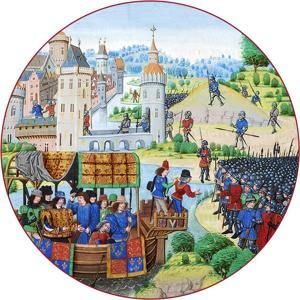
    The Peasants' Revolt, also named Wat Tyler's Rebellion or the Great Rising, was a major uprising across large parts of England in 1381. The revolt had various causes, including the socio-economic and political tensions generated by the Black Death in the 1340s, the high taxes resulting from the conflict with France during the Hundred Years' War, and instability within the local leadership of London. The final trigger for the revolt was the intervention of a royal official, John Bampton, in Essex on 30 May 1381. His attempts to collect unpaid poll taxes in Brentwood ended in a violent confrontation, which rapidly spread across the south-east of the country. A wide spectrum of rural society, including many local artisans and village officials, rose up in protest, burning court records and opening the local gaols. The rebels sought a reduction in taxation, an end to the system of unfree labour known as serfdom, and the removal of the King's senior officials and law courts.
    Inspired by the sermons of the radical cleric John Ball and led by Wat Tyler, a contingent of Kentish rebels advanced on London. They were met at Blackheath by representatives of the royal government, who unsuccessfully attempted to persuade them to return home. King Richard II, then aged 14, retreated to the safety of the Tower of London, but most of the royal forces were abroad or in northern England. On 13 June, the rebels entered London and, joined by many local townsfolk, attacked the gaols, destroyed the Savoy Palace, set fire to law books and buildings in the Temple, and killed anyone associated with the royal government. The following day, Richard met the rebels at Mile End and acceded to most of their demands, including the abolition of serfdom. Meanwhile, rebels entered the Tower of London, killing the Lord Chancellor and the Lord High Treasurer, whom they found inside.
    On 15 June, Richard left the city to meet Tyler and the rebels at Smithfield. Violence broke out, and Richard's party killed Tyler. Richard defused the tense situation long enough for London's mayor, William Walworth, to gather a militia from the city and disperse the rebel forces. Richard immediately began to re-establish order in London and rescinded his previous grants to the rebels. The revolt had also spread into East Anglia, where the University of Cambridge was attacked and many royal officials were killed. Unrest continued until the intervention of Henry Despenser, who defeated a rebel army at the Battle of North Walsham on 25 or 26 June. Troubles extended north to York, Beverley and Scarborough, and as far west as Bridgwater in Somerset. Richard mobilised 4,000 soldiers to restore order. Most of the rebel leaders were tracked down and executed; by November, at least 1,500 rebels had been killed.
    The Peasants' Revolt has been widely studied by academics. Late 19th-century historians used a range of sources from contemporary chroniclers to assemble an account of the uprising, and these were supplemented in the 20th century by research using court records and local archives. Interpretations of the revolt have shifted over the years. It was once seen as a defining moment in English history, but modern academics are less certain of its impact on subsequent social and economic history. The revolt heavily influenced the course of the Hundred Years' War, by deterring later Parliaments from raising additional taxes to pay for military campaigns in France. The revolt has been widely used in socialist literature, including by the author William Morris, and remains a potent political symbol for the political left, informing the arguments surrounding the introduction of the Community Charge in the United Kingdom during the 1980s.

    51 min
  • Episode 126 - Peasants Revolt - Part 01
    The Peasants' Revolt, also named Wat Tyler's Rebellion or the Great Rising, was a major uprising across large parts of England in 1381. The revolt had various causes, including the socio-economic and political tensions generated by the Black Death in the 1340s, the high taxes resulting from the conflict with France during the Hundred Years' War, and instability within the local leadership of London. The final trigger for the revolt was the intervention of a royal official, John Bampton, in Essex on 30 May 1381. His attempts to collect unpaid poll taxes in Brentwood ended in a violent confrontation, which rapidly spread across the south-east of the country. A wide spectrum of rural society, including many local artisans and village officials, rose up in protest, burning court records and opening the local gaols. The rebels sought a reduction in taxation, an end to the system of unfree labour known as serfdom, and the removal of the King's senior officials and law courts.
    Inspired by the sermons of the radical cleric John Ball and led by Wat Tyler, a contingent of Kentish rebels advanced on London. They were met at Blackheath by representatives of the royal government, who unsuccessfully attempted to persuade them to return home. King Richard II, then aged 14, retreated to the safety of the Tower of London, but most of the royal forces were abroad or in northern England. On 13 June, the rebels entered London and, joined by many local townsfolk, attacked the gaols, destroyed the Savoy Palace, set fire to law books and buildings in the Temple, and killed anyone associated with the royal government. The following day, Richard met the rebels at Mile End and acceded to most of their demands, including the abolition of serfdom. Meanwhile, rebels entered the Tower of London, killing the Lord Chancellor and the Lord High Treasurer, whom they found inside.
    On 15 June, Richard left the city to meet Tyler and the rebels at Smithfield. Violence broke out, and Richard's party killed Tyler. Richard defused the tense situation long enough for London's mayor, William Walworth, to gather a militia from the city and disperse the rebel forces. Richard immediately began to re-establish order in London and rescinded his previous grants to the rebels. The revolt had also spread into East Anglia, where the University of Cambridge was attacked and many royal officials were killed. Unrest continued until the intervention of Henry Despenser, who defeated a rebel army at the Battle of North Walsham on 25 or 26 June. Troubles extended north to York, Beverley and Scarborough, and as far west as Bridgwater in Somerset. Richard mobilised 4,000 soldiers to restore order. Most of the rebel leaders were tracked down and executed; by November, at least 1,500 rebels had been killed.
    The Peasants' Revolt has been widely studied by academics. Late 19th-century historians used a range of sources from contemporary chroniclers to assemble an account of the uprising, and these were supplemented in the 20th century by research using court records and local archives. Interpretations of the revolt have shifted over the years. It was once seen as a defining moment in English history, but modern academics are less certain of its impact on subsequent social and economic history. The revolt heavily influenced the course of the Hundred Years' War, by deterring later Parliaments from raising additional taxes to pay for military campaigns in France. The revolt has been widely used in socialist literature, including by the author William Morris, and remains a potent political symbol for the political left, informing the arguments surrounding the introduction of the Community Charge in the United Kingdom during the 1980s.
    55 min
  • Episode 125 - Life and Death of King Edward II - Part 03
    Edward II (25 April 1284 – 21 September 1327), also called Edward of Carnarvon, was King of England from 1307 until he was deposed in January 1327. The fourth son of Edward I, Edward became the heir apparent to the throne following the death of his elder brother Alphonso. Beginning in 1300, Edward accompanied his father on campaigns to pacify Scotland, and in 1306 was knighted in a grand ceremony at Westminster Abbey. Following his father's death, Edward succeeded to the throne in 1307. He married Isabella, the daughter of the powerful King Philip IV of France, in 1308, as part of a long-running effort to resolve tensions between the English and French crowns.
    Edward had a close and controversial relationship with Piers Gaveston, who had joined his household in 1300. The precise nature of his and Gaveston's relationship is uncertain; they may have been friends, lovers or sworn brothers. Edward's relationship with Gaveston inspired Christopher Marlowe's 1592 play Edward II, along with other plays, films, novels and media. Many of these have focused on the possible sexual relationship between the two men. Gaveston's power as Edward's favourite provoked discontent among both the barons and the French royal family, and Edward was forced to exile him. On Gaveston's return, the barons pressured the king into agreeing to wide-ranging reforms, called the Ordinances of 1311. The newly empowered barons banished Gaveston, to which Edward responded by revoking the reforms and recalling his favourite. Led by Edward's cousin, the Earl of Lancaster, a group of the barons seized and executed Gaveston in 1312, beginning several years of armed confrontation. English forces were pushed back in Scotland, where Edward was decisively defeated by Robert the Bruce at the Battle of Bannockburn in 1314. Widespread famine followed, and criticism of the king's reign mounted.
    The Despenser family, in particular Hugh Despenser the Younger, became close friends and advisers to Edward, but Lancaster and many of the barons seized the Despensers' lands in 1321, and forced the king to exile them. In response, Edward led a short military campaign, capturing and executing Lancaster. Edward and the Despensers strengthened their grip on power, formally revoking the 1311 reforms, executing their enemies and confiscating estates. Unable to make progress in Scotland, Edward finally signed a truce with Robert. Opposition to the regime grew, and when Isabella was sent to France to negotiate a peace treaty in 1325, she turned against Edward and refused to return. Instead, she allied herself with the exiled Roger Mortimer, and invaded England with a small army in 1326. Edward's regime collapsed and he fled to Wales, where he was captured in November. The king was forced to relinquish his crown in January 1327 in favour of his 14-year-old son, Edward III, and he died in Berkeley Castle on 21 September, probably murdered on the orders of the new regime.
    Edward's contemporaries criticised his performance as king, noting his failures in Scotland and the oppressive regime of his later years, although 19th-century academics later argued that the growth of parliamentary institutions during his reign was a positive development for England over the longer term. Debate over his perceived failures has continued into the 21st century.
    15 min

About All Things Plantagenet

From the publisher's feed

Detailing the life and reigns of the Plantagent Kings of England and their Descendants.

Best of All Things Plantagenet

Ranked by our users in the last 21 days

More shows like All Things Plantagenet

Dan Snow's History Hit by History Hit

Dan Snow's History Hit

4,768 Listeners

Tudors Dynasty & Beyond by RedTop Media / Rebecca Larson

Tudors Dynasty & Beyond

753 Listeners

A Slice of Medieval by Sharon Bennett Connolly and Derek Birks

A Slice of Medieval

126 Listeners

Talking Tudors by Natalie Grueninger

Talking Tudors

734 Listeners

The Ancients by History Hit

The Ancients

3,363 Listeners

The Rest Is History by Goalhanger

The Rest Is History

15,573 Listeners

Gone Medieval by History Hit

Gone Medieval

1,894 Listeners

Not Just the Tudors by History Hit

Not Just the Tudors

2,049 Listeners