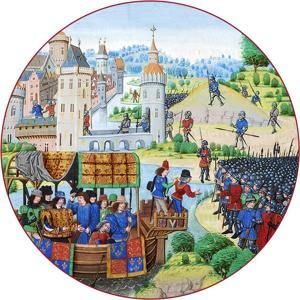
All Things Plantagenet

All Things Plantagenet

By Donnie J, HazelHistory
Download on the App Store
  • Favorites

    24

    Followers

  • Typical duration

    60 min

    per episode

Based on Podcast App listening data

All Things Plantagenet episodes

  • Episode 124 - Life and Death of King Edward II - Part 02
    Edward II (25 April 1284 – 21 September 1327), also called Edward of Carnarvon, was King of England from 1307 until he was deposed in January 1327. The fourth son of Edward I, Edward became the heir apparent to the throne following the death of his elder brother Alphonso. Beginning in 1300, Edward accompanied his father on campaigns to pacify Scotland, and in 1306 was knighted in a grand ceremony at Westminster Abbey. Following his father's death, Edward succeeded to the throne in 1307. He married Isabella, the daughter of the powerful King Philip IV of France, in 1308, as part of a long-running effort to resolve tensions between the English and French crowns.
    Edward had a close and controversial relationship with Piers Gaveston, who had joined his household in 1300. The precise nature of his and Gaveston's relationship is uncertain; they may have been friends, lovers or sworn brothers. Edward's relationship with Gaveston inspired Christopher Marlowe's 1592 play Edward II, along with other plays, films, novels and media. Many of these have focused on the possible sexual relationship between the two men. Gaveston's power as Edward's favourite provoked discontent among both the barons and the French royal family, and Edward was forced to exile him. On Gaveston's return, the barons pressured the king into agreeing to wide-ranging reforms, called the Ordinances of 1311. The newly empowered barons banished Gaveston, to which Edward responded by revoking the reforms and recalling his favourite. Led by Edward's cousin, the Earl of Lancaster, a group of the barons seized and executed Gaveston in 1312, beginning several years of armed confrontation. English forces were pushed back in Scotland, where Edward was decisively defeated by Robert the Bruce at the Battle of Bannockburn in 1314. Widespread famine followed, and criticism of the king's reign mounted.
    The Despenser family, in particular Hugh Despenser the Younger, became close friends and advisers to Edward, but Lancaster and many of the barons seized the Despensers' lands in 1321, and forced the king to exile them. In response, Edward led a short military campaign, capturing and executing Lancaster. Edward and the Despensers strengthened their grip on power, formally revoking the 1311 reforms, executing their enemies and confiscating estates. Unable to make progress in Scotland, Edward finally signed a truce with Robert. Opposition to the regime grew, and when Isabella was sent to France to negotiate a peace treaty in 1325, she turned against Edward and refused to return. Instead, she allied herself with the exiled Roger Mortimer, and invaded England with a small army in 1326. Edward's regime collapsed and he fled to Wales, where he was captured in November. The king was forced to relinquish his crown in January 1327 in favour of his 14-year-old son, Edward III, and he died in Berkeley Castle on 21 September, probably murdered on the orders of the new regime.
    Edward's contemporaries criticised his performance as king, noting his failures in Scotland and the oppressive regime of his later years, although 19th-century academics later argued that the growth of parliamentary institutions during his reign was a positive development for England over the longer term. Debate over his perceived failures has continued into the 21st century.
    7 min
  • Episode 123 - Life and Death of King Edward II - Part 01
    Edward II (25 April 1284 – 21 September 1327), also called Edward of Carnarvon, was King of England from 1307 until he was deposed in January 1327. The fourth son of Edward I, Edward became the heir apparent to the throne following the death of his elder brother Alphonso. Beginning in 1300, Edward accompanied his father on campaigns to pacify Scotland, and in 1306 was knighted in a grand ceremony at Westminster Abbey. Following his father's death, Edward succeeded to the throne in 1307. He married Isabella, the daughter of the powerful King Philip IV of France, in 1308, as part of a long-running effort to resolve tensions between the English and French crowns.
    Edward had a close and controversial relationship with Piers Gaveston, who had joined his household in 1300. The precise nature of his and Gaveston's relationship is uncertain; they may have been friends, lovers or sworn brothers. Edward's relationship with Gaveston inspired Christopher Marlowe's 1592 play Edward II, along with other plays, films, novels and media. Many of these have focused on the possible sexual relationship between the two men. Gaveston's power as Edward's favourite provoked discontent among both the barons and the French royal family, and Edward was forced to exile him. On Gaveston's return, the barons pressured the king into agreeing to wide-ranging reforms, called the Ordinances of 1311. The newly empowered barons banished Gaveston, to which Edward responded by revoking the reforms and recalling his favourite. Led by Edward's cousin, the Earl of Lancaster, a group of the barons seized and executed Gaveston in 1312, beginning several years of armed confrontation. English forces were pushed back in Scotland, where Edward was decisively defeated by Robert the Bruce at the Battle of Bannockburn in 1314. Widespread famine followed, and criticism of the king's reign mounted.
    The Despenser family, in particular Hugh Despenser the Younger, became close friends and advisers to Edward, but Lancaster and many of the barons seized the Despensers' lands in 1321, and forced the king to exile them. In response, Edward led a short military campaign, capturing and executing Lancaster. Edward and the Despensers strengthened their grip on power, formally revoking the 1311 reforms, executing their enemies and confiscating estates. Unable to make progress in Scotland, Edward finally signed a truce with Robert. Opposition to the regime grew, and when Isabella was sent to France to negotiate a peace treaty in 1325, she turned against Edward and refused to return. Instead, she allied herself with the exiled Roger Mortimer, and invaded England with a small army in 1326. Edward's regime collapsed and he fled to Wales, where he was captured in November. The king was forced to relinquish his crown in January 1327 in favour of his 14-year-old son, Edward III, and he died in Berkeley Castle on 21 September, probably murdered on the orders of the new regime.
    Edward's contemporaries criticised his performance as king, noting his failures in Scotland and the oppressive regime of his later years, although 19th-century academics later argued that the growth of parliamentary institutions during his reign was a positive development for England over the longer term. Debate over his perceived failures has continued into the 21st century.
    56 min
  • Episode 121 - Battle of Towton
    The Battle of Towton was fought on 29 March 1461 during the English Wars of the Roses, near the village of Towton, now in North Yorkshire. A culminating battle in the dynastic struggles between the houses of Lancaster and York for control of the English throne, the engagement ended in an overwhelming victory for the Yorkists. It brought about a change of monarchs in England, with the victor, the Yorkist Edward IV having displaced the Lancastrian Henry VI (on the throne since 1422) as king, and thus driving the head of the Lancastrians and his key supporters out of the country.
    It is described as "probably the largest and bloodiest battle ever fought on English soil", and according to historical sources, probably the longest. According to chroniclers, more than 50,000 Yorkist and Lancastrian soldiers fought for hours amidst a snowstorm on that day, which was Palm Sunday. A newsletter circulated a week after the battle reported that 28,000 died on the battlefield.
    Contemporary accounts described Henry VI as peaceful and pious, not suited for the violent dynastic civil wars, such as the Wars of the Roses. He had periods of insanity while his inherent benevolence eventually required his wife, Margaret of Anjou, to assume control of his kingdom, which contributed to his own downfall. His ineffectual rule had encouraged the nobles' schemes to establish control over him, and the situation deteriorated into a civil war between the supporters of Margaret and those of Richard, Duke of York. After the Yorkists captured Henry in 1460, the English parliament passed an Act of Accord to let York and his line succeed Henry as king. Margaret refused to accept the dispossession of her son's right to the throne and, along with fellow Lancastrian malcontents, raised an army. Richard of York was killed at the Battle of Wakefield and his titles, including the claim to the throne, passed to his eldest son Edward. Nobles who were previously hesitant to support Richard's claim to the throne considered the Lancastrians to have reneged on the Act – a legal agreement – and Edward found enough backing to denounce Henry and declare himself king. The Battle of Towton was to affirm the victor's right to rule over England through force of arms.
    On reaching the battlefield, the Yorkists found themselves heavily outnumbered. Part of their force under the Duke of Norfolk had yet to arrive. The Yorkist leader Lord Fauconberg turned the tables by ordering his archers to take advantage of the strong wind to outrange their enemies. The one-sided missile exchange, with Lancastrian arrows falling short of the Yorkist ranks, provoked the Lancastrians into abandoning their defensive positions. The ensuing hand-to-hand combat lasted hours, exhausting the combatants. The arrival of Norfolk's men reinvigorated the Yorkists and, encouraged by Edward, they routed their foes. Many Lancastrians were killed while fleeing; some trampled each other and others drowned in the rivers, which are said to have made them run red with blood for several days. Several who were taken as prisoners were executed.
    The power of the House of Lancaster was severely reduced after this battle. Henry fled the country, and many of his most powerful followers were dead or in exile after the engagement, letting Edward rule England uninterrupted for nine years, before a brief restoration of Henry to the throne. Later generations remembered the battle as depicted in William Shakespeare's dramatic adaptation of Henry's life—Henry VI, Part 3, Act 2, Scene 5. In 1929, the Towton Cross was erected on the battlefield to commemorate the event. Various archaeological remains and mass graves related to the battle were found in the area centuries after the engagement.
    52 min
  • Episode 120 - Battle of Agincourt
    The Battle of Agincourt was one of the greatest English victories in the Hundred Years' War. It took place on 25 October 1415 (Saint Crispin's Day) near Azincourt in northern France. England's unexpected victory against a numerically superior French army boosted English morale and prestige, crippled France, and started a new period of English dominance in the war.
    After several decades of relative peace, the English had renewed their war effort in 1415 amid the failure of negotiations with the French. In the ensuing campaign, many soldiers died due to disease and the English numbers dwindled; they tried to withdraw to English-held Calais but found their path blocked by a considerably larger French army. Despite the disadvantage, the following battle ended in an overwhelming tactical victory for the English.
    King Henry V of England led his troops into battle and participated in hand-to-hand fighting. King Charles VI of France did not command the French army himself, as he suffered from severe psychotic illnesses with moderate mental incapacitation. Instead, the French were commanded by Constable Charles d'Albret and various prominent French noblemen of the Armagnac party.
    This battle is notable for the use of the English longbow in very large numbers, with the English and Welsh archers making up nearly 80 percent of Henry's army.
    Agincourt is one of England's most celebrated victories and was one of the most important English triumphs in the Hundred Years' War, along with the Battle of Crécy (1346) and Battle of Poitiers (1356). It forms the centrepiece of the play Henry V by William Shakespeare.
    The Battle of Agincourt is well documented by at least seven contemporary accounts, three from eyewitnesses. The approximate location of the battle has never been in dispute and the place remains relatively unaltered after 600 years. Immediately after the battle, Henry summoned the heralds of the two armies who had watched the battle together with principal French herald Montjoie, and they settled on the name of the battle as Azincourt after the nearest fortified place. Two of the most frequently cited accounts come from Burgundian sources, one from Jean Le Fèvre de Saint-Remy who was present at the battle, and the other from Enguerrand de Monstrelet. The English eyewitness account comes from the anonymous Gesta Henrici Quinti, believed to be written by a chaplain in the King's household who would have been in the baggage train at the battle. A recent re-appraisal of Henry's strategy of the Agincourt campaign incorporates these three accounts and argues that war was seen as a legal due process for solving the disagreement over claims to the French throne
    53 min
  • Episode 119 - Plantagenet - An Epic Chronicle of a Dynastic Family - Series 2 Episode 3
    The House of Plantagenet was a royal house which originated from the lands of Anjou in France. The name Plantagenet is used by modern historians to identify four distinct royal houses: the Angevins, who were also counts of Anjou; the main body of the Plantagenets following the loss of Anjou; and the Plantagenets' two cadet branches, the houses of Lancaster and York. The family held the English throne from 1154, with the accession of Henry II, until 1485, when Richard III died in battle.
    Under the Plantagenets, England was transformed – although this was only partly intentional. The Plantagenet kings were often forced to negotiate compromises such as the Magna Carta. These constrained royal power in return for financial and military support. The king was no longer just the most powerful man in the nation, holding the prerogative of judgement, feudal tribute and warfare. He now had defined duties to the realm, underpinned by a sophisticated justice system. A distinct national identity was shaped by conflict with the French, Scots, Welsh and Irish, and the establishment of English as the primary language.
    In the 15th century, the Plantagenets were defeated in the Hundred Years' War and beset with social, political and economic problems. Popular revolts were commonplace, triggered by the denial of numerous freedoms. English nobles raised private armies, engaged in private feuds and openly defied Henry VI.
    The rivalry between the House of Plantagenet's two cadet branches of York and Lancaster brought about the Wars of the Roses, a decades-long fight for the English succession, culminating in the Battle of Bosworth Field in 1485, when the reign of the Plantagenets and the English Middle Ages both met their end with the death of King Richard III. Henry VII, of Lancastrian descent, became king of England; five months later, he married Elizabeth of York, thus ending the Wars of the Roses, and giving rise to the Tudor dynasty. The Tudors worked to centralise English royal power, which allowed them to avoid some of the problems that had plagued the last Plantagenet rulers. The resulting stability allowed for the English Renaissance, and the advent of early modern Britain.
    Richard of York, 3rd Duke of York, adopted Plantagenet as his family name in the 15th century. Plantegenest (or Plante Genest) had been a 12th-century nickname for his ancestor Geoffrey, Count of Anjou and Duke of Normandy. One of many popular theories suggests the common broom, planta genista in medieval Latin, as the source of the nickname. It is uncertain why Richard chose this specific name, although during the Wars of the Roses it emphasised Richard's status as Geoffrey's patrilineal descendant. The retrospective usage of the name for all of Geoffrey's male-line descendants was popular during the subsequent Tudor dynasty, perhaps encouraged by the further legitimacy it gave to Richard's great-grandson, Henry VIII. It was only in the late 17th century that it passed into common usage among historians.
    Angevin is French for "from Anjou". The three Angevin kings were Henry II, Richard I and John. "Angevin" can also refer to the period of history in which they reigned. Many historians identify the Angevins as a distinct English royal house. "Angevin" is also used in reference to any sovereign or government derived from Anjou. As a noun, it refers to any native of Anjou or an Angevin ruler, and specifically to other counts and dukes of Anjou, including the ancestors of the three kings who formed the English royal house; their cousins, who held the crown of Jerusalem; and to unrelated members of the French royal family who were later granted the titles and formed different dynasties, such as the Capetian House of Anjou and the Valois House of Anjou. Consequently, there is disagreement between those who consider Henry III to be the first Plantagenet monarch, and those who do not distinguish between Angevins and Plantagenets and therefore consider the first Plantagene

    59 min
  • Episode 118 - Plantagenet - An Epic Chronicle of a Dynastic Family - Series 2 Episode 2
    The House of Plantagenet was a royal house which originated from the lands of Anjou in France. The name Plantagenet is used by modern historians to identify four distinct royal houses: the Angevins, who were also counts of Anjou; the main body of the Plantagenets following the loss of Anjou; and the Plantagenets' two cadet branches, the houses of Lancaster and York. The family held the English throne from 1154, with the accession of Henry II, until 1485, when Richard III died in battle.
    Under the Plantagenets, England was transformed – although this was only partly intentional. The Plantagenet kings were often forced to negotiate compromises such as the Magna Carta. These constrained royal power in return for financial and military support. The king was no longer just the most powerful man in the nation, holding the prerogative of judgement, feudal tribute and warfare. He now had defined duties to the realm, underpinned by a sophisticated justice system. A distinct national identity was shaped by conflict with the French, Scots, Welsh and Irish, and the establishment of English as the primary language.
    In the 15th century, the Plantagenets were defeated in the Hundred Years' War and beset with social, political and economic problems. Popular revolts were commonplace, triggered by the denial of numerous freedoms. English nobles raised private armies, engaged in private feuds and openly defied Henry VI.
    The rivalry between the House of Plantagenet's two cadet branches of York and Lancaster brought about the Wars of the Roses, a decades-long fight for the English succession, culminating in the Battle of Bosworth Field in 1485, when the reign of the Plantagenets and the English Middle Ages both met their end with the death of King Richard III. Henry VII, of Lancastrian descent, became king of England; five months later, he married Elizabeth of York, thus ending the Wars of the Roses, and giving rise to the Tudor dynasty. The Tudors worked to centralise English royal power, which allowed them to avoid some of the problems that had plagued the last Plantagenet rulers. The resulting stability allowed for the English Renaissance, and the advent of early modern Britain.
    Richard of York, 3rd Duke of York, adopted Plantagenet as his family name in the 15th century. Plantegenest (or Plante Genest) had been a 12th-century nickname for his ancestor Geoffrey, Count of Anjou and Duke of Normandy. One of many popular theories suggests the common broom, planta genista in medieval Latin, as the source of the nickname. It is uncertain why Richard chose this specific name, although during the Wars of the Roses it emphasised Richard's status as Geoffrey's patrilineal descendant. The retrospective usage of the name for all of Geoffrey's male-line descendants was popular during the subsequent Tudor dynasty, perhaps encouraged by the further legitimacy it gave to Richard's great-grandson, Henry VIII. It was only in the late 17th century that it passed into common usage among historians.
    Angevin is French for "from Anjou". The three Angevin kings were Henry II, Richard I and John. "Angevin" can also refer to the period of history in which they reigned. Many historians identify the Angevins as a distinct English royal house. "Angevin" is also used in reference to any sovereign or government derived from Anjou. As a noun, it refers to any native of Anjou or an Angevin ruler, and specifically to other counts and dukes of Anjou, including the ancestors of the three kings who formed the English royal house; their cousins, who held the crown of Jerusalem; and to unrelated members of the French royal family who were later granted the titles and formed different dynasties, such as the Capetian House of Anjou and the Valois House of Anjou. Consequently, there is disagreement between those who consider Henry III to be the first Plantagenet monarch, and those who do not distinguish between Angevins and Plantagenets and therefore consider the first Plantagene
    59 min
  • Episode 117 - Plantagenet - An Epic Chronicle of a Dynastic Family - Series 2 Episode 1
    The House of Plantagenet was a royal house which originated from the lands of Anjou in France. The name Plantagenet is used by modern historians to identify four distinct royal houses: the Angevins, who were also counts of Anjou; the main body of the Plantagenets following the loss of Anjou; and the Plantagenets' two cadet branches, the houses of Lancaster and York. The family held the English throne from 1154, with the accession of Henry II, until 1485, when Richard III died in battle.
    Under the Plantagenets, England was transformed – although this was only partly intentional. The Plantagenet kings were often forced to negotiate compromises such as the Magna Carta. These constrained royal power in return for financial and military support. The king was no longer just the most powerful man in the nation, holding the prerogative of judgement, feudal tribute and warfare. He now had defined duties to the realm, underpinned by a sophisticated justice system. A distinct national identity was shaped by conflict with the French, Scots, Welsh and Irish, and the establishment of English as the primary language.
    In the 15th century, the Plantagenets were defeated in the Hundred Years' War and beset with social, political and economic problems. Popular revolts were commonplace, triggered by the denial of numerous freedoms. English nobles raised private armies, engaged in private feuds and openly defied Henry VI.
    The rivalry between the House of Plantagenet's two cadet branches of York and Lancaster brought about the Wars of the Roses, a decades-long fight for the English succession, culminating in the Battle of Bosworth Field in 1485, when the reign of the Plantagenets and the English Middle Ages both met their end with the death of King Richard III. Henry VII, of Lancastrian descent, became king of England; five months later, he married Elizabeth of York, thus ending the Wars of the Roses, and giving rise to the Tudor dynasty. The Tudors worked to centralise English royal power, which allowed them to avoid some of the problems that had plagued the last Plantagenet rulers. The resulting stability allowed for the English Renaissance, and the advent of early modern Britain.
    Richard of York, 3rd Duke of York, adopted Plantagenet as his family name in the 15th century. Plantegenest (or Plante Genest) had been a 12th-century nickname for his ancestor Geoffrey, Count of Anjou and Duke of Normandy. One of many popular theories suggests the common broom, planta genista in medieval Latin, as the source of the nickname. It is uncertain why Richard chose this specific name, although during the Wars of the Roses it emphasised Richard's status as Geoffrey's patrilineal descendant. The retrospective usage of the name for all of Geoffrey's male-line descendants was popular during the subsequent Tudor dynasty, perhaps encouraged by the further legitimacy it gave to Richard's great-grandson, Henry VIII. It was only in the late 17th century that it passed into common usage among historians.
    Angevin is French for "from Anjou". The three Angevin kings were Henry II, Richard I and John. "Angevin" can also refer to the period of history in which they reigned. Many historians identify the Angevins as a distinct English royal house. "Angevin" is also used in reference to any sovereign or government derived from Anjou. As a noun, it refers to any native of Anjou or an Angevin ruler, and specifically to other counts and dukes of Anjou, including the ancestors of the three kings who formed the English royal house; their cousins, who held the crown of Jerusalem; and to unrelated members of the French royal family who were later granted the titles and formed different dynasties, such as the Capetian House of Anjou and the Valois House of Anjou. Consequently, there is disagreement between those who consider Henry III to be the first Plantagenet monarch, and those who do not distinguish between Angevins and Plantagenets and therefore consider the first Plantagene
    59 min
  • Episode 116 - Plantagenet - An Epic Chronicle of a Dynastic Family - Series 1 Episode 3
    The House of Plantagenet was a royal house which originated from the lands of Anjou in France. The name Plantagenet is used by modern historians to identify four distinct royal houses: the Angevins, who were also counts of Anjou; the main body of the Plantagenets following the loss of Anjou; and the Plantagenets' two cadet branches, the houses of Lancaster and York. The family held the English throne from 1154, with the accession of Henry II, until 1485, when Richard III died in battle.
    Under the Plantagenets, England was transformed – although this was only partly intentional. The Plantagenet kings were often forced to negotiate compromises such as the Magna Carta. These constrained royal power in return for financial and military support. The king was no longer just the most powerful man in the nation, holding the prerogative of judgement, feudal tribute and warfare. He now had defined duties to the realm, underpinned by a sophisticated justice system. A distinct national identity was shaped by conflict with the French, Scots, Welsh and Irish, and the establishment of English as the primary language.
    In the 15th century, the Plantagenets were defeated in the Hundred Years' War and beset with social, political and economic problems. Popular revolts were commonplace, triggered by the denial of numerous freedoms. English nobles raised private armies, engaged in private feuds and openly defied Henry VI.
    The rivalry between the House of Plantagenet's two cadet branches of York and Lancaster brought about the Wars of the Roses, a decades-long fight for the English succession, culminating in the Battle of Bosworth Field in 1485, when the reign of the Plantagenets and the English Middle Ages both met their end with the death of King Richard III. Henry VII, of Lancastrian descent, became king of England; five months later, he married Elizabeth of York, thus ending the Wars of the Roses, and giving rise to the Tudor dynasty. The Tudors worked to centralise English royal power, which allowed them to avoid some of the problems that had plagued the last Plantagenet rulers. The resulting stability allowed for the English Renaissance, and the advent of early modern Britain.
    Richard of York, 3rd Duke of York, adopted Plantagenet as his family name in the 15th century. Plantegenest (or Plante Genest) had been a 12th-century nickname for his ancestor Geoffrey, Count of Anjou and Duke of Normandy. One of many popular theories suggests the common broom, planta genista in medieval Latin, as the source of the nickname. It is uncertain why Richard chose this specific name, although during the Wars of the Roses it emphasised Richard's status as Geoffrey's patrilineal descendant. The retrospective usage of the name for all of Geoffrey's male-line descendants was popular during the subsequent Tudor dynasty, perhaps encouraged by the further legitimacy it gave to Richard's great-grandson, Henry VIII. It was only in the late 17th century that it passed into common usage among historians.
    Angevin is French for "from Anjou". The three Angevin kings were Henry II, Richard I and John. "Angevin" can also refer to the period of history in which they reigned. Many historians identify the Angevins as a distinct English royal house. "Angevin" is also used in reference to any sovereign or government derived from Anjou. As a noun, it refers to any native of Anjou or an Angevin ruler, and specifically to other counts and dukes of Anjou, including the ancestors of the three kings who formed the English royal house; their cousins, who held the crown of Jerusalem; and to unrelated members of the French royal family who were later granted the titles and formed different dynasties, such as the Capetian House of Anjou and the Valois House of Anjou. Consequently, there is disagreement between those who consider Henry III to be the first Plantagenet monarch, and those who do not distinguish between Angevins and Plantagenets and therefore consider the first Plantagene

    59 min
  • Episode 115 - Plantagenet - An Epic Chronicle of a Dynastic Family - Series 1 Episode 2
    The House of Plantagenet was a royal house which originated from the lands of Anjou in France. The name Plantagenet is used by modern historians to identify four distinct royal houses: the Angevins, who were also counts of Anjou; the main body of the Plantagenets following the loss of Anjou; and the Plantagenets' two cadet branches, the houses of Lancaster and York. The family held the English throne from 1154, with the accession of Henry II, until 1485, when Richard III died in battle.
    Under the Plantagenets, England was transformed – although this was only partly intentional. The Plantagenet kings were often forced to negotiate compromises such as the Magna Carta. These constrained royal power in return for financial and military support. The king was no longer just the most powerful man in the nation, holding the prerogative of judgement, feudal tribute and warfare. He now had defined duties to the realm, underpinned by a sophisticated justice system. A distinct national identity was shaped by conflict with the French, Scots, Welsh and Irish, and the establishment of English as the primary language.
    In the 15th century, the Plantagenets were defeated in the Hundred Years' War and beset with social, political and economic problems. Popular revolts were commonplace, triggered by the denial of numerous freedoms. English nobles raised private armies, engaged in private feuds and openly defied Henry VI.
    The rivalry between the House of Plantagenet's two cadet branches of York and Lancaster brought about the Wars of the Roses, a decades-long fight for the English succession, culminating in the Battle of Bosworth Field in 1485, when the reign of the Plantagenets and the English Middle Ages both met their end with the death of King Richard III. Henry VII, of Lancastrian descent, became king of England; five months later, he married Elizabeth of York, thus ending the Wars of the Roses, and giving rise to the Tudor dynasty. The Tudors worked to centralise English royal power, which allowed them to avoid some of the problems that had plagued the last Plantagenet rulers. The resulting stability allowed for the English Renaissance, and the advent of early modern Britain.
    Richard of York, 3rd Duke of York, adopted Plantagenet as his family name in the 15th century. Plantegenest (or Plante Genest) had been a 12th-century nickname for his ancestor Geoffrey, Count of Anjou and Duke of Normandy. One of many popular theories suggests the common broom, planta genista in medieval Latin, as the source of the nickname. It is uncertain why Richard chose this specific name, although during the Wars of the Roses it emphasised Richard's status as Geoffrey's patrilineal descendant. The retrospective usage of the name for all of Geoffrey's male-line descendants was popular during the subsequent Tudor dynasty, perhaps encouraged by the further legitimacy it gave to Richard's great-grandson, Henry VIII. It was only in the late 17th century that it passed into common usage among historians.
    Angevin is French for "from Anjou". The three Angevin kings were Henry II, Richard I and John. "Angevin" can also refer to the period of history in which they reigned. Many historians identify the Angevins as a distinct English royal house. "Angevin" is also used in reference to any sovereign or government derived from Anjou. As a noun, it refers to any native of Anjou or an Angevin ruler, and specifically to other counts and dukes of Anjou, including the ancestors of the three kings who formed the English royal house; their cousins, who held the crown of Jerusalem; and to unrelated members of the French royal family who were later granted the titles and formed different dynasties, such as the Capetian House of Anjou and the Valois House of Anjou. Consequently, there is disagreement between those who consider Henry III to be the first Plantagenet monarch, and those who do not distinguish between Angevins and Plantagenets and therefore consider the first Plantagene

    59 min

About All Things Plantagenet

From the publisher's feed

Detailing the life and reigns of the Plantagent Kings of England and their Descendants.

Best of All Things Plantagenet

Ranked by our users in the last 21 days

More shows like All Things Plantagenet

Dan Snow's History Hit by History Hit

Dan Snow's History Hit

4,768 Listeners

Tudors Dynasty & Beyond by RedTop Media / Rebecca Larson

Tudors Dynasty & Beyond

753 Listeners

A Slice of Medieval by Sharon Bennett Connolly and Derek Birks

A Slice of Medieval

126 Listeners

Talking Tudors by Natalie Grueninger

Talking Tudors

734 Listeners

The Ancients by History Hit

The Ancients

3,363 Listeners

The Rest Is History by Goalhanger

The Rest Is History

15,573 Listeners

Gone Medieval by History Hit

Gone Medieval

1,894 Listeners

Not Just the Tudors by History Hit

Not Just the Tudors

2,049 Listeners