
Sign up to save your podcasts
Or

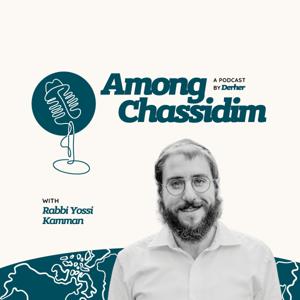


In this episode, Reb Shimon Kroll of Pomona, NY, shares his story-from growing up in Brooklyn and being scouted by Major League Baseball teams to his search for truth and the journey that brought him to Lubavitch.
He recounts in detail his seven yechidus’n and moments with the Rebbe, sharing fascinating stories and personal horaos with meaningful lessons for us all.------00:00 Preview and introduction
01:16 Growing up in 1950s Brooklyn
04:45 Baseball and the Major League scout
06:18 Leaving baseball to search for truth
11:10 The Vietnam draft and a promise to Hashem
15:57 Six friends go looking for tzitzis
18:15 An unexpected Woodstock detour
20:12 Meeting the Rebbe through Shalom Hecht
23:25 A dream that would change his life
26:19 Finding his way to Hadar Hatorah
29:59 Learning with Reb Abba Pliskin
32:30 Preparing for his first yechidus
37:18 Entering the Rebbe’s room
43:15 The Rebbe explains his dream
47:40 The friendship that showed him what a Chossid is
52:43 “May the Almighty God bless you”
54:18 Asking the Rebbe for a tikkun
59:35 Second yechidus: Struggling with learning
1:04:25 A dream repeated at the farbrengen
1:10:31 Wedding yechidus with the family
1:16:15 Considering a return to baseball
1:19:23 The Rebbe’s guidance on parnassah
1:21:19 A business crisis and a lechaim from the Rebbe
1:25:15 Buying a house behind the Rebbe’s home
1:33:13 Rosh Hashanah memories in 770
1:36:41 Machne Israel and a bracha to give with joy
1:38:17 Yechidus after the Rebbe’s stroke
1:39:06 A personal message at the Ohel
1:42:58 “A father shouldn’t have to wait to see his children”
In this episode, Rabbi Kasriel Shemtov of West Bloomfield, Michigan, shares vivid memories of living through the entire saga of the sefarim court case as a bochur- from the summer of 5745 (1985) through 5750 (1990). He recounts the story in compelling detail, from the discovery of the stolen sefarim to the court case, appeals, and subsequent legal battles.
More than a historical account, this is a firsthand window into what it felt like to be a bochur during those years: the uncertainty, the pain, the joy, and the growing understanding of what was at stake. Through his recollections, Rabbi Shemtov explores what the case meant to the Rebbe and what these events revealed about the bond between the Rebbe and Chassidim.
Along the way, we gain a deeper appreciation for what we are celebrating on Hei Teves—and why its message is so central to our lives as Chassidim in Dor Hashvi’i.
At four and a half hours, this episode is an experience to take in at your own pace, over as many sittings as you need. We’re releasing it well ahead of Hei Teves so you have time to immerse yourself in the story and join the growing shturem and anticipation as we approach forty years since Didan Notzach.______________
00:00 Introduction: Remembering Hei Teves
04:30 Hearing About the Stolen Seforim
22:20 Tishrei 5746: Overcoming Through Simcha
37:03 The Rebbetzin’s Historic Deposition
51:30 Why the Seforim Battle Mattered
1:20:53 Inside the Seforim Court Case
1:43:01 The Rebbe’s Response: Expand Lubavitch
2:14:09 Hei Teves: The Victory News Arrives
2:26:45 Seven Days of Unforgettable Dancing
2:32:25 Sending Names to the Rebbe
2:54:24 The Appeal: The Battle Continues
3:32:13 Flying From Australia for the Victory
3:49:49 Witnessing the Seforim Return
4:15:13 Recovering Treasures and Final Settlement
4:23:40 What Hei Teves Means for Us Today
In this episode, world-renowned lecturer and teacher of Chassidus Rabbi Manis Friedman joins us for a deep and thought-provoking conversation about his personal journey and the fundamental questions at the heart of a Chossid’s life.
Rabbi Friedman traces his family’s connection to Lubavitch in Tashkent and their eventual move to America. He shares memories of growing up in Crown Heights, attending the United Lubavitcher Yeshivos at Bedford and Dean, and living in the same apartment building as Rebbetzin Chana, the Rebbe’s mother. He reflects on how his friends and educators helped draw him closer to the Rebbe, his decision to become a Lubavitcher Chossid, and how his siblings followed suit.
He recalls a pivotal moment he witnessed with the Rebbe, his experiences in yechidus, and his move to Minnesota on shlichus after his marriage. He also takes us back to the founding of Bais Chana, the pioneering institution for baalos teshuvah, sharing how it began and what those early days were like.
Rabbi Friedman offers a fascinating look at his unique role translating the Rebbe’s farbrengens live for satellite television broadcasts—how it began, what it required, and the experience of conveying the Rebbe’s words as he spoke. Throughout the conversation, he explores what it means to understand and articulate Chassidus, and how expressing it clearly in English is an indicator to how much we have understood and internalized.
In the second part of the interview, the conversation turns to some of the biggest questions: Why do we need a Rebbe? What is the chiddush of our Rebbe and the mission of Dor Hashvi’i? What does it mean to bring Moshiach, and how do we understand Gimmel Tammuz within that mission? Rabbi Friedman addresses these questions and more with the clarity and depth that have made his teaching meaningful to so many.
In this episode, Rabbi Elimelech Neiman of Boro Park, an askan involved in many Jewish causes throughout the 1980s and ’90s, shares memories of his frequent encounters with the Rebbe. Whether at kos shel bracha, dollars, or lekach, the Rebbe would often engage him in conversation- particularly asking about the Gerrer Rebbe’s wellbeing, what was taking place in Ger, and various matters of askanus.
In this geshmake and fascinating conversation, Rabbi Neiman recalls the many kiruvim, brachos, and special moments he experienced over the years.
He also reflects on what this personal connection with the Rebbe meant to him then- and what it continues to mean to him today.
In this episode, Rabbi Mayer Plotkin of Montreal, Canada, shares a candid and entertaining conversation about his life experiences- growing up in Montreal, eventually coming to Torah Vodaas in Brooklyn, and, through hashgacha pratis, finding his way to the Rebbe and joining the Lubavitch Yeshivos in Montreal and 770.
Rabbi Plotkin experienced being by the Rebbe as a bochur in the late 1950s and early 1960s, giving him unique and up-close memories of the Rebbe during those years.
He shares many personal memories and fascinating experiences from over the years, including his interactions with the Rebbe’s mother, moments surrounding the Rebbe’s heart attack, and stories he heard firsthand from elder Chassidim such as R’ Zalman Gurary and R’ Shmuel Zalmanov.
A conversation filled with stories and an inside glimpse into the world of Lubavitch in those early years.
** We’re revisiting this special conversation in honor of Yomtov. Regular programming will continue after Simchas Torah**
In this episode, Rabbi Yisroel Noach Vogel, a Mashpia in Queens, shares his personal memories of spending Yom Kippur, Sukkos, & Simchas Torah in the Rebbe’s presence. It will surely draw the listener in to experience the holiness of Yom Kippur, as well "the Rebbe’s Yom Tov," where every moment was alive with unparalleled joy, connection, and chassidishe warmth.
In this episode, Rabbi Zushe Winner of Brighton Beach, NY, shares the remarkable story of how his parents became connected to the Rebbe and to Lubavitch, and the special kiruv the Rebbe showed his mother, especially after the passing of his father.
He takes us back to his formative years in the Chofs and Lameds, sharing his experiences by the Rebbe during those years and beyond.
In this interview, every story brings with it an insight, an anecdote, and a heartfelt farbrengen.
In this episode, Rabbi Nochem Kaplan of Crown Heights traces his family’s remarkable journey-from Chassidim dating back to the Alter Rebbe on his mother’s side to his father’s Litvishe roots and eventual connection to Lubavitch. Born in the Soviet Union, he recalls his family’s escape from U.S.S.R, life in the DP camps in Germany, their close connection with Rebbetzin Chana, and their eventual move to England and later New York.
Rabbi Kaplan shares memories of the Frierdiker Rebbe’s histalkus and the early years of the Rebbe’s nesius, as well as his own formative years growing up around 770 in the small Lubavitch community of the 1950s and ’60s. He describes the great Chassidim and mashpi’im who influenced him during his years learning in Kfar Chabad and 770.
Following the Rebbe’s guidance, Rabbi Kaplan devoted his life to chinuch, serving communities in Virginia, Lakewood, Philadelphia, and New York. He shares fascinating, little-known accounts of teaching Chassidus in Lakewood and his close relationships with Reb Schneur and Reb Meir Kotler, a”h. He also recounts the extraordinary story of a portrait he painted of the Rebbe Rashab—including the input he received from Reb Avrohom Mayor, Reb Mendel Futerfas, and ultimately the Rebbetzin—and the Rebbe’s satisfaction with the finished portrait.
In this episode, Reb Avraham Shmuel Levine of Eretz Yisroel discusses his family’s Litvishe background, including his grandfather’s position as a rav near Yekaterinoslav and his interactions with the Rebbe’s father, Harav Levi Yitzchak. He describes how his father came to learn in Tomchei Temimim and eventually escaped from Russia, as well as his own birth and upbringing in New England and his years in the yeshiva at Bedford and Dean.
Reb Avraham Shmuel recalls his early encounters with the Rebbe, his journey to learn in Kfar Chabad, the yechidus he had beforehand, and the letters he received from the Rebbe while he was there. He also shares memories of the famed mashpia Reb Shlomo Chaim Kesselman and the profound influence he had on him.
Upon returning to America, Reb Avraham Shmuel unexpectedly became involved with Ezras Torah, eventually serving as secretary of Agudas Harabanim—a position he held for many years, until moving to Eretz Yisroel. Through this role, he developed close relationships with many of the leading non-Lubavitch Rabbanim of the previous generation, including Reb Moshe Feinstein, Rav Yosef Eliyahu Henkin, Rabbi Simcha Elberg, Rav Yosef Dov Soloveitchik, and Reb Gedalia Schorr.
At the same time, he served as a discreet Lubavitch liaison, keeping Rabbi Hodakov and the Rebbe informed and working behind the scenes to advance many of the Rebbe’s initiatives. He shares story after story of fascinating encounters and the remarkable things he was able to accomplish—including how Reb Moshe Feinstein came to be mesader kiddushin at his wedding and had a yechidus with the Rebbe during that visit.
This is only a glimpse of a fascinating episode filled with history, personalities, and firsthand memories. Listen and enjoy!
In this episode, Rabbi Tzvi Grunblatt, Head Shliach of Argentina, takes us through his remarkable journey that led him to become Lubavitch and eventually the Rebbe’s Shliach.
Rabbi Grunblatt grew up in Argentina in a Yekkishe kehillah. During his youth, he became very close to the Rebbe’s Shliach to Argentina, Rabbi Berel Baumgarten. Although Rabbi Baumgarten did not formally teach him Chassidus, simply being around him opened Rabbi Grunblatt to a world of Chassidus and Lubavitch, eventually leading him to join a Lubavitch Yeshiva in New York.
He shares what it was like arriving from Argentina with virtually no familiarity with Lubavitch culture, and how he quickly acclimated and developed a deep connection to the Rebbe.
As his involvement grew, Rabbi Grunblatt describes the tremendous effort he invested in understanding the Rebbe’s farbrengens. This eventually led him to become involved in chazara and in the work of transcribing the Rebbe’s maamorim.
He shares fascinating anecdotes and insights into certain maamorim that the Rebbe was magihah, and elaborates on them.
The episode then turns to the passing of Rabbi Berel Baumgarten, and how that ultimately led to Rabbi Grunblatt being sent as a Shliach to Argentina- at the same time as the Rebbe instructed him to get look for a Shidduch.
Rabbi Grunblatt recounts the dramatic story of his arrival in Argentina and goes on to share fascinating episodes from his decades of Shlichus, including remarkable moments in which the Rebbe was directly involved.
From the publisher's feed

560 Listeners

63 Listeners

1,988 Listeners
669 Listeners

20 Listeners

38 Listeners

49 Listeners

39 Listeners

14 Listeners
1,121 Listeners
38 Listeners

26 Listeners

325 Listeners

11 Listeners

5 Listeners