
Sign up to save your podcasts
Or

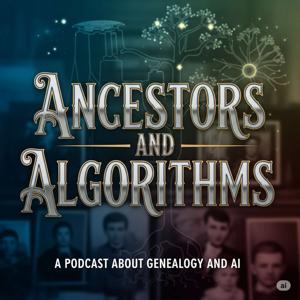


Every genealogist eventually asks the same questions. How do you know when you have enough evidence? How do you decide which record to trust when two documents disagree? How do you turn years of family history research into a conclusion that holds up against scrutiny?
The Genealogical Proof Standard, developed by the Board for Certification of Genealogists, has answered those questions for serious genealogy researchers for decades. In this episode, host Brian maps each of its five elements directly onto four AI tools, showing exactly where ChatGPT, Perplexity, Claude, and NotebookLM fit into a professional-quality genealogy research workflow.
What you will learn:
How to use ChatGPT to build a family history research plan that goes beyond Ancestry and FamilySearch to uncover overlooked record types including church records, fraternal organization archives, probate records, county histories, land records, and township-level documents your ancestor left behind.
How to use Perplexity to find the exact archive or repository where your ancestor's records exist today, with verified links and citable sources to support your documentation.
How to use Claude to compare multiple genealogy documents about the same ancestor and surface every discrepancy you missed, using a copy-paste prompt that works on the free tier in under two minutes.
How to resolve conflicting birth records, changing birthplaces, and census inconsistencies using a workflow that finds cited historical context and identifies which additional record types will resolve the conflict.
How to use NotebookLM to organize your research evidence and draft a GPS-quality proof summary grounded entirely in your own uploaded materials, not hallucinated AI information.
This episode is for genealogists at every experience level. Whether you have a brick wall ancestor, conflicting vital records, a relative who vanishes between census years, a DNA match you cannot place in your family tree, an immigrant ancestor whose name changed at the border, or a death record that contradicts the birth record, this AI genealogy workflow was built for your exact research problem.
All four tools are demonstrated on free tiers. No paid subscription required. This workflow applies to American genealogy, British records, Irish research, German immigration, and family history research across any ethnic heritage or geographic origin.
The Genealogical Proof Standard requires reasonably exhaustive research, complete and accurate source citations, thorough analysis and correlation of evidence, resolution of conflicting evidence, and a soundly reasoned written conclusion. This episode shows how AI-assisted genealogy research meets every one of those five standards.
Connect with Ancestors and Algorithms:
📧 Email: [email protected]
🌐 Website: https://ancestorsandai.com/
📘 Facebook Group: Ancestors and Algorithms: AI for Genealogy - www.facebook.com/groups/ancestorsandalgorithms/
Golden Rule Reminder: AI is your research assistant, not your researcher.
Join our Facebook group to share your AI genealogy breakthroughs, ask questions, and connect with fellow family historians who are embracing the future of genealogy research!
New episodes every Tuesday. Subscribe so you never miss the latest AI tools and techniques for family history research.
Have you ever searched for an ancestor in a newspaper database and found nothing, even though you were certain the information had to be there? You are not searching wrong. You are searching with the wrong strategy. And in this episode, that changes.
Episode 29 of Ancestors and Algorithms is a full AI tool showdown: Perplexity vs. Claude, head to head on the same newspaper research challenge. Same ancestor. Same mystery. Two completely different jobs. By the end of this episode you will know exactly which tool to reach for at every stage of your newspaper research, and you will have three copy-paste ready AI prompts that work on completely free databases like Chronicling America and Fulton History.
Here is what we cover: how to use Perplexity AI to build a newspaper research strategy before you ever open a database — including how to find ethnic-language newspapers, Polish-language newspapers, German-language newspapers, and immigrant community papers that English-language archives completely overlook. Then how to use Claude AI to fix garbled OCR text in digitized newspaper scans, extract hidden genealogical facts from historical obituaries, and apply the cluster research method to find ancestors who almost never appear in direct name searches.
The case study follows a Polish immigrant ancestor in Luzerne County, Pennsylvania in the 1880s through 1914. After two years of failed searches, an unreadable OCR obituary transcript led to four new research directions — an immigration year, a previously unknown Pennsylvania city connection, a church affiliation that opens parish records, and a census discrepancy pointing to an undiscovered child death record.
Topics and search terms covered in this episode include: how to search Chronicling America effectively, how to fix OCR errors in old newspaper scans, how to find an ancestor's obituary online for free, how to use AI for genealogy research, Perplexity AI genealogy prompts, Claude AI for document analysis, historical newspaper research tips, how to break through a genealogy brick wall, immigrant ancestor research strategies, Polish genealogy research, genealogy research for women, cluster research genealogy, FAN club genealogy method, Newspapers.com alternatives, GenealogyBank vs Chronicling America, Genealogical Proof Standard, free genealogy tools, family history research with AI, and how to read old handwriting in genealogy documents.
Whether you are searching Ancestry, FamilySearch, Newspapers.com, GenealogyBank, or free archives, the AI techniques in this episode work across every platform. No paid subscriptions required to get started. This episode is for beginner and intermediate genealogists, family history researchers, or anyone tracing immigrant ancestors, solving brick walls, or getting more from digitized historical newspaper collections.
Visit ancestorsandai.com for show notes, transcripts, prompts, and the Companion Guide.
Connect with Ancestors and Algorithms:
📧 Email: [email protected]
🌐 Website: https://ancestorsandai.com/
📘 Facebook Group: Ancestors and Algorithms: AI for Genealogy - www.facebook.com/groups/ancestorsandalgorithms/
Golden Rule Reminder: AI is your research assistant, not your researcher.
Join our Facebook group to share your AI genealogy breakthroughs, ask questions, and connect with fellow family historians who are embracing the future of genealogy research!
New episodes every Tuesday. Subscribe so you never miss the latest AI tools and techniques for family history research.
He arrived at Ellis Island in 1912 as Salvatore Maranzano. He reappeared in the 1920 Census as Samuel Martin. Eight years of silence in between, and three years of searching by his granddaughter had turned up nothing.
In Episode 28 of Ancestors and Algorithms, we follow this real listener case from start to finish and show you exactly how three free AI tools, Perplexity, Gemini in Google AI Studio, and Claude, solved an Italian immigrant name change mystery that stumped a family historian for three years. From a Declaration of Intent buried in NARA records to a Catholic marriage record in Brooklyn to a civil registration birth record in Nola, Naples Province, Italy, we follow the paper trail all the way home.
You will walk away with five copy-paste ready AI genealogy prompts and a complete workflow you can apply to your own Italian or immigrant family history research today. All tools featured are free.
WHAT YOU WILL LEARN IN THIS EPISODE:
The truth about Italian name changes at Ellis Island. Immigration officials did not change immigrant names. The manifests were created in Italy before the ship ever left port. So where did the name changes actually happen, and why? Perplexity gives us the full answer, with cited sources.
How to use Perplexity to build a research map before you ever open a genealogy database. We ask three targeted questions: why names changed, what records document a legal name change, and where naturalization records, Declaration of Intent files, and name change petitions are held today.
How to use Gemini in Google AI Studio (free at aistudio.google.com) to transcribe handwritten historical documents you cannot read on your own. Gemini 3 Pro now achieves expert-level accuracy on 18th and 19th century handwriting. We show you the exact prompt that revealed a hidden intermediate name in a 1914 government document, the clue that cracked this entire brick wall open.
How to use Claude to analyze multiple documents for the same ancestor, build a chronological research timeline, identify gaps in your evidence, and flag inconsistencies in names, ages, and birthplaces before you commit to a conclusion.
How to use Antenati, the free Italian State Archives portal, to find Italian civil registration birth, marriage, and death records. We trace our ancestor from a Brooklyn barber shop back to a birth record in Nola, Naples Province, using a column on the Italian-side ship manifest that most researchers never think to check.
These techniques are not limited to Italian genealogy research. The same AI-assisted workflow applies to any immigrant ancestor who appears to shift identities between the old country and the new one.
Connect with Ancestors and Algorithms:
📧 Email: [email protected]
🌐 Website: https://ancestorsandai.com/
📘 Facebook Group: Ancestors and Algorithms: AI for Genealogy - www.facebook.com/groups/ancestorsandalgorithms/
Golden Rule Reminder: AI is your research assistant, not your researcher.
Join our Facebook group to share your AI genealogy breakthroughs, ask questions, and connect with fellow family historians who are embracing the future of genealogy research!
New episodes every Tuesday. Subscribe so you never miss the latest AI tools and techniques for family history research.
For millions of African American families, the search for ancestors hits a wall at 1870. Before that year, the federal census did not list enslaved people by name. They appeared only as ages and numbers in slave schedules, as property in estate inventories, as entries without identity. The 1870 census was the first time most formerly enslaved African Americans were documented by name in any federal record. That moment of visibility is where most family history research begins and, too often, where it stops.
This episode of Ancestors and Algorithms is dedicated to breaking through that wall using free artificial intelligence tools available to every researcher right now.
We follow a fictional but realistic research case centered on Louisa, a formerly enslaved woman in post-Civil War Georgia. Through her story, host and AI genealogist Brian demonstrates a complete multi-tool AI workflow that takes researchers from a named ancestor in the 1870 census back into Freedmen's Bureau records, labor contracts, marriage registrations, and ration registers from the years immediately following emancipation.
In this episode you will learn why searching Freedmen's Bureau records by full name often fails and what experienced African American genealogists do instead. You will learn how to use Perplexity AI to build a state-specific research strategy accounting for surname adoption patterns among formerly enslaved people. You will learn how to use Gemini through Google AI Studio to transcribe faded handwritten Reconstruction-era documents. And you will learn how to use Claude to compare multiple records simultaneously, spotting connections that are nearly impossible to catch one document at a time.
Every tool in this episode is available on a free tier. No paid subscriptions required.
Freedmen's Bureau records are not just genealogical sources. They are the first official acknowledgment that millions of people existed, had names, had families, and were making choices about their lives. AI can help researchers find those records faster. But the meaning of what is found belongs entirely to the families whose ancestors made those marks on paper.
The 1870 Brick Wall is not the end of the story. It is the beginning of a different kind of research.
Topics covered: African American genealogy, Freedmen's Bureau records, the 1870 brick wall, formerly enslaved ancestor research, surname adoption after emancipation, AI-assisted genealogy, free AI tools for family history, Reconstruction era records, labor contracts, marriage registrations, Perplexity AI, Gemini handwriting transcription, Claude document analysis, NotebookLM, and Black family history research in the American South.
Connect with Ancestors and Algorithms:
📧 Email: [email protected]
🌐 Website: https://ancestorsandai.com/
📘 Facebook Group: Ancestors and Algorithms: AI for Genealogy - www.facebook.com/groups/ancestorsandalgorithms/
Golden Rule Reminder: AI is your research assistant, not your researcher.
Join our Facebook group to share your AI genealogy breakthroughs, ask questions, and connect with fellow family historians who are embracing the future of genealogy research!
New episodes every Tuesday. Subscribe so you never miss the latest AI tools and techniques for family history research.
If you have been sitting on a pile of DNA matches with no idea how to make sense of them, this episode was made for you.
Episode 26 of Ancestors and Algorithms tackles one of the most requested topics since the show launched: can you actually use artificial intelligence to help decode your DNA results without putting your family's genetic privacy at risk? The short answer is yes. But the HOW matters enormously, and most genealogists are either avoiding AI for DNA work out of fear, or diving in without understanding the real privacy risks. This episode fixes both problems.
In this episode, you will discover:
🧬 THE PRIVACY-FIRST TOOL GUIDE Five AI tools reviewed and rated for DNA safety. One completely free tool never trains on your uploaded data, ever. One popular tool requires a critical settings change before you use it for anything DNA-related. And one brand new health-specific workspace keeps your conversations completely isolated. You will know exactly what is safe, what needs configuring, and what you should never upload to any AI under any circumstances.
📊 5 DNA RESEARCH TASKS WHERE AI DELIVERS REAL RESULTS
🔍 A REAL BRICK WALL SOLVED LIVE A 980 centimorgan match with zero shared surnames and completely different geographic origins. Two family trees going back six generations with absolutely nothing in common. One AI-generated research hypothesis changed everything and pointed to a Catholic institutional connection that neither tree had ever documented. You will hear the full story and the exact prompt that cracked it open.
💡 COPY AND PASTE PROMPTS INCLUDED Every technique comes with a ready-to-use prompt you can take directly into your own research today. No paid subscriptions required for any of it.
This episode is relevant whether your family roots are in the American South, New England, the British Isles, Ireland, Australia, Germany, Italy, Scandinavia, or Eastern Europe. DNA mysteries do not care about borders, and neither do the AI techniques covered here.
#GenealogyPodcast #DNAGenealogy #GeneticGenealogy #AIforGenealogy #FamilyHistory #AncestryDNA #23andMe #GenealogyTips #BrickWall #FamilyTree #AncestorsAndAlgorithms #DNAMatches #GenealogyResearch #FamilyHistoryResearch
Connect with Ancestors and Algorithms:
📧 Email: [email protected]
🌐 Website: https://ancestorsandai.com/
📘 Facebook Group: Ancestors and Algorithms: AI for Genealogy - www.facebook.com/groups/ancestorsandalgorithms/
Golden Rule Reminder: AI is your research assistant, not your researcher.
Join our Facebook group to share your AI genealogy breakthroughs, ask questions, and connect with fellow family historians who are embracing the future of genealogy research!
New episodes every Tuesday. Subscribe so you never miss the latest AI tools and techniques for family history research.
Discover how to find Australian convict ancestors and track family across international borders using free AI tools. Perfect for genealogists researching British, Irish, Scottish, or Australian family history.
What You'll Learn: Track transported convicts from Britain to Australia (1788-1868) using AI-powered research techniques that work for ANY international genealogy challenge, German ancestors to Brazil, Irish to Canada, Italian to Argentina, or Scots to New Zealand.
Featured Case Study: A London weaver convicted of theft in 1832 disappears from British records. Using three free AI tools, we uncover his complete Australian life: ticket of leave, marriage to a free settler's daughter, four children, land grant, and burial in Bathurst. Plus, how DNA testing revealed American cousins who never knew their Australian family existed.
Free AI Tools Demonstrated:
Why This Matters for American Genealogists: 162,000 convicts transported to Australia left families in Britain who became American families. If your British/Irish ancestor "vanished" 1788-1868, they may be in Australian convict databases. Learn the exact records to search: convict indents, tickets of leave, certificates of freedom, New South Wales marriage/death indexes, land grants, and cemetery records.
Key Australian Resources: State Library of New South Wales, National Archives of Australia, FamilySearch (free), TROVE newspaper archive, Colonial Secretary correspondence, church records, and DNA matching strategies for Australian cousins.
Cross-Border Research Methodology: Step-by-step framework for researching ancestors who crossed international borders. Understand destination country record systems, bridge terminology gaps (British "transport" vs Australian "ticket of leave"), locate digitized records, verify with primary sources, and maintain genealogical proof standards throughout AI-assisted research.
Perfect For: Genealogists researching British Empire migrations, convict ancestry, DNA mystery matches, international record searches, or anyone with ancestors who crossed borders 1700s-1900s.
Free Resources Mentioned: FamilySearch, Ancestry (discussed), State Library of NSW digitized collections, National Archives of Australia searchable databases, TROVE, Google AI Studio (free), Claude.ai (free tier), Perplexity (free tier), NotebookLM (free).
Keywords: Australian convict records, genealogy AI, British family history, international genealogy, DNA matches Australia, free genealogy tools, transportation records, New South Wales records, FamilySearch, Ancestry research, convict ancestors, AI genealogy research, family history podcast
Connect with Ancestors and Algorithms:
📧 Email: [email protected]
🌐 Website: https://ancestorsandai.com/
📘 Facebook Group: Ancestors and Algorithms: AI for Genealogy - www.facebook.com/groups/ancestorsandalgorithms/
Golden Rule Reminder: AI is your research assistant, not your researcher.
Join our Facebook group to share your AI genealogy breakthroughs, ask questions, and connect with fellow family historians who are embracing the future of genealogy research!
New episodes every Tuesday. Subscribe so you never miss the latest AI tools and techniques for family history research.
Have you ever stared at a stack of genealogy documents knowing the answers are there, but unable to find them? That was me with a 47-page probate file from 1892. Three years I avoided it. Then I discovered Google NotebookLM, and twenty minutes later, I finally understood why two of my ancestors never spoke again.
In this episode, I'm teaching you everything about NotebookLM for genealogy research, what it is, how it works, and why it's fundamentally different from ChatGPT or other AI tools you've tried.
The key difference: NotebookLM only knows what YOU give it. Upload your census records, probate files, and research notes, and it becomes an expert on YOUR family. Every answer includes citations back to YOUR documents. No hallucinations. No made-up ancestors.
What you'll learn:
→ How NotebookLM differs from ChatGPT and Claude for genealogy
→ The generous free tier that's enough for most family historians
→ Step-by-step setup for your first genealogy notebook
→ The Comparison Query that catches errors across census records
→ Gap Analysis for smarter research planning
→ How to map your ancestor's social network (FAN club)
→ Creating Audio Overviews your family will actually listen to
→ Generating infographics and slide decks from your research
→ Copy-paste prompts you can use immediately
Featured prompts in this episode:
Whether you're struggling with complex legal documents, trying to compare records across decades, or looking for new ways to share family history with relatives who won't read documents—this episode has practical techniques you can use today.
Resources mentioned:
#GoogleNotebookLM #GenealogyAI #AIGenealogy #FamilyHistoryResearch #GenealogyPodcast #NotebookLM #GenealogyTools #FamilyTreeResearch #AIResearch #GenealogyTips
Connect with Ancestors and Algorithms:
📧 Email: [email protected]
🌐 Website: https://ancestorsandai.com/
📘 Facebook Group: Ancestors and Algorithms: AI for Genealogy - www.facebook.com/groups/ancestorsandalgorithms/
Golden Rule Reminder: AI is your research assistant, not your researcher.
Join our Facebook group to share your AI genealogy breakthroughs, ask questions, and connect with fellow family historians who are embracing the future of genealogy research!
New episodes every Tuesday. Subscribe so you never miss the latest AI tools and techniques for family history research.
Learn how to transform dry genealogy facts into compelling ancestor biographies using free AI tools. This complete AI writing tutorial teaches genealogists step-by-step how to use Claude, Perplexity, and ChatGPT to create family histories people actually want to read—without inventing a single fact.
What You'll Learn:
In this 35-minute genealogy AI workshop, discover the three-part system for writing ancestor biographies that makes family members ask for printed copies. Brian walks through the exact process used to turn boring timelines into emotional narratives that honor ancestors while maintaining genealogical proof standards.
Complete Example Walkthrough:
Follow the real example of Catherine Schmidt (1848-1921), a Bavarian immigrant who came to America alone at age 20, raised eight children, and survived 29 years of widowhood running a boarding house. See how the same verified facts transformed from a boring timeline into a biography that made family members cry and request copies.
You'll Get Word-for-Word Prompts For:
Advanced Techniques Included:
Common Pitfalls to Avoid:
Learn the five biggest mistakes genealogists make when using AI for writing, including letting AI add "color," ignoring uncomfortable facts, over-polishing, forgetting source citations, and accepting first drafts. Get strategies for preventing each mistake before it happens.
Why This Episode Matters:
Most genealogists are excellent researchers but struggle to communicate findings in ways that engage family members. Research sits in drawers unread because it's presented as reports, not stories. This episode solves that problem using completely free AI tools that work as writing assistants—not as researchers inventing facts.
Who This Is For:
Free Tools Used: Claude.ai, Perplexity.ai, ChatGPT (all free tiers work perfectly)
All prompts available in the free Facebook group: "Ancestors and Algorithms: AI for Genealogy"
Tags: #GenealogyWriting #AIForGenealogy #FamilyHistory #AncestorBiographies #FreeAITools #ChatGPT #Claude #Perplexity #GenealogyResearch #WritingTips
Connect with Ancestors and Algorithms:
📧 Email: [email protected]
🌐 Website: https://ancestorsandai.com/
📘 Facebook Group: Ancestors and Algorithms: AI for Genealogy - www.facebook.com/groups/ancestorsandalgorithms/
Golden Rule Reminder: AI is your research assistant, not your researcher.
Join our Facebook group to share your AI genealogy breakthroughs, ask questions, and connect with fellow family historians who are embracing the future of genealogy research!
New episodes every Tuesday. Subscribe so you never miss the latest AI tools and techniques for family history research.
Three John Smiths. Same parish. Same occupation. All married to women named Mary. Which one is YOUR ancestor?
If you research English or UK family history, you've hit this genealogy brick wall: multiple people with identical names in the same small community, and parish registers giving you almost nothing to tell them apart. This episode shows you exactly how to solve this using AI tools.
THE CHALLENGE: I tackle one of the most common English genealogy problems, distinguishing between three John Smiths in Market Rasen parish, Lincolnshire, England, 1790-1850. All agricultural laborers. All married women named Mary. Parish registers offered minimal detail. Traditional cluster genealogy methods weren't revealing the patterns I needed.
THE AI SOLUTION: Learn how Claude AI and Perplexity became invaluable research assistants in untangling this knot. I'll show you the exact prompts and complete workflow:
ENGLISH GENEALOGY ESSENTIALS:
AI TECHNIQUES YOU'LL LEARN:
✓ Five copy-paste prompts for parish record analysis
✓ Timeline comparisons using Claude
✓ When to use Perplexity vs. Claude
✓ Document comparison for handwritten records
✓ Verifying AI suggestions against primary sources
✓ Organizing complex family relationships
WHO THIS HELPS:
RESOURCES: All prompts and free tools at ancestorsandai.com
Whether researching Market Rasen, Manchester, or anywhere in the UK, these AI techniques work for any same-name genealogy challenge. International researchers can adapt these methods too.
Connect with Ancestors and Algorithms:
📧 Email: [email protected]
🌐 Website: https://ancestorsandai.com/
📘 Facebook Group: Ancestors and Algorithms: AI for Genealogy - www.facebook.com/groups/ancestorsandalgorithms/
Golden Rule Reminder: AI is your research assistant, not your researcher.
Join our Facebook group to share your AI genealogy breakthroughs, ask questions, and connect with fellow family historians who are embracing the future of genealogy research!
New episodes every Tuesday. Subscribe so you never miss the latest AI tools and techniques for family history research.
The Soldier Who Came Home Different: Using Free AI to Uncover PTSD in Civil War Records
A Union soldier survived three years of brutal Civil War combat, witnessing battles where 30% of his regiment was killed or wounded. He came home physically unscathed. But something broke inside.
His hands trembled. Thunder sent him into hiding. He woke screaming from battle nightmares. His wife said, "He's not the boy I married in 1861."
In 1884, he applied for a disability pension. Doctors documented "irritable heart," "nervous prostration," "tremor of hands." The pension bureau denied his claim. No visible wounds = no disability.
Until I used three FREE AI tools to uncover what 19th-century medicine couldn't diagnose: PTSD, documented, verifiable, heartbreaking.
In This Episode, You'll Learn:
✅ How to use Perplexity (FREE) to research military unit histories in 60 seconds with citations
✅ How to use Gemini 3 (FREE via Google AI Studio) to transcribe 19th-century handwriting with under 2% error rate
✅ How to use Claude (FREE tier) to analyze pension documents and spot trauma patterns doctors missed
✅ The exact verification workflow to confirm AI insights (genealogical proof standards matter!)
✅ Why some Civil War pensions were denied and later approved, the 1890 law that changed everything
✅ How to recognize PTSD, depression, and anxiety in military records across ALL wars
These techniques work for ANY military ancestor:
What Makes This Episode Different:
This isn't just Civil War research, it's about understanding the invisible wounds our military ancestors carried home and finally having the tools to honor their full stories.
You'll get copy-paste ready prompts for all three AI tools (Perplexity, Claude, Gemini 3), verification checklists, and a complete multi-tool workflow that saves hours of research time.
Every tool featured has a FREE tier. No expensive subscriptions required.
Featured Story: Private Daniel Hartley, 6th West Virginia Infantry, survived Cloyd's Mountain where his friend James Keener died in his arms. For 20 years, his community questioned whether his suffering was real because they couldn't see a wound. AI helped me find his voice, verify his testimony, and understand his trauma.
Join Our Community: Get all the AI prompts, tools guides, and research support in our FREE Facebook group "Ancestors and Algorithms: AI for Genealogy" (800+ members helping each other break down brick walls)
Resources Mentioned:
Connect with Ancestors and Algorithms:
📧 Email: [email protected]
🌐 Website: https://ancestorsandai.com/
📘 Facebook Group: Ancestors and Algorithms: AI for Genealogy - www.facebook.com/groups/ancestorsandalgorithms/
Golden Rule Reminder: AI is your research assistant, not your researcher.
Join our Facebook group to share your AI genealogy breakthroughs, ask questions, and connect with fellow family historians who are embracing the future of genealogy research!
New episodes every Tuesday. Subscribe so you never miss the latest AI tools and techniques for family history research.
From the publisher's feed
Stuck on a family history brick wall? It's time to add the most powerful tool to your genealogy toolkit: Artificial Intelligence. Welcome to Ancestors and Algorithms, the…
Forget the hype and confusion. This isn't just another podcast about AI; this is your hands-on, step-by-step masterclass using AI. Each week, host and researcher Brian demystifies the technology and shows you exactly how to apply AI tools to find ancestors, analyze records, and solve your toughest genealogy puzzles.
We explore the incredible promise of AI while navigating its perils with an honest, practical approach. Learn to use AI as your personal research assistant—not a replacement for your own critical thinking.
Join us to learn how to:
Whether you're a beginner genealogist or a seasoned family historian, if you're ready to upgrade your research skills, this podcast is for you. Hit Follow now and turn AI into your ultimate secret weapon for uncovering your ancestry.
Ranked by our users in the last 21 days

43,338 Listeners
324 Listeners
249 Listeners
54 Listeners
267 Listeners
256 Listeners
107 Listeners

10,679 Listeners

15,941 Listeners
2,014 Listeners
189 Listeners
37 Listeners
939 Listeners
645 Listeners

8 Listeners