
Sign up to save your podcasts
Or

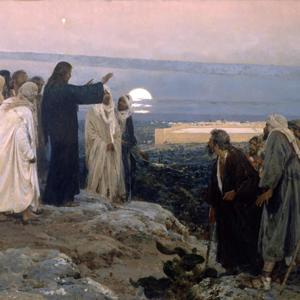


We’ve begun a new course on the Book of Acts, a verse by verse study that will likely run about six months. This week’s opening session looks at some basics of the Book of Acts and its role in the New Testament. We discuss some of Luke’s likely purposes in writing Luke and Acts. We hope you’ll watch or listen every week, and if you enjoy these sessions that you’ll share them.
Class notes are available here as a PDF.
If you like, you can also watch on my YouTube channel.
EXCERPT: Christians have always treasured the way that the Gospel of Luke and Acts show God’s heart for all peoples. In the Gospel of Luke, we begin to see glimmers of God’s heart to reach the Gentile world, but in Acts it’s a major theme. Jesus in the very first chapter of Acts tells the believers that they will be His witnesses to the ends of the earth. As we’ll see, the disciples took a good 10 years to realize that meant more than just reaching Jews who lived in other countries – it meant reaching everyone!
In the Book of Acts we see the Gospel reaching new people groups (Ethiopians, Samaritans, Romans, Greeks) and going into new territories (Syria, Asia Minor, Europe). And of course, we know from history that during this time period, the Gospel was going into places not even recorded in the Book of Acts. Our Indian friends know that the Apostle Thomas landed on the western shore of India in the year 52 AD. There are still churches there today that can trace themselves back to his mission.
All of this was accomplished not through the cleverness of Man, but by believers receiving what Jesus called “the Promise of the Father,” the gift of the Holy Spirit that the prophets had predicted. Jesus said in Acts 1:8,
“…you shall receive power when the Holy Spirit has come upon you; and you shall be witnesses to Me in Jerusalem, and in all Judea and Samaria, and to the end of the earth.”
It was the power of the Spirit that enabled ordinary men and women to have the power and the boldness they needed to proclaim the truth of Jesus’ resurrection. By the Spirit they would offer new life to people who had never heard of Israel’s God.
Thanks for reading Apostolic Purpose! Subscribe for free to receive new posts and support my work.
Here's my sermon yesterday on the presentation of Jesus, called "Seeing The Salvation Of God." If you like, you can also watch on my YouTube channel.
EXCERPT: Jesus was a man. Yes, he was fully God, but also fully man.
The Bible says He became like us in all things, so He could be our faithful High Priest. He can sympathize with us because He became a part of God’s people in every way. He didn’t just seem to be a Jewish man, He really became one, and He lived like one.
He was the Lawgiver, yet He humbly submitted to every Jewish regulation. He was circumcised like every other boy. Circumcision is a sign that our old life has been cut away. Jesus had no need of that, but He submitted to it all the same. Eight days after birth, His Blood was shed for the first time, so that He might be fully accepted as a Jew. He received in His body the mark all Jewish man carry.
He was bought back from God with silver, just like every other firstborn boy. When Jesus left the splendor of Heaven, He had already surrendered His Will into the Father’s hands. He needed no ceremony to confirm God’s claim on His life. But He submitted to it all the same. Like all the children of Israel, He was willing to say that He was God’s property.
He became a servant of the Lord, treated more poorly than the work animals that were a prophetic picture of Him. Like them, He carried the burdens of the people.
His parents were too poor to bring a lamb for Mary’s purification, but He would be the Lamb of God, taking away the sins of the world.
He was the Owner of everything – yet He identified with the poor by coming to live in the home of a tradesman, instead of a mansion of marble.
The Apostle Paul said, “…you know the grace of our Lord Jesus Christ, that though He was rich, yet for your sakes He became poor, that you through His poverty might become rich” (2 Cor. 8:9).
As the Lord of Heaven, He might have made Himself exempt from all these things. But Jesus chose to become one of us… in all things. He fully identified with us and experienced our pains and struggles.
This week’s session in our healing course is called “Following Jesus In Works of Healing." We talked about how it’s important to spend time in the Gospels and the Acts in order to learn from Jesus’ healing ministry and to increase our faith for healing. We then explored some passages in the Gospels to observe Jesus at work.
Class notes are available here as a PDF.
If you like, you can also watch on my YouTube channel.
EXCERPT: It’s a wonderful exercise to read the Gospels frequently. In fact, we should read the Gospels and the Acts on a regular basis. Obviously, we want to read the whole Bible, because the whole Bible is the Bible, not just the parts we like. Every bit of it can build your faith, and yet it’s only in the Gospels and in Acts that can we witness Jesus and His first followers in action.
We didn’t have the privilege of sitting at Jesus’ feet in the natural, but if we spend profitable time in the Gospels, He will disciple us by His Spirit, and we’ll see ourselves grow in some important ways:
* Obedience to the Father’s Word.
* Compassion for people, like Jesus.
* Reliance upon the Holy Spirit.
* Faith in the power of God.
Those are the things that characterized Jesus’ earthly walk, and as we study Him, we can grow in just those same ways. As we’ve been saying all along, seeing what the Word says about healing, seeing Jesus’ compassion for people, and seeking the anointing of the Spirit will increase our faith, so we’ll be emboldened to pray for people and see results.
Thanks for reading Apostolic Purpose! Subscribe for free to receive new posts and support my work.
Painting: “Abraham and Lot Divide The Land,” by Claes Corneliszoon Moeyaert (1592-1655)
The Departure Of Lot (Genesis 13:5-18)
In this section of Genesis, Abraham has come into the Promised Land, but a famine has caused him to go down into Egypt. You may remember how, because of Abraham’s deception, his wife Sarah was taken into the Pharaoh’s harem. Abraham ended up being embarrassed and rebuked by the Pharaoh.
As we begin Genesis 13, Abraham returns back into the land of Canaan together with Sarah and his nephew Lot. You will remember that Lot had come with Abraham when Abraham entered the Land of Canaan.
Now, during all this time, God had been blessing Abraham even though Abraham had only partially obeyed God. His partial obedience was actually disobedience, of course, but God was merciful to him. That’s another message altogether, but while Abraham was learning to obey, God was patient with him.
Abraham was supposed to leave his ancestral city of Ur of the Chaldees, but he disobeyed by first going to Haran with his family. Abraham didn’t fully obey until his father died, and only then did he leave for the Land of Canaan.
* He was also supposed to leave behind his kindred, but he took Lot with him.
* He also took all the people and possessions he had obtained, and so he took a lot of baggage into his inheritance, everything he had accumulated during his season of disobedience.
* So, those were three points of partial obedience.
5 Lot also, who went with Abram, had flocks and herds and tents. 6 Now the land was not able to support them, that they might dwell together, for their possessions were so great that they could not dwell together. 7 And there was strife between the herdsmen of Abram’s livestock and the herdsmen of Lot’s livestock. The Canaanites and the Perizzites then dwelt in the land.
8 So Abram said to Lot, “Please let there be no strife between you and me, and between my herdsmen and your herdsmen; for we are brethren. 9 Is not the whole land before you? Please separate from me. If you take the left, then I will go to the right; or, if you go to the right, then I will go to the left.”
10 And Lot lifted his eyes and saw all the plain of Jordan, that it was well watered everywhere (before the LORD destroyed Sodom and Gomorrah) like the garden of the LORD, like the land of Egypt as you go toward Zoar. 11 Then Lot chose for himself all the plain of Jordan, and Lot journeyed east. And they separated from each other. 12 Abram dwelt in the land of Canaan, and Lot dwelt in the cities of the plain and pitched his tent even as far as Sodom. 13 But the men of Sodom were exceedingly wicked and sinful against the LORD.
14 And the LORD said to Abram, after Lot had separated from him: “Lift your eyes now and look from the place where you are—northward, southward, eastward, and westward; 15 for all the land which you see I give to you and your descendants forever. 16 And I will make your descendants as the dust of the earth; so that if a man could number the dust of the earth, then your descendants also could be numbered. 17 Arise, walk in the land through its length and its width, for I give it to you.”
18 Then Abram moved his tent, and went and dwelt by the terebinth trees of Mamre, which are in Hebron, and built an altar there to the LORD.
So, we find that even though the land was fertile, Abraham and Lot had been so blessed that they were crowding each other and competing for resources.
We also see that Abraham is generous. He is willing to give Lot anything he wants, and he gives him the choice of the best land. Bear in mind that Lot wasn’t even supposed to be there. I wonder if Abraham thought Lot was part of the fulfillment of God’s promise concerning descendants. Whatever the case, Lot leaves, and he goes away, going as far as the outskirts of Sodom.
More Revelation
What's interesting to me, aside from Abraham’s generosity, is the greater revelation that now comes to him. As soon as Lot has been removed from him, there is fresh revelation from God. He had revelation before, but now God gives more. God gives him a greater understanding of his inheritance. Why is this, and how do we know? It’s because Abraham now receives a commission to walk in that inheritance, to explore it, and to make his presence known and felt in the land.
We’ve all heard many times that names are of great significance in Hebrew. It’s certainly something of tremendous significance here, in my opinion, and nobody who speaks Hebrew would have missed the fact that Lot’s name is very unusual. His name is also important to the story. The name of Lot actually means a veil or a covering.
Now, we live 4,000 years down the road, so we have no idea why Lot was given this name. I can only speculate that he was born with a veil over his face. Perhaps you’ve heard that some children are born with a membrane called a veil over their faces. This is something that’s totally harmless, and it’s easily removed at birth. It’s quite rare, and just about one out of about every 80,000 children is born with it. My suspicion is that this is why Lot was given this name, because he was born with that unusual membrane or veil across his face.
Of course, God uses things like that to highlight spiritual lessons for us. For Abraham, having a Lot with him, having all that excess baggage in his life because of partial obedience, was like having a veil over his eyes. It kept him from seeing further into the purposes of God for his life.
Notice in verse 14 that Moses emphasizes the removal of Lot, the lifting of the veil. Moses says: And the LORD said to Abram, after Lot had separated from him: “Lift your eyes now and look...” That’s very powerful, and it’s not at all coincidental. If we were reading it in Hebrew it would be a easily recognizable play on words.
Christians often say that disobedience hinders us, but we don’t always think about how it hinders us. It’s not necessarily because God is angry at us and opposes us. Being cut off from God’s Voice and His revelation for our lives could be one of the main ways that disobedience hinders our progress. When we hold onto the veil of the old life, the covering of partial disobedience, and make accommodations for it, we are unable to see what God has for us. The result? We can’t see what our next steps are supposed to be.
As soon as Lot was removed, Abraham began to see better. He also received permission to start walking around and exploring more of what God had always intended to give to him as an inheritance.
A little while later, Lot was captured, and I think that knowing a little bit about his inheritance enabled Abraham to rescue his nephew. The kings of Mesopotamia had taken Lot captive, and Abraham chased them all the way past Damascus. How did he do that? Probably because he had recently become more familiar with the Land of Canaan. He was able to develop strategies to fight in places that until recently he had only just heard of. There are a lot of obvious applications there for us in terms of spiritual warfare. Obedience will give us greater vision and greater permission from God to explore our inheritance, and that in turn will enable us to rescue more people who are in trouble.
Sometimes we get frustrated because we don’t make quicker progress. We may not even realize that some point of disobedience in our lives is blinding us, and crippling us. This is why we need to stay in the Word of God, and stay in the place of prayer. The closer we draw to the Lord in love and obedience, the more we’ll be able to see his help, and the inheritance we have in Him – what He has made available to us.
By contrast, the worldly thinking of Lot, having his lack of vision, will cause people to move to the plain of Jordan, where it all looks very easy. Like Lot, people can head back east, away from the altars of God. They move in the direction of Sodom like Lot did. Actually, Lot is taken captive in Chapter 14 because he soon ended up living in Sodom.
Worldly-thinking people like Lot also separate themselves from people who are hungry for God, people God has blessed. Of course, Abraham did tell him to go, but notice that Lot didn’t have the spirit of Ruth. Lot didn’t have the spirit of Ruth to say, “Do not ever urge me to go, nor desert your side and leave you.” He didn’t hunger for the things of God or the people of God more than he hungered for wealth and the appearance of prosperity that the plain of Jordan represented to his veiled eyes.
Friends, we need to have God remove our Lots, remove our veils. This is why Paul, in his marvelous Ephesians 1 prayer, doesn’t pray for us to have spiritual blessings in heavenly places, because we already do have them. Instead, he prays that we would know that we have them, and he prays that we would experience them.
Coming to the Lord with a desire to be set free from everything that hinders our love and obedience is a key step for our growth.
This week’s session in our course on healing is called “Questions About Deliverance." We looked into some important issues of terminology in deliverance. What does it mean to rebuke the enemy? Can people bind Satan? What about binding and loosing? Do these forms of “praying” accomplish anything in the spiritual realm? We also began to make some observations from the healing stories of the Gospel. Watch with us!
Class notes are available here as a PDF.
If you like, you can also watch on my YouTube channel.
EXCERPT: Many of us have heard people speaking about “binding and loosing.” They recall how Jesus said, “…whatever you bind on earth will be bound in heaven, and whatever you loose on earth will be loosed in heaven” (Matthew 18:18). But in context, all that means is to exercise authority and judgment in the church. It refers to what spiritual leadership permits and does not permit in the church. In fact, in Matthew 18, the subject is people who sin unrepentantly and are put out of the church.
Among the Jews, the rabbis had the power of binding and loosing — in other words the authority to permit some things and forbid others. When Jesus came, He gave the Twelve Apostles the ability to do the same. So, I know it may sound dramatic to hear people binding Satan and loosing God’s angels, and all these kinds of things, but it has no support whatsoever in God’s Word.
I’m afraid this is simply learned behavior, and learned language. It’s a part of the traditions of men concerning deliverance ministry.
Thanks for reading Apostolic Purpose! Subscribe for free to receive new posts and support my work.
This week’s session in our course on healing is called "Basic Principles Of Deliverance." We discuss the Christian's authority to cast out demons, some common terms in deliverance ministry, demonic activity in human beings, and some important considerations concerning expelling demons from people. This was followed by a question-and-answer time.
Class notes are available here as a PDF.
If you like, you can also watch on my YouTube channel.
EXCERPT: The Church carried on powerful deliverance ministry in the Book of Acts and in the first centuries of the Church.
From its inception, the Church’s deliverance ministry propelled evangelism: “And the multitudes with one accord heeded the things spoken by Philip, hearing and seeing the miracles which he did. For unclean spirits, crying with a loud voice, came out of many who were possessed; and many who were paralyzed and lame were healed. And there was great joy in that city” (Acts 8:6-7).
In the first several centuries after Christ, casting out demons was perhaps the main ingredient in evangelism. There is a famous secular historian at Yale University, a professor named Ramsay MacMullen. The American Historical Association named him the greatest living historian of the Roman Empire. People have often debated how the Church was able to Christianize the Roman Empire, but Professor MacMullen—the greatest living historian of the Roman Empire—claimed that the ministry of casting out demons was the single greatest factor. {Affiliate link}
For hundreds of years after Christ, Christian leaders spoke boldly about the ability of ordinary Christians to cast out demons. The Church Father Tertullian, who died in 220 AD, said that the greatest proof of Christianity was the truth of the Word. But he said the second greatest proof of our faith was the testimony of the demons who have been conquered by Jesus!
Thanks for reading Apostolic Purpose! Subscribe for free to receive new posts and support my work.
This week’s session in our course on healing is called "Are the Gifts of the Spirit Available Today?" We discuss the doctrine of cessationism, which asserts that the Gifts of the Spirit have passed away in part or totally, and are therefore not for today.
Our arguments include: (1) that the New Testament gives us no direct statement in favor of cessationism; (2) that 1 Corinthians 13 doesn't support cessationism; (3) that the Gifts of the Spirit never died out in history; and (4) that the Gifts were not just for the Apostles, and their purpose was not to authenticate the Apostles.
Class notes are available here as a PDF.
If you like, you can also watch on my YouTube channel.
EXCERPT: The Gifts did not authenticate the apostles; rather, they gave witness to the Message of the Gospel.
We often hear people say that the Gifts of the Spirit we see in the New Testament were “sign gifts” that authenticated the Apostles. There are a lot of ways people articulate this, but the basic idea is that the Apostles would have needed some authentication from Heaven for their message. But if that is so, why would we not need authentication for preachers today, especially when the Gospel is being taken to some new region that it’s never gone before? And, by the way, isn’t Jesus with us until the end of the age?
In fact, I believe the very idea of a “sign gift” is something manufactured by cessationists. The Bible never uses phrases like “sign gift” nor does it speak of some gifts as being special signs that would one day disappear, leaving only a few lesser or ordinary gifts.
We believe that Jesus heals people simply out of His love and compassion. In fact, don’t we know from the Gospels that seeing signs doesn’t necessarily produce faith in Christ? Jesus taught us that some people won’t believe even if someone rises from the dead. The problem isn’t with the eyes… it’s with the heart. Indeed, if you perform miraculous signs, people might even say that you’re empowered by the Devil. Didn’t they say that Christ Himself had demons?
But what does the Bible say? What did the Gifts testify to? And what do they testify to today?
At the end of Mark’s Gospel, after Jesus told the disciples what they would do in His Name, we read this, “So then, after the Lord had spoken to them, He was received up into heaven, and sat down at the right hand of God. And they went out and preached everywhere, the Lord working with them and confirming the word through the accompanying signs” (Mark 16:19-20).
In Acts 14, we read about Paul and Barnabas ministering in a place called Iconium, and the Bible says, “…they stayed there a long time, speaking boldly in the Lord, who was bearing witness to the word of His grace, granting signs and wonders to be done by their hands” (14:3).
I’ll give you one more, from Hebrews chapter 2. Cessationists like to claim that this passage proves the Gifts of the Spirit authenticated the apostles, but if we study it carefully, we will see it’s exactly the opposite. The writer says,
“Therefore we must give the more earnest heed to the things we have heard, lest we drift away. For if the word spoken through angels proved steadfast, and every transgression and disobedience received a just reward, how shall we escape if we neglect so great a salvation, which at the first began to be spoken by the Lord, and was confirmed to us by those who heard Him, God also bearing witness both with signs and wonders, with various miracles, and gifts of the Holy Spirit, according to His own will?” (2:1-4)
Each time, what is really in view is God bearing witness to the Gospel of salvation through Christ. This helps us understand once again why the Bible speaks of the manifestation of the Spirit. When the Gifts are in operation, it is the Spirit of God appearing in His reality in that moment. Paul talks about this in 1 Corinthians 14:
“…if all prophesy, and an unbeliever or an uninformed person comes in, he is convinced by all, he is convicted by all. And thus the secrets of his heart are revealed; and so, falling down on his face, he will worship God and report that God is truly among you” (14:24-25).
The Gifts don’t authentic YOU. God uses people in the Gifts to bless and edify people, and to bear witness to His own Word and His own activity.
In this session, we dig further into the topic of the anointing. Is there such a thing as a transferable anointing? How do we safeguard the anointing upon our lives, and avoid grieving and quenching the Holy Spirit? How can we better cooperate with the Spirit and become His ministry partner? We closed the session out with a time of prophetic and healing ministry.
Class notes are available here as a PDF.
If you like, you can also watch on my YouTube channel.
EXCERPT: We can please the Lord by walking in holiness, in the fear of the Lord, and in the kindness of Jesus. As we love and forgive, we will see the anointing on our lives remain and increase.
In Acts 9, the Church walked in this: “Then the churches throughout all Judea, Galilee, and Samaria had peace and were edified. And walking in the fear of the Lord and in the comfort [edification] of the Holy Spirit, they were multiplied” (Acts 9:31). I’ve often said that this was the key to moving the Church from addition of souls to multiplication. We need to walk in the Presence and the power of the Spirit – AND walk in the fear of the Lord.
Safeguard your anointing, because it is precious!
In this special seminar, we talk about understanding the anointing. We discuss topics such as what the anointing is, who is anointed, and how we can receive the anointing and increase in it.
Class notes are available here as a PDF.
If you like, you can also watch on my YouTube channel.
EXCERPT: I think in Spirit-filled environments, where worship is powerful and we experience the Gifts of the Spirit, we tend to forget just how powerful the Word of God is. We forget that the Word is supernatural.
Paul says, “So now, brethren, I commend you to God and to the word of His grace, which is able to build you up and give you an inheritance among all those who are sanctified” (Acts 20:32).
We’ve been speaking a lot about spiritual gifts but let me say this. If you are weak in the Word of God, you will be a weak Christian. If you are strong in the Word, you’ll be a strong Christian. Examine your habits concerning the Word. If you don’t know how to read or study the Bible, ask someone. Make it a priority. The knowledge of God that comes through the Scriptures is not optional for the Christian. Be saturated in God’s Word.
Read the Word aloud, and speak the Word aloud. It will minister faith to your spirit; it will build up your faith. It will create confidence and boldness in your heart.
This session in our series about the ministry of healing is called “Religious Traditions That Weaken Biblical Faith.” Is sickness your "cross to bear" – or is it something to resist? We talk about faith and the ingrained religious ideas that can short-circuit it.
Class notes are available here as a PDF.
If you like, you can also watch on my YouTube channel.
EXCERPT: If a physical affliction was the only way to bring a person to God in repentance, then of course it’s better to have physical suffering now, rather than to be lost for an eternity without God. We can read how Paul excommunicated someone from the Church, handing them over to Satan, as he said, for the destruction of their flesh so that their spirit might be saved. (See 1 Corinthians 5:1ff.) That’s not the kind of thing we’re talking about here.
When people believe that they must welcome their sickness without even seeking God for healing, that is something I would want to talk through with them. I would want to talk to them about God’s heart for healing. Sickness is an enemy. It came in through the Fall, and one day it will no longer be able to touch us, praise God. (In the age to come, the leaves of the tree of life will be for the healing of the nations. This tells me much about the heart of God for healing!)
But I never want to assume or quickly agree with someone that God is placing sickness on them, or that they must simply see it as their “cross to bear.” I want to continue to pray, fast, seek God, and resist sickness. I want to take healing as the norm, because that is the picture the Bible gives us.
From the publisher's feed