
Sign up to save your podcasts
Or

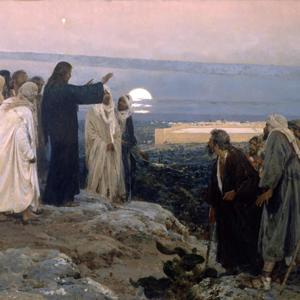


This was the second part of a special Saturday Seminar in which, using the Book of Acts as a guide, we explored the concept of growing in intimacy with the Spirit of God. The first believers could say things like, “It seemed good to the Holy Spirit and to us…” Do we have that kind of relationship with Him? Watch with us, and if you enjoy these teachings, kindly share them to a friend.
Class notes are available here as a PDF.
If you like, you can also watch on my YouTube channel.
EXCERPT:
God encourages us like this: “Taste and see that the Lord is good.” Sometimes we take that verse and verses like it, and we apply them only to people who don’t yet know the Lord. That’s OK, but I think a verse like that can’t just be for the unsaved – it has to also be for those of us who’ve begun to taste of His goodness.
It’s really the delightfulness of knowing Jesus and the Holy Spirit that will keep us and safeguard us in His love. We don’t hold onto to Jesus in the last days by gritting our teeth and trying extra hard, but by growing in our love for Him, and deepening our fellowship with Him. May we increase more and more in our desire to love and serve Him.
How easy it is to forget that the first and greatest of all God’s commandments is this: “‘You shall love the LORD your God with all your heart, with all your soul, and with all your mind.’ This is the first and great commandment” (Matt. 22:37b-38). Those are the words of Jesus - lovely to quote, but hard to live.
In Philippians 3, Paul said he wanted to know Jesus. But he already knew Jesus. I believe the New Testament writers assume that we will both have and develop intimacy with Jesus through the Holy Spirit.
We had a special seminar in our ongoing "Book of Acts" class this past weekend. In this, the first session, we looked into Acts chapter 4 and discussed issues of persecution and peace. How can we face tribulations and guard our hearts in the Lord’s peace at the end of the age? Watch with us, and if you enjoy these teachings, kindly share them to a friend.
Class notes are available here as a PDF.
If you like, you can also watch on my YouTube channel.
EXCERPT:
This prayer meeting (in Acts 4) shows us that it’s entirely appropriate to ask God to heal and do the miraculous, and to do so in evangelization. You can pray for people in the name of Jesus whether you’re an apostle or whether you just got saved last week. You can be a pastor of 5,000 or a mother of five. You can be a man of 90 or a girl of nine. You see, God gave the Name of Jesus to every believer. The Church in Acts 4 specifically asked God to make them bold by Him doing healings, signs, and wonders through them in Jesus’ Name.
Friends, it can’t be wrong to pray for the miraculous if they did so. They’re my pattern – not people who spread unbelief, or who tell you not to pray for the sick, and so on.
In this week's session, explore Acts chapter 3 with us, and the healing of a man who was lame from his mother's womb, healed through the power of Jesus' Name. Watch with us, and if you enjoy these sessions, kindly share them to a friend.
See image below, to assist in discussion of the Temple Mount.
Class notes are available here as a PDF.
If you like, you can also watch on my YouTube channel.
EXCERPT:
As the man clings to Peter and John,a big crowd assembles in Solomon’s Porch. This is an example of the effect of what we commonly call power evangelism. Evangelism coupled with the power of the Holy Spirit, evangelism with signs and wonders, is especially powerful. Signs and wonders do not preach the Gospel; someone still has to convey the message of life in Christ. But signs and wonders do several important things: (1) they get people’s attention; (2) they testify of the goodness of God in general; (3) and they testify, as in this case, of the power that God has placed in the Name of Jesus.
So, we seek as much as possible to not only share Christ in word, but in the power of the Spirit. This was the pattern in the Gospel when Jesus sent out first the Twelve and then the Seventy. Jesus said, “And as you go, preach, saying, ‘The kingdom of heaven is at hand.’ Heal the sick, cleanse the lepers, raise the dead, cast out demons’” (Matthew 10:7-8a).
And remember, of course, the theme verse for the entire Book of Acts, Acts 1:8: “You shall receive power after the Holy Spirit has come upon you, and you shall be my witnesses…”
In this brief video we address a question received in our ongoing class on the Book of Acts. What’s the difference between the indwelling of the Spirit, and the Baptism in the Spirit? Some say there is no difference; others assert strongly that the measure or work of the Spirit we receive when we come to faith in Christ isn’t all that God has for us.
Consider with us the three little words with, in, and upon, and what God might be communicating through them when it comes to our relationship with His Spirit.
A sermon about the Wedding at Cana, as our church begins a series on the seven miraculous signs performed by Jesus in the Gospel of John. What does it mean that Jesus manifested His glory? And what is the significance of the sign of changing water into wine?
If you like, you can also watch on my YouTube channel.
EXCERPT:
We said earlier that Jesus’ turning water into wine was prophetic. At Cana, He transformed common, ordinary water into wine of the best quality, and He made the people rejoice. This is symbolic, and it prophesies to us that by His glory He will one day bring the glory of God into this world.
This beginning of signs is the whole Gospel in miniature. Changing water into wine was a parable; it was the whole Gospel in a picture. It tells us that from now on, ordinary people and ordinary things of life are going to be transformed by the power of Christ breaking into our world. It tells me that He’s come to do more than simply patch me up a little bit. He hasn’t come to make the water of my life into better water.
No, He’s come to change me into something completely different. He hasn’t come to give me a Band-Aid. He came to speak forgiveness and transformation over my life, changing me into something—into someone—I could never have been without His power.
In this week's session, we examine the beginnings of the young church in Jerusalem and their vibrant life together. What made this first church so powerful and effective? Watch with us, and if you enjoy these sessions, kindly share them to a friend.
Class notes are available here as a PDF.
If you like, you can also watch on my YouTube channel.
EXCERPT:
Verse 46 says that …they ate their food with gladness and simplicity of heart… That translation “gladness” is a little too religious for me. It’s a Greek word that really means joy. This isn’t so much a reference to joy at the Lord’s Supper, but rather just joy as they’re eating and going through life together. When they ate together, and as they went through their day, they had real joy.
⁃ This word translated as gladness is the same word Luke uses to talk about how John the Baptist leapt in his mother’s womb for joy when he heard the greeting of Mary, who was carrying the unborn Savior (see: Luke 1:44).
⁃ It’s the same word that Jude the Lord’s brother would use to say how the Lord is able to “…present you faultless before the presence of His glory with exceeding joy...” (see Jude 24b). I think it’s a much stronger word than just being glad.
⁃ It’s a strong word, and when Christians are in love with Jesus and in love with one another, there will be a release of God’s joy among them, making life lighter and sweeter.
• They had simplicity or, as many translations would render it, sincerity of heart. What a beautiful combination. Where people are truly serving Jesus there will be both joy and sincerity. There will be a lack of hypocrisy. People will be genuine in their love for God and one another. We can imagine that in those beautiful early days, no one was taking advantage of one another. Certainly no one seems to have been envious of others or coveting one another’s possessions. They were too consumed with love for Christ to get trapped in those kinds of sins.
In this session, we explore Peter's sermon on the Day of Pentecost. What proofs did Peter put forward to make his claim that Jesus was Lord and Messiah? What was the significance of the titles "Son of Man" and "Son of God" for Peter's audience? Watch with us, and if you enjoy these sessions, kindly share them to a friend.
Class notes are available here as a PDF.
If you like, you can also watch on my YouTube channel.
EXCERPT:
Peter uses three words to describe God’s miraculous activity in Jesus, and we’re going to see those three words all throughout Acts, and all over the New Testament: miracles, wonders, and signs. Let’s take a minute to talk about them.
The first word is usually translated as “miracle,” but it doesn’t mean the same thing it usually does in English. In many languages, the word “miracle” carries the idea of something that is contrary to the laws of nature. But the word Peter uses doesn’t mean that at all: it’s our old friend dunamis, and that means power, the supernatural power of God. So, rather than using the word “miracles,” I suppose we could render it by saying “acts of power.” One commentator I read called it “manifestations of divine power.”
There are just a few English Bible version that avoid using the word “miracles.” They say “mighty works” (ESV) or “powerful deeds” (NET). That’s better, not just because it’s more accurate, but also because it doesn’t put supernatural works out of reach for believers. God wants to use us in deeds of power. Remember, Jesus said that the one who believes in Him will do the works that He had been doing, and even greater works (see John 14:12). He also said in Acts 1:8 that we would receive dunamis when the Holy Spirit came upon us.
In this week’s session of our study in Acts, we look into Acts 2 and the Day of Pentecost. What is the significance of the Feast of Pentecost? Why did Jesus pour out the Spirit on this day? We explore this as well as what happened with the Holy Spirit descended. Join us, and if you enjoy these sessions, kindly share them to a friend.
Class notes are available here as a PDF.
If you like, you can also watch on my YouTube channel.
EXCERPT: It's important for us to see again, as we saw earlier in Acts chapter 1, that the believers were all in one accord. If we desire the Holy Spirit to move in our midst, let us remain in one accord as well. Let us do the things that make for peace. Let us handle our concerns and disagreements the way that God's Word tells us to handle them, and then we will fulfill God's Word. As Paul commands us, we must maintain the unity of the Spirit in the bond of peace (see Ephesians 4:3). There was as of yet no discord among them to be a hindrance to the moving of the Holy Spirit….
The fire of God is poured out upon each one of them. Just as He once descended in fire on the mountain, and just as He descended upon the Temple sacrifices, so now He descended upon those who had obeyed the Gospel, coming to clothe them with power as Jesus had promised: "You shall receive power (dunamis) after the Holy Spirit has come upon you, and you shall be my witnesses... (Acts 1:8a)"
In this week’s session of our study in Acts, we completed our look at Chapter 1, exploring what happened during the ten important days between Jesus’ Ascension into Heaven and the outpouring of the Spirit on the day of Pentecost. If you enjoy these sessions, kindly share them to a friend.
Class notes are available here as a PDF.
If you like, you can also watch on my YouTube channel.
EXCERPT: If you grew up in a traditional church environment, you might not have learned much about the second coming of Christ. Maybe all you ever knew about it was what you heard as you recited a creed in church: “He will come again in glory to judge the living and the dead, and His kingdom will have no end.” But these two angels are giving the apostles—and us—some basic points of information here.
1. First, Jesus will return. That may sound obvious, but think about what it means. It means that things will not go on forever in this world the way they are now. God has determined that there will be an end to injustice, and that He will one day set up a kingdom of righteousness. There won’t be any wars, and economic injustice will not be tolerated. History is not going to repeat in an infinite cycle; there will be an end to history as we understand it because there will be an end to Man’s direct management of this world apart from God. This is what Christians have been praying for, for two thousand years: “Thy Kingdom come, Thy Will be done on earth as it is in Heaven.” God will one day answer that prayer by sending Jesus to reign upon the earth.
2. Second, it will be the same Jesus. To someone who’s been a Christian a while, that may sound even more obvious. But in our day, it’s important to keep this truth in mind. Today, Christians are being assailed by false teachings about Jesus – about who He is and about what He may do in the future. We should remember Jesus’ own words, how He said, “Take heed that no one deceives you. For many will come in My name, saying, ‘I am the Christ,’ and will deceive many” (Matthew 24:ba-5).
Muslims call Jesus “Isa.” They believe that Jesus didn’t die, and that he will be returning one day to serve as the lieutenant or the assistant of their Messiah, the Mahdi. That is a false Jesus.
Some people in New Age belief systems believe that “the Christ” isn’t even a person, but is rather an anointing or a state of being. So, you might have heard people talking about “the Christ Consciousness.” People with this mindset might say that Jesus was the Christ for that era, and that some day someone will come along who will be the Christ for the new age that’s dawning.
No, the One who’s coming back to rule and reign is the very same One who suffered and died on the Cross, the One who rose again on the third day, and who spoke to these dumbfounded men here in Acts chapter 1. Jesus IS the Christ. This what we’ve quoted to you from Revelation chapter 1: “Behold, He is coming with clouds, and every eye will see Him, even they who pierced Him. And all the tribes of the earth will mourn because of Him. Even so, Amen” (Rev. 1:7).
We’ve begun a new course on the Book of Acts, a verse by verse study that will likely run about six months. In this session we begin to examine the text, exploring the last chapter of Luke and the beginning of Acts. We hope you’ll watch or listen every week, and if you enjoy these sessions that you’ll share them.
Class notes are available here as a PDF.
If you like, you can also watch on my YouTube channel.
EXCERPT: After what Jesus tells them about the coming of the Spirit, notice the question they ask. They ask Him if He is now going to restore the kingdom to Israel. You may remember that when Jesus was being examined by Pontius Pilate, Jesus told Pilate that His kingdom was not of this world. However, the Jewish people knew that when Messiah came, Israel would be the leading nation of the world and all their oppressors would be defeated. There would be a Sabbath age, an age of prosperity and blessing, when every Israelite would enjoy peace and rest. The knowledge of God would cover the earth just as the waters cover the sea.
Because Jesus had conquered death, and because He was promising to pour out the Spirit, the apostles might have thought that He was about to raise up an invincible army made up of Samsons and Davids, anointed by the Holy Spirit, and incapable of being defeated by normal humans.
And why did they expect this kingdom to come immediately? Probably because Jesus said the Spirit was about to come upon them. Jesus had also promised them that they would reign with Him in that kingdom. He had told them, “Assuredly I say to you, that in the regeneration, when the Son of Man sits on the throne of His glory, you who have followed Me will also sit on twelve thrones, judging the twelve tribes of Israel” (Matthew 19:28).
But Jesus’ answer was unexpected. He didn’t say that Kingdom was never going to happen (and indeed it will come), but He said it wasn’t for them to know when it would happen.
Thanks for reading Apostolic Purpose! Subscribe for free to receive new posts and support my work.
From the publisher's feed