
Sign up to save your podcasts
Or

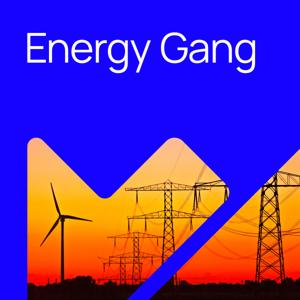

VPPs – virtual power plants – continue to spark heated debate. Are they genuinely a fast, affordable way to add capacity to the grid? Or are they an overhyped concept that falls apart when electricity systems are under stress? To find out, host Ed Crooks welcomes Colby Hastings, the senior director for residential energy at Tesla, to unpack what VPPs can and can’t do for the grid.
Colby explains how storage-based VPPs can behave very differently from the classic demand response that relies on consumers changing their behaviour. She sets out Tesla’s thinking on VPPs, including its strategies for customer participation, reliability, and pay-for-performance. Tesla’s model includes opt-outs, backup reserve settings, and transparency via an app. Customer choice is an important principle.
Regular guest Amy Myers Jaffy also joins the show, and she debates what’s holding VPPs back from scaling everywhere. Electricity market design can be critical for determining how fast VPPs are adopted. Other issues, including concerns about “double compensation” under net metering systems, are also important. Some regions are moving faster than others.
Finally, Colby tells us what’s coming next from Tesla and in the industry. Tesla’s vehicle-to-grid plans are starting to take shape. A pilot, starting with the Cybertruck, was launched last month. And she explains why Puerto Rico is one of the clearest case studies for demonstrating the value of VPPs as critical infrastructure.
See Privacy Policy at https://art19.com/privacy and California Privacy Notice at https://art19.com/privacy#do-not-sell-my-info.
 View all episodes
 By Wood Mackenzie

4.7
12371,237 ratings
VPPs – virtual power plants – continue to spark heated debate. Are they genuinely a fast, affordable way to add capacity to the grid? Or are they an overhyped concept that falls apart when electricity systems are under stress? To find out, host Ed Crooks welcomes Colby Hastings, the senior director for residential energy at Tesla, to unpack what VPPs can and can’t do for the grid.
Colby explains how storage-based VPPs can behave very differently from the classic demand response that relies on consumers changing their behaviour. She sets out Tesla’s thinking on VPPs, including its strategies for customer participation, reliability, and pay-for-performance. Tesla’s model includes opt-outs, backup reserve settings, and transparency via an app. Customer choice is an important principle.
Regular guest Amy Myers Jaffy also joins the show, and she debates what’s holding VPPs back from scaling everywhere. Electricity market design can be critical for determining how fast VPPs are adopted. Other issues, including concerns about “double compensation” under net metering systems, are also important. Some regions are moving faster than others.
Finally, Colby tells us what’s coming next from Tesla and in the industry. Tesla’s vehicle-to-grid plans are starting to take shape. A pilot, starting with the Cybertruck, was launched last month. And she explains why Puerto Rico is one of the clearest case studies for demonstrating the value of VPPs as critical infrastructure.
See Privacy Policy at https://art19.com/privacy and California Privacy Notice at https://art19.com/privacy#do-not-sell-my-info.
399 Listeners

124 Listeners
506 Listeners
132 Listeners

166 Listeners
103 Listeners

61 Listeners

141 Listeners

80 Listeners
638 Listeners
279 Listeners

203 Listeners

230 Listeners
119 Listeners

141 Listeners