
Sign up to save your podcasts
Or

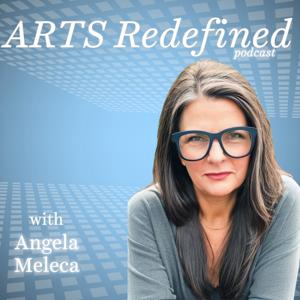


What happens when food insecurity and arts funding collide? In this conversation, Angela Meleca and Lynnette Shy (Confluence Art Solutions) explore how we can discuss the arts’ impact in a world where millions face hunger and crises of basic needs. Angela challenges arts leaders to reframe their messaging so it isn’t tone-deaf to broader societal struggles—arguing that art is food for the human spirit.
Together, they unpack how arts participation strengthens empathy, confidence, and belonging—the same human outcomes that sustain communities through hardship. The two discuss whether decades of undervaluing arts education have led to a creativity deficit, how automation has reshaped our sense of humanity, and why creativity may be the only truly cross-sector skill that connects us all.
This is a powerful conversation about reframing relevance: positioning the arts not as “extra,” but as essential nourishment for human resilience and connection.
This is ARTS Redefined.
#Angela Meleca, #Lynnette Shy #artsadvocacy #foodinsecurity #communityresilience #empathy #belonging #creativity #artseducation #artsfunding #socialimpact #artsrelevance #ReframetoResonate #RenaissanceofRelevance #ReturnonArt #ROAframework #nonprofitleadership #creativesector #artsandhumanity #ARTSRedefinedpodcast
www.melecacreative.com
www.https://confluence-arts.com/
When your funding pitch starts with a budget gap, you position your organization as a cost. When you start with the gap in your community, you position yourself as the solution — and solutions get funded. In this episode of ARTS Redefined, Angela Meleca shares how arts leaders can shift their messaging to lead with impact, not shortfalls. Drawing from more than $160 million in secured arts funding, Angela walks you through three practical steps to identify the community gap you fill, measure the change you create, and make every pitch about outcomes funders value.
Ready to reframe your messaging for more funding? Download the free Arts Advocacy Toolkit at melecacreative.com/advocacy-toolkit and start leading with solutions today.
Are you still trying to prove your value with ticket sales and attendance numbers—only to see funding stay flat or disappear altogether? In this episode of ARTS Redefined, Angela Meleca explains why the traditional case for arts funding is no longer effective—and what we must do differently to achieve sustainable investment in the arts.
You’ll hear how 20 arts organizations are already using real-time data to show outcomes that truly matter: confidence, belonging, creative skills, and job preparedness. This is the kind of evidence funders value—and the case that will shift how we’re funded in the future.
If you’re tired of fighting for resources with outdated talking points, it’s time to reframe your case and prove the transformational impact of your work.
🔗 Download the Free Advocacy Toolkit: https://melecacreative.com/advocacy-toolkit
📅 Book a 1:1 Strategy Call: https://calendly.com/melecacreative/1-1-chat
Across the country, DEI language is quietly being erased—from strategic plans to university websites. But if the words are gone, what remains?
In this episode of ARTS Redefined, Angela Meleca sits down with a group of arts policy students from Miami University to explore what it means to lead with values when the language is no longer safe. Together, they reflect on how equity can live in actions, decisions, and institutional practices—even when the acronym disappears.
This candid conversation moves beyond performative allyship and toward a deeper question: What does it truly mean to embed DEI in our DNA?
Whether you're navigating changes in policy, funding, or internal culture, this episode offers perspective, clarity, and a look at how the next generation prepares to lead.
Chapters
00:00 Introduction – Setting the stage for what’s at stake
02:08 Student fears and the politics of language
06:40 When DEI becomes performative
10:55 What it means to live values, not just name them
15:20 Lessons from the playground: empathy, inclusion, and memory
19:00 DEI in our DNA: how leadership makes values visible
24:15 Closing reflections and what future leaders are asking from us
If your organization serves 100 students, what happens to those students? In this episode, Alan Harrison, author of Scene Change, delivers a sobering truth: producing art is no longer enough. In a post-NEA world, funders will demand data, not anecdotes.
We unpack:
Why arts nonprofits are losing funding—and relevance
The difference between teaching and educating
What it means to become a movement instead of just a mission
How to survive this shift by measuring impact in real-time
This episode is for arts leaders, funders, and policymakers who know it’s time to stop justifying the arts—and start proving them.
[00:00] Cold Open: “So what? What did they get out of it?”
[01:20] The truth about 501(c)(3)s and arts orgs
[07:50] Why arts orgs are failing funders
[15:00] What comes after the NEA
[22:00] Introducing a new tool to prove impact
[27:00] Impact Squared explained
Alan Harrison, Author Scene Change, Scene Change 2
https://www.artsjournal.com/scenechange/about-scene-change/
What does it take to future-proof the arts?
In this episode of ARTS Redefined, Angela P. Meleca is joined by arts entrepreneur and professor Jeffrey Nytch to address the pressing need for new skills, models, and approaches to make a lasting impact.
Angela and Jeffrey explore why arts organizations must move beyond adapting — and start leading — by getting proximate to the communities they serve, building strategic partnerships, and embracing bold programming.
They discuss:
Why transferable skills from the arts are critical to the innovation economy
How creativity strengthens STEM fields
Why audience engagement must go beyond traditional models
New ways to measure arts impact and relevance in 2025
If you’re ready to lead the future of the arts — not just survive it — this conversation is your blueprint.
Jeffrey Nytch
https://www.colorado.edu/music/jeffrey-nytch
In this episode of ARTS Redefined, Angela P. Meleca sits down with Wilma K. Mullet, Executive Director of the Tuscarawas Arts Partnership, for a powerful conversation about resilience, resourcefulness, and redefining what the arts mean to a community. Wilma shares the challenges and triumphs of leading a rural arts organization in Tuscarawas County, Ohio—from navigating funding limitations to building coalitions across sectors.
They explore the vital role of public officials in supporting the arts, the importance of building trust, and how community can be a lifeline for artists and organizations alike. This is a must-listen for anyone working in rural or underfunded communities, or those looking to reimagine what arts leadership looks like outside major metro areas.
Key Takeaways:
Resourcefulness is critical for rural arts organizations.
Collaboration can be more powerful than funding alone.
Public officials can be key allies—if relationships are built.
Perseverance and trust are as valuable as budgets.
Community engagement starts with creating a welcoming environment.
CHAPTERS:
00:00 – Introduction to Creative Placemaking
06:37 – Funding and Financial Strategies for Arts Organizations
08:58 – Challenges in Rural Arts Funding
12:00 – Resourcefulness in the Arts
15:07 – Building Relationships with Stakeholders
17:59 – The Role of Community and Public Officials
20:46 – Perseverance in the Face of Adversity
23:58 – The Transformative Power of Arts in Communities
27:09 – DEI and Community Needs
30:01 – Future Aspirations for TAP
32:51 – Defining Art and Closing Thoughts
https://www.tuscarawasartspartnership.org/
Connect with Angela Meleca:
🌐 Website: www.melecacreative.com
📱 Instagram: https://www.instagram.com/angelapmeleca/
📧 LinkedIn: https://www.linkedin.com/in/angelapmeleca/
Follow @ARTSRedefined for practical tips and content on arts advocacy.
What if creativity isn’t just something kids do—but something we all need to thrive?
In this episode of ARTS Redefined, Angela Meleca is joined by Victoria Lozano, EVP of Marketing at Crayola. Together, they discuss why creativity is one of the most critical life skills we can nurture—not just in children, but across every profession. From reimagining Crayola’s brand to launching the global Crayola Creativity Week, Victoria shares how the company is helping to redefine how we think about the arts in education and beyond.
Takeaways include:
Creativity is a behavior, not just a talent
We’re un-teaching creativity without realizing it
Crayola is moving beyond products to experiences, content, and advocacy
Inclusion in creative expression starts with how we see ourselves
Educators and parents have tools to foster creativity in simple, daily ways
Chapters
00:00 The Importance of Creativity
01:40 Myths and Misconceptions about Creativity
04:35 Creative Behaviors and Lifelong Skills
07:36 Evolving Beyond Products: Crayola's New Direction
11:59 Nostalgia vs. Innovation in Creative Experiences
14:28 The Future of Creativity in Education
18:32 Inclusion and Diversity in Creativity
20:01 The Role of Creativity in the Next Decade
20:43 Resources for Educators
22:37 Defining Art and Its Impact
Victoria Lozano is Chief Marketing Officer at Crayola LLC, where she oversees all aspects of marketing and consumer engagement for one of the world’s most iconic and cherished brands. For over 120 years, Crayola has been synonymous with nurturing children’s creativity. Today, it is recognized as one of the most culturally resonant, authentic, and trusted brands globally.
https://creativity-week.squarespace.com/
In this episode of ARTS Redefined, Angela Meleca sits down with writer, creative mentor, and Rebel Writers Workshop founder Neno Littlewood for a refreshingly honest conversation about how we create, evolve, and keep going—even when life gets messy.
From navigating ADHD and dyslexia to building a creative business and reshaping her personal identity, Neno shares how embracing her story—and the imperfect drafts along the way—became her greatest source of power. This is for every arts leader, creator, and nonprofit professional who’s ever felt stuck or sidelined by perfectionism, burnout, or fear.
We talk about:
Why perfectionism kills creativity
How embracing “the shitty first draft” helps you grow
Reframing failure as evolution
Why mentorship and community matter
How stories rewire the brain and move people to act
This isn’t just a conversation about writing—it’s about the courage to become who you are. For Relevance Rachel, it’s a reminder that art is the act of creating—whether it’s a business, a painting, or a new path forward.
0:00 – Cold Open: There is no failure, only giving up
2:00 – Hustling vs. evolving
5:45 – Why we must normalize failure in the arts
7:30 – There’s always a way—creative solutions for burnout
10:30 – Storytelling, neuroscience, and empathy
17:00 – The Rebel Writers Workshop: helping others start
20:00 – Breaking personal narratives through art
26:30 – Journaling, affirmations, and daily practices
30:00 – Defining art as any act of creation
32:30 – Discount code for Neno’s workshop
🌐 Website: www.melecacreative.com
📱 Instagram: @angelapmeleca
📧 LinkedIn: Angela Meleca
📺 YouTube: ARTS Redefined
Follow @ARTSRedefined for practical tips and content on arts advocacy.
Chapters:Website: Writersrebellion.comInstagram: https://www.instagram.com/nenoswritersrebellion/Link to Rebel Writers Workshop: https://www.writersrebellion.com/store/p/rebel-writers-workshopUse code ARTS10 for $10 off the workshop.
Is it possible for arts fundraising to be its art form?
In this episode of ARTS Redefined, Angela Meleca is joined by Matt Hugg—founder of Nonprofit.Courses and expert in nonprofit fundraising. Together, they challenge conventional approaches to development and explore how creativity isn’t just for the stage or the canvas—it’s the secret weapon in donor relationships, storytelling, and fundraising.
If you're an arts leader tired of transactional fundraising and ready to connect more authentically with your supporters, this conversation is a must-listen.
You’ll learn:
Why creativity is your fundraising superpower
How to reframe “non-arts” work as creative work
Common disconnects in data, relationships, and storytelling
A mindset shift that can transform your development strategy
Relevance isn’t reserved for your programming—it belongs in your fundraising too.
From the publisher's feed