
Sign up to save your podcasts
Or

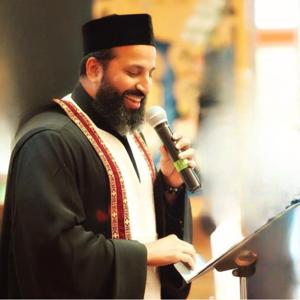


“When Jesus saw their faith, He said to the paralytic, ‘Son, your sins are forgiven you’” — Saint Mark 2:5
In Saint Mark 2:1–12, a paralyzed man cannot reach Jesus on his own. The house is crowded. The doorway is blocked. But he has four friends—and that makes all the difference. These four reveal what the Church is meant to be and what every believer must become.
First, they are compassionate. They see his suffering and refuse indifference. The Church must feel before it fixes. Second, they are unified. No one carries a corner alone. They move together. Division would have dropped the stretcher. Unity carries the broken safely. Third, they are persistent. The crowd blocks the entrance, but they do not retreat. They climb, dig, and lower. True faith finds a way when obstacles appear. Fourth, they are selfless. The miracle happens for the man on the mat, not for them. They are content to remain unnamed while another stands restored.
This is what every believer must become: compassionate in heart, united in spirit, persistent in faith, and selfless in service. Notice that Scripture says Jesus saw their faith. Sometimes the faith of a community carries someone who cannot believe for himself. As Ephrem the Syrian wrote, “Blessed are they who bear the weak, for they bear Christ Himself.” When we carry one another, we participate in God’s mercy.
Be a corner-holder. Lift someone. Lower someone to Jesus. And watch forgiveness and healing unfold where love makes a way.
“God was in Christ reconciling the world to Himself.” — 2 Corinthians 5:19
The work of grace is always return—return to God, return to one another, return to communion. Sin scatters. Pride divides. Fear isolates. But the heart of the Gospel is rebuilding what was broken.
Lent is not a season of punishment; it is a season of making room. We do not fast to harm ourselves. We fast to heal space within ourselves. We remove what fills us so that God may fill us again. Fasting loosens the grip of excess, distraction, resentment, and noise. It creates room—room for God’s voice and room for one another’s presence.
Too often we ask during Lent, “What am I allowed to eat? What am I allowed to do?” But the better question is: What does love require of me?
Love may require forgiveness.
Love may require restraint.
Love may require generosity.
Love may require silence.
As Isaac of Nineveh writes, “Fasting is the beginning of the healing of the soul.” Healing begins when we stop feeding what divides us and start nourishing what unites us.
The true fast restores communion. It softens sharp words. It reconciles strained relationships. It rebuilds trust stone by stone.
When we make room for God, we discover space for mercy. When mercy grows, communion is rebuilt.
This Lent, do not measure our devotion by restriction alone. Measure it by love. Fast from whatever hardens our heart. Feast on what restores relationship.
For the work of grace is always return—and love is the road home.
“God, be merciful to me, a sinner.” — Saint Luke 18:13
In the parable of the Pharisee and the tax collector (Luke 18:9–14), two men stand in the same temple, but only one truly encounters God. The Pharisee suffers from a peculiar spiritual blindness. He is not immoral, not dishonest, not outwardly corrupt. In fact, he is disciplined, generous, and religious. Yet he is so busy cataloging his virtues that he has lost sight of God. He thanks God—but listens closely and you will hear that he is really admiring himself.
His prayer is full of “I.”
“I fast.”
“I give.”
“I am not like others.”
He stands in the temple, but the altar of his heart is occupied by his own reflection. The tax collector, by contrast, cannot even lift his eyes. He brings no résumé, no comparison, no defense. Only a plea: “God, be merciful to me, a sinner.” And Jesus says it is this man who goes home justified.
As Saint Ephrem the Syrian writes, “The proud man’s righteousness is a veil over his eyes, but the humble man’s tears wash his sight.” Humility restores vision. Spiritual blindness is subtle. It grows when we measure ourselves against others instead of against God’s holiness. It thrives when gratitude turns into self-congratulation.
Today, examine our prayers. Are they centered on God’s mercy—or our merit? Lay down the list. Lift up our needs. In humility, we finally see clearly—and in seeing clearly, we are truly justified.
“You are a letter from Christ… written not with ink but with the Spirit of the living God” — 2 Corinthians 3:3
The Apostle Paul tells the believers that they themselves are Christ’s letter. Not parchment. Not ink. Not carved stone. But living, breathing testimony. A letter carries a message from someone absent. It reflects the sender’s heart, character, and intent. If we are letters from Christ, then the world reads Him through us. Our reactions, our words, our integrity, our mercy—these form the sentences people encounter daily.
But Saint Paul makes something clear: this letter is not self-written. It is “written… with the Spirit of the living God.” We do not author ourselves into holiness. We are inscribed by grace. Too often we try to edit the message—presenting selective obedience, convenient kindness, partial surrender. Yet the Spirit writes deeply, sometimes through pressure, sometimes through pain.
As Ephrem the Syrian wrote, “The Spirit engraved the image of Christ upon the heart, that the heart might become a tablet of life.” The engraving is inward before it is outward. Ask ourselves: What is the world reading in me? Bitterness or forgiveness? Anxiety or trust? Pride or humility?
Every conversation is a line written. Every choice is a phrase formed. Every act of love is a bold declaration of the Sender. Today, yield our hearts again to the Spirit’s hand. Let Him write clearly. For we are Christ’s letter—meant to be read, known, and recognized as His.
“This kind can come out by nothing but prayer and fasting” — Saint Mark 9:29
In Mark 9:14–29, a desperate father brings his tormented son to the disciples—but they cannot cast the spirit out. When Jesus arrives, deliverance comes swiftly. Later, in private, the disciples ask why they failed. His answer is piercing: “This kind can come out by nothing but prayer and fasting.”
The problem was not technique. It was order. Prayer and fasting reorder the heart before they confront the demon. They realign the soul before they address the storm. Fasting dethrones self-reliance. Prayer enthrones dependence. Together, they shift us from noise to surrender, from striving to abiding.
The father in the story models this reordering when he cries, “I believe; help my unbelief!” He brings both faith and weakness. That honesty is itself a form of surrender. We often want power without preparation, authority without intimacy, victory without surrender. But Jesus teaches that some battles are won long before they appear—won in hidden places where appetite is disciplined and the heart is humbled.
As Isaac of Nineveh wrote, “Fasting is the weapon established by God… through it the demons are defeated.” Fasting empties us of ourselves so we may be filled with God. When the heart is reordered through prayer and fasting, faith is strengthened. When faith is strengthened, authority follows. And when authority flows from intimacy with Christ, strongholds fall.
Before confronting what binds others, let God confront what binds us. Victory begins in reordered devotion.
“Lord, if You are willing, You can make me clean” — Luke 5:12
Before the miracle, there is a posture. The leper does something astonishing—he falls on his face before Jesus. He worships first. Before asking for healing, before explaining his pain, before pleading his case, he bows. His body touches the dust in surrender before his mouth forms a request. This is the reordering of the heart.
So often we rush into God’s presence with demands. We present our needs first and offer worship later—if the answer satisfies us. But the leper reverses that pattern. Worship comes before the miracle. Surrender comes before the solution. Then he says: “If You are willing…” His request reveals a second reordering—his faith. He does not question Christ’s power; he entrusts himself to Christ’s will. Faith is not control; it is confidence wrapped in surrender.
When the heart is reordered in worship, and faith is reordered in trust, life is reordered by grace. Jesus answers, “I will; be clean.” The man rises not only healed in body, but restored in community, worship, and dignity. As Ephrem the Syrian wrote, “The Lord touched him to show that His mercy is not defiled, but that defilement is cleansed by His mercy.”
Today, bow first. Worship before we ask. Trust before we see. When our heart kneels, our faith aligns—and when faith aligns, our life follows.
“That they all may be one, as You, Father, are in Me, and I in You” - John 17:21
As we walk the ascetical path of Great Lent, the journey of our spiritual transformation now leads us to its sixth stage: Union with God. Awakening stirred our hearts. Repentance turned us. Purification cleansed us. Renewal strengthened us. Illumination enlightened us. Now, transformation leads us to its true goal — communion with God.
Union is not absorption or loss of self; it is loving participation in the life of Christ. As iron placed in fire becomes radiant without ceasing to be iron, so the soul united to God becomes filled with divine light while remaining fully human. St. Ephrem the Syrian writes: “The Most High came down and dwelt in the lowly, that He might raise the lowly to the heights.” This is the heart of Orthodox spirituality — theosis, living in an active relationship with the Lord.
Union is deeply practical. Pray throughout the day, not only at set times. Whisper the Jesus Prayer while walking, working, or waiting. Receive the services of the Church with attention. Forgive quickly, for division clouds communion. Today, seek nearness. Speak to Christ and offer Him your thoughts before they become actions. Transformation is not self-improvement — it is divine intimacy. In union, the soul rests in God, and God lives within the soul.
“For God, who commanded the light to shine out of darkness, has shone in our hearts to give the light of the knowledge of the glory of God” - 2 Corinthians 4:6
As we enter into the second week of the Great Lent, our journey of transformation advances to the fifth step: Illumination. After Awakening, Repentance, Purification, and Renewal, something begins to change within us. The heart grows quieter. The mind becomes clearer. We begin to see — not only our weaknesses — but God’s presence in all things. Illumination is not a dramatic vision; it is the gentle light of Christ steadily brightening the inner life.
St. Gregory teaches: “The light of the Lord is not a symbol, but a real participation in divine life.” As we fast and pray, distractions lose their grip. Scripture speaks more personally. We notice subtle temptations sooner. We respond with greater discernment. This is the light of grace working within.
Begin the day with the Gospel before any other voice. Pause before reacting. Ask, “Lord, enlighten my darkness.” Guard the peace we are beginning to taste. Today, seek clarity rather than noise, depth rather than speed. Through illumination, transformation becomes radiant — and the soul begins to reflect the light of Christ to the world.
“Therefore, if anyone is in Christ, he is a new creation; old things have passed away; behold, all things have become new” - 2 Corinthians 5:17
Our journey of transformation continues during this Great Lent. After Awakening, Repentance, and Purification, we arrive at the fourth step: Renewal.
Renewal is more than removing sin; it is receiving new life. When a field is cleared of weeds, it must be planted with good seed. When the heart is cleansed, it must be filled with Christ. Lent is not simply subtraction — it is a holy replacement.
St. Symeon the New Theologian writes: “Do not say that it is impossible to receive the Spirit of God; rather, believe that you can be renewed.” Replace hurried prayer with attentive prayer. Replace idle scrolling with Scripture. Replace resentment with intercession. Begin small but begin consistently. Transformation grows through faithful repetition.
Notice the quiet shifts: greater patience in conversation, gentler responses under stress, deeper awareness in prayer. These are signs of renewal — evidence that grace is reshaping us from within. Today, ask the Lord not only to cleanse our heart, but to rebuild it. Invite Him to plant new desires, holy thoughts, and steadfast hope. Through renewal, transformation becomes visible — and the new creation begins to emerge.
“Create in me a clean heart, O God, and renew a right spirit within me.” (Psalm 51:10)
During the Great Lent, we continue the journey of transformation. After Awakening and Repentance, today we embrace the third step: Purification.
Repentance turns us toward God; purification clears away what still clings to the soul. Just as gold is refined by fire, the heart is cleansed through prayer, fasting, watchfulness, and humility. Lent is not only about saying “I am sorry,” but about allowing God to wash, heal, and reorder our inner life.
As Ephrem the Syrian teaches: “Let tears wash away the stains of the heart, that the Spirit may dwell there in purity.”
Purification is practical. Guard your thoughts. Limit distractions. Fast not only from food, but from gossip, harsh words, and unnecessary noise. Replace complaint with gratitude. Replace irritation with patience. When impure thoughts arise, do not entertain them — gently return to the Jesus Prayer.
This step requires effort, but it brings freedom. As the heart becomes lighter, prayer becomes clearer and love becomes easier.
Today, choose one area of your life to simplify or cleanse. Offer it to Christ. Through purification, transformation deepens — and the soul begins to reflect the light of God more clearly.
From the publisher's feed