
Sign up to save your podcasts
Or


"For emissions in the sector that we studied, the 80/20 rule really applied, because it was 80% of the emissions coming from 20% of the facilities...For those 20% it was generally not the case that there wasn't an easy fix—better maintenance programs, or just even having an operator drive by and unstick a valve."
In this episode, I’m in conversation with Austin Mitchell, the CEO and co-founder of Synota, on the topic of energy finance transformation. One of the legacy challenges of energy finance is the separation of energy transactions (the movement, measurement, custody transfer, and ownership of energy products — electrons and molecules) from the financial transactions of energy products (purchase and sale agreements, contracts, settlements, and accounting).
"We've designed a physical system that's really incredible [at moving energy around], but as I spent time in industry, what became really apparent to me is that we are way less efficient at moving money back up the value chain."
Modern digital tools can fundamentally overhaul this long-standing structure by enabling real time settlement of transactions, and releasing billions of dollars in credit, interest payments, financing charges and resourcing associated with energy finance.
"In that entire value chain everybody's extending credit to everybody. If credit’s not being extended, then you're the entity having to borrow the cash to pay the person who won't give you credit. So there's credit, there's collateral, and there are departments at every energy company to manage that."
Austin Mitchell is the Co-founder and CEO of Synota and has spent his career in the energy industry. He started in academia where his research informed energy and environmental policy at state and federal levels. Austin's energy expertise includes markets, utilities and regulation, business strategy, and risk management. He is passionate about solving the global problems of energy equity and access.
"We arrive at conservative estimates of 10% of the cost of the average business and residential bill is directly tied to that financial inefficiency. It's everything from the payment processors, to the bad debt. And all of the back office processes and resources dedicated to managing the existing system."
Austin holds a degree in Mechanical Engineering from the University of Dayton, and a PhD in Engineering & Public Policy from Carnegie Mellon University.
Austin is a proud father of two kids, loves to be active, and gives back to his community.
USEFUL LINKS View all episodes
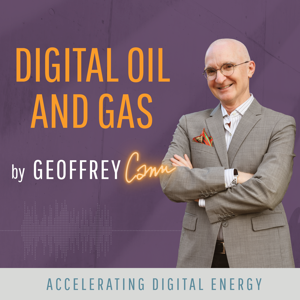
 By Geoffrey Cann
5
1919 ratings
"For emissions in the sector that we studied, the 80/20 rule really applied, because it was 80% of the emissions coming from 20% of the facilities...For those 20% it was generally not the case that there wasn't an easy fix—better maintenance programs, or just even having an operator drive by and unstick a valve."
In this episode, I’m in conversation with Austin Mitchell, the CEO and co-founder of Synota, on the topic of energy finance transformation. One of the legacy challenges of energy finance is the separation of energy transactions (the movement, measurement, custody transfer, and ownership of energy products — electrons and molecules) from the financial transactions of energy products (purchase and sale agreements, contracts, settlements, and accounting).
"We've designed a physical system that's really incredible [at moving energy around], but as I spent time in industry, what became really apparent to me is that we are way less efficient at moving money back up the value chain."
Modern digital tools can fundamentally overhaul this long-standing structure by enabling real time settlement of transactions, and releasing billions of dollars in credit, interest payments, financing charges and resourcing associated with energy finance.
"In that entire value chain everybody's extending credit to everybody. If credit’s not being extended, then you're the entity having to borrow the cash to pay the person who won't give you credit. So there's credit, there's collateral, and there are departments at every energy company to manage that."
Austin Mitchell is the Co-founder and CEO of Synota and has spent his career in the energy industry. He started in academia where his research informed energy and environmental policy at state and federal levels. Austin's energy expertise includes markets, utilities and regulation, business strategy, and risk management. He is passionate about solving the global problems of energy equity and access.
"We arrive at conservative estimates of 10% of the cost of the average business and residential bill is directly tied to that financial inefficiency. It's everything from the payment processors, to the bad debt. And all of the back office processes and resources dedicated to managing the existing system."
Austin holds a degree in Mechanical Engineering from the University of Dayton, and a PhD in Engineering & Public Policy from Carnegie Mellon University.
Austin is a proud father of two kids, loves to be active, and gives back to his community.
USEFUL LINKS
228,910 Listeners

142 Listeners

233 Listeners
537 Listeners

365 Listeners
394 Listeners

112,277 Listeners

14 Listeners
28 Listeners

18 Listeners

1,087 Listeners