Back Garden Biology

Back Garden Biology

By Oxford UniversityEducation
Download on the App Store

Back Garden Biology episodes

  • Much ado about mothing
    Dedicated to moths, this episode explores how and why these unsung heroes deserve more attention. Lindsay examines the horse chestnut leaf miner and hunts for spectacular hornet moths in her local park; Doug Boyes explains why he is a life-long fan; and Professor Ben Sheldon empties his moth-trap so we can all see who’s hanging out in the garden at night.
    20 min
  • Much ado about mothing (Transcript)
    Dedicated to moths, this episode explores how and why these unsung heroes deserve more attention. Lindsay examines the horse chestnut leaf miner and hunts for spectacular hornet moths in her local park; Doug Boyes explains why he is a life-long fan; and Professor Ben Sheldon empties his moth-trap so we can all see who’s hanging out in the garden at night. Creative Commons Attribution-Non-Commercial-Share Alike 2.0 UK: England & Wales; http://creativecommons.org/licenses/by-nc-sa/2.0/uk/

    0 min
  • Stop the pigeon? Never!
    Woodpigeons are common garden birds, whose familiar call has been likened to someone complaining about their feet. But woodpigeons make fantastic parents, and like all pigeons and doves produce a kind of 'milk' to feed their young. Find out more about them and discover how an Oxford PhD student is trying to uncover more about the feral pigeons in town centres and their wild relative, the rock dove.
    17 min
  • Stop the pigeon? Never! (Transcript)
    Woodpigeons are common garden birds, whose familiar call has been likened to someone complaining about their feet. But woodpigeons make fantastic parents, and like all pigeons and doves produce a kind of 'milk' to feed their young. Find out more about them and discover how an Oxford PhD student is trying to uncover more about the feral pigeons in town centres and their wild relative, the rock dove.
    Creative Commons Attribution-Non-Commercial-Share Alike 2.0 UK: England & Wales; http://creativecommons.org/licenses/by-nc-sa/2.0/uk/
    0 min
  • All that glitters
    Find out how birds, insects and plants exploit iridescence. The natural world is filled with colour, but colours can be produced in different ways. Solid colours are due to chemical pigments, but other colour phenomena, such as iridescence are due to physical structures. Find out how birds, insects and plants exploit iridescence to dazzle sexual partners and intimidate rivals, or even just to make the most of the left-over light that other plants can't use.
    16 min
  • Three little birds
    Blue and great tits commonly use nest-boxes in gardens. In this episode we explore their nesting behaviour and get a priviledged view inside the nest-boxes at Wytham Woods. We explore what determines the number of eggs that they lay and ask whether could they lay more.
    17 min
  • Three little birds (Transcript)
    Blue and great tits commonly use nest-boxes in gardens. In this episode we explore their nesting behaviour and get a priviledged view inside the nest-boxes at Wytham Woods. We explore what determines the number of eggs that they lay and ask whether could they lay more. Creative Commons Attribution-Non-Commercial-Share Alike 2.0 UK: England & Wales; http://creativecommons.org/licenses/by-nc-sa/2.0/uk/
    0 min
  • Why is the world green?
    Lindsay searches for the truth about our verdant green world and tackles a mystery about her rose-bushes: who ate all the greenfly? We live on a green planet and it's hard to imagine it being any different. But the fact that most plants are covered in lush green leaves needs some explaining. Part of the explanation lies deep inside plant cells and part of it with the insects that feed on them. Join Lindsay as she searches for the truth about our verdant world and tackles a mystery that unfolds on her rose-bushes: who ate all the greenfly?
    15 min
  • Why is the world green? (Transcript)
    Lindsay searches for the truth about our verdant green world and tackles a mystery about her rose-bushes: who ate all the greenfly? We live on a green planet and it's hard to imagine it being any different. But the fact that most plants are covered in lush green leaves needs some explaining. Part of the explanation lies deep inside plant cells and part of it with the insects that feed on them. Join Lindsay as she searches for the truth about our verdant world and tackles a mystery that unfolds on her rose-bushes: who ate all the greenfly? Creative Commons Attribution-Non-Commercial-Share Alike 2.0 UK: England & Wales; http://creativecommons.org/licenses/by-nc-sa/2.0/uk/

    0 min
  • Garden Safari: The Bug Five!
    Did you know that just five groups of insects dominate your garden? And can you tell the difference between bugs and beetles? In this week's episode, meet the Bug Five and learn how to tell them apart, with beautiful drawings by Lindsay's former student, Pandora Dewan, and lots of new video clips. You are encouraged to select your own Bug Five, by choosing your favourite representative of each of the five groups and you can decide whether Linday's Bug Five are better or worse than those selected by entomologist Liam Crowley.
    18 min

About Back Garden Biology

From the publisher's feed

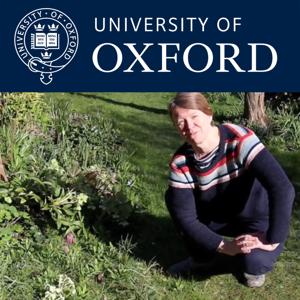
In this fun and informative series Dr Lindsay Turnbull, Associate Professor and Fellow of The Queen’s College, Oxford University, looks at the biology of the back garden. This series is recorded…

More shows like Back Garden Biology

Philosophy for Beginners by Oxford University

Philosophy for Beginners

329 Listeners

Approaching Shakespeare by Oxford University

Approaching Shakespeare

328 Listeners

General Philosophy by Oxford University

General Philosophy

70 Listeners

Reuters Institute for the Study of Journalism by Oxford University

Reuters Institute for the Study of Journalism

8 Listeners

Aesthetics and Philosophy of Art lectures by Oxford University

Aesthetics and Philosophy of Art lectures

77 Listeners

Theoretical Physics - From Outer Space to Plasma by Oxford University

Theoretical Physics - From Outer Space to Plasma

60 Listeners

The Secrets of Mathematics by Oxford University

The Secrets of Mathematics

41 Listeners

Critical Reasoning for Beginners by Oxford University

Critical Reasoning for Beginners

30 Listeners

Literature and Form by Oxford University

Literature and Form

18 Listeners

Ethics in AI by Oxford University

Ethics in AI

4 Listeners