
Sign up to save your podcasts
Or



Send us Fan Mail
Bill Bartholomew speaks with Cortney Nicolato, president and CEO of United Way of Rhode Island, about the ALICE study and why the old federal poverty measure misses a huge share of working families. They discuss how nonprofits are filling gaps in state services, why funding is under strain, and what policy and system changes could better support Rhode Islanders.
https://unitedwayri.org/alice/
In this episode
Timestamps
00:00 — Introducing the ALICE study and Rhode Island’s cost-of-living crisis
01:19 — Why ALICE captures need better than the federal poverty level
02:00 — A family of four needs $111,000 just to survive in Rhode Island
03:18 — What goes into a survival budget beyond rent and groceries
04:45 — Why the 1960s poverty formula no longer fits modern life
05:37 — Frontline workers who keep Rhode Island running but still struggle
06:32 — Multiple jobs, shame, and barriers to upward mobility
07:44 — The equity gap for Hispanic, Black, and older households
08:35 — Turning data into action through United Way’s Family Stability Initiative
09:31 — Helping families move from crisis to stability with financial coaching and housing support
10:00 — Utility aid, 211, SNAP help, and $23 million returned through VITA
11:25 — How nonprofit funding strain compounds the state’s social problems
12:24 — Why nonprofits need to be treated like essential infrastructure
13:50 — Supporting nonprofits with legal help, resource sharing, and advocacy
15:16 — The case for long-term planning instead of yearly budget chaos
17:14 — Why nonprofits often run state programs better, cheaper, and faster
18:27 — Collaboration between nonprofit, private, and government sectors
19:03 — Where to find the ALICE data and Rhode Island-specific report
Notable quotes
Support the show
Follow Bill on Instagram and YouTube
Send us Fan Mail
Aaron Guckian on staying in the Rhode Island governor’s race ahead of the first debate
Bill Bartholomew interviews Republican gubernatorial nominee Aaron Guckian just hours before the first of three major statewide debates. The conversation centers on whether Guckian will stay in the race, how he differentiates himself from independent candidate Ken Block and Helena Foulkes, and what his governing pitch looks like on taxes, energy, infrastructure, and cost of living.Guckian says repeatedly that he is “all in” and frames his campaign around a pragmatic, center-right message aimed at lowering the burden on Rhode Islanders while leveraging federal and state partnerships for economic growth.
Key topics
Timestamps
00:00 - Opening setup: first debate looming and the race’s intraparty tension
00:42 - Responding to Ken Block’s pressure and the “stay in or get out” question
01:41 - Why Guckian says Rhode Island needs major change on taxes and costs
02:27 - Clarifying the “ghost” figure and the confusion around the campaign visit
03:43 - Identifying Robert Anderson and redirecting to the campaign platform
04:03 - What a Guckian governorship would look like
05:02 - Personal biography and why his background matters to voters
06:26 - Defense, energy, and federal investment as Rhode Island’s growth engine
07:53 - Why he says his infrastructure and government experience translate to the governor’s office
08:31 - Polling, fundraising, and why he thinks debate night could change the race
09:49 - Comparing his path to past Rhode Island three-way races
10:46 - Providence politics, rent control, and the case against leftward city leadership
11:45 - Taxes, budget pressure, and why he says local promises may not pencil out
13:09 - Arriving late to a meeting and the campaign’s response
14:54 - Rhode Island Works Smarter and the role of frontline workers
15:49 - Cutting consultant dependence and rethinking transportation leadership
16:43 - His identity as a pragmatic centrist Republican and why he thinks that matters
17:41 - Final commitment: staying in the race through the end
18:47 - His public-service pitch, charity work, and healthcare advocacy
19:45 - Personal recovery, financial stress, and why affordability is central
20:13 - Gas tax suspension, healthcare incentives, and doctor retention
20:54 - Closing banter, harmony, and a lighter note before the debate
Support the show
Follow Bill on Instagram and YouTube
Send us Fan Mail
read Singer's piece here:
https://www.oceanstatemedia.org/economy/2026-09-28/we-do-not-want-to-turn-people-away-r-i-nonprofits-face-financial-crisis
Rhode Island’s nonprofit fiscal cliff and the future of local public media
Bill Bartholomew talks with Singer, Chief Strategy and Audience Officer at Ocean State Media, about a growing crisis hitting Rhode Island nonprofits, public media, and the people who rely on both. The conversation starts with Singer’s reporting on how funding pressure is rippling through the nonprofit ecosystem, then expands into bigger questions about whether direct government service, philanthropy, or a stronger tax base can realistically fill the gap.We discuss how Ocean State Media is reshaping itself as a community-driven local news operation, and why the story emerged from listening sessions in Bristol rather than a newsroom assignment. Singer also explains why the crisis is bigger than one grant, one organization, or one budget cycle.
Key topics
Timestamps
(0:00) Rhode Island’s nonprofit funding crisis begins
(0:58) Singer introduces his role at Ocean State Media
(1:27) Rebuilding a merged PBS and NPR newsroom
(2:56) How community listening in Bristol surfaced the story
(3:26) Volunteer shortages and the widening nonprofit strain
(4:26) Demand keeps rising after the pandemic
(5:52) Why the Matthewson Street Church grant became a flashpoint
(7:12) The “limited pie” problem for donors and institutions
(8:56) Can government replace nonprofits directly?
(9:45) Are nonprofits really just middlemen?
(11:20) The central question: where does the money come from?
(12:38) Governor’s office response and a budget coming too late
(13:27) Why the next governor may inherit the crisis
(15:21) Addressing root causes before people hit catastrophe
(17:34) Community-led journalism and reporting from the ground
(18:47) Why local stories need broader statewide relevance
(20:13) Building audience trust through real community conversation
(21:49) Talk radio, local disagreement, and what people actually care about
(23:17) Volunteer-hour Medicaid ideas and why implementation is messy
Support the show
Follow Bill on Instagram and YouTube
Send us Fan Mail
How the Morales campaign turned branding, video, and community trust into a winning Providence message
This episode looks at the communications strategy behind David Morales’ Providence campaign and why it connected so strongly with voters. Bill Bartholomew is joined by Ross Lippman, Lindsey Bond, and Louis Morales to break down the brand identity, short-form video strategy, and the people-first messaging that helped the campaign cut through fear-based attacks.We discuss how the team built a campaign that felt like Providence rather than generic politics, and why authenticity, consistency, and local relationships mattered more than money and negative ads.
Key topics
Timestamps
00:00 - Why the Morales campaign mattered in Providence
01:28 - Ross Lippman’s role in video and communications
01:52 - Lindsey Bond’s path from events into comms
02:14 - Louis Morales on building the campaign’s visual identity
03:03 - Creating a brand that felt community-driven, not generic
04:44 - Early logo sketches and why the chosen design stood out
06:12 - The monarch butterfly as a symbol for immigrant communities
07:25 - Ross on joining the campaign after Ocean State Media
09:49 - Adapting video for TikTok, reels, and platform behavior
10:22 - Making campaign videos substantive, not just “brain rot”
12:08 - Lindsey on joining through friendship and events organizing
13:32 - How digital strategy grew from email to social to web
14:52 - Why the campaign message had to overcome fear and misinformation
16:14 - Messaging for neighbors, not against an opponent
17:38 - Building early equity before the challenger fully engaged
19:40 - Why the anti-Morales attacks failed to land
21:39 - Lindsey on underestimated voters and broken establishment politics
25:55 - What the Providence win means for future local races
27:25 - Authenticity and education as the core of social content
30:03 - Louis on the underdog story and Latino representation
31:46 - Ross on skepticism, early coverage, and believing the campaign could win
Support the show
Follow Bill on Instagram and YouTube
Send us Fan Mail
Megan Cotter on rural politics, voter conversations, and calling out toxic school committee behavior
Bill Bartholomew speaks with Rhode Island State Representative Megan Cotter, District 39, about her reelection campaign, what she is hearing while knocking on doors, and why she resists rigid political labels. The conversation turns to a disturbing Facebook exchange involving Cotter, her opponent Jasmine Roy, and Chariho school committee members Polly Hopkins and Phelps, centered on online bullying and body shaming by elected officials.In this episode:
Timestamps: (0:00) Reintroducing Megan Cotter and why a rural sandwich stop led to the conversation
(1:34) Why Cotter welcomes a contested race and stays active in the district
(2:43) What voters in District 39 are saying about healthcare, costs, and housing
(4:02) Why Cotter says labels and purity tests are a disservice
(5:46) Handling polarized conversations at the door without losing respect
(7:20) Setting up the Facebook post and Cotter’s health story
(7:46) Losing 120 pounds, training, and how the journey changed her campaigning
(9:47) How the Facebook post escalated into body shaming and harassment
(11:22) Why elected officials should not excuse cruel behavior as free speech
(12:23) Confirming the school committee members involved
(13:11) Why Cotter says Polly Hopkins should resign
(14:24) Why this matters as an example for kids and the public
(16:12) Why elected officials should hold themselves to a higher standard
(17:36) What message this sends to students in Cherhoe
(18:14) The broader district context and why accountability matters
(19:17) Why voters in Hopkinton need to do better
(19:45) Closing thoughts and final thanks
Support the show
Follow Bill on Instagram and YouTube
Send us Fan Mail
Bill Bartholomew talks with independent Rhode Island gubernatorial candidate Ken Block about a newly released poll, the three-way race against Helena Foulkes and Aaron Guckian, and what the numbers suggest about the final stretch. The conversation also digs into fundraising, outside spending, and whether debates and forums can give voters a real contrast between the candidates.
Support the show
Follow Bill on Instagram and YouTube
Send us Fan Mail
Lost and Found with Pamela Fernandez on WaterFire Accelerate
Bill Bartholomew speaks with artist Pamela Fernandez about WaterFire Accelerate, the professional development program for artists 30 and under, and the culminating group exhibition Lost and Found at the WaterFire Arts Center. The conversation moves from Providence’s creative ecosystem to Fernandez’s Dominican and Providence roots, and how both shape her work in textiles, printmaking, and painting.In this episode, Fernandez reflects on community, institutional support, and the challenge of making art that is both personally meaningful and socially responsive.
Key topics
Timestamps
00:00 - WaterFire Accelerate and the Lost and Found exhibition
00:39 - How the artist development program works
01:41 - Why cohort support extends beyond the studio
02:47 - Fernandez’s Providence and Dominican roots
03:42 - Why Providence feels like the right art city for now
05:21 - Building a career through nonprofits and local institutions
07:35 - How Dominican identity and Providence shape her work
09:28 - Choosing what her art should say now
10:56 - Why textiles still matter in her practice
12:17 - Artist panel details and exhibition closing date
13:12 - Balancing political responsibility with personal expression
15:51 - Why artists still matter in social movements
17:46 - Closing thoughts on WaterFire and the exhibition
Notable quotes
Copy
“I feel like community is what is gonna keep us all afloat, especially in these times.”
Copy
“I feel like for me, Providence to me is the place where I wanna be.”
Copy
“I feel like you gotta figure out how you wanna show up, even if it’s not in your work, like how are you showing up in your day to day?”
Support the show
Follow Bill on Instagram and YouTube
Send us Fan Mail
Trauma-Informed Policing in Rhode Island and Beyond
Bill Bartholomew speaks with Liz Gledhill, director of the Center for Trauma Informed Policing at Family Service of Rhode Island, about a Rhode Island-built model that trains law enforcement to respond to families and children in crisis with more empathy, better situational awareness, and less additional harm. The conversation focuses on how the Go Team model evolved, why it matters at the first point of police contact, and what it takes to scale trauma-informed policing nationally.In this episode, they also discuss the balance between public safety and trauma-informed response, how community trust is built one interaction at a time, and why state funding matters when agencies are asked to adopt new trainings.
Key topics
Timestamps
00:00 - Why trauma-informed policing matters now
00:59 - Liz Gledhill introduces the Center for Trauma Informed Policing
01:12 - How a Rhode Island pilot became a national training initiative
01:45 - 25 years of police partnership and the SAMHSA grant that launched the center
02:20 - How the training helps officers reduce harm during crisis response
03:21 - Why children at crisis scenes need protection even when they are not the focus
04:20 - Public safety and trauma-informed training can work together
05:36 - Rhode Island’s Go Team model and what it borrowed from Connecticut
06:58 - The ripple effect of police interactions on trust and lived experience
07:28 - How one safe interaction can start rebuilding community trust
08:57 - What rank-and-file officers think when the model is first introduced
09:21 - Why skepticism often turns into support after officers see the results
10:35 - Police unions, stakeholder input, and why the model has staying power
11:05 - What the state can do beyond grants and good intentions
11:21 - Why unfunded training mandates undermine real implementation
12:26 - Closing thoughts and thanks
Support the show
Follow Bill on Instagram and YouTube
Send us Fan Mail
Rhode Island Transit, Smart Growth, and the Real Cost of Underfunding RIPTA
Bill Bartholomew talks with Scott Wolf, executive director of Grow Smart Rhode Island, about why transit is much more than a social service and how better funding could support housing, economic development, tourism, and affordability across the state. They also dig into the governor’s race, the gap between rhetoric and real transit investment, and what Rhode Island can learn from places like Chattanooga, Pittsburgh, Minneapolis, and Ithaca.
Key topics
Timestamps
00:00 - Why transit entered the governor’s race
00:43 - Scott Wolf on smart growth and regional credibility
01:34 - The biggest leadership gap in understanding transit
03:17 - Transit as an engine for housing and economic vitality
04:44 - Why young people and employers care about transit
05:07 - The Hasbro example and transit as a business factor
06:37 - Stable funding for RIPTA versus free fares
07:05 - Why Rhode Island needs both new money and efficiencies
08:33 - RIDOT scrutiny, RIPTA cuts, and the service death spiral
09:28 - The affordability case for reducing car ownership
10:29 - Bikes, pedestrians, and the larger multimodal picture
11:23 - Tourism benefits from a more user-friendly state
11:48 - How much power municipalities really have
13:34 - Transit, housing, and the politics of local resistance
14:31 - The biggest barrier: low expectations and short-term thinking
16:39 - Transit as the key to housing and economic mobility
17:05 - Learning from Chattanooga, Pittsburgh, Minneapolis, and Ithaca
18:39 - Why Rhode Island should study what works elsewhere
20:03 - Restoring RIPTA service cuts for about $5 million
21:26 - The transit master plan and bold next steps
Support the show
Follow Bill on Instagram and YouTube
Send us Fan Mail
Eric Moyal, founder of Project Insulin, joins Bill Bartholomew to explain how his nonprofit is working to create and sell generic insulin directly to patients at cost. The conversation covers the insulin affordability crisis, why Rhode Island can be a powerful place for early-stage startup growth, and what it takes to build a long-term biotech project in a tough fundraising environment.
00:00 - Introduction to Eric Moyal and Project Insulin
00:08 - How Project Insulin plans to sell insulin at cost
00:42 - The real cost of insulin for patients without insurance
01:11 - Why a few for-profit manufacturers control the market
02:10 - Learning the issue through a partner with type 1 diabetes
03:06 - The statistic that pushed him to get involved
03:36 - Why this is a nonprofit and fundraising challenge, not just a science problem
04:27 - Rhode Island’s push into health and sciences
05:26 - Why Rhode Island was a strong place for early-stage growth
06:23 - Social Enterprise Greenhouse and the accelerator experience
07:41 - Why Rhode Island works best as an early-stage startup ecosystem
08:45 - Why building major pharmaceutical infrastructure in-state is difficult
09:11 - Rhode Island’s interpersonal network as its “secret sauce”
10:33 - The idea of Rhode Island as a pass-through for talent and growth
11:51 - Why not every business needs to become a billion-dollar unicorn
13:34 - Why raising money for a long-horizon nonprofit is difficult
14:54 - Project Insulin’s current fundraising target and development phase
15:46 - Long-term plans for national and global insulin distribution
Support the show
Follow Bill on Instagram and YouTube
From the publisher's feed
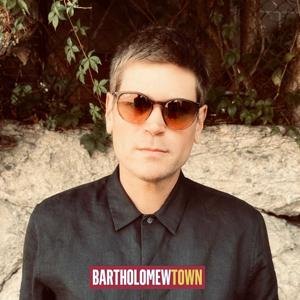
Bartholomewtown is an independent news and interview podcast exploring Rhode Island through conversations with the people driving politics, culture, business, and public life. Hosted by journalist…

90,949 Listeners

43,824 Listeners

38,001 Listeners
6,720 Listeners
4,019 Listeners

87,051 Listeners

111,852 Listeners
32,248 Listeners
14 Listeners
20 Listeners

15,918 Listeners
47 Listeners
10,791 Listeners
2,265 Listeners
1,650 Listeners