Beijing Bytes: US-China Tech War Updates

Beijing Bytes: US-China Tech War Updates

By Inception Point AINewsTechnologyPoliticsTech News
Download on the App Store

Beijing Bytes: US-China Tech War Updates episodes

  • Tech Tug-of-War: US-China Rare Earth Truce, but Chip Choke Holds Remain
    This is your Beijing Bytes: US-China Tech War Updates podcast.
    Welcome back, tech sleuths—Ting here, delivering your biweekly scoop on the digital chess match that is the US-China tech war. This is Beijing Bytes, and I’ll cut to the silicon chase: the rivalry isn’t cooling off, it’s just gotten a firmware update.
    Picture it: two weeks ago, just as you were finishing your coffee, Beijing and Washington were locked in yet another round of marathon trade negotiations in, of all places, rainy London. On June 5th, Xi Jinping and Donald Trump (yes, he’s back in the White House) had their infamous phone call, breaking some ice and setting the stage. Fast forward to June 11th—President Trump posts (not tweets, but Truth Socials) that the US and China reached a tentative trade deal. The headline? Reciprocal tariffs slashed to 10%. That’s right, a partial truce, at least on paper.
    But here’s the twist: tech wasn’t left out in the drizzle. China agreed to temporarily ease its stranglehold on rare-earth exports for six months. Why does this matter? Because rare earths are the secret sauce in everything from fighter jets to your phone’s vibration motor, and China controls 85% of the global supply chain. Within hours, a major magnet maker in China announced it had snagged an export license. This is huge for US manufacturers, who’ve been sweating bullets over rare earth shortages. But don’t get too cozy—this is a six-month Band-Aid, not a cure.
    Meanwhile, the US didn’t budge much on advanced tech export controls. Treasury bigwig Scott Bessent and Commerce Secretary Howard Lutnick held the line: no loosening on cutting-edge chip or AI-related tech for now. Beijing pushed hard, but Washington knows that semiconductors are today’s nuclear codes—the lines must be drawn with a soldering iron.
    If you’re in the business world, you felt the aftershocks. Smartphone exports from China crashed a jaw-dropping 72% year-on-year—the steepest drop since records began in 2011. Companies like Huawei and SMIC, already bruised by entity list restrictions, are now racing to retool with homegrown tech while facing mounting global skepticism.
    What’s the strategic playbook here? The US is laser-focused on maintaining the choke points: advanced chip tech, semiconductor manufacturing equipment, and software exports. China, for its part, doubles down on self-sufficiency, rolling out another $143 billion for homegrown semiconductor innovation. It’s a tug-of-war between American ingenuity and Chinese scale—each side determined to avoid dependence and claim the digital throne.
    Expert consensus says we’re not in a tariff war anymore. The new battlefield is technological sovereignty. Both nations are playing a long game, betting that future economic power and military strength hinge on who writes the code and builds the chips.
    Forecast? Expect more tactical truces like the rare-earth reprieve, but don’t hold your breath for a handshake moment. With mutual distrust—and a few cyber inci
    This content was created in partnership and with the help of Artificial Intelligence AI.
    4 min
  • Silicon Smackdown: US-China Tech Tensions Boil Over as Hacks and Bans Fly
    This is your Beijing Bytes: US-China Tech War Updates podcast.
    Hey folks, Ting here—your byte-sized guide to the wild world where Beijing meets Silicon Valley in cyberspace. Buckle up, because the past two weeks have felt like binge-watching a hacker thriller… except it's all too real.
    Let’s start with the latest cyber ruckus. Just this week, researchers flagged a nasty Chrome zero-day and a string of zero-click iPhone attacks. Now, before you blame that cousin who clicks every pop-up, know these exploits are getting sneaky—think malicious code, no user interaction, and a target list that jumps continents. Analysts suspect a mix of state-backed and freelance actors, with fingers pointed in both directions across the Pacific. The game? Stealing AI models, industrial secrets, and, of course, geopolitical leverage.
    Meanwhile, on the rules front, Uncle Sam doubled down on tech restrictions—especially around semiconductors. Remember ASML’s EUV lithography machines? The US is still blocking China from snagging them. This bottleneck is a real pain for Chinese chipmakers like SMIC and a headache for Huawei, who can now only dream of making 5nm chips domestically. The US isn’t just playing defense; it’s investing at home, pumping $50 billion via the CHIPS Act to lure chipmaking stateside. On the flip side, Beijing is waving around a $143 billion self-sufficiency fund, trying to invent, not import, its way out of these chokeholds.
    But wait, trade war vibes are fading. We're in a tech cold war now. Top officials met in London and emerged with a so-called “framework” for a truce. But as Dexter Roberts from the Atlantic Council put it, any roll-back of tech controls would be a big win for China—and that still seems unlikely. Both sides have realized that the real fight isn’t about running shoes or soybeans, it’s about who controls AI, quantum, and the chips that power tomorrow’s tanks and Teslas.
    The result? Fragmented supply chains, nervous markets, and smaller countries forced to pick sides or face economic whiplash. Nvidia’s Jensen Huang even quipped that restrictions might actually help Chinese competitors by forcing them to innovate faster—like, turbo mode fast.
    So what’s next? Experts predict more export bans (think quantum and AI), more cyber-espionage, and a global tech ecosystem that keeps splintering. In short: if you’re in the crosshairs of this rivalry, expect more whiplash—and a lot more hacking headlines.
    That’s all for this week’s Beijing Bytes. This is Ting, reminding you: in the US-China tech war, even the bots are watching. Stay patched, stay sharp, and see you on the other side of the firewall!
    For more http://www.quietplease.ai
    Get the best deals https://amzn.to/3ODvOta
    This content was created in partnership and with the help of Artificial Intelligence AI.

    3 min
  • Beijing Bytes: Rare Earths, Crashing Exports & Hacked IoT - US-China Tech Tango Gets Wilder
    This is your Beijing Bytes: US-China Tech War Updates podcast.
    *Beijing Bytes: US-China Tech War Updates with Ting*
    Hey tech enthusiasts! Ting here, coming to you with the latest pulse check on the increasingly complex US-China tech tango. The past two weeks have been absolutely wild in the digital battleground.
    Let's dive right in. Just two days ago, on June 10th, Washington and Beijing finally hammered out a new framework in London to de-escalate mounting trade tensions that nearly collapsed bilateral trade last month. The May 12th Geneva negotiations pulled us back from the brink of what would have been an unprecedented trade embargo. Both sides claimed victory, with Trump securing rare earth exports from China, while Beijing got verbal commitments against decoupling.
    But make no mistake – this isn't your parents' trade war anymore. We've graduated to a full-blown technology conflict where semiconductor manufacturing equipment, rare earth processing, and software export controls are the new battlefields. China controls a staggering 85% of global rare earth processing capacity, while the US leverages its chokehold on advanced chip production equipment like ASML's EUV lithography machines.
    The casualties are mounting. On May 22nd, smartphone exports crashed a jaw-dropping 72% – the steepest decline since records began in 2011. Meanwhile, on the cyber front, a China-linked espionage group has been busy targeting over 70 organizations across multiple sectors between July 2024 and March 2025, including cybersecurity firm SentinelOne.
    Adding to the digital chaos, two distinct Mirai botnets are currently exploiting the Wazuh Server vulnerability (CVE-2025-24016) to launch distributed denial-of-service attacks and infect IoT devices worldwide.
    What's becoming crystal clear is that both nations are prioritizing technological sovereignty over short-term economic gains. China's $143 billion semiconductor self-sufficiency drive and America's $50 billion CHIPS Act tell the story. Beijing's strategy of retaliating, preparing its population for a protracted struggle, and waiting for Washington to seek an offramp proved effective in recent negotiations.
    The strategic chess match continues to evolve beyond tariffs to technological dominance. Despite the recent de-escalation, experts warn the truce remains fragile. One thing is certain – Beijing views recent US actions as vindication for its techno-industrial and self-reliance policies.
    As we look ahead, expect continued volatility, especially around export controls on emerging technologies. The future economic and geopolitical power balance will ultimately be determined not by trade deficits, but by who controls the critical technologies of tomorrow.
    This is Ting, signing off until our next tech war update!
    For more http://www.quietplease.ai
    Get the best deals https://amzn.to/3ODvOta
    This content was created in partnership and with the help of Artificial Intelligence AI.
    4 min
  • Chip Wars & Cyber Scars: US-China Tech Clash Heats Up as Ting Dishes the Digital Dirt
    This is your Beijing Bytes: US-China Tech War Updates podcast.
    Hey Byteheads, Ting here with your up-to-the-minute download on the US-China Tech War—and trust me, these past two weeks have seen more plot twists than a kung fu hacker flick.
    Let’s plug in fast. While you were updating your VPN and I was chasing backdoors in the cloud, Washington and Beijing have been busy shifting their rivalry from tariffs to what I call “chip wars and cyber scars,” alias the techno-strategic battlefield of 2025.
    First, the mother of all choke points: semiconductors. The US doubled down on its restrictions, leaning on ASML to keep EUV lithography machines away from China, putting a serious dent in Beijing’s plans to crank out next-gen chips. Meanwhile, China’s still holding about 85% of the world’s rare earth processing, which—like it or not—means the US clean energy and defense dreams have a Made in China sticker on them. These moves aren’t only geeky—they’re high-stakes chess. Semiconductor bans hit Huawei again, with new blocks on their access to cutting-edge 5nm chips, forcing a total business model reboot for the once-mighty giant.
    But if you thought we were just trading chips and minerals, think again. In London, just this week, USTR Katherine Tai and China’s Wang Wentao nearly hit the big red “mutually assured embargo” button before backing off. Both sides stepped down tariffs—barely—but ramped up controls on software, research exchanges, and AI smarts. The handshake in Geneva had barely cooled before new export controls started biting, especially on AI and dual-use tech. Beijing got the US to verbally agree it doesn’t want total decoupling, but I wouldn’t bet my crypto wallet on this détente holding for long.
    Now, the cyber side. Both nations are investing more in self-reliance than ever. The US is pumping $50 billion into its own fabs via the CHIPS Act. China’s countering with a $143 billion semiconductor self-sufficiency blitz. And on the digital walls? Cybersecurity is getting tighter than a WeChat group chat for dissidents. Zero-trust, double-check, and a lot less cross-border code-sharing—expect more siloing, fewer open-source love letters.
    Industry-wise? US firms are scrambling to diversify supply chains out of China, while Chinese giants refocus on Asia, Africa, and Latin America. Short-term, that means higher costs and market uncertainty. Long-term, we’re looking at a fractured tech world—think two parallel AI universes, one running on Baidu and Haier, the other on Google and Nvidia.
    Expert forecast? This isn’t a trade war, it’s tech cold war 2.0. Both sides are playing long-term, but China’s manufacturing dominance outweighs its software vulnerability—at least for now. Expect more cyber skirmishes, more talent restrictions, and a world where sharing code is riskier than sharing your Netflix login in a hacker forum.
    Stay tuned, cybernauts. This byte war is just getting started, and your favorite firewall-breaking narrator is on the case.
    F
    This content was created in partnership and with the help of Artificial Intelligence AI.
    4 min
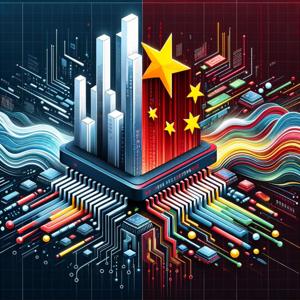
  • Chip Chop, Hack Attack: US-China Tech Showdown Sizzles!
    This is your Beijing Bytes: US-China Tech War Updates podcast.
    *Beijing Bytes with Ting: US-China Tech War Heats Up*
    Hey techies, Ting here! Buckle up for your dose of digital drama from the frontlines of the US-China tech war. The past two weeks have been absolutely explosive!
    First off, we've seen the "Chip War" escalate to new heights. The US expanded restrictions on Huawei, blocking their access to 5nm chips, essentially kneecapping their advanced computing capabilities. This follows the pattern established back in 2019 when Huawei first landed on the entity list, but the noose is tightening.
    Meanwhile, did you catch that bombshell from RSAC 2025 in San Francisco? At the Moscone Center, cybersecurity experts revealed a string of targeted attacks exploiting Qualcomm's Adreno GPUs. Three zero-days were finally patched, but not before significant damage was done. Word on the street is these weren't random hackers - the sophisticated nature points to state-sponsored activity, though nobody's officially naming names.
    Chrome users got a nasty surprise with a new zero-day that's being actively exploited. If you haven't updated your browser, stop what you're doing and do it now! This vulnerability sits alongside an alarming rise in what experts are calling "New Fragmentation" of the global tech ecosystem.
    On the strategic front, both nations have doubled down on technological sovereignty. China's pouring a staggering $143 billion into semiconductor self-sufficiency while America's CHIPS Act allocated $50 billion to boost domestic production. It's no longer about tariffs, folks – it's about controlling the critical chokepoints in global technology supply chains.
    Speaking of supply chains, ASML's EUV lithography machines remain at the center of this tech cold war. Without access to these Dutch-made marvels, China's dreams of producing cutting-edge chips remain just that – dreams.
    The most fascinating development? The emergence of parallel tech ecosystems. Wiz just launched WizOS, a secure container Linux built on Alpine's foundation. This represents the growing trend of companies creating secure, sovereign technology stacks to navigate the bifurcating digital landscape.
    What does this mean for the future? Industry analysts predict we'll see continued fragmentation through 2026, with smaller nations increasingly forced to choose sides in this technological divide. The real victims may be developing countries caught between these competing tech blocs.
    The days of a unified global internet are fading fast as we witness the birth of separate digital spheres of influence. As the old Chinese proverb says, "When two tigers fight, the mountain suffers." In this case, the mountain is our global innovation ecosystem.
    This is Ting, signing off from Beijing Bytes. Stay secure, stay informed, and I'll see you in the metaverse!
    For more http://www.quietplease.ai
    Get the best deals https://amzn.to/3ODvOta
    This content was created in partnership and with the help of Artificial Intelligence AI.
    4 min
  • The Tech Tango Turns Toxic: US-China Chip Chokehold Escalates!
    This is your Beijing Bytes: US-China Tech War Updates podcast.
    Hey everyone, Ting here, your byte-sized brainiac bringing you the latest on the US-China tech war from Beijing Bytes. Strap in—because the past two weeks have been a high-speed, low-latency rollercoaster across the cyber and silicon front lines.
    Let’s kick off with the hotwire: just last week, the US Commerce Department dropped the hammer on China. Orders went out to American firms like Synopsys, Cadence, and Siemens EDA—big names if you care about the tiny stuff, like, say, every chip in every modern device—to halt exports of critical electronic design automation software, or EDA, to Chinese customers. These aren’t just mundane programs; EDA tools are the backbone for designing advanced semiconductors, and the US action hit the stock prices hard before they partially bounced back. According to TrendForce, China accounted for roughly 16% of Synopsys and 12% of Cadence’s EDA sales in 2024, so this move is more than a slap on the wrist—it’s a full-on chokehold on R&D in both capitals.
    Trump, yes, he’s back, and not just with more tweets—he doubled down on tariffs too. Steel and aluminum tariffs just got jacked up to 50%, plus new rounds of restrictions now cover not only AI chips, Nvidia gear, and semiconductor chemicals like butane and ethane, but also jet engines. The US is revoking previously granted licenses and even student visas, casting a pretty wide net. The Chinese Ministry of Commerce called foul, saying these moves gut diplomatic progress and hit China’s “legitimate rights and interests.”
    On the other side, Beijing isn’t exactly blinking. Chinese giants—think SMIC in chips and the Beijing Academy of Artificial Intelligence—are ramping up self-reliance. For every US export ban, new funding and “buy local” initiatives emerge, pivoting toward homegrown alternatives and seeking fresh markets across Southeast Asia and Africa.
    The impact? Global supply chains are getting another stress test. Semiconductor fragmentation is now the new normal, with smaller countries caught in the crossfire, having to pick a side or risk being left behind entirely. The ripple effects go beyond chips—think electric vehicles, smart tech, and industrial robotics, where China is flexing for pole position and the US is scrambling to hold ground.
    Expert analysis is blunt: the US-China tech war isn’t just about who launches the faster AI or builds the best chip—it’s about global dominance and shaping the rules for everyone else. The recent dial-back in tariff tit-for-tat after talks between Trump and Xi hints at a willingness to avoid outright economic meltdown, but don’t mistake that for peace. The strategic competition is set to escalate, with both sides doubling down on domestic innovation, security hardening, and forming new tech alliances.
    Looking ahead, expect further decoupling, sharper cyber maneuvers, and a drag race for leadership in AI, 5G, and quantum computing. As for your gadgets—don’t
    This content was created in partnership and with the help of Artificial Intelligence AI.
    4 min
  • Tech Titans Clash: US-China Trade Tango Gets Spicy! 🌶️🇺🇸🇨🇳💻
    This is your Beijing Bytes: US-China Tech War Updates podcast.
    *Hey tech enthusiasts, Ting here with your Beijing Bytes update! Buckle up for the latest in the ever-intensifying US-China tech showdown that's making my dual monitors overheat with notifications.*
    The past fortnight has been absolutely wild in the US-China tech space. Just yesterday, China's Commerce Ministry accused the Trump administration of undermining the May 12 trade agreement by issuing new AI chip export controls and halting sales of chip design software to Chinese companies. This comes after President Trump claimed on Friday that Beijing violated the same trade pact - talk about a diplomatic game of "no, you!"
    Let's break down what's actually happening: On May 29, the US Commerce Department ordered American companies to stop exporting key chip materials and software to China. The "big three" in electronic design automation - Cadence, Synopsys, and Siemens EDA - received letters requiring them to get special licenses before selling their critical semiconductor design software to Chinese firms.
    The restrictions don't stop there. The US is also targeting chemicals for semiconductors like butane and ethane, along with machine tools and aviation equipment. And if that wasn't enough tension, the administration announced on May 28 they're starting to revoke visas for Chinese students - a move Beijing calls a serious violation of earlier agreements.
    Meanwhile, there are reports that Nvidia is building a new AI chip specifically for the Chinese market with computing cluster capabilities - a fascinating pivot as companies try to navigate these choppy geopolitical waters.
    To add fuel to the digital fire, Trump doubled steel and aluminum tariffs to 50% effective tomorrow, June 4. According to Arthur Kroeber at Gavekal Research, "Fresh hostilities between the US and China show that the many questions left hanging after the Geneva ceasefire in mid-May still have no satisfactory answers."
    The implications? We're looking at potential fragmentation of global supply chains, especially in semiconductors. Small and developing countries are caught in the crossfire, forced to choose between US and Chinese technology blocs. The Brookings Institution calls this the "New Fragmentation" - a disruption to the global trading system that increases conflict risk.
    For investors, Stephen Kotkin yesterday flagged that a US-China war is now "the only real threat to portfolios" - a sobering assessment amid Trump's second term policy shifts.
    As your friendly neighborhood tech analyst who's been watching this space since before TikTok was cool, I'd say we're witnessing a defining moment in the global tech landscape. The coming weeks will show whether we're heading toward technological decoupling or if cooler heads might prevail.
    This is Ting, signing off until next time - keep your firewalls updated and your diplomatic channels open!
    For more http://www.quietplease.ai
    Get the best deals https://am
    This content was created in partnership and with the help of Artificial Intelligence AI.
    4 min
  • US-China tech war reignites! Geneva truce in shambles as chip battle escalates - buckle up, it's gonna be a wild ride!
    This is your Beijing Bytes: US-China Tech War Updates podcast.
    Hey there, Ting here with your Beijing Bytes update! The last two weeks have been absolute chaos in the US-China tech space, and my servers are practically melting from tracking it all!
    So remember that Geneva "ceasefire" from May 12th? Yeah, that lasted about as long as my last smartphone battery. While the trade deal did reduce those sky-high reciprocal tariffs from 145% down to 30% on the US side and from 125% to 10% on China's side, the tech war is heating up in new ways.
    Just three days ago, the US Commerce Department dropped a bombshell by telling American electronic design automation companies like Cadence, Synopsys, and Siemens EDA to stop supplying their semiconductor design technology to China. That's a direct hit to China's chip ambitions! And if that wasn't enough, Washington also suspended licenses for tech exports to COMAC, China's state aerospace manufacturer, potentially crippling development of their homegrown C919 aircraft.
    Beijing's response? Not happy, to put it mildly. Sources tell me these moves are seen as undermining the entire Geneva agreement, especially since China had just relaxed their critical minerals export restrictions as part of the deal. The timing couldn't be worse, as both sides were supposed to be engaging in 90 days of bilateral talks on trade and economic matters.
    As Nick Marro from the Economist Intelligence Unit put it, "We are increasingly seeing US-China frictions migrate away from tariffs and into more difficult areas of the economic relationship." And he's right - semiconductors, 5G, AI, and even potassium technology are all battlegrounds now.
    What's particularly concerning is how this affects global supply chains. The semiconductor sector is especially vulnerable, with Taiwan and South Korea caught in the middle. Smaller nations are being forced to choose between US and Chinese tech blocs, which is disrupting economic stability worldwide.
    Looking ahead, Dan Wang from Eurasia Group predicts "the decoupling of US-China tech sectors will be prolonged and increasingly complex, regardless of the state of tariff negotiations." I'm tracking rumors that China might announce new countermeasures targeting American cloud services as early as next week.
    For businesses caught in this digital crossfire, uncertainty remains the only certainty. The temporary tariff relief might ease some inflationary pressure, but the tech restrictions signal a deeper, more structural competition that's reshaping the global digital economy.
    That's all for now! This is Ting signing off - keep your firewalls updated and your supply chains diversified!
    For more http://www.quietplease.ai
    Get the best deals https://amzn.to/3ODvOta
    This content was created in partnership and with the help of Artificial Intelligence AI.
    3 min
  • Silicon Smackdown: US-China Tech Rivalry Heats Up with Hacks, Chips, and AI Drama
    This is your Beijing Bytes: US-China Tech War Updates podcast.
    Hello everyone, Ting here, your digital byte-sized guide to the tangled drama of US-China tech rivalry! Let’s get right to the silicon heart of the matter—over the past two weeks, the tech competition between Washington and Beijing has packed as much suspense as the latest hit C-drama, but with more semiconductors and fewer love triangles.
    First up, cyber frontlines have been unusually noisy. The usual shadowy exchanges between Chinese and American cyber actors hit new levels after suspected state-linked hackers targeted financial firms in both nations. Notably, anonymous Chinese sources pointed fingers at Washington for "weaponizing cyberspace," while US agencies traced a sophisticated phishing campaign back to a Shanghai-based hacking collective. Cue the accusations, denials, and many a “no comment”—classic cyberwarfare theater.
    Meanwhile, fresh tech restrictions are coming down like spring rain. On May 12, both sides announced a mutual tariff rollback—an apparent pause to the so-called “Chip War” with US tariffs on Chinese tech goods dropping from a blistering 145% to 30%, and China slashing its countermeasures to a softer 10%. Sounds like progress, right? Well, as Zhou Weihuan over at UNSW noted, don’t break out the baijiu just yet: these tariff cuts are temporary, and deeper tensions remain alive and well. Beijing is still wary of Washington’s ever-tightening chokehold on advanced semiconductors and AI, especially after last week’s surprise controls on chipmaking equipment exports to China.
    The policy front is equally steamy. The US is doubling down on its industrial policy, with Congress approving a new tech investment review board aimed squarely at outbound investments in Chinese AI and quantum startups. China isn’t just watching: it’s stepping up its “dual circulation” policy, funneling investment into homegrown champions like DeepSeek—the AI firm causing waves by powering not just EVs but also robotics giants like UBTech and PC conglomerate Lenovo. Deutsche Bank analysts even called DeepSeek’s rise a “Sputnik moment” for China, a warning bell for Washington that the next industrial revolution clock is ticking fast.
    Industry impact? The global supply chain continues its identity crisis. Chipmakers in Taiwan and South Korea are caught in the crossfire, forced to choose sides as US and China both dangle incentives and wield penalties. Meanwhile, smaller nations are sweating—caught between two tech giants, the risk of getting squeezed rises by the day.
    What’s the strategic outlook? Experts warn that while this ceasefire on tariffs may cool markets temporarily, the tech rivalry is only fragmenting the global order further. Think less of a “new cold war,” more of an endless tug-of-war, with countries and companies forced to pick teams or risk going solo. Long story short: no one should expect lasting peace—just briefer, sharper battles.
    Forecast: expect more sanctions, more
    This content was created in partnership and with the help of Artificial Intelligence AI.
    4 min
  • Beijing Bytes: Chip Wars, Cyber Mischief & TikTok Whiplash - US-China Tech Tango Heats Up
    This is your Beijing Bytes: US-China Tech War Updates podcast.
    Hey everyone, Ting here! It’s May 27, 2025—buckle up because Beijing Bytes is going to move faster than a TikTok “For You” page on 5G. The past two weeks in the US-China tech war have been a firewall-smashing spectacle: cyber-mischief, tariff tennis, and regulatory déjà vu. Let’s hack right in.
    First up, the US and China pulled a rare diplomatic move on May 12—agreeing to dial tariffs down to 10%. But don’t pop the Baijiu yet. Just days later, President Trump saber-rattled with threats of a whopping 50% added tariff if China doesn’t step back on their 34% retaliatory levies. Chinese Ministry of Commerce isn’t blinking—they called it “a mistake on top of a mistake” and swore to fight to the end. Still, there’s tea leaf reading over whether both sides want to avoid a full tech decoupling or just buy time for their industry titans to regroup.
    On the cyber front, intrigue is everywhere, even if direct hacks haven’t made front-page news this week. The US National Security Council is wringing its hands about safeguarding advanced AI chips from “adversaries”—read: China. This became critical after the Trump administration let major Gulf states buy advanced US chips, supposedly with “robust security standards.” But with enforcement agencies understaffed and contracts tight-lipped, experts are side-eyeing whether those chips might slip, “accidentally,” into Chinese hands. Imagine a game of cyber hot potato with the fate of global AI at stake.
    Speaking of chips, we’re still in full-blown “Chip War” mode. The US is locking down semiconductor exports and investments to firms like Huawei and SMIC, but now the Middle East has entered the chat—thanks to Microsoft and some AI infrastructure deals stretching as far back as Biden. David Sacks, White House AI and Crypto Czar, is crowing about “America First” and the dream of out-building China in AI infrastructure. But the Brookings Institution and tech pundits warn that this tech bifurcation risks fragmenting the world’s digital economy; smaller nations are forced to pick sides or risk being digitally stranded.
    Meanwhile, Trump’s TikTok ban was delayed again—cue eye rolls in Beijing and boardrooms alike. For ByteDance, it means more time to maneuver, but for US policymakers, it’s a game of regulatory whack-a-mole.
    Bottom line: Policy shifts are whipsawing industries, especially supply chains from Taiwan to the Gulf. Semis, AI, and cloud are the big battlefields. The strategic stakes? Both the US and China are racing not just for economic dominance but for the power to set tomorrow’s global tech rules. As for forecasts? Experts see more fragmentation coming, and the next big flashpoint—whether it’s a cyber incident, new export ban, or regulatory squeeze—could drop any day.
    Alright, this is Ting signing off—until the next packet drop in the world’s most electric tech contest!
    For more http://www.quietplease.ai
    Get the best deals https://amzn.to
    This content was created in partnership and with the help of Artificial Intelligence AI.
    4 min

About Beijing Bytes: US-China Tech War Updates

From the publisher's feed

This is your Beijing Bytes: US-China Tech War Updates podcast.