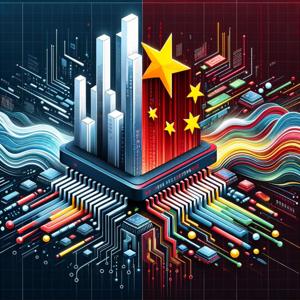
Beijing Bytes: US-China Tech War Updates

Beijing Bytes: US-China Tech War Updates

By Inception Point AINewsTechnologyPoliticsTech News
Download on the App Store

Beijing Bytes: US-China Tech War Updates episodes

  • Cyber Chessboard Heats Up: US-China Tech Standoff Escalates into Full-On Thriller!
    This is your Beijing Bytes: US-China Tech War Updates podcast.
    Hey everyone, Ting here – your cyber-witty guide to all things Beijing, hacking, and this endlessly escalating US-China tech standoff. I know, I know, you’re probably thinking: “What’s new?!” Well, grab your virtual popcorn because the past two weeks have been a full-on thriller.
    First punch: cybersecurity. Just last week, a new case of alleged state-backed hacking hit the wires, this time with a US defense contractor’s internal documents reportedly snatched by a group traced back to China’s infamous APT41. That’s right, same crew known for those “smash-and-grab” cyberespionage sweeps. Meanwhile, US Cyber Command is on high alert as chatter suggests “counter-intrusion” ops ramping up across Pacific-based US infrastructure. The cyber chessboard is alive and buzzing, and nobody’s clapping, least of all the businesses caught in the crossfire.
    Now, to policy – oh boy. Donald Trump is flexing again, rolling out another round of tariffs aimed squarely at Chinese electronics and AI-enabling chips. On April 17, he announced at the White House Rose Garden that these measures are a “national security necessity.” Xi Jinping, never one to blink, has already countered with Beijing’s own stealthy non-tariff barriers. This isn’t just about paying more for iPhones, folks: China is slow-walking US agricultural and LNG exports with intricate regulatory mazes and by using third-party brokers to re-route purchases. That’s bureaucratic kung fu at its finest. Some analysts are warning these nontariff restrictions are, frankly, stickier and more damaging than the tariffs themselves—particularly for Trump’s political base in states like Iowa and Nebraska.
    Industries? Feeling the squeeze. Tech firms from Silicon Valley to Shenzhen are scrambling to decouple supply chains, burning cash on “de-risking strategies.” Apple and Tesla are already reporting delays as they try to shift components out of China. American chipmakers like Nvidia and AMD? They’re stuck in limbo, with export bans forcing them to rethink R&D hubs. Even Chinese AI startups are struggling, now that access to US cloud computing services is drying up.
    What about the big picture? Experts like Ben Lilliston at the Institute for Agriculture and Trade Policy argue that, unlike tariffs which you can just pay, these new full-on restrictions actually block entire lines of products. There’s talk of a “tech iron curtain” dividing the world into two rival innovation spheres. Some economists even warn this war could snowball, risking millions of jobs and triggering a new wave of global poverty.
    Strategically, both Washington and Beijing are digging in for a long conflict, each side betting the other will blink first. The US is doubling down on “friend-shoring”—roping in allies like Japan, South Korea, and the EU to build alternative tech alliances. China is fast-tracking home-grown chip development and looking to BRICS countries for new digital partn
    This content was created in partnership and with the help of Artificial Intelligence AI.
    5 min
  • Tingling Tensions: US-China Tech Tiff Turns Nasty! Tariffs, Hacks, and Bounties, Oh My!
    This is your Beijing Bytes: US-China Tech War Updates podcast.
    Well, hello there, it's your trusty cyber sleuth Ting—tech-savvy, witty, and your go-to for all things tangled in the US-China tech tussle. Buckle up, folks, because the past two weeks have been a rollercoaster of hacking, tariffs, and trade chaos. Let’s break it down.
    First, the tariff bombshells. President Trump raised tariffs on Chinese goods to a jaw-dropping 125%, sparking a wave of retaliatory measures from Beijing. China countered with 84% tariffs on American imports, while also tightening its grip on critical mineral exports and targeting U.S. firms with sanctions. Amidst the chaos, Washington toyed with delisting nearly 300 Chinese companies from American stock exchanges, a move that could shake up $1.1 trillion in market value. Wall Street is rattled, and experts are saying we’re heading into a long, messy standoff. Meanwhile, companies like Nvidia are attempting to adapt, announcing a $500 million push for AI supercomputers made entirely in the U.S. Call it re-shoring, but it’s a slow and painful process.
    Now, let’s talk cyber. The U.S.-China trade war isn’t just economic—it’s digital combat too. Information emerged that last year, China admitted to its involvement in the infamous Volt Typhoon cyberattacks on U.S. critical infrastructure. These attacks infiltrated everything from utilities to telecommunications, with hackers lingering for months, prepping for potentially destructive campaigns. And guess what? Experts warn that these cyber "bombs" might still be lying in wait, ready to ignite if tensions escalate further.
    China, not one to miss a beat, accused the U.S. National Security Agency (NSA) of hacking into the 2025 Asian Winter Games’ systems in Harbin, targeting competition infrastructure and sensitive data. Beijing even named three NSA operatives and issued bounties for their arrest. In this digital tit-for-tat, neither side seems willing to back down.
    And speaking of hacks, cyber scammers are cashing in on the confusion around tariffs. Fake invoice scams, phishing schemes, and malicious domains have exploded, leaving consumers and businesses alike scrambling to protect their data and wallets. It’s practically a cyber-crime gold rush.
    What’s the strategic implication here? For the U.S., the goal is clear: choke China's access to American supply chains and capital, while bolstering domestic tech capabilities. But China’s not flinching—they’ve been preparing for this showdown for years. Xi Jinping’s government is doubling down on its "self-reliance" mantra while continuing to deepen ties with other nations, like Vietnam, to sidestep U.S. pressure.
    The crystal ball for the future? Expect more chaos in trade, supply chains, and cyberspace. If you thought the tech decoupling was winding down, think again. These two giants are embedding their rivalry into every sector of global tech—innovation, cybersecurity, and the digital economy.
    Stay tuned, because this tec
    This content was created in partnership and with the help of Artificial Intelligence AI.
    4 min
  • Cyber Showdown: US vs China - Hacks, Attacks, and Sneaky Tactics! 🇺🇸🇨🇳💻
    This is your Beijing Bytes: US-China Tech War Updates podcast.
    The past two weeks in the US-China tech rivalry have been a whirlwind, and oh boy, is the cyber scene buzzing! Hi, I’m Ting, your go-to for all things cyber and China, and let me just dive into the highlights.
    First off, the trade war is no longer about tariffs alone—it’s spilling into cyberspace. The US recently hiked tariffs on Chinese goods to a whopping 125%, and China retaliated with an 84% uptick on American imports. But the real tension lies under the surface. Cybersecurity experts warn that China could pivot from economic retaliation to full-blown cyberattacks. Remember the *Volt Typhoon* campaign? This Chinese state-sponsored group had infiltrated US infrastructure, lying dormant like a digital time bomb. The goal? Potential disruption if a critical moment—like a Taiwan crisis—arises. Think electric grids, water systems, transportation networks—scary stuff, right?
    Oh, and here’s a juicy insider scoop: last December, during a closed-door meeting in Geneva, Chinese officials indirectly confirmed their involvement in Volt Typhoon attacks. The US delegation was left shaken, realizing this was more than surveillance—it was a message. Meanwhile, the Salt Typhoon campaign, targeting US telecom giants like Verizon, added fuel to the cyber fire. These intrusions underscored China’s long-term strategy: gather intelligence now, and exploit it later.
    While state-backed cyber campaigns simmer, cybercriminals are already cashing in. Fraudsters are exploiting tariff chaos with phishing scams claiming you owe import fees to release packages. AI-powered tools make these attacks frighteningly convincing—fake DHL emails, phony invoices, and even in-person scams are spiking. In just the first quarter of 2025, over 300 tariff-related malicious domains popped up. Scammers are playing chess while most of us are still figuring out checkers.
    From the US side, cybersecurity is a top priority—or at least it’s supposed to be. Critics have questioned the Trump administration’s mixed messaging, but one thing is clear: the stakes are astronomically high. With Chinese hackers responsible for more breaches than Russia, Iran, and North Korea *combined*, the pressure is on. Former FBI Director Chris Wray even called Chinese cyber operations the “defining threat of our generation.” No big deal, right?
    So where does it all lead? Experts say China is playing the long game, embedding itself into US systems and waiting for the right moment to strike. The US, in turn, is ramping up efforts to isolate Chinese tech firms and replace compromised infrastructure. But let’s face it—this is a high-stakes chess match, and both sides are calculating their next moves.
    Buckle up, folks. The US-China tech war is no longer just about 5G or microchips—it’s now about who can dominate in cyberspace. Stay tuned; it’s going to be a wild ride!
    For more http://www.quietplease.ai
    Get the best deals https://amzn.to/3ODvOta
    This content was created in partnership and with the help of Artificial Intelligence AI.
    4 min
  • Tingling Tensions: US-China Cyber Showdown Heats Up! No Holds Barred in Digital Cold War
    This is your Beijing Bytes: US-China Tech War Updates podcast.
    It’s been quite the rollercoaster in the US-China tech war these past two weeks, hasn’t it? Let me break it down for you—I'm Ting, your go-to source for all things China-tech-hackery, and trust me, it’s been a cyberminefield out there.
    First, cybersecurity. It’s like a full-blown cyber chess game between Beijing and Washington. China’s state-sponsored hackers—think infamous groups like Volt Typhoon and Salt Typhoon—have been busy. They’ve got their digital tentacles in US critical infrastructure, from water systems to telecommunications. Imagine this: malware dormant in systems, just waiting for a signal. It’s all part of Beijing’s long-term strategy to undermine competitors and prep for a possible Taiwan showdown. Meanwhile, new US legislation called the ‘Strengthening Cyber Resilience Against State-Sponsored Threats Act’ is aiming to counter these threats by beefing up defenses and forcing interagency coordination. But let’s be real—it feels more like a Band-Aid on a gaping wound.
    On the trade front, tensions hit new highs—Trump hiked tariffs on Chinese imports to 125%, and Beijing fired back with retaliatory duties. Here’s where it gets dicey: experts like Tom Kellermann warn that China could escalate with systemic cyberattacks as retaliation. Beijing’s hackers have already infiltrated critical US systems, from energy grids to transportation, so the potential for chaos is terrifyingly real. Oh, and don’t forget the scammers who’ve jumped on this tariff chaos, duping people with phishing schemes that look like legit import fees.
    Industry-wise, both nations are feeling the heat. US companies relying on Chinese manufacturing are scrambling to relocate supply chains, but that’s easier said than done. Meanwhile, China’s tech ambitions, like its push in AI, are accelerating. The debut of their latest AI model, DeepSeek, underscores how they’re racing ahead while the US fumbles with protecting its own systems.
    Strategically, experts are calling this digital Cold War the "defining conflict of the century." Anne Neuberger from the US National Security Council said it best: China’s espionage isn’t about stealing consumer data—it’s about reshaping global power dynamics. The implications of their access to critical US infrastructure could be catastrophic if tensions over Taiwan boil over.
    So, what’s next? Expect more tit-for-tat. The US might impose stricter tech export controls and even sanctions, while Beijing will likely double down on cyber offensives and tech self-reliance. My prediction? We’re far from the endgame in this tech war—it’s only just heating up. Stay tuned, folks; I’ll keep you posted.
    For more http://www.quietplease.ai
    Get the best deals https://amzn.to/3ODvOta
    This content was created in partnership and with the help of Artificial Intelligence AI.
    3 min
  • Ting's Tech Tea: U.S.-China Cyber Clash Heats Up Amid Tariff Tango
    This is your Beijing Bytes: US-China Tech War Updates podcast.
    Whew, folks, it’s been a whirlwind couple of weeks in the world of U.S.-China tech relations! Pull up a chair, because I, Ting, your ever-curious digital storyteller with a knack for all things cyber and geopolitical, am here to break it down for you. Buckle up—this won’t be boring.
    Let’s start with the tariff brawl. Just yesterday, April 7, President Trump issued a sharp-edged ultimatum: if Beijing doesn’t roll back its recent 34% tariff increase on U.S. goods, a staggering 50% tariff on Chinese imports will go live on April 9. China, predictably, isn’t taking this lying down. It’s rolling out countermeasures, including slapping hefty tariffs on U.S. goods and tightening rare earth export controls. Trust me, rare earths are a big deal—they’re critical to everything from your smartphone to advanced weaponry. Markets? Tanking. Analysts? Wringing their hands over a potential global recession. Everyone else? Waiting to see who blinks first, though it seems neither Trump nor Xi Jinping is interested in backing down.
    Meanwhile, the cyber battlefield is just as fiery. China’s hackers, state-sponsored, of course, have been on a tear. Remember Salt Typhoon, the crew known for burrowing into U.S. telecommunications networks? They’re still at it, vacuuming up sensitive data. Volt Typhoon’s been even sneakier—deploying malware into U.S. infrastructure systems like water, energy, and transportation. Think about it: dormant malware, just waiting for Beijing’s signal. It’s all part of China’s long game, especially as tensions over Taiwan simmer. And don’t get me started on reports that China hacked U.S. Treasury systems late last year. Cyber espionage? An understatement.
    But the U.S. isn’t sitting idle. The Biden administration laid the groundwork for tougher tech restrictions in 2024, and Trump has picked up the baton with gusto. A slew of Chinese tech products—think drones and autonomous cars—are facing outright bans. The risks? Espionage, data theft, and potential sabotage. The U.S. is also fortifying its supply chain, severing reliance on Chinese components for critical systems. Bold? Yes. Effective? We’ll see.
    The collateral damage is everywhere. Global industries are reeling—tech giants, manufacturers, even agriculture. Chinese companies are scrambling for new markets, while U.S. firms are lobbying furiously for exemptions. Behind closed doors, European leaders fret over becoming dumping grounds for cheap Chinese exports.
    What’s next? Experts warn that we’re headed for a long, icy standoff. But here’s my take: neither side can afford to lose. For the U.S., it’s about safeguarding security and supply chains. For China, it’s about projecting dominance and resilience. And for the rest of us? Well, keep an eye on your gadgets, your stock portfolios, and, let’s be honest, your wallets.
    So, as the saying goes in tech circles: patch your systems, update your strategies, and stay curious. Thi
    This content was created in partnership and with the help of Artificial Intelligence AI.
    4 min
  • Cyber Showdown: China's Hacks, Bans & AI Flex | US Fights Back!
    This is your Beijing Bytes: US-China Tech War Updates podcast.
    Phew, what a whirlwind the last couple of weeks have been in the US-China tech war! It’s Ting here, your techie tour guide to all things cyber, hacking, and geopolitical tech drama. Buckle up—this ride is juiced with quantum leaps, cyberattacks, and policy salvos.
    First, let’s talk cyber. China’s been busy escalating its hybrid tactics. State-sponsored cyberattacks targeting U.S. critical infrastructure continue to grab headlines. Just imagine: a hacker group like Salt Typhoon breaking into nine telecommunications networks or prying into U.S. officials’ phones. Now, layer that with the December discovery of Volt Typhoon’s infiltration of U.S. router networks—it’s basically Beijing flexing its digital muscles to disrupt U.S. defenses and gather intelligence. Oh, and Taiwan? They’re fielding 2.4 million cyberattack attempts a day. Yes, daily. If that doesn’t scream high-tech warfare, I don’t know what does.
    Meanwhile, Washington isn’t taking it lying down. The Biden administration has expanded restrictions on Chinese tech—think bans on Huawei telecom gear, Chinese drones, and even internet-connected cars. National security concerns are driving these moves, particularly fears of espionage. But Beijing is retaliating in stride. In March, they rolled out an anti-monopoly probe against Google, leveraging trade tensions to make a domestic stand.
    Speaking of domestic, China’s tech ambitions are accelerating. Ever heard of DeepSeek? It’s China’s homegrown rival to ChatGPT that debuted with jaw-dropping capabilities—and at a fraction of the cost. Silicon Valley was rattled. Experts like IBM’s George Tulevski warn this is just the beginning. Add to that China’s strategic push for semiconductor independence and rare earth mineral controls—a critical squeeze on global supply chains that made the U.S. sit up and take notice.
    The policy fallout isn’t just about rivalry; it’s reshaping industries. The U.S. CHIPS Act is pumping billions into domestic semiconductor production, while Beijing doubles down on AI and 5G investments. But this isn’t purely bilateral. Countries like Turkey are inching into China’s orbit, with Huawei outfitting their telecommunications infrastructure. Meanwhile, developing nations might find China’s tech—like DeepSeek’s cheaper AI—irresistibly alluring.
    Where does this leave us? A future where everyone picks a tech side is on the horizon. Huawei vs. Apple, ChatGPT vs. DeepSeek—it’s a high-tech duopoly being etched into the global market. Will mutual dependencies like semiconductor trade temper this clash? Maybe, but the stakes are sky-high. Who gets the next innovation edge could decide not just market dominance but geopolitical power for decades. So, stay tuned—I’ll keep decoding this tech war byte by byte!
    For more http://www.quietplease.ai
    Get the best deals https://amzn.to/3ODvOta
    This content was created in partnership and with the help of Artificial Intelligence AI.
    4 min
  • Jasmine Tea & Spyware: Sipping Through the US-China Tech Showdown
    This is your Beijing Bytes: US-China Tech War Updates podcast.
    The other day, I found myself scrolling through some tech headlines while sipping jasmine tea, and boy, the updates on the US-China tech war were anything but dull. Let me break it down for you.
    First, cybersecurity was all over the news. China’s state-backed hackers, most notably the groups Salt Typhoon and Volt Typhoon, have been ramping up activities like it’s an Olympic sprint. Salt Typhoon alone managed to breach at least eight U.S. telecommunications providers, snagging sensitive call data and even law enforcement surveillance records. Imagine your phone calls being someone’s open book. Meanwhile, Volt Typhoon kept busy planting access in critical infrastructure to prepare for potential conflict. Now that’s a whole new level of foresight—or paranoia, depending on who you ask. On the flip side, China accused a U.S. intelligence agency of hacking into their high-tech firms. Cyber tit-for-tat? Sounds about right.
    Then came the bombshell: Washington doubled down on tech restrictions. The export of advanced AI chips to China? Blocked. Companies like Nvidia and AMD are now walking a tightrope. On top of that, the U.S. government dismantled Chinese spyware operations on American soil, from drone spying near military bases to clandestine police stations. It’s like we’re living in a real-life spy thriller.
    Meanwhile, across the Pacific, Beijing isn't just sitting back. They launched their own investigations into companies like Google, signaling, “Hey, two can play this game.” But what’s really shaking the tech world is China’s relentless push for semiconductor independence. U.S. sanctions might have slowed them down, but they just doubled their investment in AI, quantum computing, and 5G. Their approach screams “self-reliance or bust.”
    Now, these moves aren't just sharpening political knives; the tech industry is already feeling the heat. Semiconductor supply chains are doing the cha-cha—one step forward, two steps back. U.S. and Chinese companies are scrambling for alternatives, and meanwhile, smaller players like Vietnam and Mexico are cashing in as the new kids on the block.
    So, what does the future look like? Experts predict more turbulence. The U.S. seems bent on keeping its AI edge—think the CHIPS Act—and China’s all-in on being the next global tech superpower by 2030. Both sides are playing hardball, and there’s no timeout in sight. For now, all I can say is, keep your eyes on the plug wars, chip wars, and cyber skirmishes. Things are heating up faster than hotpot on high.
    For more http://www.quietplease.ai
    Get the best deals https://amzn.to/3ODvOta
    This content was created in partnership and with the help of Artificial Intelligence AI.
    3 min
  • Salty Hacks, Tariff Tiffs, and AI Arms Race: US-China Tech Tango Heats Up!
    This is your Beijing Bytes: US-China Tech War Updates podcast.
    Hey there, tech enthusiasts! It's Ting here, your friendly neighborhood China and cyber expert, coming at you with the latest scoop on the US-China tech tussle. Buckle up, because the past two weeks have been a wild ride in the digital domain!
    Let's kick things off with a bang – or should I say, a hack? The infamous Chinese hacker group Salt Typhoon has been up to their old tricks again, this time targeting telecom companies across the globe. According to Recorded Future's Insikt Group, these digital desperados compromised five more telecom providers, including two in the US, by exploiting unpatched Cisco edge devices. Talk about a salty situation!
    But wait, there's more! The US Department of Justice dropped a bombshell, charging 12 Chinese nationals in a state-backed hacking campaign. These cyber ninjas, some working for a company called i-Soon, were allegedly conducting espionage operations at the behest of China's Ministry of Public Security and Ministry of State Security. Looks like the Great Firewall isn't just for keeping information in – it's for sending hackers out too!
    On the policy front, President Trump has been busy wielding his tariff hammer. He's threatening to slap an additional 10% tariff on Chinese goods, bringing the total to a whopping 20%. It's like a game of economic whack-a-mole, but with real-world consequences. The tech industry is bracing for impact, with concerns that this could disrupt global supply chains and innovation.
    Speaking of innovation, China's artificial intelligence scene is buzzing with excitement after the success of DeepSeek, their homegrown large language model. It's giving American tech giants a run for their money, causing quite a stir in Silicon Valley. The US is feeling the heat, with some senators even suggesting we should "steal" China's best AI talent. Talk about a reverse brain drain!
    But it's not all doom and gloom for Uncle Sam. The US is beefing up its military partnership with Japan, aiming to counter Chinese "aggression" in the region. Defense Secretary Pete Hegseth announced an upgrade of the US military command in Japan to a new "war-fighting headquarters." Looks like the chess board of geopolitics just got a new piece!
    Meanwhile, China's flexing its military muscles too, launching large-scale drills around Taiwan. It's like a high-stakes game of Risk, but with real ships and planes. The Chinese military says it's a "severe warning" against Taiwan's independence aspirations. Talk about sending a message!
    So, what's the forecast for this tech typhoon? Experts predict continued turbulence in US-China relations, with cybersecurity and AI likely to be the main battlegrounds. The race for technological supremacy is heating up, and neither side shows signs of backing down.
    As we navigate these choppy waters, one thing's for sure – the tech world is in for an exciting ride. Keep your firewalls up and your innovation engines ru
    This content was created in partnership and with the help of Artificial Intelligence AI.
    5 min
  • Tech Tantrum: US-China Showdown Heats Up with Tariffs, Hacks, and Shady Deals
    This is your Beijing Bytes: US-China Tech War Updates podcast.
    Hey there, tech enthusiasts! Ting here, your go-to gal for all things China, cyber, and hacking. Buckle up, because the US-China tech war has been on fire these past two weeks, and I've got the hottest updates for you.
    So, picture this: Trump's back in the White House, and he's not wasting any time. On March 3rd, he slapped a 20% tariff on Chinese goods, citing the fentanyl crisis as the reason. Beijing didn't take that lying down. The very next day, they hit back with tariffs on US agricultural products. It's like watching a high-stakes ping-pong match, but with billions of dollars on the line.
    But wait, there's more! The US Department of Commerce decided to join the party by adding 80 entities to the Entity List. Their goal? To restrict China's access to high-performance computing and quantum technologies. It's like they're trying to build a digital Great Wall around America's tech.
    Now, let's talk cyber shenanigans. The Justice Department dropped a bombshell, charging 12 Chinese nationals in a massive hacking operation. These guys were allegedly working for the Ministry of Public Security and a company called i-Soon. Talk about a bad day at the office! They're accused of targeting everything from government agencies to religious organizations. It's like they were playing a global game of "Hack-a-Mole."
    But China's not just sitting back and taking it. They've beefed up their anti-foreign sanctions law, giving themselves more power to seize assets and restrict activities of foreign entities. It's like they're saying, "Two can play at this game, Uncle Sam!"
    In the corporate world, Apple's Tim Cook made a surprise visit to China, announcing a $4.1 million donation to Zhejiang University. Some experts are raising eyebrows, calling it an indirect donation to the Chinese Communist Party. Talk about walking a tightrope!
    Meanwhile, the FCC is playing detective, investigating Chinese companies suspected of selling banned equipment in the US. It's like a high-tech game of hide and seek, with national security at stake.
    But here's the kicker: a report from BitSight revealed that one-third of the US supply chain relies on software or services from companies designated as Chinese military companies by the US Defense Department. Talk about awkward!
    Looking ahead, experts are predicting more turbulence. The tech decoupling between the US and China is likely to accelerate, with both sides doubling down on their respective strategies. We might see more restrictions on AI and quantum computing, increased scrutiny of cross-border investments, and a continued battle for dominance in emerging technologies.
    One thing's for sure: this tech war is far from over. It's like we're watching a high-stakes chess game, where each move could reshape the global tech landscape. So, keep your eyes peeled and your firewalls up, because in this digital age, the next big hack or breakthrough could be just arou
    This content was created in partnership and with the help of Artificial Intelligence AI.

    5 min
  • Silk Typhoon Strikes! Trump's Tariff Tango and China's Robot Revolution Heats Up the Tech War
    This is your Beijing Bytes: US-China Tech War Updates podcast.
    Hey there, tech enthusiasts! Ting here, your friendly neighborhood China and cyber expert, ready to dive into the latest US-China tech drama. Buckle up, because the past two weeks have been a wild ride in the world of digital espionage and economic warfare.
    Let's start with the bombshell that dropped on March 5th - the US Department of Justice indicted 12 Chinese nationals, including two government officials, for a massive cyber espionage campaign. These hackers, linked to groups like Silk Typhoon and I-Soon, allegedly infiltrated everything from US government agencies to news outlets and defense contractors. Talk about a digital smash-and-grab!
    But wait, there's more! Remember that Treasury Department hack from December? Well, it turns out it was part of this larger operation. The hackers were so sneaky, they managed to stay undetected for years. It's like they were playing a high-stakes game of digital hide-and-seek, and the US was "it" for way too long.
    Now, let's talk tariffs. Trump's back, and he's not pulling any punches. On March 3rd, he slapped a 20% tariff on Chinese goods, citing concerns over fentanyl production. China, not one to be outdone, retaliated the very next day with duties on US agricultural products. It's like a game of economic ping-pong, and farmers are caught in the middle.
    But it's not all doom and gloom. Chinese tech companies are showing some serious resilience. Take DeepSeek, for example. This AI startup has been making waves with its R1 model, giving American tech giants a run for their money. It's so good that even Amazon Web Services is getting in on the action. Who said the US had a monopoly on innovation?
    Speaking of innovation, China's not just playing defense. They're going on the offensive in the humanoid robot race. With recent successes from companies like DeepSeek and Unitree, China's making a play for pole position. Watch out, Boston Dynamics!
    But here's where it gets really interesting. The US is starting to realize that containment alone won't win this tech race. Experts are calling for a shift in strategy, focusing more on fostering innovation at home rather than just trying to hold China back. It's like they've finally figured out that the best defense is a good offense.
    Looking ahead, we're in for some turbulent times. With Trump's tariffs set to kick in on April 2nd, and China preparing for economic shocks, the tech landscape is about to get even more unpredictable. Chinese Premier Li Keqiang has already hinted at new policies to keep the economy running smoothly. It's like watching two tech giants play a high-stakes game of chess, and we're all just pawns on the board.
    So, what's the takeaway? The US-China tech war is heating up, with both sides pulling out all the stops. From cyber espionage to economic warfare, it's a battle on all fronts. But remember, in the world of tech, today's underdog could be tomorrow's leader. Stay tu
    This content was created in partnership and with the help of Artificial Intelligence AI.
    5 min

About Beijing Bytes: US-China Tech War Updates

From the publisher's feed

This is your Beijing Bytes: US-China Tech War Updates podcast.