
Sign up to save your podcasts
Or

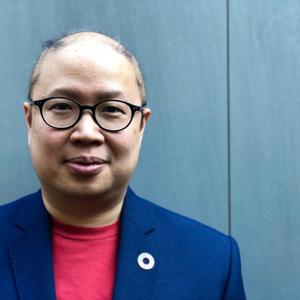


How does individual shareholder activism work? How does personal agency and systems change work together in a theory of change? How do we become change makers? What did Catherine's mother teach me?
Catherine is Chief Executive of ShareAction. She coordinates civil society activism to promote responsible investment Catherine was recognised by the World Economic Forum as a Young Global Leader in 2014. ShareAction campaigns have significantly altered corporate strategy and government policy. For instance, on HSBC establishing environmental targets and Tesco making healthy food commitments.
Transcript and video available here.
Topics covered:
-Catherine’s activism journey
-Catherine on community and theory of change
-ShareAction theory of change
-Healthy eating campaign, ideas on fiduciary duty
-How to decide on campaign topics
-Converting skeptics
-What poetry taught me dividual agency at National Express
What poetry taught me
-Questions on individual pension investors vote
-Maximising the well being of people
-Responsible Investment Bill idea, maximising welfare
-Better growth not degrowth
-Problems of vaccine nationalism
-Underrated/overrated: art, cycling, carbon tax, voting, remote work, having children
-Catherines advice to young people
Tassos Stevens is artistic director of Coney. The transcript of the podcast here. Prior to Coney, he did a doctorate in Psychology, won the inaugural James Menzies-Kitchin Award for theatre directors, did the NT Studio Directors Course, ran the ROAR platform to support new work and new artists on the London fringe, and also worked as critic, teacher, many flavours of researcher, salesman, and chef.
We chat about pivotal moments of theatre and explore what interactive and immersive mean for theatre.
The importance of play and “making belief’ as opposed to “suspending disbelief”
How to involved audiences in agency and what Tassos advises for young people interested in theatre.
Matt Clancy is a progress fellow at Emergent Ventures. He teaches at Iowa State University and writes on Substack a newsletter called New Things Under the Sun, which you should subscribe to if you are interested in anything innovation related. Matt has also synthesised many of the emerging studies on remote working. Transcript and video links here.
We discuss whether progress has been stagnating and the importance of moral and social progress as well as technological.
Whether small team or large teams are better for invention.
How important are agglomeration effects and how a declining agglomeration impact might make the case for remote work stronger.
The role of innovation prizes and patents for incentivising innovation and if copyright is too long.
Whether innovation agencies (eg ARPA) are the answer and what Matt would do as an executive director of one.
Differences between UK and US university systems and advice for young people.
Matt’s thinking on remote work.
Short introduction to Ben Yeoh Chats.
If you are curious about the world this show is for you.
I have extended conversations across humanities and science with artists, philosophers, writers, theatre makers, activists, economists and all walks of life.
Episodes include:
-What is like to go to Columbia University at 15 and be valedictorian with Leopold Aschenbrenner?
-What should worry us about gamification with philosopher Thi Nguyen ?
-What sparks invention with innovation historian, Anton Howes ?
-What do story telling and improvisation tell us about being human with Lee Simpson.
-I’ve learned a tremendous amount doing these shows and hope you enjoy and learn too.
Enjoy.
Lee Simpson is a founder member of Improbable (theatre makers and improvisers), a long time Comedy Store Player (since the 1980s) and one of Paul Merton's Impro Chums. He’s also been a croupier, cinema projectionist and breakfast show DJ. He’s written plays, appeared in sit-coms and in some films, been on some Radio 4 panel shows and once did a very poor poodle act at the London Palladium. That vast range highlights two strong threads one in the world of improv and another in the world of theatre making. Transcript available here and video version available here.
-I speak to Lee on his roots in theatre and improv and the importance of Keith Johnstone’s work.
-Lee outlines his thoughts on on his drama school experience, two schools of improv (US and UK) andhow improv and theatre misunderstand one another.
-We discuss the infrastructure (or lack of) behind improv and theatre and techniques on listening to the audience and feedback loops in performing.
-We sketch out ideas on structure and story form, on being human and Lee explains status structure as a technique.
-We chat about how humans understand the world and how we view our lives as story that changes through time.
-Lee reflects on being part of a comedy group for a long time and shares a stroy on Mo Mowlam.
-We talk on how to “build back better” in the arts and what Open Space is and techniques for listening and genuine connections to art.
-We end with advice Lee has for young people.
Contents:
I had an excellent chat with Leopold Aschenbrenner. Leopold is a grant winner from Tyler Cowen’s Emergent Ventures. He went to Columbia University, aged 15, and graduated in 2021 as valedictorian. (Contents below ↓ ↓ ). He is a researcher at the Global Priorities Institute, thinking about long-termism. He has drafted a provocative paper encompassing ideas of long-termisim, existential risk and growth.
For some of our conversation we were joined by phantom Tyler Cowen imagining what he might think. We discussed Leopold’s critique of German culture and whether he’d swap German infrastructure for the American entrepreneurial spirit.
Whether being a valedictorian is efficient, if going to University at 15 is underrated and life at Columbia University.
What you can learn from speed solving Rubik’s cubes and if Leopold had to make the choice today if he’d still be vegetarian.
Thinking about existential risk, Leopold considers whether nuclear or biological warfare risk is a bigger threat than climate change and how growth matters and if the rate of growth matters as much depending on how long you think humanity survives.
Considering possible under rated existential risk Leopold sketches out several concerns over the falling global birth rate, how sticky that might be and whether policy would be effective. We consider what is worth seeing in Germany, how good or not GDP is as a measure and what we should do with our lives.
Leopold has wide ranging thoughts and in thinking and working on fat tail existential ruin risks is working on saving the human world. Fascinating thoughts.
Transcript Here with links and a video version here. Ben Yeoh's microgrants here.
1:35 How to think about a future career (80000 hours)
4:10 Is going to university at 15 years old underrated?
6:22 In favour of college and liberal arts vs Thiel fellowships
9:14 Is being a valedictorian efficient (H/T Tyler Cowen)
13:01 Leopold on externalities and how to sort smart people
15:08 Learnings from Columbia. The importance of work ethic.
19:50 Leopold learning from Adam Tooze and German history
22:16 Leopold critiques German culture on standing out.
23:08 Observations on decline of German universities
25:22 Leopold concerns on the German leadership class 30:25 German infrastructure and if it feels poor
34:13 Critique of too much netflix
35:27 What to learn from speed cubing Rubik’s cubes and weird communities
38:04 Leopold’s story of Emergent Ventures and what he found valuable
40:08 Embracing weirdness and disagreeableness
42:20 Leopold considering whether US entrepreneurial culture worth swapping for German infrastructure
44:44 Leopold on social ills of alcohol
44:59 Examining Leopold’s ideas of existential risk and growth
48:49 Different views depending on time frame:700 years or millions of years
52:18 Leopold’s view on importance of growth and risk of dark ages
57:07 Climate as a real risk but not a top existential risk 1:01:02 Nuclear weapons as an underrated existential risk
1:01:45 View on emergent AI risk 1:03:20 Falling fertility as an underrated risk
1:15:35 Mormon and eternal family
1:17:29 Underrated/overrated with phantom Tyler Cowen
1:36:10 What EA gets right/wrong, EA as religion? 1:44:56 Advice: Being independent, creative and writing blogs
I chat with C. Thi Nguyen who used to be a food writer and is now a philosophy professor at University of Utah. Thi thinks about trust, art, games, and communities.
We discuss his first book, Games: Agency as Art. The book is about how games are the art form that work in the medium of agency. We chat about the difference between play and games and wider games philosophy.
Thi worries about the problems on trusting experts, if oneself is not an expert and how none of us are experts in most domains. We discuss making tea, process art and how we should be thinking about making food. Fascinating topics across food and philosophy.
Transcript and links available here. Contents and Youtube links below.
06:13 Thi on Gamification
12:15 Thi on Trust and what to be worried about a gamified system
16:25 Thi on philosophy of expertise and the challenge of finding experts to trust
20:58 Thi on board games recommendations
26:05 Is “play” better or “games” better? Thi answers on how games are different from play.
31:20 The importance of drinking games
34:13 The four types of games
36:35 How constraints are useful
45:47 What is process art
50:02 Games and cooking
57:39 How to make tea
1:02:16 Thi on creative productivity (don't kill the weird ideas)
Anton Howes on innovation history, the improving mindset and progress studies. Anton Howes is an innovation historian and policy thinker, we have a fascinating wide ranging conversation on innovation. Transcript and video available here.
We discuss raising the prestige of innovators today, but consider it easy to say but harder to enact.
Anton argues for the benefits of a “great Exhibition” as a direct mechanism to inspire an “improving” mindset - the type of mindset that leads to innovation.
Anton shares what he has discovered about how invention has happened in history; and whether stagnation has happened or not recently, that it might be good to send a signal on the importance of innovation in any case. Why incremental innovation might be underrated, and why the process of innovation (ideas, iterations) is not publicised more.
Anton discusses evidence that formal education has not been needed for historic inventors (an improving mindset being potentially more important) and whether there are more than enough innovation prizes currently.
We have a strong section on problems with copyright and how rules around copyright might not be fit for purpose today and how to pronounce “gimcrack” - a useless invention - and why having more gimcracks might be a sign of healthy innovation.
A fascinating walk through innovation history.
Anton Howes is an innovation historian and policy thinker. He’s written a brilliant history of the RSA - the royal society for arts, manufactures and commerce - arguably Britain’s national improvement agency over the last 260 years - and is the RSA’s Historian in Residence. I recommend you check out his book, Arts and Minds. He writes a substack newsletter blog on innovation thinking that has won an award from Tyler Cowen’s Emergent Ventures. He has a day job as head of innovation research at the Entrepreneurs Network think tank and in my mind is an all round excellent thinker on innovation.
Tom Gosling was a partner at PwC, and an advisor to boards around executive pay and incentives, governance, and strategy. He's currently an Executive Fellow at London Business School and helps steer the work of the purposeful company collaboration.
Tom speaks about the benefits of purpose and the risk of corporate puff. We touch on audit reform and the challenges of regulation. We discuss the importance of democractic process and the role of government compared to the role of business. We underrate/overate carbon taxes, diversity targets, Milton Friedman and financial incentives.
On a personal note, we talk about the challenges of achieving a personal netzero, the joys of singing and the importance of understanding what makes you happy.
It's a fascinating conversation on many currently debated topics. Read the transcript.
Jonathan Meth is a dramaturg, extraordinaire, director, curator, very involved in the European theatre and disability arts. He's a lecturer at Goldsmiths. He's worked with many of the major theatre organizations in Britain, and he's a fascinating theatre thinker.
We speak about dramaturgy and theatre as playwright lead and theatre as colloboration lead. We discuss disability arts and a little about what autism has taught us. Jonathan looks at theatre funding and infrastrucutre and what it might mean to build back differently.
We discuss his work with Fence and what he has learned teaching a wide mix of international students.
Jonathan makes a case for the power of questions and curiosity.
A transcript is available here along with video.
From the publisher's feed

2,445 Listeners

16,072 Listeners