
Sign up to save your podcasts
Or

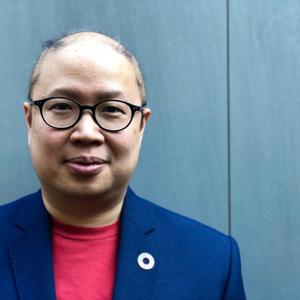


Jacob Soll is a professor of philosophy, history and accounting. His latest book is Free Market: The History of an Idea. Jake has works on the history of accounting, The Reckoning: Financial Accountability and the Rise and Fall of Nations (2014); the influence of Machiavelli, "The Prince" (2005) and Louis XIV’s First minster, Jean-Baptiste Cobert, The Information Master (2009). Jake works on accounting standards and financial transparency as well as the history of ideas.
Transcript, video and links here: https://www.thendobetter.com/investing/2022/9/24/jacob-soll-the-history-of-free-market-ideas-cicero-adam-smith-hamilton-machievelli-podcast
We discuss is better accounting can save the world by looking at externalities, natural capital and human capital better.
We chat about the central role of Cicero and stoic thought in the history of free market thinkers, and how Cicero was in this respect more influential than Aristotle.
Jake talks about how Christian thinkers, and Franciscan monks thought about free markets and also Alexander Hamilton and Machievelli.
We discuss the role of institutions in shaping thought. Jake argues for the importance of patenting ideas and if UK’s patent office gave the country an edge when the industrial revolution started.
We debate if “idea” or “dream” would be a better word to encompass the historic thinking on free markets.
We discuss the role of culture, to what extent protectionism and some tariffs helped economies develop historically.
We play underrated/overrated on: GDP as a measure, carbon tax, standardized sustainability measures, and UBI, universal basic income.
We end on Jake’s current projects and life advice. Study more serious humanities books!
Naomi Fisher is a clinical psychologist. She has written a book: Changing Our Minds: How children can take control of their own learning. The book is an excellent look at self-directed education also known in the UK as home education, or in the US as home school or unschooling.
We discuss her background as a psychologist and her work with autistic people. We chat about her experience of eleven schools and why she has ended up asking questions about control. Why we control people and particularly why we control children.
Naomi discusses the different schools of thought on education and why progressive doesn't necessarily mean child-led education and why she likes the idea (Alison Gopnik) of a child as scientist.
We chat about what Naomi views as the problems of the current system such as the overuse of exams and why behvaiourism only covers a tiny slice of what learning is in the real world. Naomi highlights some of the benefits of a self-directed education process and what home education can bring.
We talk about the amount of time we have spent in the world of Minecraft. Why parents may be overworried about the use of technology and screen time. Why YouTube might be more beneficial than not.
Naomi answers my question on how to deal with child meltdown and outlines the idea of zones of tolerance. I pose a question on to what extent we should influence a child’s learning “syllabus” and Naomi outlines her view that a child should always have agency and not be forced into “learning” but that does not mean we should not seek to give a child a rich environment and opportunity to learn.
Naomi answers listener questions. First, if home education is only for rich people, and, second, the impacts of the pandemic on home educators.
We play overrated/underrated and Naomi rates: the government setting the curriculum, the role of exams, social media and technical colleges.
Naomi talks about her latest projects including a second book on neurodiversity and self-directed education, called “A Different Way to Learn” available in 2023.
Naomi ends with advice:
Transcript available here: https://www.thendobetter.com/arts/2022/8/31/naomi-fisher-home-education-unschool-agency-in-learning-meltdowns-child-led-learning-cognitive-psychology-podcast
Kana Chan is living in Kamikatsu which is Japan’s first “zero waste” village in rural Japan. She writes a substack at Tending Gardens and runs INOW which is an educational homestay programme to stay to at Kamikatsu. In 2021, she was selected as an Emerging Climate Leader Asia-Pacific through the ProSPER.Net Leadership Programme. She has lived and worked in Bangladesh, and travelled widely as a photographer and story teller. Kana cares deeply about climate action, sustainable tourism, and education.
I ask Kana about how she arrived in Kamikatsu.
I ask what people should understand or misunderstand, how Kana finds Japanese culture and how it differs between rural and city. What she misses about the city.
What people have learned coming to Kamikatsu, all the farming knowledge she has learned growing and harvesting her own food, and what the process of tea farming (awa bancha) has been like.
Kana explains that zero waste currently means here that 80% of all waste in the village is recycled (in 45 different categories!) and how the villagers manage their waste systems.
We play overrated/underated on toilets that play music, sitting in hot baths and Japan train journeys.
Kana ends on her latest projects and her advice on what can be learned from disconnecting from a culture of convenience.
"I think being able to just see a diverse amount of the way people live and seeing how people choose to spend their time, how people choose to spend their money, I think can be just a really enriching experience. And so you have those things to contrast and see, "Oh, that's probably something I can take into my own life or not." I don't think the countryside is necessarily for everyone, but I do think that people can incorporate aspects that bring more nature into their lives or bring more self-sufficiency into their lives and I think a good starting point for that is spending time in the countryside and then being able to see what you can take back to wherever home is for you.
If you do decide to move to the countryside, just changing your frame of mind and seeing the things that are inconveniences as opportunities for you to spend your time in other ways, and disconnecting from a culture of convenience can be just a really personally enriching thing. That's what I've found for myself and so, yeah, I hope everyone gets to spend some time in the countryside; whether it's permanent, temporal, or just transient. If Kamikatsu interests you in particular or sustainability from a countryside perspective, I'd be happy to welcome you here to Kamikatsu"
Transcript and link to video available here: www.thendobetter.com/arts/2022/8/1/kana-chan-living-in-a-zero-waste-village-in-rural-japan-kamikatsu-podcast
Larry Temkin is a moral philosopher. He has major works on inequality (book: Inequality); transitivity and social choices (when A > B > C, A > C ?; book: Rethinking the Good) and recently on the philosophies of doing good (critiquing some aspects of Effective Altruism, long-termism, international aid, utilitarianism | book: Being Good in a World of Need). As of 2022, he was Distinguished Professor of Philosophy at Rutgers University.
The podcast is in two parts. The second part focuses on Effective Altruism (EA) ideas. The first part looks at transitivity, and other debates in philosophy through a pluralist lens. This is part 2 on EA ideas.
The whole conversation is 3 hours long, so please feel free to dip in and out of it, and if you are intrigued go and look to Larry’s original works. There is a link to a transcript and commentray in a blogpost at the end.
In the podcast, I ask:
I ask how Larry comes up with such unique ideas such as on inequality and transitivity, and the story of how he was rejected by three great philosophers when he first proposed his idea. (In part 1)
Larry explains consequentialist notions of personhood, especially with respect to a question I had on Singer’s view on disability, and even though our general views are more pluralist. (In part 1)
I pose a dilemma I have about the art of a friend who has done awful things, and Larry explains the messiness of morals. (In part 1)
(In part 2) Larry recounts the dinner with Derek Parfit, and Angus Deaton, along with a billionaire and other philosophers. This dinner gave Larry bad dreams and lead to Larry thinking up many disanalogies to Peter Singer’s classic pond analogy.
We discuss the pond analogy and how it may or may not be a good analogy for doing good in foreign places especially the disaster that was Goma. Larry discusses how he changed his mind on whether international aid may be doing more harm than good and both philosophical and practical reason behind it.
Larry also discusses some concern on the the possible over focus on long-termism.
We barely touch on Larry’s work in inequality, but I will mention that it has been influential in how the World Health Organisation and potentially ultimately China has viewed access to healthcare. The work has also highlighted the complexity around equality, and that it may be more individualistic and more complicated than often assumed.
Throughout all of this is the strong sense of a pluralistic view of the world, where we may value many attributes such as fairness, justice, health and that a focus on only one value may lead us astray.
Larry ends with life advice:
Transcript and video, plus blog posts here: https://www.thendobetter.com/arts/2022/7/24/larry-temkin-transitivity-critiques-of-effective-altruism-international-aid-pluralism-podcast
Larry Temkin is a moral philosopher. He has major works on inequality (book: Inequality); transitivity and social choices (when A > B > C, A > C ?; book: Rethinking the Good) and recently on the philosophies of doing good (critiquing some aspects of Effective Altruism, long-termism, international aid, utilitarianism | book: Being Good in a World of Need). As of 2022, he was Distinguished Professor of Philosophy at Rutgers University.
The podcast is in two parts. The second part focuses on Effective Altruism ideas. The first part looks at transitivity, and other debates in philosophy through a pluralist lens. This is part 1.
The whole conversation is 3 hours long, so please feel free to dip in and out of it, and if you are intrigued go and look to Larry’s original works. I provide some links in the blogpost link at the end to his books and some commentary from others (Tyler Cowen, reviewers) and a transcript.
In the podcast, I ask:
How should we value a human life?
What is transitivity? And we discuss the axioms that transitivity underpins for economic, social and moral choices.
I ask how Larry comes up with such unique ideas such as on inequality and transitivity, and the story of how he was rejected by three great philosophers when he first proposed his idea.
Larry explains consequentialist notions of personhood, especially with respect to a question I had on Peter Singer’s view on disability, and even though our general views are more pluralist.
I pose a dilemma I have about the art of a friend who has done awful things, and Larry explains the messiness of morals.
Larry recounts the dinner with Derek Parfit, and Angus Deaton, along with a billionaire and other brilliant philosophers. This dinner gave Larry bad dreams and lead to Larry thinking up many disanalogies to Peter Singer’s classic pond analogy.
We discuss the pond analogy and how it may or may not be a good analogy for doing good in foreign places especially the disaster that was Goma. Larry discusses how he changed his mind on whether international aid may be doing more harm than good and both philosophical and practical reasons behind it.
Larry also discusses some concern on the the possible over-focus on long-termism.
We barely touch on Larry’s work in inequality, but I will mention that it has been influential in how the World Health Organisation and potentially ultimately China has viewed access to healthcare. The work has also highlighted the complexity around equality, and that it may be more individualistic and more complicated than often assumed.
Throughout all of this is the strong sense of a pluralistic view of the world, where we may value many attributes such as fairness, justice, health and that a focus on only one value may lead us astray.
“I've taught many students over the years. I'm coming to the end of my career. I'm retiring. I've had countless students in my office over the years who are struggling with the question of, "How should I lead my life? This is extremely controversial, but being the pluralist that I am, I believe in a balanced life. Now, you can find balance in a number of ways. But just as I'm a pluralist about my moral values, I'm a pluralist about what's involved in being a good person and what's involved in leading a worthwhile human life. I'm signed up in the camp of, "We only have one life to lead."
Transcript and video: https://www.thendobetter.com/arts/2022/7/24/larry-temkin-transitivity-critiques-of-effective-altruism-international-aid-pluralism-podcast
Leigh Caldwell is a cognitive economist. Leigh has done excellent work around the psychology of pricing and exploring how people consume intangible products with their mind. He has founded several software companies and is co-founder of the Irrational Agency.
We chatted on Leigh graduating from university at 18, what attracted him to the internet and wanting to start companies and what lead him to the path of psychology, behavioral economics and ultimately to cognitive economics.
How the question of “Why do we get so much of what's important to us from what is manufactured inside our heads?” inspired Leigh to understand more about the brain.
Leigh dicusses his ideas on why the human brain might have developed the mental tools that we have. We explore the idea of mental simulation, what the brain may be incentivised to do and how the brain may solve the challenge of planning for future action and deferred gratification.
Leigh discusses the idea of discounting the future, the challenge of long causality chains in our scenario thinking and how the ease of imagination may impact how we think of future actions.
Leigh explains his model exploring agency and choice, and the difficulties and limitations of models.
We discuss the power of stories, why narrative might work and the possible process of conditioning and deconditioning to story narratives. Why once a myth or pattern is embedded, it is so difficult to work around.
Leigh gives me some free consulting on how to price and sell sustainable investing products, how to use surveysand how a small company could do it themselves to an extent. We discuss utility theory and nudge economics.
We play over-rated/under-rated on: nudging, carbon tax, carbon labels, being a generalist, deliberative democracy; and Scottish Independence.
We end on current projects and Leigh’s life advice.
‘...storytelling is your voice going out there and hopefully having as big an impact as you want. But, story hearing is the other side of it. We should be listening to the stories of all the people around us, and the many people whose stories are not heard in society. By hearing those stories and understanding what underlies them, then we will be able to figure out what the right story is that we might then want to tell…”
Transcript/Video: https://www.thendobetter.com/investing/2022/7/21/leigh-caldwell-cognitive-economics-power-of-stories-how-the-mind-consumes-dreams-and-plans-future-actions-podcast
David Finnigan is an award winning theatre maker, writer and games creator from Ngunnawal country, Australia. David produces performances and writing that explores concepts from Game Theory, Complex Systems science, Network Theory and Resilience. He has also had the dubious honour of performing on stage with me, in our performance lecture collaboration, Thinking Bigly. He has a show coming up at The Barbican, London, 27 September, 2022: You’re Safe Til 2024: Deep History.
We discuss how all art might be considered climate art. Thus we should consider jobs as jobs, why put green there? or health is health. This can take some of the heat out of the language.
We chat about the process of creativity in particular in performing arts. The importance of David finding a community in his home town and the constant making of work at the start of his artistic journey.
David discusses what he learned from scientists and his father. How this has integrated into his art.
We debate on what is most misunderstood about Australia and London.
I ask David what he learned from injured possums. David talks about London foxes and Underground mosquitoes.
How theatre is narrow but deep. How theatre is bad for being able to pay rent. What David learnt from theatre in the Philippines.
What we learn from failure. How we practice creativity and how we improve. David’s work in music and spoken word.
We end on David’s current projects including his one man climate show coming up at the Barbican.
David gives his advice to creatives.
Transcript and Video available here.
Sophie Purdom co-writes a climate and innovation newsletter read by tens of thousands, ClimateTech VC. Sophie has worked in start ups as an operator. She is a venture capitalist investor. She has written widely on sustainable investing.
We speak on how Sophie came to climate tech investing, the importance of knocking on doors and being helpful.
What Sophie learned working for local government (Providence) and how climate has always been her through line into investing.
We discuss what areas of climate tech are over-invested in and under-invested in, and why she’s interested in the climate-industrial-tech area.
We chat about investment philosophy, the VC geography and gender lens and how she seeds the landscape on access to capital at the seed and pre-seed stage.
Sophie explains the concept of “brown spinning” and the pros/cons of taking assets private or selling brown assets to less responsible entities.
We play over-rated, under-rated on: Lifting Weights, Carbon tax, Green New Deal, Tesla
Carbon offsets, Nuclear Power, Carbon removal and the woolly mammoth.
We finish on Sophie’s current projects and her career and life advice.
Transcript and video available here.
Francesca Sanderson managed an ethical equities fund at JPMorgan as an asset manager but quit that to live for a year living off grid. She then became a social impact investor with Big Society Capital and now runs the Arts Impact programmes currently at Nesta.
We chat about what she learned, missed and loved about living off-grid. How she has a more pluralist world view.
Fran talks about what she learned at JP Morgan. The power and the weaknesses of institutional and organisational strength.
We discuss social impact, its opportunities and risks and highlight some brilliant projects.
We chat on the the tyranny of numbers and data and the tension between process and oversight, and over burdensome bureaucracy and slowness.
We play overrated/underrated addressing stakeholder capitalism, the settlement movement, and cycling.
Fran ends on her advice, be trustworthy:
Transcript and video are available here.
Nadia Asparouhova (previously writing under Nadia Eghbal) is an independent researcher with widely read essays on a range of topics most recently philanthropic funding including effective altruism and ideas machines, and recent ideas in funding science. She’s written books about the open source community. She has worked in start ups and venture. She set up and ran Helium grants, a microgrant programme. She is an Emergent Ventures fellow.
We speak about what she learned from microgranting and reviewing thousands of applications.
We discuss what she thinks about EA influenced philanthropy, and why she is personally pro-pluralism.
Nadia talks about why doesn’t consider herself a creator and the downsides and upsides on he creator economy as currently formed. We discuss parallels with the open source community.
We chat about Nadia’s work as an independent researcher versus her work at start-ups and how they are fulfilling in different ways.
Nadia examines what faith means to her now. We chat on the importance of intuition and the messiness of creative science and learning. We talk about science funding and how we might be the cusp of something new. Nadia expresses optimism about the future as we discuss possible progress stagnation.
On a more personal note, we chat about how Nadia was a vegetarian and how and why she changed her mind. But also that she could not be a complete only carnivore either. We discuss the importance of family stories that shape us and the role the stories of her grandmother played in her life.
We play over-rated under-rated:
-Effective Altruism
-Miami
-Crowdfunding
-Toulouse
-Newsletters
-Katy Perry
Nadia talks briefly about a seed of an idea around anti-memetics. Nadia ends with her advice to others. Follow your curiosities.
Transcript is available here.
How are crypto billionaires most likely to change charitable giving Effective Altruism (EA) aside?
“Broadly my worldview or thesis around how we think about philanthropy is that it moves in these sorts of wealth generations. And so, right now we're kind of seeing the dawn of the people who made a lot of money in the 2010s with startups. It's the “ trad tech” or startup kind of cohort. Before then you had people who made a lot of money in investment banking and finance and the early tech pioneers, they all formed their own cohort. And then you might say crypto is the next generation after that, which will eventually break down into smaller sub components for sure but we don't really know what those things are yet, I think, because crypto is still so early and they've sort of made money in their own way.
...When you have a group of people that have made money in a certain way that is almost by definition it's because it's a new wealth boom. They made their money in a way that's distinctly different from previous generations. And so, that becomes sort of like a defining theory of change or worldview. All the work that they are doing in this sort of philanthropic sense is finding a way to impose that worldview. …what will crypto's contribution to that be?
...I think in the crypto kind of generation you might see instead of thinking about the power of top talent, I think they're more about giving people tools to kind of build their own worlds..."
From the publisher's feed

2,445 Listeners

16,072 Listeners