
Sign up to save your podcasts
Or

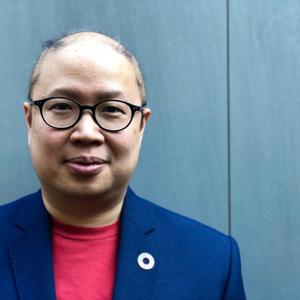


Jennifer Doleac studies the economics of crime and discrimination. In July 2023, Jenn will join Arnold Ventures as the Executive Vice President of Criminal Justice. We chat about trends and causes of crime. How guns, drugs and policing interact with crime trends.
…there was this huge increase in violent crime in particular in the late early eighties, early nineties. And suddenly violent crime started falling dramatically in the mid-1990s. We still aren't entirely sure why that is the case, this big mystery in the economics of crime world. But we do know that basically crime has been falling since then until very recently. So during the pandemic and since the pandemic, we've seen this big uptick in homicide and shootings, at least in the US. Again, we're not entirely sure why that change. It's kind of like trying to describe what's going on in the stock market. There are lots of sort of little blips and everything, and you can have big picture understanding of the economy and what drives growth, but not be able to predict fluctuations in the stock market. So it's similar with crime rates
But overall, we're still in a place where homicide rates and violent crime rates are much lower than they were in the early to mid-nineties. So overall things have gotten much safer, especially in our big cities; we're much safer. But of course, as you said, there's a lot of variation place to place; particular neighborhoods, particular communities, they're the brunt of a lot of violent crime that is still going on. So it's a major public safety or major public problem and concern for policymakers in particular places and that has become more of a focus in recent years as homicides and shootings have gone up, which of course we're not used to after this big decline for decades...
We talk about what we know of policies that work on reducing crime, and how challenging the recent uptick in crime statistics is to ideas on reforming criminal justice.
We discuss alternatives to jail, and what type of interventions can work on crime, such as sentencing for misdemeanors, and access to healthcare.
Jenn explains why the “broken window” theory of crime has not really held up. The mixed studies on body cameras and how deterrents (like DNA databases and CCTV) seem to work.
Jenn discusses her work suggesting some policies have had unintended consequences related to “ban the box” (where employers are not allowed to know of former convictions on initial job application), and related to her paper on the Moral Hazard of Lifesaving Innovations: Naloxone Access and Opioid Abuse (which has proved controversial in some quarters).
We play overrated/underrated on: Texas, diversity and universal basic income. We end on Jenn’s current projects and life advice.
Transcript and video are here: https://www.thendobetter.com/arts/2023/5/8/jennifer-doleac-crime-policing-policy-podcast
Jenn also hosts her own podcast: Probable Causation, a podcast about law, economics, and crime.
Patrick House is a neuroscientist and writer. His research focused on the neuroscience of free will and in particular how mind-control parasites altered a rat’s behaviour.
We once had a long chat on the rainy streets of Glasgow. This chat – which I may not fully recall – involved speaking on what consciousness is, and touched on his work on mind-control bugs.
He’s written a collection of essays: Nineteen Ways of Looking at Consciousness
“Consider different translations of a poem: Each has something relevant to say, but none can entirely capture the essence. House repeatedly returns to a case in which a woman was undergoing brain surgery to address epilepsy. At one point, the surgeons touched a part of the brain that made her laugh. Did this indicate that emotional responses are simply an aspect of the physical matter inside our skulls?”
We had a long chat on this. I asked him:
Do you dream in colour ?
Whether lucid dreaming is real?
What he meant by: "If I were asked to create, from scratch and under duress, a universal mechanism for passing consciousness from parent to child, I would probably come up with something a bit like grafting a plant." ?
Memory in childhood
What he finds the most terrifying result in neuroscience
What translating poetry has in common with understanding consciousness
Whether animals have consciousness
What he thinks of AI and why he no longer plays Go
Patrick asks me if I would write a play only for robots.
We end on Patrick’s advice:
“My suggestion is to have phenomenological date night with whoever you're interested in the world and ask what their dreams are really like and if it's in images or what inside of their head is really like and see if you get anything, see if you solve any conflict.”
It was lovely long form chat about consciousness and the mind.
Transcript/Video here: www.thendobetter.com/arts/2023/3/27/patrick-house-neuroscience-understanding-consciouness-podcast
Chris Stark is the Chief Executive of the UK’s Climate Change Committee. The committee is an independent statutory body which advises the UK and the devolved governments on emissions targets and preparing for and adapting to the impacts of climate change. I think he is one of the most important and thoughtful thinkers on climate change policy today. This is his second time on the podcast. We covered many topics in 2022 which you can check out here.
This time I ask on:
Some of the recent politics decisions and discussions such as the UK government decision on a Cumbria coal mine.
What the US IRA (inflation reduction act) might mean for climate policy:
Chris outlines some of the challenges of a carbon tax and why a carbon tax and dividend may also not work.
Chris ends on advice on to think about climate impact and future projects.
Transcript and video available here: https://www.thendobetter.com/investing/2023/2/23/chris-stark-2023-climate-policy-netzero-adaptation-incentives-podcast
Jade O’Brien was a stock broker (equity sales) for over 7 years. She then retrained as a teacher and has taught in both the state sector and the private sector in the UK.
Jade used to pitch me stock ideas and speak about the investment world. I was very curious on why she decided to change careers to become a teacher.
We chat about what drove Jade to the world of finance. What she viewed as the pros and cons, and what it is like as a woman in a male dominated world and advice she has.
Jade outlines her experience of finance which has many positives as well as challenges, and what might have changed over the decade.
(Ben) So what would you say to women wanting to make it in the city or in financial services?
We discuss the factors that made Jade change her jobs. How we might think about death and how she found teacher training.
We chat on how we might “value” teaching and why it’s hard to rate teachers. Why some people ask for more homework, and others ask for less homework and how both views can have merit.
We address:
This was an amazing long form conversation addressing many of the debates within education today.
Transcript and Video available here: https://www.thendobetter.com/arts/2023/2/2/jade-obrien-from-stockbroker-to-teacher-being-a-woman-in-finance-schools-and-teaching-podcast
Kanjun is co-founder and CEO of Generally Intelligent, an AI research company. She works on metascience ideas often with Michael Nielsen, a previous podcast guest. She’s a VC investor and co-hosts her own podcast for Generally Intelligent. She is part of building the Neighborhood, which is intergenerational campus in a square mile of central San Francisco. Generally Intelligent (as of podcast date ) are looking for great talent looking to work on AI.
We get a little nerdy on the podcast but we cover AI thinking, fears on rogue AI, and the breakthroughs of Chat AI. We discuss some of her latest ideas in meta science based on the work she has done with Michael Nielsen (previous podcast here) and what are the important questions we should be looking at.
We chat about the challenge of old institutions, the value of dance and creativity and why her friends use “to kanjun” as a verb.
We cover her ideas on models of trauma and why EMDR (Eye Movement Desensitization and Reprocessing therapy) and cognitive therapies might work.
We discuss why dinosaurs didn’t develop more.
We chat around “what is meaning” and “what is the structure of knowledge”, what are the strengths and weakness of old institutions; culture vs knowledge vs history and other confusing questions.
Kanjun gives her advice on how to think about dance (dance like you are moving through molasses).
"Dance is inside of you. It just needs to be unlocked."
We play underrated/overrated on: having agency, city planning, death of institutions, innovation agencies, high frequency trading; diversity
Kanjun thinks on how capitalism might want to be augmented and what excites Kanjun about AI and complex systems.
Kanjun asks me questions and I offer my critique on Effective Altruism.
This is quirky long form conversation on a range of fascinating topics.
Transcript and video available here: https://www.thendobetter.com/arts/2023/1/17/kanjun-qiu-ai-metascience-institutional-knowledge-trauma-models-podcast
Florence Evans is an art dealer, historian, curator, collector and mud larker. We chat on what does mudlarking tell us about history ? What does art tell us about being human ?
Florrie chats on the cultural history of mudlarking, the stories found objects represent from the both the darker side of human history such as beads and the slave trade, as well as the lighter sides of found items.
We discuss one of her favourite finds, a whole child’s shoe from the Tudor era.
We chat on what we’ve puzzled out from our river finds including a hand blown glass apothecary bottle from the 1600s.
We discuss: bottles, beads, coins, stories, Roman items, buttons and costumes and more…
We touch on her philosophy as an art collector and what art means to us as humans.
What art Florrie likes and collects and the challenge of modern art.
Florrie gives her advice on art collecting and life.
Transcript and links available here: www.thendobetter.com/arts/2022/12/27/florence-evans-mud-larking-art-collecting-and-art-dealing-podcast
Michael Nielsen is a scientist at the Astera Institute. He helped pioneer quantum computing and the modern open science movement. He is a leading thinker on the topic of meta science and how to improve science, in particular, the social processes of science. His latest co-authored work is ‘A Vision of metascience: An engine of improvement for the social processes of Science’ co-authored with Kanjun Qiu . His website notebook is here, with further links to his books including on quantum, memory systems, deep learning, open science and the future of matter.
I ask: What is the most important question in science or meta science we should be seeking to understand at the moment ?
We discuss his vision for what a metascience ecosystem could be; what progress could be and ideas for improving the the culture of science and social processes.
We imagine what an alien might think about our social processes and discuss failure audits, high variance funding and whether organisations really fund ‘high risk’ projects if not that many fail, and how we might measure this.
We discuss how these ideas might not work and be wrong; the difficulty of (the lack of) language for new forming fields; how an interdisciplinary institute might work.
The possible importance of serendipity and agglomeration effects; what to do about attracting outsiders, and funding unusual ideas.
We touch on the stories of Einstein, Katalin Kariko (mRNA) and Doug Prasher (molecular biologist turned van driver) and what they might tell us.
We discuss how metascience can be treated as a research field and also as an entrepreneurial discipline.
We discuss how decentralisation may help. How new institutions may help. The challenges funders face in wanting to wait until ideas become clearer.
We discuss the opportunity that developing nations such as Indonesia might have.
We chat about rationality and critical rationality.
Michael gives some insights into how AI art might be used and how we might never master certain languages, like the languages of early computing.
We end on some thoughts Michael might give his younger self:
Transcript/Video available here: https://www.thendobetter.com/arts/2022/11/15/michael-nielsen-metascience-how-to-improve-science-open-science-podcast
Saloni Dattani is a founding editor at Works in Progress, a researcher at Our World in Data and a commissioning editor at Stripe Press. She has recently been profiled by Vox as part of the Future Perfect 50. Saloni is an excellent thinker on progress and science with recent articles for Wired (on making science better) and Guardian (on challenge trials).
Saloni tells me what are the most important questions in science that we should be working on.
We discuss making science better and thinking around challenge trials, making science more open source, reforming peer review and thinking around experimental clinical trial design.
We talk about vaccines, why Saloni tends to optimism and what risks and opportunities she is thinking about.
Borrowing from Tyler Cowen, I ask:
How ambitious are you ?
Which of your beliefs are you least rational about?” (Or what is she most irrational about?)
What is something esoteric you do ?
We play over rated / under rated on:
Substack, Misinformation, Doing a PhD, Women in Science; Vaccines and Drugs
We end on Saloni’s current projects and advice.
Transcript and video available here: www.thendobetter.com/arts/2022/11/8/saloni-dattani-improving-science-important-questions-in-science-open-science-reforming-peer-review-podcast
Jérôme Tagger is CEO of Preventable Surprises. Jérôme is a thinker on long term ESG trends (a catch-all phrase for extra-financial environment, social and governance) and systemic risks. He was a Director at the Global Impact Investing Network, the founding COO of the UN-backed Principles for Responsible Investment, Head of Research at Eurosif and Chief Revenue Officer at ImpactAlpha.
Link to video and transcript: www.thendobetter.com/investing/2022/11/2/jrme-tagger-sustainability-esg-as-a-negotiation-impact-investing-podcast
We chat about the differing roles of companies, civil society and government. What Jérôme thinks about the most important levers and theories of change.
Why ESG could be thought of as a form of negotiation.
Whether we have an idea on what the neglected issues or under rated ESG challenges are.
What you should be thinking of as the chief exec of a think tank start-up. How we should think about building institutional capital. The importance of relationships and “social capital”.
Whether we should consider “less democracy, technocractics rather than democratic decision making.
What Jérôme thinks about billionaire philanthropy.
What Jérôme is hearing about views on regulation on greenwashing and, in particular, on SFDR (Sustainable Finance Disclosure Regulation, EU).
Jérôme ends with advice and current projects.
Mark Koyama is an Associate Professor of Economics at George Mason. Mark researches comparative national state economic development and the rise of religious tolerance. He is interested in how historical institutions functioned and in the relationship between culture and economic performance.
Transcript: www.thendobetter.com/investing/2022/10/9/mark-koyama-how-the-world-became-rich-economic-history-intangibles-culture-progress-podcast
I ask why it has taken economists and historians so long to form central views on how we have become rich?
Mark discusses what historic progress might tells us about economic development today. I ask about the interaction between the main factors behind economic progress such as: institutions, culture, infrastructure, geography, energy.
I question the role of common law and ask about living constitutions. Mark discusses his reading of the literature and how the UK is relatively unique in its living constitutions.
I query the role of intangibles and the patent system and briefly lay out the case (after Brad De Long) for importance of industrial labs and the corporate form. Mark discusses these factors and their importance from the 1870s but also what was important pre-1870.
We chat about culture (using Joe Henrich’s terms) as a set of heuristics. Mark discusses the literature on the importance and role of slavery (probably not the most major facotr in the UK’s industrialization, but still heavily argued), and the role and roots of social progress such as women’s rights.
We cover impacts of war and also the black death from an economic history view and we discuss the challenge on climate.
We play over/underrated on : GDP, carbon tax, representative democracy governance mechanisms, universal basic income.
Mark ends with current projects and advice.
"….So podcasts; everything is online basically. The young person who's ambitious and interested can actually get to speed quickly. So you can teach yourself econometrics by watching tons of YouTube videos. Most people won't because there's other stuff to watch on YouTube, there's other stuff to do. I could be teaching myself foreign languages on YouTube and I'm not doing it because my opportunity costs I guess is maybe high. But if you're young and wanted to study this stuff, you can get a huge head start just by use of the internet cleverly. Tyler Cowen’s advice is find the right mentors. Find some people and learn from them. But you get a huge amount early on to give yourself a head start before you go to university because to be honest, the university experience isn't necessarily going to be all that…"
From the publisher's feed

2,445 Listeners

16,072 Listeners