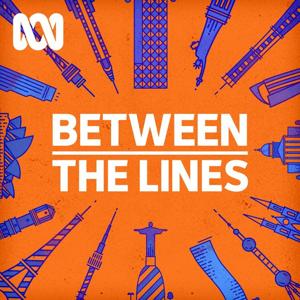
Between the Lines

Between the Lines

Download on the App Store

Between the Lines episodes

  • Elaine Pearson on free speech at UNSW and Hiroshima 75th anniversary
    Defending the right to offend China on campus
    Last week, Human Rights Watch Australia Director Elaine Pearson was interviewed by the media department at the University of New South Wales about the human rights implications of Hong Kong's new national security law.
    Her comments on Hong Kong new national security legislation upset some students. They claimed article caused offence to China and demanded the university remove the article.
    The university temporarily removed the article, but after a public outcry, the article was re-posted with caveats.
    So how did we get to the point where one of Australia's leading universities agrees to political censorship in favour of another nation state? What should universities do to make sure this does not happen again?
    Elaine Pearson, Human Rights Watch Australia Director and adjunct law lecturer at the University of New South Wales.
    Hiroshima 75th anniversary
    At 8.15am on 6th August 1945, the US Airforce dropped the Little Boy uranium fission bomb on central Hiroshima, making it the first city ever to be destroyed by a nuclear bomb. On the 9th of August, Nagasaki became the second.
    When the bomb exploded around thirty percent of Hiroshima's population were killed instantly. Many more died in the months and years to come.
    The bombs brought an end to World War Two, but the world was horrified at the human cost.
    Toshihiro Higuchi, Assistant Professor, Edmund A. Walsh School of Foreign Service, Georgetown University; author of Political Fallout: Nuclear Weapons Testing and the Making of a Global Environmental Crisis.
    Michael Gordin,  Rosengarten Professor of Modern and Contemporary History, Princeton University;  co-editor of The Age of Hiroshima

    29 min
  • Australian independence at the Ausmin talks; Thatcherism and Reagonomics: lessons for economic recovery?
    All way with DJT?
    This week Defence Minister Linda Reynolds and Foreign Minister Marise Payne flew to Washington to attend the annual Ausmin talks. The backdrop to this year’s talks is a series of escalating events and rhetoric on Hong Kong’s new national security laws, ownership of the South China Sea,  cyber-attacks and theft,  and the closure of consulates in the US and China.
     But the deeper issue on the agenda was a choice. The US was hoping Australia would throw everything in with the US – and officially cast China as a strategic rival.
    Also, Thatcherism and Reagonomics: lessons for economic recovery?
    This week Treasurer Josh Frydenberg said the kind of free-market policies associated with Margaret Thatcher and Ronald Reagan could help Australia recover from the Covid recession. 
    Are tax cuts and deregulation the way forward?
    30 min
  • Liberals pushing back against cancel culture in the US; the withering of the US-South Korea alliance
    Liberals pushing back against cancel culture in the US
    Some people call it cancel culture because it is based on mainly online activism aimed at 'cancelling' or withdrawing support from a celebrity or public figure.
    But in the last few years it has extended away from pop culture celebrities into academic institutions, writers festivals and even mainstream newspapers like the New York Times.
    Advocates argue they are righting wrongs and correcting fundamental injustices in the system.
    Critics say it promotes illiberalism, creates a censorious culture of intolerance for opposing views and diverts attention from deeper problems.
    Yascha Mounk, founder of Persuasion, signatory to the Harpers Letter, Associate Professor of the Practice of International Affairs at Johns Hopkins University. Author of The People versus Democracy - Why Our Freedom Is in Danger and How to Save It.
    And, is the alliance between the US and South Korea unravelling?
    President Trump botched the North Korean nuclear deal, and he has been threatening to pull US troops out the Demilitarised Zone between the two Koreas unless South Korea pays billions more to the US.
    But with the tensions between the US and China growing, doesn't Washington need democratic allies in the region now, more than ever?
    Sue Mi Terry, Senior Fellow for Korea, and Korea Chair at the Center for Strategic and International Studies, Washington DC.
    30 min
  • Covid missteps in the UK, Will Putin be president for life? And, genocide denialism in Srebrenica
    UK update with Isabelle Oakeshott
    Boris Johnson was elected in a landslide to get Brexit finalised. But his mishandling of the Coronavirus crisis has his approval ratings in free fall. Meanwhile, Britain’s exit from Europe has fallen off the front pages and Labour’s new leader is gaining ground.
    Also, will Putin be president for life?
    Vladimir Putin recently secured constitutional changes that may allow him to rule for another sixteen years. Most Western analysts see the move as a power grab to offset his falling approval ratings.   
    Mary Dejevsky argues that Putin simply seeks to assure a smooth transition when he leaves office.
    Also, Genocide denialism
    A quarter century ago, Bosnian Serbs massacred more than eight thousand Muslims. Survivors say history is being denied and war crimes celebrated.
    30 min
  • Muscling up to China and 25 years since Srebrenica
    China — the unnamed adversary in Australia’s defence review
    Last week the Morrison government launched its Defence Strategy and Force Structure Review, promising $270 billion over the next decade to enhance Australia’s defence capabilities. But is the money too much, or not enough?  Is it going to all the right places? And will it do enough to safeguard Australia from China’s increasing aggression and its rapidly growing military capabilities? 
    Also, Remembering Srebrenica
    In 1995 the small town of Srebrenica became the site of Europe’s worst massacre since the Holocaust. The town was supposed to be a UN protected safe haven for Bosnian Muslims who had been targeted in a campaign of ethnic cleansing by Bosnian Serbs. But UN troops failed to protect the civilians, and over eight thousand people were killed. The deaths of civilians galvanised the US into action. President Bill Clinton launched unilateral US strikes against Serbian forces.
    30 min
  • Remembering Owen Harries and Hamilton the musical
    Vale Owen Harries
    Welsh-born Owen Harries was one of Australia’s most significant foreign-policy thinkers. A conservative and realist, he battled the doves during the Vietnam era and the hawks during the war on terror.  From his editorial post at the National Interest magazine he played an influential role in US foreign policy circles, earning respect and admiration from the likes of Henry Kissinger and Francis Fukuyama. Harries died this month aged 90.
    Also, what does the Hamilton musical say about US politics today?
    This month Disney releases the film version of the blockbuster Broadway musical Hamilton. The story is based around the story of Alexander Hamilton, one of the founders of the US constitution. Hamilton fought in the Revolutionary War against Britain, and was one of the authors of The Federalist Papers. He later became the first Secretary of the US Treasury, helping lay the foundations of the US economy. He was killed in a duel with Vice President Aaron Burr. What does the musical of his life story tell us about US affairs in 2020?
    29 min
  • Understanding the border dispute between India and China, and the Gillard-Rudd leadership coup ten years on
    Border tensions between China and India
    The Himalayan border region between China and India has been in dispute since 1962. This month, a violent clash between troops resulted in twenty Indian and an unknown number of Chinese deaths. Will the recent escalation push India away from China for good?  
    Also, the Gillard leadership coup ten years on
    This week marks the ten-year anniversary of the Labor Party coup to replace Kevin Rudd with Julia Gillard. What is its legacy for Australian politics?
    30 min
  • Geoffrey Blainey on the vandalism of historic statues, and the geopolitics of Coronavirus conspiracies
    Preserving the past
    Geoffrey Blainey — who coined the term ‘the tyranny of distance’- is one of Australia’s most prolific and well known historians.  He discusses Australia’s record on race relations and the removal of historic statues. 
    Also, the geopolitics of Coronavirus conspiracies
    What do state actors like China and Russia hope to gain from spreading disinformation on the virus? And how do fringe domestic groups like QANON and anti-vaxxers fit in?
    30 min
  • The Inter-Parliamentary Alliance on China and a trifecta of troubles in the US
    An anti-China alliance?
    The Inter-Parliamentary Alliance on China brings together politicians from liberal democracies including Canada, Norway, Germany and the US. Labor Senator Kimberly Kitching is the Australian Co-Chair. But as Australia heads into recession, and China increases it's restrictions on Australia trade, might this just make things worse?
    Also, do America’s mounting domestic woes spell electoral trouble for Trump?
    This month the US has been beset by trifecta crises. There’s a health crisis sparked by COVID-19. An economic crisis caused by the government-led recession to stem the virus. Complicating it all,  is the race crisis caused by mounting evidence of police brutality against African Americans. What does all this mean for American politics and public discourse in “the land of the free”?
    29 min

About Between the Lines

From the publisher's feed

Making sense of Australia’s place in the world, Between the Lines puts contemporary international issues and events into a broader historical context, seeking out original perspectives and challenging…

More shows like Between the Lines

Background Briefing by ABC Australia

Background Briefing

79 Listeners

Hack by triplej, triple j

Hack

54 Listeners

Pacific Beat by ABC Radio Australia, ABC Radio

Pacific Beat

13 Listeners

Saturday Extra - Separate stories podcast by ABC Australia

Saturday Extra - Separate stories podcast

8 Listeners

Pacific Review by ABC Radio Australia, ABC Radio

Pacific Review

3 Listeners

Radio National Breakfast by ABC Australia

Radio National Breakfast

15 Listeners

Politics Now by ABC Australia

Politics Now

87 Listeners

RN Drive - Separate stories podcast by ABC

RN Drive - Separate stories podcast

8 Listeners

AM by ABC Australia

AM

8 Listeners

PM by ABC Australia

PM

10 Listeners

If You're Listening by ABC Australia

If You're Listening

312 Listeners

Australia Wide by ABC Australia

Australia Wide

8 Listeners

ABC News Daily by ABC Australia

ABC News Daily

141 Listeners

The World Today by ABC Australia

The World Today

10 Listeners

Ms Represented by ABC

Ms Represented

4 Listeners

Not Stupid by ABC Australia

Not Stupid

19 Listeners

After The Disaster by ABC Australia

After The Disaster

2 Listeners

ABC News Top Stories by ABC Australia

ABC News Top Stories

5 Listeners