
Sign up to save your podcasts
Or

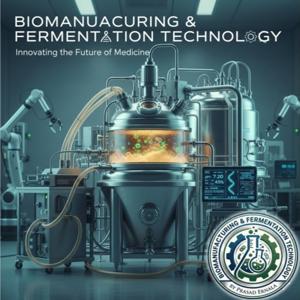


This study presents a compelling advancement in sustainable biopolymer production by demonstrating how cassava-derived dextrose can be efficiently converted into polyhydroxybutyrate (PHB) through a model-informed fed-batch strategy. By integrating genome-scale flux balance analysis with precisely timed pulse-feeding regimes, the authors shift Cupriavidus necator metabolism from biomass growth toward enhanced carbon storage. The work reveals that late-stage, carbon-only feeding under nitrogen-limited conditions significantly boosts PHB accumulation, achieving up to ~50% of cell dry weight, compared to substantially lower yields under growth-favoring regimes. This approach transforms fed-batch fermentation from an empirical process into a predictive, controllable system, enabling deliberate optimization of intracellular carbon flux. From an industrial perspective, the strategy reduces substrate wastage, improves polymer yield, and simplifies downstream processing, thereby strengthening process economics. Coupled with the use of low-cost cassava feedstocks, this framework offers a scalable and regionally adaptable pathway toward commercially viable, biodegradable plastics. Moreover, the integration of digital modeling with fermentation operations establishes a transferable blueprint for next-generation biomanufacturing platforms, with strong implications for startup innovation, IP development, and global deployment in emerging bioeconomies.
#Science#Bioprocess #ScaleUp and #TechTransfer,#Industrial #Microbiology,#MetabolicEngineering and #SystemsBiology,#Bioprocessing,#MicrobialFermentation,#Bio-manufacturing,#Industrial #Biotechnology,#Fermentation Engineering,#ProcessDevelopment,#Microbiology,#Biochemistry,#Biochemical Engineering, #Applied #MicrobialPhysiology, #Microbial #ProcessEngineering, #Upstream #BioprocessDevelopment, #Downstream Processing and #Purification,#CellCulture and #MicrobialSystems Engineering, #Bioreaction #Enzymes, #Biocatalyst #scientific #Scientist #Research
In this episode we discuss the results of Researchers who have successfully engineered the bacteria Bacillus subtilis to serve as a highly efficient production host for active hemoglobins and myoglobins. By utilizing a sophisticated "push–restrain–pull–block" strategy, scientists optimized the internal metabolic pathways to significantly increase the supply of heme, a critical cofactor for these proteins. This systematic overhaul resulted in record-breaking production levels for plant-based and animal-based proteins, achieving concentrations of approximately one gram per liter. The choice of this specific microbe is strategically important because it is considered food-grade, making it an ideal candidate for manufacturing ingredients for meat alternatives. Ultimately, this work demonstrates how precision fermentation can be used to improve the color, flavor, and sensory qualities of sustainable food products through advanced metabolic engineering.
#Science#Bioprocess #ScaleUp and #TechTransfer,#Industrial #Microbiology,#MetabolicEngineering and #SystemsBiology,#Bioprocessing,#MicrobialFermentation,#Bio-manufacturing,#Industrial #Biotechnology,#Fermentation Engineering,#ProcessDevelopment,#Microbiology,#Biochemistry,#Biochemical Engineering, #Applied #MicrobialPhysiology, #Microbial #ProcessEngineering, #Upstream #BioprocessDevelopment, #Downstream Processing and #Purification,#CellCulture and #MicrobialSystems Engineering, #Bioreaction #Enzymes, #Biocatalyst #scientific #Scientist #Research
Apr 30, 2026
The provided discussion on report outlines the state of the bioprocess and biomanufacturing industry as of April 2026, focusing on technological shifts toward sustainability and efficiency. Key scientific breakthroughs include point-of-use media production to lower carbon emissions and the adoption of physics-informed AI for more reliable digital twins. Major industry trends highlight a move toward intensified manufacturing processes for monoclonal antibodies, which significantly reduce production costs and facility footprints. Global infrastructure is expanding through new bioprocess design centers and workforce training initiatives led by the WHO to address critical skill shortages. Furthermore, the report discusses regulatory shifts, such as the EU Biotech Act II, aimed at streamlining the scaling of industrial biotechnologies. Collectively, these updates signal an industry-wide transition from experimental pilots to the commercial integration of digital and modular tools.
#Science #STEM #Bioprocess #ScaleUp and #TechTransfer,#Industrial #Microbiology,#MetabolicEngineering and #SystemsBiology,#Bioprocessing,#MicrobialFermentation,#Bio-manufacturing,#Industrial #Biotechnology,#Fermentation Engineering,#ProcessDevelopment,#Microbiology,#Biochemistry,#Biochemical Engineering, #Applied #MicrobialPhysiology, #Microbial #ProcessEngineering, #Upstream #BioprocessDevelopment, #Downstream Processing and #Purification,#CellCulture and #MicrobialSystems Engineering, #Bioreaction #Enzymes, #Biocatalyst #scientific #Scientist #Research
This episode describes a modular biocatalytic platform designed to transform affordable, common seed oils into high-value functional edible oils. The process utilizes enzymatic interesterification to rearrange fatty acids, improving the oil's nutritional structure and chemical stability. Additionally, microbial functionalization is employed to enrich these oils with beneficial compounds like antioxidants and vitamins. By integrating green downstream processing, the framework ensures that these enhancements are achieved without the use of harsh chemicals. The ultimate goal is to create scalable and cost-effective alternatives to premium oils that provide superior health benefits and culinary performance. This approach bridges the gap between affordability and high-quality nutrition through innovative bioprocessing techniques.
#Bioprocess #ScaleUp and #TechTransfer,#Industrial #Microbiology,#MetabolicEngineering and #SystemsBiology,#Bioprocessing,#MicrobialFermentation,#Bio-manufacturing,#Industrial #Biotechnology,#Fermentation Engineering,#ProcessDevelopment,#Microbiology,#Biochemistry,#Biochemical Engineering, #Applied #MicrobialPhysiology, #Microbial #ProcessEngineering, #Upstream #BioprocessDevelopment, #Downstream Processing and #Purification,#CellCulture and #MicrobialSystems Engineering, #Bioreaction #Enzymes, #Biocatalyst #scientific #Scientist #Research
This episode explores strategies for reducing manufacturing costs in microbial fermentation, specifically focusing on the production of the immunosuppressant tacrolimus. The authors argue that a 50% reduction in costs is achievable by viewing the process as a comprehensive engineering challenge rather than focusing solely on biology. Key economic drivers include improving titer, rate, and yield, which together maximize the output of high-value metabolites relative to time and capital. Significant savings are realized by optimizing growth media, engineering robust strains, and utilizing adsorbent resins to simplify recovery. Furthermore, the text emphasizes that efficient downstream processing and high volumetric productivity are more effective at lowering unit costs than simply increasing the scale of production. Ultimately, the research demonstrates that integrated process design allows manufacturers to significantly decrease expenses while maintaining high product quality.
#Bioprocess #ScaleUp and #TechTransfer,#Industrial #Microbiology,#MetabolicEngineering and #SystemsBiology,#Bioprocessing,#MicrobialFermentation,#Bio-manufacturing,#Industrial #Biotechnology,#Fermentation Engineering,#ProcessDevelopment,#Microbiology,#Biochemistry,#Biochemical Engineering, #Applied #MicrobialPhysiology, #Microbial #ProcessEngineering, #Upstream #BioprocessDevelopment, #Downstream Processing and #Purification,#CellCulture and #MicrobialSystems Engineering, #Bioreaction #Enzymes, #Biocatalyst #scientific #Scientist #Research
This discussion explores the modernization of plastic bioremediation, detailing a shift from accidental discovery to the intentional design of enzymes. By leveraging generative AI and metagenomic mining, researchers can now engineer stable catalysts that target complex polymers much faster than natural evolution. The sources emphasize that while PET depolymerization serves as a successful proof of concept, the future lies in tackling more recalcitrant plastics like nylons and polyurethanes. Achieving industrial-scale circularity requires moving beyond laboratory successes to address process engineering challenges, such as reactor mass transfer and feedstock variability. Ultimately, the field is evolving into an integrated ecosystem where digital twins and advanced bioprocessing bridge the gap between molecular innovation and economic viability. This transition marks a critical move from simply finding enzymes to building a comprehensive manufacturing stack for global waste management.
#Bioprocess #ScaleUp and #TechTransfer,#Industrial #Microbiology,#MetabolicEngineering and #SystemsBiology,#Bioprocessing,#MicrobialFermentation,#Bio-manufacturing,#Industrial #Biotechnology,#Fermentation Engineering,#ProcessDevelopment,#Microbiology,#Biochemistry,#Biochemical Engineering, #Applied #MicrobialPhysiology, #Microbial #ProcessEngineering, #Upstream #BioprocessDevelopment, #Downstream Processing and #Purification,#CellCulture and #MicrobialSystems Engineering, #Bioreaction #Enzymes, #Biocatalyst #scientific #Scientist #Research
The provided discussion examines the strategic shift in pharmaceutical manufacturing from traditional metal-catalyzed reductions toward the use of ketoreductases (KREDs) to meet modern sustainability and purity standards. These biocatalytic proteins offer superior stereochemical precision and operate under mild conditions, effectively eliminating the risk of heavy metal contamination in active pharmaceutical ingredients. While the transition supports Green Chemistry goals by reducing waste and solvent consumption, the sources emphasize that successful industrial implementation requires managing substrate solubility and implementing cost-effective cofactor regeneration systems. Advanced techniques like protein engineering and machine learning are highlighted as essential tools for optimizing these enzymes for high-concentration industrial environments. Ultimately, the text argues that adopting KRED-based workflows is a pragmatic economic choice that simplifies regulatory compliance and streamlines downstream purification.
#Bioprocess #ScaleUp and #TechTransfer,#Industrial #Microbiology,#MetabolicEngineering and #SystemsBiology,#Bioprocessing,#MicrobialFermentation,#Bio-manufacturing,#Industrial #Biotechnology,#Fermentation Engineering,#ProcessDevelopment,#Microbiology,#Biochemistry,#Biochemical Engineering, #Applied #MicrobialPhysiology, #Microbial #ProcessEngineering, #Upstream #BioprocessDevelopment, #Downstream Processing and #Purification,#CellCulture and #MicrobialSystems Engineering, #Bioreaction #Enzymes, #Biocatalyst #scientific #Scientist #Research
The episode examines the industrial production of #mycophenolic acid (MPA), a vital fungal metabolite used for immunosuppressive medications. While increasing fermentation yields is important, the source emphasizes that #downstream processing is the primary factor determining commercial success due to the complex nature of fungal broths. Challenges such as high viscosity and difficult filtration necessitate a specialized recovery sequence involving pH-driven extraction and crystallization. The text also contrasts MPA with ergothioneine to highlight that MPA production is uniquely burdened by its purification requirements and solvent dependence. Ultimately, the authors argue that profitable manufacturing requires an integrated approach that balances fungal growth control with efficient separation technologies.
#Bioprocess #ScaleUp and #TechTransfer,#Industrial #Microbiology,#MetabolicEngineering and #SystemsBiology,#Bioprocessing,#MicrobialFermentation,#Bio-manufacturing,#Industrial #Biotechnology,#Fermentation Engineering,#ProcessDevelopment,#Microbiology,#Biochemistry,#Biochemical Engineering, #Applied #MicrobialPhysiology, #Microbial #ProcessEngineering, #Upstream #BioprocessDevelopment, #Downstream Processing and #Purification,#CellCulture and #MicrobialSystems Engineering, #Bioreaction #Enzymes, #Biocatalyst #scientific #Scientist #Research
This episode examines the transition of #ergothioneine from a niche antioxidant to a mass-marketed ingredient produced through industrial fermentation. It compares two primary microbial hosts, E. coli and S. cerevisiae, highlighting that while the former achieves superior productivity and higher yields, the latter offers a simplified, food-grade production process without the need for expensive chemical precursors. The review details the technological milestones and engineering strategies that have successfully increased product concentrations to multi-gram levels, making large-scale 5 kL manufacturing economically viable. Key operational factors such as feed strategies, downstream recovery, and cost-of-goods drivers are analyzed to provide a roadmap for commercial success. Ultimately, the report forecasts continued market growth through 2030, driven by rising demand in the nutraceutical, cosmetic, and functional food sectors. This overview serves as a strategic guide for manufacturers to balance titer, regulatory positioning, and process complexity in global markets.
#Bioprocess #ScaleUp and #TechTransfer,#Industrial #Microbiology,#MetabolicEngineering and #SystemsBiology,#Bioprocessing,#MicrobialFermentation,#Bio-manufacturing,#Industrial #Biotechnology,#Fermentation Engineering,#ProcessDevelopment,#Microbiology,#Biochemistry,#Biochemical Engineering, #Applied #MicrobialPhysiology, #Microbial #ProcessEngineering, #Upstream #BioprocessDevelopment, #Downstream Processing and #Purification,#CellCulture and #MicrobialSystems Engineering, #Bioreaction #Enzymes, #Biocatalyst #scientific #Scientist #Research
The provided Discussion outlines a Commercial-Backbone Framework for the biotechnology industry, specifically focusing on precision fermentation and consumer-facing products. It advocates for a strategic shift from traditional "Lab-to-Market" methods to a market-driven approach that begins with consumer needs and works backward to the bioreactor. This model integrates sensory science, regulatory strategy, and unit economics into the early stages of bioprocess design to ensure products are both technically viable and commercially desirable. By prioritizing psychographic profiling and retail price anchors, the framework aims to prevent "over-engineering" and close the gap between scientific achievement and market success. Ultimately, the text demonstrates how engineering constraints must be defined by the final culinary application and consumer expectations to achieve true profitability.
#Bioprocess #ScaleUp and #TechTransfer,#Industrial #Microbiology,#MetabolicEngineering and #SystemsBiology,#Bioprocessing,#MicrobialFermentation,#Bio-manufacturing,#Industrial #Biotechnology,#Fermentation Engineering,#ProcessDevelopment,#Microbiology,#Biochemistry,#Biochemical Engineering, #Applied #MicrobialPhysiology, #Microbial #ProcessEngineering, #Upstream #BioprocessDevelopment, #Downstream Processing and #Purification,#CellCulture and #MicrobialSystems Engineering, #Bioreaction #Enzymes, #Biocatalyst #scientific #Scientist #Research
From the publisher's feed