
Sign up to save your podcasts
Or



Send us Fan Mail
In this special edition, we look back at the remarkable life of the longest serving female Senator in American History, Senator Dianne Feinstein of California. A Democrat that I almost never agreed with on anything except forestry management and protecting endangered fish. She was a champion of gun control, was an entrenched fighter of the pro-abortion agenda and spent her career working on environmental and liberal social agenda items.
So what in the world could we possibly be thinking doing a tribute to her career in these weeks following her passing away at age 90. Diane Feinstein was a liberal Senator, but she was also a very warm, respectful, good natured happy warrior. Feinstein often went out of her way to find common ground in order to work with her Republican Colleagues. One of her closest friends n the Senate was Senator Lamar Alexander , a Tennessee Republican. Ironically, as her health dramatically declined , after her husband died and she reached the age of 89, it was most often her Republican Colleagues from Lindsey Graham, to Ted Cruz, to John Kennedy, to even Mitch McConnell who more often than not were the people who defended her against vicious attacks from the liberal wing of her own Democratic Party.
For it was Dianne Feinstein, at the end of the Amy Coney Barrett Supreme Court Hearings, who reached out to Senator Lindsey Graham to say we as Americans can be proud of the way we worked together through differences during the hearing. She wanted to do more work like that for the good of our country even though she was also opposed to the appointment of Barrett to the Court. She was repaid with some of the most disrespectful treatment I have ever witnessed a senior elected official receive from the members of her own party. It was in a word, disgusting to listen too.
Our show, wants to remember Dianne Feinstein here for the giant she was in the history of the country, and show our gratitude to the last major figure in America to try and "bridge the political gap" that is currently driving our nation full speed into a wall. We feel like we need more representatives in government, and everywhere else in society for that matter, who behave like Senator Feinstein and for that we honor her long and illustrious career with this special edition of our podcast.
Questions or comments at , [email protected] , https://twitter.com/randal_wallace , and http://www.randalwallace.com/
Please Leave us a review at wherever you get your podcasts
Thanks for listening!!
Send us Fan Mail
In the season finale of our 11th Season, we have the equivalent of the "Who Shot J.R.?" episode of DALLAS mixed with all the excitement of the end of a Roger Moore "James Bond" movie.
In the second part of our look at "A Bloody Christmas" we look back at the suddenly swift, and deadly fall of Romanian Dictator Nicolae Ceaușescu. He had been the absolute ruler of the nation of Romania for nearly 25 years. In that time, he had been the Communist Ruler with at least some good relations with the West because he had often been at odds with his fellow Communist in the Soviet Union. He had even condemned the invasion of Czechoslovakia.
Inside his country he had ruled with an iron hand, and a well armed secret police force and as Ted Koppel would say he had created an atmosphere where it was as insane as having an insane asylum run by the inmates. Romania under Ceausescu was every bit as bleek and foreboding a place as the Dracula mythology had portrayed it to the world. Then suddenly, after a bloody confrontation in the town of Timisoara, while the dictator was mid sentence in one of his long speeches on the balcony of the Palace of the Parliament, the people rose up, Ceausescu panicked and fled, and the country plunged into absolute chaos in what would be the only bloody revolution amongst all the Communist collapses in Eastern Europe.
This episode, using an extraordinary ABC News Special Report by Ted Koppel titled "The Death of a Dictator" and mixed with contemporary news reports, and interviews with historians, we will tell this most incredible, almost to strange not to be fiction tale of the fall of Nicolae Ceaușescu , from the panicked speech , to the frantic helicopter escape, to the car chase with two stolen cars, and finally the three hour trial and immediate execution. This is an incredibly wild ride through the history of the bloodiest revolution during the communist collapse that changed the World.
A link to the video "The Death of a Dictator " by Ted Koppel of ABC News is available in the chapters section
Questions or comments at , [email protected] , https://twitter.com/randal_wallace , and http://www.randalwallace.com/
Please Leave us a review at wherever you get your podcasts
Thanks for listening!!
Send us Fan Mail
This is the start of our two part Season 11 conclusion, A BLOODY CHRISTMAS. Two major events occured at the sametime over the Christmas holidays in 1989, the invasion of Panama, and the Romanian Revolution. Both were bloody affairs and both were plotlines no novelist would have ever made up.
In this episode we look back at the invasion of Panama and its dictator Manuel Noriega, described by one Cabinet Official as "The Mouse that Roared" . He actually declared war on the United States that December as though the Panamanian Army was a match for one of the two Superpowers on Earth. The situation got worse from there and after a military officer was killed and another was wounded and his wife attacked, George Bush had had enough.
In this episode, we will take a look at Noriega's life and regime, and then lead you through the events that led to his ouster and the invasion. Noriega himself proved hard to find for several days until turning up at the Vatican's Consul office where he held up for a few weeks before finally surrendering in January 1990.
He was then taken back to the United States where he was tried on drug smuggling and money laundering charges, the first former head of state, tried for criminal acts outside of his own country. It was an interesting end for "The Mouse that Roared"
Questions or comments at , [email protected] , https://twitter.com/randal_wallace , and http://www.randalwallace.com/
Please Leave us a review at wherever you get your podcasts
Thanks for listening!!
Send us Fan Mail
In this episode we look back at the moment it was clear the Cold War was essentially over. The story actually begins in 1985, when Mikhail Gorbachev is elevated to power after a succession of elderly, Communist leaders, all of whom went back to the early days of the Soviet Union.
Leonid Brezhnev had been a hard line, old school, Communist leader, that had been in power throughout the Johnson, Nixon, Ford, Carter, and early Reagan Years. He had presided over the Soviet Union's military rise as a Super Power but also had seen the nation's economy become weak. He, however, was not, and when he took power as part of a team in the 1960's he had consolidated his position and was clearly the man in charge in the Kremlin for most of his 18 years as General Secretary.
Brezhnev died in November 1982 and would be succeeded by Yuri Andropov , the former head of the KGB, for just over 15 months, before dying at age 69. Andropov would then be succeeded by Constantine Chernenko who would serve for even less time passing away just 13 months after being named General Secretary. It was then that the protege of Andropov would emerge, and at age 53,it was clear Mikhail Gorbachev was not going to die anytime soon.
On the other side of the ball, was Ronald Reagan, a career anticommunist often ridiculed for his unwillingness to work with his Soviet Counterparts. An unfair charge given that all of them had died about once a year since Reagan had been elected. When Reagan and Gorbachev finally met they had an instant chemistry and thus forged a warm relationship that helped turn the corner on what had been an icy , untrusting , mutual existence between the United States and the Soviet Union since the end of the Second World War.
What Reagan and his CIA Advisor William Casey had figured out was that the Soviet Union, while militarily strong, was a dying nation inside its borders and they pushed them to the bargaining table. In Gorbachev, they finally found a Soviet Leader, who was more concerned about the future of his people than the future of it's revolutionary global desires. We will look back in this episode at the relationships that both Reagan and Bush had with Gorbachev, and the circumstances that led to this meeting in Malta on the heels of the fall of the Berlin Wall, when Gorbachev was trying to negotiate a way to save his struggling nation.
This episode was produced over one year ago, and is dedicated in memory to CBS News Correspondent Bill Plante, who died at that time we were producing this episode, and who also produced for CBS News one of the historic reports we used for this podcast.
Questions or comments at , [email protected] , https://twitter.com/randal_wallace , and http://www.randalwallace.com/
Please Leave us a review at wherever you get your podcasts
Thanks for listening!!
Send us Fan Mail
The Fall of the Berlin Wall was the most significant moment recorded in an era when it became obvious that the winds of freedom were about to sweep through Eastern Europe and around the World. It came without warning at the end of a rather boring press conference when the Communications Director for East Germany read a final statement ending the press conference that if East German residents wanted to leave they could and if they wanted come back they would be allowed with a VISA, but all applications would be accepted.
Suddenly, the very symbol of oppression throughout the world, The Berlin Wall, that seperated the East Germans from the West Germans basically meant nothing. The East Germans came through the gates like a tsunami over a broken sea wall. It was a flood of people and a flood of emotions for the German people who had been separated by that wall for 28 years.
For so many people alive today, who did not live through the Cold War, the significance of the moment, may be hard to explain. Since the end of World War 2, the world had been divided between the free people's of the World and the people trapped in a Communist system that stifled innovation, and controlled every aspect of the people's lives. The results were nowhere more evident than simply looking on one side of this wall and comparing it to the other. On the West side of the wall was a thriving , bustling West Berlin , full of opportunity, prosperity, and the freedom to live life as you chose, on the East side was a drab, decaying, city in economic despair and where the people were trapped inside the borders of their own country.
My step father, Larry Bulmer, was in the Canadian military and his memory of the era was that of the horrified East Germans driving the ragged , old, limited Soviet made automobiles in terror as they tried to navigate the German autobahn, being passed by the modern West German cars doing over 100 MPH. It was a dramatic change, and welcome one for the world, and it marked the beginning of the end of the Communist rule over Eastern Europe.
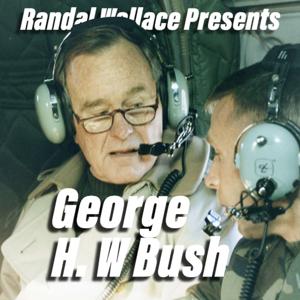
All of this momentous change occurred under the cautious, watchful, magnanimous leadership of George. H. W. Bush, the single best manager of government we have seen in our lifetime and to paraphrase the famous Carly Simon song, "Nobody could have managed it better"
Questions or comments at , [email protected] , https://twitter.com/randal_wallace , and http://www.randalwallace.com/
Please Leave us a review at wherever you get your podcasts
Thanks for listening!!
Send us Fan Mail
Deng Xiaoping was the People's Republic of China's Paramount Leader for over a decade. A decade, in which the nation rose from a backwards, isolated, command economy, Communist Nation, to the front doorsteps of becoming an unquestioned World Power. It is hard to find an argument against Deng Xiaoping's status as one of the most important figures in the history of the 20th century.
While all of that is true it is also true that most Americans probably know almost nothing about him and the remarkable life that landed him in the position to lead the World's most populous nation almost singlehandedly for over a decade. He had been politically shunned more than once during the years of Mao Zedong. His own son was tossed from a building and spent the rest of his life in a wheelchair because of it. He was even forced at one point to wear a dunce cap, and shipped off to the Chinese hinterlands.
However, once Deng Xiaoping assumed power, in his 70's, he moved quickly to change the nation into an industrial an economic power. While other leaders like Chairman Mao are more famous none are as important to the nation we now see as our chief rival as the most powerful nation on Earth. The fact that China is now the number two economy in the world, moving quickly to fill the power vacuum around the world created by the end of the Cold War, can be directly attributed to the leadership of this one man.
This episode will introduce you to him. We will hear from many of the American diplomats who dealt directly with Deng Xiaoping while he was in power, and we will listen in on the news coverage available when he passed away in 1997. Ironically, Deng Xiaoping was often overshadowed by others. So often, Mao Zedong and Zhou Enlai have been lauded for their roles in Revolutionary China, the outreach they did to President Nixon and the United States, and the dominance they held in China for so many years, all of which often overshadowed Deng Xiaoping's role in the eyes of the World, and even in his own country. It is my opinion, and the opinion of many historians, that eventually his mark on World history will probably be far more consequential than any of the rest of the leadership China has had to this very day.
Here in this episode we put the spotlight on Deng Xiaoping, and his axiom " To get Rich is Glorious"
Questions or comments at , [email protected] , https://twitter.com/randal_wallace , and http://www.randalwallace.com/
Please Leave us a review at wherever you get your podcasts
Thanks for listening!!
Send us Fan Mail
President George Bush had been the first envoy to China during the Ford Administration. A job he had loved. He was a friend to the People's Republic of China, and he actually picked the nation to be the first place he went on an official trip as President.
Which put him, and his administration, in an awful spot when Deng Xiaoping ordered the military to crush a student demonstration that had gone on for several weeks in Tiananmen Square in Beijing, China. It would take the deft management of this skilled diplomat to weather the storm of outrage in our country as this tragedy unfolded on the other side of the world.
This is that story, of how President Bush went about defending the human rights of the students victimized in the square, while also keeping a very idealistic American Public from seeking a severe response against the nation that had become a major trading partner and ally of the United States, and while also keeping our relationship with China from a collapse at a pivotal moment at the end of the Cold War.
It is the first major moment in what would become a long list of major moments in the foreign policy of the United States as the Cold War came crashing to an end. George Bush seemed to know as it all unfolded, that in the long term, it would be China that would one day be the Communist World's nearly sole survivor.
Questions or comments at , [email protected] , https://twitter.com/randal_wallace , and http://www.randalwallace.com/
Please Leave us a review at wherever you get your podcasts
Thanks for listening!!
Send us Fan Mail
In this episode we take a look back at one of the biggest environmental disasters of all time. The Exxon Valdez oil tanker hit the Bligh Reef in Prince William Sound on March 24, 1989 and dumped 10.8 million gallons of oil into the water. Prince William Sound was so remote that it could only be gotten too by boat or air, and that made getting to it in order to clean the spill up nearly impossible for Exxon and the Government. The result was that the oil drifted everywhere, eventually covering 1300 miles of the coast affecting dramatically a habitat for salmon, sea otters, seals , and various bird, and other wildlife.
President Bush was forced to act as fast as possible to reverse the damage before it laid waste many of the natural resources Alaska needed to survive. All of this tragedy was blamed on Captain Joseph Hazelwood who was accused of being drunk at the time of the accident. That proved to be untrue, and Hazelwood won a criminal case in 1990 ending that widely believed mythology. He was , in fact , not even on the bridge at the time of the accident. He had not been drinking while on the job and the accusations stemmed from a DUI arrest he had received some 6 months earlier while off from work.
Years later , Exxon was found to have been negligent in how it operated its supertankers. Three factors would eventually be listed as the cause. They were : (from Wikipedia)
It would be the Bush Administration that would supervise the clean up of the Sound, and implemented the reforms that helped make the oil industry far safer after the spill. This is that story, and the story of the nearly two decades of struggle for the Alaskans who had to try and pick up the pieces after the spill was over and the attention of the world had moved on.
This show also discusses our host , Randal Wallace's own involvement in the debate over offshore drilling in the Carolinas, where he supported drilling for Natural Gas in an era before electric cars had so transformed the energy market in America.
Questions or comments at , [email protected] , https://twitter.com/randal_wallace , and http://www.randalwallace.com/
Please Leave us a review at wherever you get your podcasts
Thanks for listening!!
Send us Fan Mail
In this episode we look as President George H. W. Bush looks head on into one of the most expensive financial disasters the nation had seen up to that point. The Savings and Loan industry had long since operated without the same constraints as normal banking operated under and it led to a meltdown for investors and those who had deposited money in them in 1989 just after President Bush tool office.
He could have let it collapse and done nothing, which actually would have been a popular position but instead he stepped up to the plate and bailed out the industry. He did so by reaching across the aisle and getting the opposition party to come on board with his proposals to save the day. It was a tough call with plenty of political risk but in the end Bush was determined to do the right thing and protect those depositors who had unwittingly placed their life savings in these Savings and Loans.
It would not be the last time that Bush would step up to make tough , politically damaging decisions but decisions that proved to be beneficial for the country in the long run.
Questions or comments at , [email protected] , https://twitter.com/randal_wallace , and http://www.randalwallace.com/
Please Leave us a review at wherever you get your podcasts
Thanks for listening!!
Send us Fan Mail
This episode takes a look at the team President George H. W. Bush put together in order to run his Administration. They were an impressive group that helped guide the country through the many historical events that this administration faced during its four years in office.
From the Savings and Loan debacle, to the Exxon Valdez disaster, to the fall of the Berlin Wall, the Panamanian invasion, the fall of the Romanian Government, the Gulf War and the collapse of the Soviet Union. In this episode we will hear from several of the key players on the team assembled by George Bush and hear them talk about the man they worked for and the way he dealt with the consequential decisions he made in all of these situations he faced.
Then in the subsequent episodes we listen in as Bush deals with each of these events that occurred in 1989 as we finish up our 11th season. It is a fascinating portrait these figures paint of a man who was humble, strategic, and cool under fire, who had built personal relationships around the world that he was able to call on as he dealt with issues everywhere and for the most part navigated it all successfully.
Most of these interviews were collected when President Bush passed away after November 30, 2018,
Questions or comments at , [email protected] , https://twitter.com/randal_wallace , and http://www.randalwallace.com/
Please Leave us a review at wherever you get your podcasts
Thanks for listening!!
From the publisher's feed
We begin our third season on Bob Dole's life and career, by traveling back in time to his April 1995 Presidential Campaign Announcement. At that point the Republican Party was on the rise…
In our third of four seasons, we will look back at Bob Dole's 1995 as he takes off into the Presidential campaign, while also trying to manage Congress. A Congress full of unruly new Republican firebrands in the House under their revolutionary Speaker Newt Gingrich. We will listen as that struggle between the Republican Establishment, the new House Republicans under Gingrich, and the Liberal Democrats in Congress, all converge into a battle for power, all of which allows Bill Clinton to perform one of the most dramatic political comebacks in all of American History.
We invite you to come along with us on a wild ride through the high points and low moments of modern American History, in an effort to show the citizens of today that we are an amazing and resilient nation.
Our Podcasts are separated by individual Documentary style titles. --
Season 1 : Bridging the Political Gap episodes 1 -11 --- Season 2 : Lessons in Leadership : --- The GIANTS of the Senate and Joe Biden episodes 14 - 16 ---- World War 2 Episodes 17 - 20 --- General MacArthur You're Fired Episodes 21 - 23 ---- A Celebration of the life of George Shultz episodes 26 - 28 ---- November 1963 : The end of the Age of Innocence episode 29 --- Season 3 ----The Johnson Treatment episodes 32 - 39 ---- Upheaval 1968 episodes 40 - 50 ---- Season 4: Richard Nixon 1968 -1971 The Man Who Saved the Union episodes 51 -67 ----- Season 5 Richard Nixon 1972 The Foundation of Peace episodes 71 - 96 -----1973 Ten Days in January 97 - 100 -- Season 6 Richard Nixon 1973 : Enemies at the Gate 101 - 125 ---- Season 7 Richard Nixon 1974 Through the Fire 126 - 147 ---- Season 8 Richard Nixon 1974 - 1994 The Fall and the Re-Rise of Richard Nixon. 148 - 174 plus bonus materials --- Season 9 Gerald Ford Beyond Watergate 175 -190 -- Season 10 John Jenrette. & Jimmy Carter too 191 - 224 -- Season 11 George H.W. Bush : The Leadership Lessons 225 - 250 --- Season 12: Mayor Hirsch 253 - 259, George H.W. Bush : The Sweep of History 260 - 285, Season 13 George H.W. Bush The Gulf War, The Coup, Clarence Thomas & the Cold War's End 286 - 318, Season 14 George H. W. Bush 1992 The Changing of the Guard 319 - 363 Season 15 Bob Dole 1993 - 1995 The Last Man Standing 364 - 402, Special Season 16 The Great American Authors 403 - 419 , Season Seventeen Bob Dole The Life that Brought him there 420 - 458, Season Eighteen Bob Dole 1995 Clinton's Comeback 459 -
(FAIR USE NOTICE : This presentation contains copyrighted material the use of which has not been specifically authorized by the copyright owner. The use of this footage is for educational and historical commentary. We believe this constitutes a fair use of any such copyrighted material.)