
Sign up to save your podcasts
Or

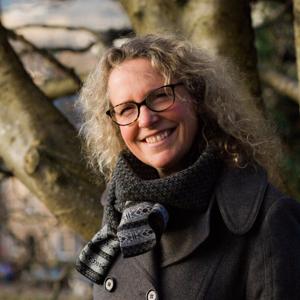


Astrophysicist Professor Catherine Heymans is on a quest to understand the dark side of our Universe. Observations suggest that 95% of the Universe is made up of something invisible, something we can't see or touch called dark matter and dark energy. We only know it exists because of its impact on the things we can see and touch but beyond that we really know very little about it. So how can you study something you can't see, feel or observe through a telescope? In this fascinating conversation Catherine shares her deep rooted passion for tackling huge questions, the origins of her love of exploration and why she believes there is indeed alternative life out there but she doesn't think we'll ever get to meet it.
It's 80 years since the Manhattan Project saw the first nuclear bomb developed and latterly unleashed on the world. In the aftermath enthusiasm for nuclear power and innovation went into overdrive but at what cost? In this Brainwaves Pennie Latin visits Douneray Power Station in Caithness where the long process of decommissioning is still in progress, to explore what the nuclear fuelled invention of the post war era now means for scientists working in Scotland. Why is the job of cleaning up after the nuclear era so complicated in the UK and what, if anything, have we learned from those scientific innovators of the past.
Ring tones, notifications, sirens, traffic, electronic gadgets, the noise is endless! So, in a bid to escape and find a bit of respite from our increasingly noisy world, Pennie Latin goes in search of a slice of silence. Its a journey that takes her from a world war II fuel tank hidden in the heart of the Highlands which houses the longest echo on record to an anechoic chamber where silence is absolute. In between she considers the value of silence and whether you can ever truly switch off the world, physically or mentally. Is silence a commodity worth pursuing or, at the end of the day, does the cost of finding silence outweigh the benefits? So, will Pennie find silence and what will it yield if she does?
From the chemical structure of different plastics to what exactly should we be putting in our recycling bins, Brainwaves explores what it is about plastics that has made them environmental enemy number one.
Pennie Latin meets the founder of Sci Sisters and the Crum Brown Chair of Chemistry at the University of Edinburgh, Professor Polly Arnold
Polly's work focus's around two fundamental forms of waste. She spends her time as chemist lurking around the bottom end of the Periodic Table with elements like uranium and plutonium. This waste she is interested in is nuclear waste and primarily how will it behave as it decays in the future.
The other waste she focuses her attention to is what she sees as the waste of talented women who, for a variety of reasons, leave their careers in STEM. To address this she started SciSisters, a network for women in STEM to provide a platform for promoting their areas of expertise and at the same time providing support for women working in a field with a strong gender imbalance.
How many of us spend our days surrounded by dead bodies? For Professor Tracey Wilkinson, the Principal Anatomist at the University of Dundee, it is part of her everyday. Tracey is current Cox Chair of Anatomy at the University which is celebrating the 130th Anniversary of the position in 2018.
The Centre for Anatomy and Human Identification was the first in the UK to introduce the Thiel soft fix approach to embalming, leading to research which has resulted in new and improved surgical procedures and the design and development of new medical technologies and surgical devices.
Starting in the dissecting room, in this Brainwaves, Pennie Latin follows Tracey for a day to find out more about her role as Principle Anatomist, the research she heads ups and how her passion for anatomy is being passed on to medical students, surgeons and researchers around the world.
Body organs aren't all internal like the brain or the heart. There's one we wear on the outside. Skin is our largest organ, it covers over 2m2. This fleshy covering does a lot more than make us look presentable. In fact, without it, we'd literally evaporate.
Skin acts as a waterproof, insulating shield, guarding the body against extremes of temperature, damaging sunlight, and harmful chemicals. It also exudes antibacterial substances that prevent infection and manufactures vitamin D for converting calcium into healthy bones. Our skin is a huge sensor packed with nerves for keeping the brain in touch with the outside world. At the same time, skin allows us free movement, proving itself an amazingly versatile organ.
From the anatomy class to the skin labs of the future, this Brainwaves looks at this extraordinary organ that we all share and the science behind some cutting edge innovation happening to replace, repair and improve damaged skin.
It's all very well being told that the best way to stave off ageing is to do, think, eat or behave in a certain way when you're young, but when you are young, you don't ever believe you're going to get old, so by the time you are getting old it's too late. You've frittered away you're entire youth partying, denying your body sleep and exercise and eating junk food so by the time you're 40, you look 50 and feel 60, aaaaaagh!
But is it really too late? Is there something we could, should, might do in middle age to hold back the tidal wave of old age? Welcome to The Intervention Factory - an on-going Scottish research project, designed by Associate Professor from Heriot Watt, Dr Alan Gow, aimed at understanding which ordinary, everyday actions and behaviours could be the key to helping us stay sharper for longer.
In this Brainwaves, Pennie Latin listens in to Alan's Edinburgh Fringe Show at the Cabaret of Dangerous Ideas based on our cognitive decline and then explores the a piece of research called the What Keeps You Sharp survey which explores how accurate our own ideas are about what does and doesn't keep us younger for longer.
Should we offer language classes on the NHS? Could bilingualism be more beneficial than medication when it comes to a strong, healthy brain and is monolingualism making us ill?
In this Brainwaves, Pennie Latin meets the man behind those bold ideas. Dr Thomas Bak is Reader in Psychology at the University of Edinburgh and clinical research fellow at the Anne Rowling Regenerative Neurology Clinic.
A plurilingualist and Gaelic learner, originally from Poland, now based in Scotland his work focuses on the interaction between bilingualism and cognitive functions across our lifetime, in particular the effects of language learning in delaying diseases such as dementia.