Brainwaves

Brainwaves

By BBC Radio ScotlandTechnology
Download on the App Store

All Brainwaves episodes

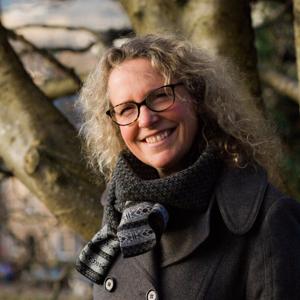
  • Professor Polly Arnold
    Pennie Latin meets the founder of Sci Sisters and the Crum Brown Chair of Chemistry at the University of Edinburgh, Professor Polly Arnold
    Polly's work focus's around two fundamental forms of waste. She spends her time as chemist lurking around the bottom end of the Periodic Table with elements like uranium and plutonium. This waste she is interested in is nuclear waste and primarily how will it behave as it decays in the future.
    The other waste she focuses her attention to is what she sees as the waste of talented women who, for a variety of reasons, leave their careers in STEM. To address this she started SciSisters, a network for women in STEM to provide a platform for promoting their areas of expertise and at the same time providing support for women working in a field with a strong gender imbalance.
    29 min
  • Professor Tracey Wilkinson
    How many of us spend our days surrounded by dead bodies? For Professor Tracey Wilkinson, the Principal Anatomist at the University of Dundee, it is part of her everyday. Tracey is current Cox Chair of Anatomy at the University which is celebrating the 130th Anniversary of the position in 2018.
    The Centre for Anatomy and Human Identification was the first in the UK to introduce the Thiel soft fix approach to embalming, leading to research which has resulted in new and improved surgical procedures and the design and development of new medical technologies and surgical devices.
    Starting in the dissecting room, in this Brainwaves, Pennie Latin follows Tracey for a day to find out more about her role as Principle Anatomist, the research she heads ups and how her passion for anatomy is being passed on to medical students, surgeons and researchers around the world.
    29 min
  • An Adventure in Skin
    Body organs aren't all internal like the brain or the heart. There's one we wear on the outside. Skin is our largest organ, it covers over 2m2. This fleshy covering does a lot more than make us look presentable. In fact, without it, we'd literally evaporate.
    Skin acts as a waterproof, insulating shield, guarding the body against extremes of temperature, damaging sunlight, and harmful chemicals. It also exudes antibacterial substances that prevent infection and manufactures vitamin D for converting calcium into healthy bones. Our skin is a huge sensor packed with nerves for keeping the brain in touch with the outside world. At the same time, skin allows us free movement, proving itself an amazingly versatile organ.
    From the anatomy class to the skin labs of the future, this Brainwaves looks at this extraordinary organ that we all share and the science behind some cutting edge innovation happening to replace, repair and improve damaged skin.
    29 min
  • How to Stay Sharp
    It's all very well being told that the best way to stave off ageing is to do, think, eat or behave in a certain way when you're young, but when you are young, you don't ever believe you're going to get old, so by the time you are getting old it's too late. You've frittered away you're entire youth partying, denying your body sleep and exercise and eating junk food so by the time you're 40, you look 50 and feel 60, aaaaaagh!
    But is it really too late? Is there something we could, should, might do in middle age to hold back the tidal wave of old age? Welcome to The Intervention Factory - an on-going Scottish research project, designed by Associate Professor from Heriot Watt, Dr Alan Gow, aimed at understanding which ordinary, everyday actions and behaviours could be the key to helping us stay sharper for longer.
    In this Brainwaves, Pennie Latin listens in to Alan's Edinburgh Fringe Show at the Cabaret of Dangerous Ideas based on our cognitive decline and then explores the a piece of research called the What Keeps You Sharp survey which explores how accurate our own ideas are about what does and doesn't keep us younger for longer.
    29 min
  • Dr Thomas Bak
    Should we offer language classes on the NHS? Could bilingualism be more beneficial than medication when it comes to a strong, healthy brain and is monolingualism making us ill?
    In this Brainwaves, Pennie Latin meets the man behind those bold ideas. Dr Thomas Bak is Reader in Psychology at the University of Edinburgh and clinical research fellow at the Anne Rowling Regenerative Neurology Clinic.
    A plurilingualist and Gaelic learner, originally from Poland, now based in Scotland his work focuses on the interaction between bilingualism and cognitive functions across our lifetime, in particular the effects of language learning in delaying diseases such as dementia.
    29 min
  • Prof Sethu Vijayakumar

    What role will robots play in our lives in the future? We already interact with robots on a daily basis but with the development of intelligent, free-thinking robots our relationship with them will change.

    Sethu Vijayakumar, Professor of Robotics at the School of Informatics at the University of Edinburgh and judge on BBC2's Robot Wars, has spent his career in robotics pioneering the use of large scale machine learning techniques for use in healthcare, in our homes and in ground breaking unmanned missions to Mars, the precursor to a potential human Martian colony.

    We shouldn't be afraid of robots, he says. Instead we need to become comfortable that robots will be more efficient than us and make less mistakes than us. Our future is shared and fully autonomous robots. Humans just need to become content with relinquishing some control of our world.

    In this Brainwaves, Pennie Latin meets Sethu Vijayakumar in his lab in Edinburgh, along with some of his robots - from a relatively simple prosthetic forearm to one of the most advanced humanoid robots in the world, Valkyrie.

    29 min
  • The Scottish Wildcat

    Facing imminent extinction the Scottish Wildcat used to to be found widely across the country. Today the most optimistic population count suggests there are around 315 individual wildcats left and they are only in the north of Scotland. Experts have suggested we may have only 5 years to save the species.

    In response Scottish Wildcat Action is the first national conservation plan with a vision to restore viable population of Scottish wildcats into the Highlands. Their plan is a multifaceted approach. It involves tagging, tracking and mapping wildcats in their natural habitat. Domestic cat owners have a role to play too. The biggest threat to the wildcat is hybridisation with domestic and feral cats. Which begs the question should we be neutering domestic cats that are near wildcat habitats? And if all this fails should we follow what worked for the Iberian Lynx and develop a captive bred population with the intention of releasing them into the wild later on?

    But is it too late and at what cost? Should we really be ploughing all these resources and expertise into saving them?

    In this Brainwaves Pennie Latin meets some of the researchers, conservationists and scientists who are trying save the iconic Scottish Wildcat.

    29 min
  • Child Tissue Donation

    Would you, could you or should you donate your body to science? That might be a hard enough question to answer but what about donating your children's tissue to research after their death. This is exactly the situation Sarah Gray and her husband found themselves in when one of their twins, Thomas, died.

    Thomas, was born with anencephaly and died 6 days after birth. Sarah and her husband donated Thomas's tissues for scientific research. With time Sarah's desire to know what Thomas's tissue has been used for got the better of her. She went on an extraordinary journey to understand the full extent of Thomas's legacy, visiting the institutions which had received parts of his liver and eyes and tracing the scientific impact of his donation.

    Joanne Mullarky is a research nurse at the University of Bradford's Human Tissue Bank. When she heard Sarah's story she changed the way she worked and now today thinks that a stronger relationship between academic institutions and donor parents is vital to increasing the amount of tissue donated. Tissue that is currently rarely donated.

    A Brainwaves special recorded in front a live audience at the Edinburgh International Book Festival. Honest, thought provoking and profoundly moving, Sarah's story of Thomas's donation will question the way we think about life after death and the extraordinary gift of giving a dead body to science.

    29 min
  • Snow and Ice

    An intricate yet delicate six sided crystal floats down to earth. It becomes powerful enough to carve our landscape. It is cold enough to kill us and if it becomes unstable it can move at hundreds of miles per hour. All this, yet that crystal is composed of one of life's absolute essentials, water. This Brainwaves is all about the surprising, quirky and fascinating science behind something we all experience in a Scottish winter - Snow and Ice.

    From the startling beauty of ice crystal formation to the science of drilling down to find the oldest ice on the planet. Pennie Latin climbs mountains, goes back in time and asks what makes the perfect snowball in this intriguing episode of Brainwaves that will make you look out the window wishing for the next snowfall.

    29 min