
Sign up to save your podcasts
Or

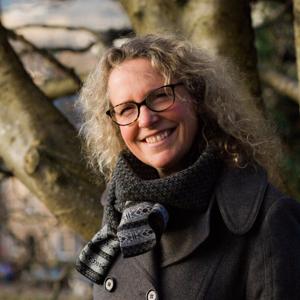


Until recently, it was thought that our brains were fully developed by early childhood.
Driven by the assumption that brain growth was pretty much complete by the time a child began school, scientists believed for years that the adolescent brain was essentially an adult one, only with fewer miles on it.
But over the last two decades the scientific community has learned that the teenage years encompass vitally important stages of brain development and research has shown that the adolescent brain is still changing into early adulthood. This has impacts on learning and multitasking, stress and memory, sleep, addiction, and decision-making. For parents, these consequences often manifest themselves in a variety of behaviours.
In this episode of Brainwaves on The Adolescent Brain, Pennie Latin examines the relatively young field of teenage neurology. Examining what science has discovered about brain functioning, wiring and capacity to try and explain how these eye-opening findings not only dispel commonly held myths, but also yield practical suggestions that will help adults and teenagers negotiate the often frustrating and misunderstood adolescent years.
A farmer's daughter from Angus, soil has been in Professor Lorna Dawson's family for generations. She just didn't expect her relationship with soil to lead her into a scientific career of solving crime. Now Principal Soil Scientist at the James Hutton Institute she has for over 25 years' researched soil and plant interactions.
It was when she was an Edinburgh geology student that her mind was drawn towards forensics. One evening 2 teenage girls went missing from near her student halls, they turned up dead the next day. Little did Lorna know that one day she would become pivotal in the forensic case of The World's End murders.
Her role as Head of the Soil Forensic Science Group has led her to work on over 70 criminal cases across the globe. It's the detailed analysis of the microbial DNA held within the soil that has led to her pioneering work becoming so effective at finding bodies, caches of drugs and overturning alibi's in courtrooms.
There is however one case that she has been working on for several years which remains incomplete. In this episode of Brainwaves Pennie Latin joins Lorna Dawson on site as she starts a new search for the remains of the missing Scottish schoolgirl Moira Anderson.
Underneath the waves of Scotland's seas there is a hive of communication going on. Clicks, shrieks, calls and whistles that can be heard for over 15kms. They are highly developed forms of communication, some evidence even shows local dialects among our two main native populations of Bottlenose dolphin in Scotland.
What started as a career trying to work out the similarities between how animals and humans perceive the world around them led Professor Vincent Janik, Director of Scottish Oceans institute at St. Andrews University, to focussing his work on the nuances of how dolphins address each other, how they communicate.
In this episode of Brainwaves Pennie Latin explores what makes dolphin communication some of the most advanced of the animal kingdom and what we can learn about the development of language and brain function in humans by comparing ourselves to the dolphins.
Fracking doesn't just open up rocks, it divides all kinds of communities across Scotland.
In January 2015 the Scottish Government announced a moratorium on hydraulic fracturing taking place in Scotland, putting in place ban on fracking shale rock for oil and gas, while they further consider the implications of fracking.
Lots of us have heard the back and forth about whether we should or should not entertain fracking as an answer to our energy requirements in Scotland but how much of that is based strictly upon science?
In this Brainwaves Pennie Latin explores the science of hydraulic fracturing as a method of extracting oil and gas from the carboniferous shale reserves of Scotland's Midland Valley and picks apart how a detailed understanding and analysis of Scotland's specific geology and landscape helps us to understand both what potential reserves of oil and gas there might be under our feet but also what are the possible implications of mining those reserves through fracking.
We've been fascinated by it for thousands of years. It was the target of a 20th century technological arms race that would put the first humans in space and on extra-terrestrial soil, sparking exponential advances in spaceflight.
Man got there, then left, and hasn't been back for 45 years. But now private investors, Kickstarter funds and international space agencies are clamouring to return. For something we see in the sky most nights it still holds an air of mystique. The Moon.
As the European Space Agency prepares to land on the lunar surface again this episode of Brainwaves looks at the fascinating relationship between earth and its moon, hearing from those who have orbited the moon and those who are planning to return to it to form a human colony.
When Richard Morris was a physics student he volunteered to be a subject in a psychology experiment. It triggered a fascination with the brain that led to him become one of the world's leading neuroscientists.
His lifetime work has focused on memory and why, in his own words, it's such an interesting thing. Consider what life would be like if we didn't have memory. Who would we be, how would we know our place in the world? In 2016 for his work looking at how we form memory and specifically the intricate cellular functions created during the memory making process, Professor Richard Morris was awarded The Brain Prize.
It was walking past fish tanks in the back of a marine biology laboratory that originally gave him the idea for an experiment that would change the way we understand how memory is formed. An idea he himself describes as being ludicrously simple. The Water Maze became and still is a standard experiment used in labs around the world to analyse memory.
This early work focused on how we form memory, today his fascination lies in what happens when our memory starts to fail.
In this episode of Brainwaves, Pennie Latin explores our memory with Professor Richard Morris and why he thinks it's one of the grand challenges of neuroscience.
The sound of the world around us provides us with key indicators to the health of our planet. How those sounds change over time and in space can show how the well-being of earth is changing, both naturally and through man's impact.
Soundscape ecology is the study of nature's sounds - from the lapping of the ocean's waves and the rustle of leaves, to the rutting roars of red deer and the whistling of whales and dolphins.
But the sound of our world is changing, advances in recording technology mean that we can now very easily listen to that change. But one of the key things for science though is being able to analyse that soundscape and relate it how the natural world is changing.
In this episode of Brainwaves, Pennie Latin talks to those who have spent years recording the evolving soundscape of our planet, explores how the sound is being analysed and discovers how sound is being used to measure re-wilding in parts of the Highlands.
Everyone will remember the first time they saw the Northern Lights dance across the night sky. For some it will have been a deeply moving moment, for others, time to capture a photograph. For cultures and communities going back 100's of years the aurora borealis have meant many different things, from the spirits of the dead being whisked away to the omens of the Gods.
Whatever your belief, it is impossible to not look at this mythical dance of colours in the night sky as anything other than beautiful. Plasma scientist, Dr Melanie Windridge has devoted herself to understanding the science of the aurora borealis and recording the human connection with them.
In this episode of Brainwaves, Melanie explains why there are different colours, how the dancing waves of the lights are a kind of earthly Thai Chi and while the aurora might be beautiful it is actually vital to protect us from violent space weather as we become a more and more tech dependant world.
If we do nothing, up to 10 million people a year across the globe will die due to drug resistant bacterial infections by 2050. Antimicrobial Resistance isn't just a massive international problem, it is a problem that faces every single one of us here in Scotland.
Bacteria found in Scotland's population are already resistant to the antibiotics of last resort and according to Health Protection Scotland we are facing a substantial Public Health Risk.
So what's the answer? That's something that researchers across Scotland are busy trying to crack both through innovation in diagnostics and treatment.
On the treatment side, new technology already in use in NHS Greater Glasgow and Clyde is cutting bacterial infection identification times from over 24 hours to nearer 24 minutes. Other researchers are suggesting the future lies in the past with a return to 'phage' therapy - a viable treatment for infection for over 100 years but the discovery of Penicillin and onset of antibiotic treatments pushed it to one side.
Another angle of attack is through the pioneering research of the Cronin Group in Glasgow which is taking the fight back to the bacteria with a remarkable new concept - 3D printing bacteria identification kits.
In this episode of Brainwaves, Pennie Latin meets some of the Scottish scientists fighting the global war against antimicrobial resistance to find out how we need to change our relationship with antibiotics and our attitude to the role of medicine in healthcare.
Time for your phone upgrade? What did you do with the old one? Stick it in a drawer, hand it back to your phone company or just throw it away.
Have you ever considered that your smartphone might be a treasure trove of precious metals, a rich vein of gold, silver and platinum? Welcome to the world of the Urban Miners.
And it's not just smartphones; almost anything with a circuit board contains precious metal of some sort. If you add up all the electronic and electrical waste across Scotland you have a small mountain of pre-loved devices and appliances. But stored within that mountain are rich seams of precious metals just waiting to be mined and potentially turned back into something else.
In this episode of Brainwaves Pennie Latin discovers how gold is being retrieved from smartphones, platinum from road sweepings in richer and more environmentally friendly ways than the original mining process.
This re-using of materials leads to the onset of the circular economy and potential for huge innovation, design and invention, which is being driven here in Scotland by the Institute of Remanufacture and Zero Waste Scotland who say that in a world of limited resources, re-using, re-furbishing and remanufacturing may be the only realistic way forward.