
Sign up to save your podcasts
Or

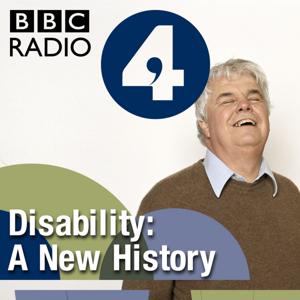

Disabled children are everywhere in popular fiction - Tiny Tim, What Katy Did, The Secret Garden. But what about the real children of the 19th century? What were their lives like, and where can we hear their voices?
In this 9th programme in the series, Peter White searches for documents which reveal the reality of children's lives.
He discovers new research into the history of the Brave Poor Things, a charity which set out to 'save' disabled children across the country through organised games, outings, and a Guild song:
'A trouble's a ton, A trouble's an ounce
The literature of the Brave Poor Things includes quotes from children - like this girl:
'O! I am so glad to be a cripple!' said a happy-faced girl one day when away in the country. 'Glad?' questioned someone. What DO you mean? And she answered, 'I can't help being glad. It is so beautiful to belong to the Guild, and I couldn't unless I had lost my leg.'
That's from fund-raising propaganda - but it's not a real girl's voice. Using images of pathetic children to raise money for charity has had a powerful legacy.
Just occasionally, there is a real child's voice. Peter discovers a letter from a little girl in a Swansea Institution for the Deaf and Dumb, and it is almost unbearably moving:
'I do feel homesick. When are you coming to see me? Do you know how long I have to stop here? The children are all dumb here, I am the only girl that can speak.'
With historians Julie Anderson, Joanna Bourke and Mike Mantin.
Producer: Elizabeth Burke
 View all episodes
 By BBC Radio 4

4.8
99 ratings
Disabled children are everywhere in popular fiction - Tiny Tim, What Katy Did, The Secret Garden. But what about the real children of the 19th century? What were their lives like, and where can we hear their voices?
In this 9th programme in the series, Peter White searches for documents which reveal the reality of children's lives.
He discovers new research into the history of the Brave Poor Things, a charity which set out to 'save' disabled children across the country through organised games, outings, and a Guild song:
'A trouble's a ton, A trouble's an ounce
The literature of the Brave Poor Things includes quotes from children - like this girl:
'O! I am so glad to be a cripple!' said a happy-faced girl one day when away in the country. 'Glad?' questioned someone. What DO you mean? And she answered, 'I can't help being glad. It is so beautiful to belong to the Guild, and I couldn't unless I had lost my leg.'
That's from fund-raising propaganda - but it's not a real girl's voice. Using images of pathetic children to raise money for charity has had a powerful legacy.
Just occasionally, there is a real child's voice. Peter discovers a letter from a little girl in a Swansea Institution for the Deaf and Dumb, and it is almost unbearably moving:
'I do feel homesick. When are you coming to see me? Do you know how long I have to stop here? The children are all dumb here, I am the only girl that can speak.'
With historians Julie Anderson, Joanna Bourke and Mike Mantin.
Producer: Elizabeth Burke

7,639 Listeners

1,046 Listeners

5,520 Listeners

1,799 Listeners

1,763 Listeners

1,049 Listeners
1,920 Listeners
4,159 Listeners

3,177 Listeners
720 Listeners