
Sign up to save your podcasts
Or



Set against the backdrop of a small college town, the Heyst's familial tensions converge during the holiday weekend; not only is the family's livelihood at stake, but the debt collector has just come into town, the youngest daughter has returned from an institution unprompted, and there's even a question of fidelity to boot. However, against the simplicity of communal gatherings and the warmth of familial bonds, the worries that once seemed insurmountable begin to fade. And through the lens of Easter's promise of renewal, Strindberg suggests that life's burdens may be lighter than they appear, offering a glimpse of hope amidst the chaos of everyday existence.
Follow me on other platforms:
https://bemuse.bandcamp.com
https://www.instagram.com/talentunlimited1/?hl=en
https://open.spotify.com/artist/0wiNjFbd6rluEHZF4Qffcv
https://www.facebook.com/profile.php?id=100070481824821&locale=hi_IN
https://www.patreon.com/bemuse
https://www.youtube.com/channel/UCLZ_sUa8kfdu3qa6GSzbDiw
Website: https://bemusearts.com
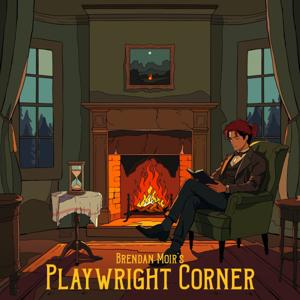
*This Season's Album Art by Breanna Rose*
Johan August Strindberg (1849 – 1912) was a Swedish playwright, novelist, poet, essayist and painter. A prolific writer who often drew directly on his personal experience, Strindberg wrote more than sixty plays and more than thirty works of fiction, autobiography, history, cultural analysis, and politics during his career, which spanned four decades.A bold experimenter and iconoclast throughout, he explored a wide range of dramatic methods and purposes, from naturalistic tragedy, monodrama, and history plays, to his anticipations of expressionist and surrealist dramatic techniques. From his earliest work, Strindberg developed innovative forms of dramatic action, language, and visual composition. He is considered the "father" of modern Swedish literature and his The Red Room (1879) has frequently been described as the first modern Swedish novel.In Sweden, Strindberg is known as an essayist, painter, poet, and especially as a novelist and playwright, but in other countries he is known mostly as a playwright.
*Any views/ideas expressed in these plays are not my own, and I do not believe in the censoring of anything controversial or problematic that the playwright/poet/author has written which will impact the way in which the story is told. The integrity of these works is much more important to me than any triggering content, and therefore I would ask that you have the same maturity and mental framework to listen to these pieces and appreciate them in their proper historical context.*
If you cast a reasonable doubt in someone, are you responsible for their actions? Especially when that doubt was planted in order to manipulate?
This is one of the central questions posed in August Strindberg's "The Father," a three act play about a power struggle between the over-domineering Adolf and his wife Laura as they discuss the future plans for their child. All doubts come to a head, however, when Laura points out that a child's paternity can never be proven, and thus, under common law, strips Adolf of his power over the child. Through deceit, treachery, and manipulation, the plan to get rid of "The Father" is set in motion, and only time will tell if Adolf is a madman filled to the brim with jealous rage or righteous fury.
Follow me on other platforms:
https://bemuse.bandcamp.com
https://www.instagram.com/talentunlimited1/?hl=en
https://open.spotify.com/artist/0wiNjFbd6rluEHZF4Qffcv
https://www.facebook.com/profile.php?id=100070481824821&locale=hi_IN
https://www.patreon.com/bemuse
https://www.youtube.com/channel/UCLZ_sUa8kfdu3qa6GSzbDiw
Website: https://bemusearts.com
*This Season's Album Art by Breanna Rose*
Johan August Strindberg (1849 – 1912) was a Swedish playwright, novelist, poet, essayist and painter. A prolific writer who often drew directly on his personal experience, Strindberg wrote more than sixty plays and more than thirty works of fiction, autobiography, history, cultural analysis, and politics during his career, which spanned four decades.A bold experimenter and iconoclast throughout, he explored a wide range of dramatic methods and purposes, from naturalistic tragedy, monodrama, and history plays, to his anticipations of expressionist and surrealist dramatic techniques. From his earliest work, Strindberg developed innovative forms of dramatic action, language, and visual composition. He is considered the "father" of modern Swedish literature and his The Red Room (1879) has frequently been described as the first modern Swedish novel.In Sweden, Strindberg is known as an essayist, painter, poet, and especially as a novelist and playwright, but in other countries he is known mostly as a playwright.
*Any views/ideas expressed in these plays are not my own, and I do not believe in the censoring of anything controversial or problematic that the playwright/poet/author has written which will impact the way in which the story is told. The integrity of these works is much more important to me than any triggering content, and therefore I would ask that you have the same maturity and mental framework to listen to these pieces and appreciate them in their proper historical context.*
When is vengeance justified? And to what extent?
Adolf, an artist, is having martial problems with his independent wife Tekla. Meanwhile, Gustav, his friend, attempts to get Adolf to stand up for himself and "be the man of the house." But behind all of this superficial talk is a psychological war being waged on three fronts, and each party will do nearly anything to get their desires met. The only question now, is who will be the first to fall....
Join me in experiencing the first of many plays by August Strindberg this season, where we'll be exposed to various forms of existentialism, interpersonal dynamics, and the struggle for power amidst some light-hearted satire by Guy Wetmore Carryl. But for now, please, sit back, relax, and enjoy, "The Creditors."
Follow me on other platforms:
https://bemuse.bandcamp.com
https://www.instagram.com/talentunlimited1/?hl=en
https://open.spotify.com/artist/0wiNjFbd6rluEHZF4Qffcv
https://www.facebook.com/profile.php?id=100070481824821&locale=hi_IN
https://www.patreon.com/bemuse
https://www.youtube.com/channel/UCLZ_sUa8kfdu3qa6GSzbDiw
Website: https://bemusearts.com
*This Season's Album Art by Breanna Rose*
Johan August Strindberg (1849 – 1912) was a Swedish playwright, novelist, poet, essayist and painter. A prolific writer who often drew directly on his personal experience, Strindberg wrote more than sixty plays and more than thirty works of fiction, autobiography, history, cultural analysis, and politics during his career, which spanned four decades.A bold experimenter and iconoclast throughout, he explored a wide range of dramatic methods and purposes, from naturalistic tragedy, monodrama, and history plays, to his anticipations of expressionist and surrealist dramatic techniques. From his earliest work, Strindberg developed innovative forms of dramatic action, language, and visual composition. He is considered the "father" of modern Swedish literature and his The Red Room (1879) has frequently been described as the first modern Swedish novel.In Sweden, Strindberg is known as an essayist, painter, poet, and especially as a novelist and playwright, but in other countries he is known mostly as a playwright.
*Any views/ideas expressed in these plays are not my own, and I do not believe in the censoring of anything controversial or problematic that the playwright/poet/author has written which will impact the way in which the story is told. The integrity of these works is much more important to me than any triggering content, and therefore I would ask that you have the same maturity and mental framework to listen to these pieces and appreciate them in their proper historical context.*
Two astronomers realize that the universe, having expanded to the fullest extent, is now collapsing in on itself at an alarming rate. The two astronomers observe this phenomenon as pleasantly and remorsefully as a sunset, discussing love, life, and the purpose of both before the universe collapses.
Follow me on other platforms:
https://bemuse.bandcamp.com
https://www.instagram.com/talentunlimited1/?hl=en
https://open.spotify.com/artist/0wiNjFbd6rluEHZF4Qffcv
https://www.facebook.com/profile.php?id=100070481824821&locale=hi_IN
https://www.patreon.com/bemuse
https://www.youtube.com/channel/UCLZ_sUa8kfdu3qa6GSzbDiw
Website: https://bemusearts.com
*This Season's Album Art by Brian Fisher*
Brendan Moir is a composer, writer, and all around performer. At present, he lives in Limerick, Ireland. His overall art style is very traditional with the incorporation of many modern techniques. His philosophy and goal is “to create art that will make one think; to properly reflect the entirety of our human experience.”
His artistic endeavors have led him across many different fields, including music composition/theory, piano performance, singing/dancing/acting, play/screenwriting, and tutoring. He wishes to further develop these skills in order to “create an epitome of art by combining all the arts.”
*Any views/ideas expressed in these plays are not my own, and I do not believe in the censoring of anything controversial or problematic that the playwright/poet/author has written which will impact the way in which the story is told. The integrity of these works is much more important to me than any triggering content, and therefore I would ask that you have the same maturity and mental framework to listen to these pieces of art and appreciate them in their proper historical context.*
Come join me in reading the magnum opus of J.M. Synge, where a young traveler has come from out of town boasting that he's committed patricide, which, rather than ostracizing him, causes many women of the town to become morbidly curious about this young man, including the prettiest girl in town and the quite newly vivacious widow. But what happens when the supposedly dead father shows up in town to whoop his son into submission? Find out as we explore the dynamics of bad boy charisma and righteous paternal fury is this a hilarious romp through the Irish Countryside.
Follow me on other platforms:
https://bemuse.bandcamp.com
https://www.instagram.com/talentunlimited1/?hl=en
https://open.spotify.com/artist/0wiNjFbd6rluEHZF4Qffcv
https://www.facebook.com/profile.php?id=100070481824821&locale=hi_IN
https://www.patreon.com/bemuse
https://www.youtube.com/channel/UCLZ_sUa8kfdu3qa6GSzbDiw
Website: https://bemusearts.com
*This Season's Album Art by Brian Fisher*
Edmund John Millington Synge (1871–1909) was an Irish playwright, poet, writer, collector of folklore, and a key figure in the Irish Literary Revival. His best known play The Playboy of the Western World was poorly received, due to its bleak ending, depiction of Irish peasants, and idealisation of parricide, leading to hostile audience reactions and riots in Dublin during its opening run at the Abbey Theatre, Dublin, which he had co-founded with W. B. Yeats and Lady Gregory.
His writings mainly concern working-class Catholics in rural Ireland, and with what he saw as the essential paganism of their world view. Owing to his ill health, Synge was schooled at home. His early interest was in music, leading to a scholarship and degree at Trinity College Dublin, and he went to Germany in 1893 to study music. He abandoned this career path in 1894 with a move to Paris where he took up poetry and literary criticism and met Yeats, and then returned to Ireland.
Synge suffered from Hodgkin's disease. He died aged 37 from Hodgkin's-related cancer, while writing what became Deirdre of the Sorrows, considered by some as his masterpiece, though unfinished during his lifetime. Although he left relatively few works, they are widely regarded as of high cultural significance.
*Any views/ideas expressed in these plays are not my own, and I do not believe in the censoring of anything controversial or problematic that the playwright/poet/author has written which will impact the way in which the story is told. The integrity of these works is much more important to me than any triggering content, and therefore I would ask that you have the same maturity and mental framework to listen to these pieces and appreciate them in their proper historical context.*
From the publisher's feed
Welcome to Brendan Moir's Playwright Corner, where I read plays, poems, or whatever's currently striking my fancy in the classic audio book format. Prepare to be filled with joy, hope, rage, envy,…