
Sign up to save your podcasts
Or




Based on Podcast App listening data
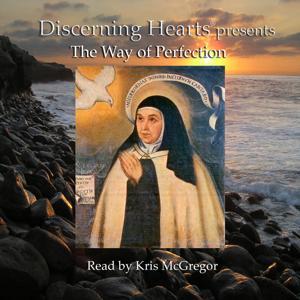
It was through the lens of intimate friendship with Jesus Christ that the many foundations of St. Teresa of Jesus (of Avila) were begun. In her book, “The Way of Perfection,” she wrote: “All my longing was and still is that since He {Jesus} has so many enemies and so few friends that these few friends be good ones. As a result, I resolved to do the little that was in my power; that is, to follow the evangelical counsels as perfectly as I could and strive that these few persons who live here do the same.” Her life was a witness and testimony to this intimate friendship with Jesus. We must be diligent in seeking the Lord and answering “His Call.” St. Teresa counsels us on how to develop this relationship: “Represent the Lord Himself as close to you and behold how lovingly and humbly He is teaching you. Believe me, you should remain with so good a friend as long as you can. If you grow accustomed to having Him present at your side, and He sees that you do so with love and that you go about striving to please Him, He will never fail you. He will help you in all your trials; you will find Him everywhere.” (“The Way of Perfection 23.2; 26.1). It is through a frequent, intimate conversation in prayer and in the sacraments, that we can more easily grown in our union with Jesus. In this program, Mark and Frances discuss the importance of developing this friendship with Christ through the life and counsel of our Mystic and Doctor of the Church, St. Teresa of Jesus (of Avila).
RESOURCES:
Articles:“Springtime of Faith Conference: The Toolbox of Pope Benedict,” Nashville. http://www.springtimeoffaith.org/images/Springtime%20of%20Faith%20ConferenceThe%20Toolbox%20of%20Pope%20Benedict%202010.pdf
“Christ in the Mysticism of St. Teresa” by Father Kieran Kavanaugh, OCD. http://www.angelfire.com/ca5/stjoseph/formdocs/christ_by_kieran.htm
“Teresa of Avila and Friendship” by Susan B. Cordsen; http://nebula.wsimg.com/d072ccd7a633bf3fe455a1d59188b38e?AccessKeyId=BEEADDF369000DCF3CC9&disposition=0&alloworigin=1
Books:“Collected Works of St. Teresa of Avila, Vol. 1,2 and 3, ‘ The Book of Her Life,’ ‘The Way of Perfection,’ and ‘Interior Castle’” trans. by Kieran Kavanaugh, OCD and Otilio Rodriguez, OCD; ICS Publications.
“15 Days of Prayer with Saint Teresa of Aivla” by Jean Abiven; Liguori.
“Let Nothing Trouble You: 60 Reflections from the Writings of St. Teresa of Avila,” Compiled by Heidi S. Hess; Servant Publications.
“Friendship with Christ: Love and Service” by Sister Mary of Jesus and St. Joseph, OCD; Carmel, Schenectady, New York, 1972.
There is perhaps no greater challenge for those of us who are pursuing the spiritual life then that apparent dichotomy of pain and joy. St. Paul tells us that we must, like him, be a person of joy, and in fact, we should expect to experience joy even in our most difficult times. In this compelling conversation on the top of suffering and joy, Mark and Frances share some insights from one of the most well known and popular Saints of the 20th Century, St. Mother Teresa of Calcutta. In her journals, which were only published after her death, the Church was provided a very unique view into the inner life of a future Saint. What was both remarkable and perhaps surprising for many people, was how Mother Teresa's life was a challenging combination of both suffering and joy. Through her wisdom and also the wisdom and insight of our Carmelite Saints, Frances and Mark share important insights on how all of us can deal with this apparent contradictory experiences of suffering and joy along the spiritual journey. In addition, they support these insights with very specific verses from sacred scripture, which point out that these two opposites are in fact very much a part of the Christian process of growing in the likeness of Christ.
Books:
Booklet:
Apostolic Letter:
Think about one of the most common acts you perform every day as a Christian, the Sign of the Cross. Now ask yourself whether you truly understand the meaning of this sacramental act, or what it signifies to us Christians. In this program Mark and Frances begin by providing a history of the development of Sign of the Cross. Next they discuss the three most significant meanings expressed within this sign. Much of the material for this conversation is taken from a book written by Saint Francis de Sales, which was intended to specifically defend both the use of the sign, and also provide some insight into the real power of the Sign of the Cross. As with so many of the acts of devotion we Catholics use every day, it is important for us to understand the fuller meaning and power associated with the signs of our Faith. This particular program will hopefully provide you with some of the deeper insight and understanding that will allow you to look at the Sign of the Cross in a much more meaningful way. And, it might also cause you to gain a much deeper appreciation and reverence the next time you begin to make the Sign of the Cross.
Books:
What can you do to fight the suffocating plague of indifference and immorality? Eucharist Adoration!! Guests Teresa Gooding and Marika Zimmerman share the details on how to get started. What is Eucharistic Adoration and how does one go about doing this? What if your parish doesn’t have Eucharistic Adoration? How would you go about setting it up? What do the Popes say about spending time with Our Lord in the Blessed Sacrament? What did some of our Carmelite Saints think about it? There are many reasons to begin Eucharistic Adoration, not the least coming from Scripture. The benefits pay off in Heavenly dividends! It’s good to start developing a love for Jesus in the Blessed Sacrament in our young people today, to help them become spiritually strong and virtuous.
Scripture passages:
Catechism of the Catholic Church: CCC #2096, #2628
Books:
Articles:
Encyclicals:
Websites:
benefits_of_holy_hour.pdf for article on “Over 100 Benefits of Eucharistic Adoration”
www.usccb.org “The United States Catholic Conference of Bishops.”
eucharistic-devotion on Eucharistic Devotion and Holy Hours.
perpetual-expositon-of-the-blessed-sacrament.cfm on Perpetual Exposition of the Blessed Sacrament.
www.therealpresence.org on the Holy Hour of Eucharistic Adoration
We so often hear the phrase, ‘Purity of Heart’ but what does this actually mean. More importantly, what does it mean in a spiritual context. Many people rightly believe the definition includes such characteristics as keeping our thoughts pure or keeping our bodies chaste, and this is certainly true, but neither of these elements go far enough. According to the Danish philosopher, Soren Kiergegaard, in a book by this very title, “Purity of Heart is to Will One Thing.” Scripture would seem to support Kierkegaard’s argument when it tells us to ‘Seek first the Kingdom of God.’ In other words, the first and most important thing in our life must be the pursuit of God and His Kingdom, and this is exactly what Kierkegaard argues for in his book. The entire text is basically an assault on what Kierkegaard calls ‘Double-Mindedness’ or the propensity of individuals to attempt to balance their pursuit of the Good, (which Christ Himself tells us is God) with their individual desires for the things of this world. According to Kierkegaard there can be no such balance. Instead, he argues, everything else must be subordinated to our pursuit of the only thing that can bring us ultimate fulfillment. Mark and Frances draw extensively from the writings of Kierkegaard for this important conversation, but then they go on to incorporate and validate his argument with quotes from some of the great Saints of Carmel. If you are looking for the reasons of so many of the apparent discontinuity in your life, and the remedy for these disconnects, then this is the program to listen to.
Magazine:
Book:
“The Collected Works of St. John of the Cross: ‘Ascent to Mt. Carmel’” by John of the Cross; Trans. by Kieran Kavanaugh, OCD and Otilio Rodriguez, OCD; ICS Publications.
“The Complete Works of Elizabeth of the Trinity, Vol. 1: Major Spiritual Writings; ‘Heaven in Faith,’ by Elizabeth of the Trinity; Trans. by Aletheia Kane, OCD; ICS Publications.
Article:
Scripture:
Parents have a very important obligation to teach their children how to pray. Secular Discalced Carmelite, Colleen Sollinger, has much to share with us on this topic. She is a mother of 6 and has homeschooled all of them. 2 of the 6 are in college now. She is also a formatter for the OCDS Community in Dayton. She shares tips on how to set the stage for prayer, providing opportunities for children to pray, and ways to make it personal and relative to their lives. She also gives ideas on how to appeal to your child’s own personality. Many resources are given to help in this most important journey to God through prayer.
BOOKS:
WEBSITES:
Catholic All Year
People have access to an amazing amount of technology thru their computers, tablets, and smartphones. How can this technology be used to help us grow in our spiritual life? How can it help us grow in prayer? How can we use it so it enhances our growth rather than becoming a distraction? How can it help those with a vocation to the Carmelites? CatholicApptitude.org Founder, Jennifer Kane has much to share with us. Tim Bete, techno guru, helps Carmelite Conversations’ host, Frances, interview Jennifer to get all the newest scoops and best advice on Catholic Apps.
www.CatholicApptitude.org
Scripture:
Book:
The conversation on humility continues in this 3rd program of 3. Why is “humility” such an important virtue among all the other virtues? What does a humble soul really look like? What characteristics does a truly humble soul have? What can help motivate us to want to grow in humility? How can we conquer our natural and sinful inclinations so as to grow in humility? What are some images that serve as models of humility to motivate us? What are the rewards of humility? Finally, what are the famous 12 Steps (or Degrees) of Humility?
Scripture:
Articles Online:
Books:
Guest: Chris Cotter, OCDS
Without the virtue of humility, the house of our interior life falls, as humility is the bedrock foundation on which to build. Guest, Chris Cotter, continues the conversation about humility because of its great importance in our growth. Pope Francis said recently at the World Youth Day in Poland: “Thus, contrary to our expectations and perhaps even our desires, the kingdom of God, now as then, ‘does not come in a way that attracts attention’ but rather in littleness, in humility.” The very word, “humility” comes from “humble” which comes from the Latin word “humus” which means grounded. How good it is to stay grounded…grounded in Christ and the humility he showed us. As we pray, we should continue to grow in self knowledge. “To know who we are in relation to who God is” is paramount in spiritual growth. Not all souls experience the heights of prayer, but all souls experience moments of being humbled. To embrace these moments is an opportunity to really enlarge our hearts and imitate our Lord. Chris Cotter gives us several suggestions from St. Teresa of Avila in how to grow in humility.
Books:
Cathechism of the Catholic Church:
Scripture:
Other:
St. Teresa of Avila said: “There is more value in a little study of humility and in a single act of it than in all the knowledge in the world.” With that in mind, we begin a “little study of humility.” We begin with St. Teresa’s quote: “Humility is to walk in truth.” We must walk in the truth of who we are and who we are before God. To walk in truth is to act in justice. What does St. Teresa teach us about true humility? What signs indicate true humility versus false humility? What signs can we look for in discerning the exercise of humility in temptaions? Why is humility the essential key to holiness? Why is humility a sign of great courage? Listen and learn along with us.
“Divine Intimacy” by Fr. Gabriel of St. Mary Magdalen, OCD; Tan Books.
Scripture: 1 Peter 5:5b-7
From the publisher's feed
Ranked by our users in the last 21 days

6,755 Listeners

456 Listeners
17 Listeners

2,161 Listeners

2,617 Listeners

1,513 Listeners
122 Listeners

61,791 Listeners