
Sign up to save your podcasts
Or

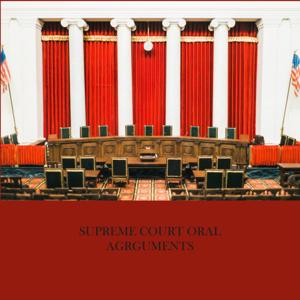

Hamm v. Smith | Case No. 24-872 | Oral Argument Date: 12/10/25 | Docket Link: Here
Question Presented: When someone takes multiple IQ tests to prove intellectual disability in a capital case, do courts look at all the scores together, or can one low score alone save their life?
OverviewThe Supreme Court will decide whether courts must evaluate multiple IQ scores collectively or whether a single qualifying score triggers constitutional protection in death penalty cases. This decision affects hundreds of current death row inmates and reshapes capital litigation nationwide.
Episode RoadmapOpening: Life-or-Death Numbers Game
• Decision by June 2025 with immediate nationwide implementation
• Smith's five IQ scores (75, 74, 72, 78, 74) create constitutional conflict
• Alabama courts denied protection; federal courts granted it based on single low score
Background: Murder and Testing Battle
• 1997: Smith murdered Van Dam for suspected cash, received death sentence
• Federal habeas relief sought based on intellectual disability claim
• Five IQ tests created evidentiary puzzle for courts
Constitutional Question
• Collective evaluation vs. holistic assessment approaches
• State discretion in implementing federal constitutional mandates
• Burden of proof when test results create uncertainty
Episode HighlightsAlabama's Arguments (Supporting Execution):State Discretion
• Atkins left states "task of developing appropriate ways to enforce" constitutional prohibition
• Supreme Court provided no specific implementation guidelines
• Alabama's preponderance standard considering all scores fits constitutional framework
Rejecting "One-Low-Score" Rule
• Eleventh Circuit misread precedents, improperly shifted burden to state
• Four out of five scores above 70 should control determination
• Multiple scores provide more accurate assessment than isolated measurements
No Constitutional Expansion
• Atkins protected only those "known to have IQ under 70"
• Extending protection to borderline cases exceeds national consensus
Smith's Arguments (Opposing Execution):Holistic Assessment Required
• Courts must evaluate scores "holistically" with expert interpretation, not mechanical counting
• Hall v. Florida mandates "additional evidence" beyond raw scores
• Alabama law requires considering "all relevant evidence"
Proper Application
• District court correctly held evidentiary hearing and credited Smith's experts
• Expert testimony showed measurement error creates genuine uncertainty
• Prevents mechanical application of arbitrary cutoffs
Scientific Reality
• IQ tests contain measurement error, particularly for borderline functioning
• Constitutional protections require considering scientific testing limitations
United States' Arguments (Supporting Alabama):Preserve State Discretion
• Atkins preserves "traditional legislative role in setting criminal sanctions"
• Maintains federalism principles and constitutional structure
Multiple Scores More Reliable
• "Multiple IQ scores often say more collectively than any one does alone"
• Statistical reliability improves with comprehensive testing
Precedent Limitation
• Hall and Moore corrected specific state misuse of IQ tests
• Did not mandate "one-low-score rule" as circuits interpreted
Stakes and ImplicationsImmediate Impact:
• Hundreds of current death row inmates with borderline IQ scores
• Nationwide standard for intellectual disability determinations
• Immediate adaptation of expert witness and testing protocols required
Constitutional Effects:
• Balance between federal mandates and state discretion in criminal justice
• How scientific evidence intersects with constitutional law
• Burden of proof application to uncertain psychological test results
Oral Argument PreviewKey Dynamics:
• Federalism questions from Roberts and Kavanaugh
• Scientific methodology discussions from Breyer and Kagan
• Burden of proof questions about who bears risk of uncertain results
Timeline:
• Oral arguments expected early 2025
• Decision by June 2025 with immediate implementation
• Practitioners must prepare now for either outcome
 View all episodes
 By SCOTUS Oral Arguments

4.6
1010 ratings
Hamm v. Smith | Case No. 24-872 | Oral Argument Date: 12/10/25 | Docket Link: Here
Question Presented: When someone takes multiple IQ tests to prove intellectual disability in a capital case, do courts look at all the scores together, or can one low score alone save their life?
OverviewThe Supreme Court will decide whether courts must evaluate multiple IQ scores collectively or whether a single qualifying score triggers constitutional protection in death penalty cases. This decision affects hundreds of current death row inmates and reshapes capital litigation nationwide.
Episode RoadmapOpening: Life-or-Death Numbers Game
• Decision by June 2025 with immediate nationwide implementation
• Smith's five IQ scores (75, 74, 72, 78, 74) create constitutional conflict
• Alabama courts denied protection; federal courts granted it based on single low score
Background: Murder and Testing Battle
• 1997: Smith murdered Van Dam for suspected cash, received death sentence
• Federal habeas relief sought based on intellectual disability claim
• Five IQ tests created evidentiary puzzle for courts
Constitutional Question
• Collective evaluation vs. holistic assessment approaches
• State discretion in implementing federal constitutional mandates
• Burden of proof when test results create uncertainty
Episode HighlightsAlabama's Arguments (Supporting Execution):State Discretion
• Atkins left states "task of developing appropriate ways to enforce" constitutional prohibition
• Supreme Court provided no specific implementation guidelines
• Alabama's preponderance standard considering all scores fits constitutional framework
Rejecting "One-Low-Score" Rule
• Eleventh Circuit misread precedents, improperly shifted burden to state
• Four out of five scores above 70 should control determination
• Multiple scores provide more accurate assessment than isolated measurements
No Constitutional Expansion
• Atkins protected only those "known to have IQ under 70"
• Extending protection to borderline cases exceeds national consensus
Smith's Arguments (Opposing Execution):Holistic Assessment Required
• Courts must evaluate scores "holistically" with expert interpretation, not mechanical counting
• Hall v. Florida mandates "additional evidence" beyond raw scores
• Alabama law requires considering "all relevant evidence"
Proper Application
• District court correctly held evidentiary hearing and credited Smith's experts
• Expert testimony showed measurement error creates genuine uncertainty
• Prevents mechanical application of arbitrary cutoffs
Scientific Reality
• IQ tests contain measurement error, particularly for borderline functioning
• Constitutional protections require considering scientific testing limitations
United States' Arguments (Supporting Alabama):Preserve State Discretion
• Atkins preserves "traditional legislative role in setting criminal sanctions"
• Maintains federalism principles and constitutional structure
Multiple Scores More Reliable
• "Multiple IQ scores often say more collectively than any one does alone"
• Statistical reliability improves with comprehensive testing
Precedent Limitation
• Hall and Moore corrected specific state misuse of IQ tests
• Did not mandate "one-low-score rule" as circuits interpreted
Stakes and ImplicationsImmediate Impact:
• Hundreds of current death row inmates with borderline IQ scores
• Nationwide standard for intellectual disability determinations
• Immediate adaptation of expert witness and testing protocols required
Constitutional Effects:
• Balance between federal mandates and state discretion in criminal justice
• How scientific evidence intersects with constitutional law
• Burden of proof application to uncertain psychological test results
Oral Argument PreviewKey Dynamics:
• Federalism questions from Roberts and Kavanaugh
• Scientific methodology discussions from Breyer and Kagan
• Burden of proof questions about who bears risk of uncertain results
Timeline:
• Oral arguments expected early 2025
• Decision by June 2025 with immediate implementation
• Practitioners must prepare now for either outcome

25,877 Listeners

3,556 Listeners

667 Listeners

1,103 Listeners

6,311 Listeners

112,877 Listeners

7,215 Listeners
2,415 Listeners
5,817 Listeners
3,921 Listeners

16,173 Listeners
400 Listeners
744 Listeners
38 Listeners
847 Listeners