
Sign up to save your podcasts
Or

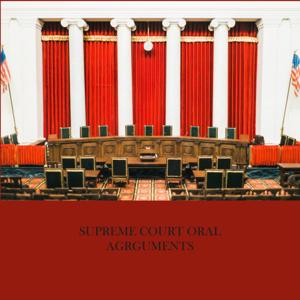

Trump v. Slaughter | Case No. 25-332 | Oral Argument Date: 12/8/25 | Docket Link: Here
Question Presented: Whether Congress can require the President to show cause before removing commissioners of independent agencies, or whether Article II grants the President absolute removal power over all executive officers.
OverviewThis episode examines a case that could trigger the most dramatic restructuring of federal power since the New Deal. President Trump removes FTC Commissioner Rebecca Slaughter without cause, challenging the constitutional foundation of independent agencies. The Court confronts whether two dozen independent agencies that control $47 trillion in economic activity can maintain protection from at-will presidential removal.
Episode RoadmapOpening: Constitutional Crisis Brewing
• December 8th oral argument creates immediate urgency
• Potential elimination of independent agency protections
• Stakes include Federal Reserve, FTC, SEC, and two dozen other agencies
Housekeeping Matters
• Black Friday mailbag episode announcement
• December calendar overview with mega cases
• Thanksgiving week content roadmap
Constitutional Framework: Article II Powers
• "Executive Power shall be vested in a President" - Article II, Section 1
• Take Care Clause mandates faithful execution of laws
• Appointments Clause divides officers into principal and inferior classes
• Constitution grants no explicit removal authority
Background: The Slaughter Removal
• 1914: Congress creates FTC with removal protection for cause only
• 2018: Trump nominates Slaughter; Senate confirms unanimously
• 2024: Biden renominates; Senate again confirms unanimously
• March 2025: Trump fires Slaughter via email without cause
Procedural History: Courts Block Trump
• DC federal court grants summary judgment for Slaughter
• Courts issue injunctions preventing interference with duties
• Appeals courts affirm lower court rulings
• Supreme Court grants certiorari to resolve government structure crisis
Legal ArgumentsPresident Trump's Constitutional Case
• Article II grants conclusive removal power over all executive officers
• "Decision of 1789" from First Congress supports absolute presidential authority
• Modern FTC exercises "quintessentially executive powers" unlike 1935 version
• Humphrey's Executor has become "doctrinal dinosaur" requiring overrule
Commissioner Slaughter's Defense
• Two centuries of congressional practice creating independent agencies
• Multimember structure prevents arbitrary decision-making and protects liberty
• Constitution requires no absolute removal power under Take Care Clause
• Historical tradition supports agency independence with cause requirements
Key Precedents Battle
• Humphrey's Executor (1935): Upheld FTC removal protections as quasi-legislative
• Recent cases confine Humphrey's without overruling: Free Enterprise Fund, Seila Law, Collins
• Historical precedents from founding era support both positions
Constitutional Stakes and ImplicationsIf President Wins
• Every independent agency becomes at-will political appointment
• Regulatory whiplash could destabilize economic sectors
• Federal Reserve exception creates constitutional inconsistency
• Two dozen agencies face immediate restructuring
If Slaughter Wins
• Independent agencies maintain stability and expertise-based decisions
• Markets retain predictable regulatory environment
• Historical tradition of congressional agency design continues
• Separation of powers preserves deliberative government functions
Timing and Urgency FactorsDecember Calendar Pressure
• Decision expected by June during active agency decision-making
• Trump v. Cook (Federal Reserve case) follows immediately
• Current commissioners face potential removal attempts post-decision
• Industries should prepare for rapid regulatory shifts
Economic Impact Analysis
• $47 trillion in controlled economic activity at stake
• Interest rates, merger approvals, investment protections all affected
• Long-term planning becomes impossible with political agency control
• Regulatory stability enables investment and economic growth
Oral Argument PreviewKey Questions to Watch
• Federal Reserve exception handling reveals constitutional framework
• Practical consequences questions from Chief Justice Roberts
• Reliance interests and stare decisis from Justice Kagan
• Democratic accountability versus expertise-based governance balance
Critical Precedent Discussions
• Whether Humphrey's Executor survives modern constitutional analysis
• How recent administrative law cases affect independent agency doctrine
• Role of historical practice in constitutional interpretation
Implementation Concerns
• Immediate effects on pending enforcement actions
• Current regulation validity during transition period
• Industry reliance on agency stability for business planning
Key Legal Concepts Explained• Independent agency removal protections
• Article II Vesting Clause interpretation
• Separation of powers in administrative state
• Stare decisis and precedent overruling standards
• Democratic accountability versus regulatory expertise
• Historical practice in constitutional interpretation
 View all episodes
 By SCOTUS Oral Arguments

4.6
99 ratings
Trump v. Slaughter | Case No. 25-332 | Oral Argument Date: 12/8/25 | Docket Link: Here
Question Presented: Whether Congress can require the President to show cause before removing commissioners of independent agencies, or whether Article II grants the President absolute removal power over all executive officers.
OverviewThis episode examines a case that could trigger the most dramatic restructuring of federal power since the New Deal. President Trump removes FTC Commissioner Rebecca Slaughter without cause, challenging the constitutional foundation of independent agencies. The Court confronts whether two dozen independent agencies that control $47 trillion in economic activity can maintain protection from at-will presidential removal.
Episode RoadmapOpening: Constitutional Crisis Brewing
• December 8th oral argument creates immediate urgency
• Potential elimination of independent agency protections
• Stakes include Federal Reserve, FTC, SEC, and two dozen other agencies
Housekeeping Matters
• Black Friday mailbag episode announcement
• December calendar overview with mega cases
• Thanksgiving week content roadmap
Constitutional Framework: Article II Powers
• "Executive Power shall be vested in a President" - Article II, Section 1
• Take Care Clause mandates faithful execution of laws
• Appointments Clause divides officers into principal and inferior classes
• Constitution grants no explicit removal authority
Background: The Slaughter Removal
• 1914: Congress creates FTC with removal protection for cause only
• 2018: Trump nominates Slaughter; Senate confirms unanimously
• 2024: Biden renominates; Senate again confirms unanimously
• March 2025: Trump fires Slaughter via email without cause
Procedural History: Courts Block Trump
• DC federal court grants summary judgment for Slaughter
• Courts issue injunctions preventing interference with duties
• Appeals courts affirm lower court rulings
• Supreme Court grants certiorari to resolve government structure crisis
Legal ArgumentsPresident Trump's Constitutional Case
• Article II grants conclusive removal power over all executive officers
• "Decision of 1789" from First Congress supports absolute presidential authority
• Modern FTC exercises "quintessentially executive powers" unlike 1935 version
• Humphrey's Executor has become "doctrinal dinosaur" requiring overrule
Commissioner Slaughter's Defense
• Two centuries of congressional practice creating independent agencies
• Multimember structure prevents arbitrary decision-making and protects liberty
• Constitution requires no absolute removal power under Take Care Clause
• Historical tradition supports agency independence with cause requirements
Key Precedents Battle
• Humphrey's Executor (1935): Upheld FTC removal protections as quasi-legislative
• Recent cases confine Humphrey's without overruling: Free Enterprise Fund, Seila Law, Collins
• Historical precedents from founding era support both positions
Constitutional Stakes and ImplicationsIf President Wins
• Every independent agency becomes at-will political appointment
• Regulatory whiplash could destabilize economic sectors
• Federal Reserve exception creates constitutional inconsistency
• Two dozen agencies face immediate restructuring
If Slaughter Wins
• Independent agencies maintain stability and expertise-based decisions
• Markets retain predictable regulatory environment
• Historical tradition of congressional agency design continues
• Separation of powers preserves deliberative government functions
Timing and Urgency FactorsDecember Calendar Pressure
• Decision expected by June during active agency decision-making
• Trump v. Cook (Federal Reserve case) follows immediately
• Current commissioners face potential removal attempts post-decision
• Industries should prepare for rapid regulatory shifts
Economic Impact Analysis
• $47 trillion in controlled economic activity at stake
• Interest rates, merger approvals, investment protections all affected
• Long-term planning becomes impossible with political agency control
• Regulatory stability enables investment and economic growth
Oral Argument PreviewKey Questions to Watch
• Federal Reserve exception handling reveals constitutional framework
• Practical consequences questions from Chief Justice Roberts
• Reliance interests and stare decisis from Justice Kagan
• Democratic accountability versus expertise-based governance balance
Critical Precedent Discussions
• Whether Humphrey's Executor survives modern constitutional analysis
• How recent administrative law cases affect independent agency doctrine
• Role of historical practice in constitutional interpretation
Implementation Concerns
• Immediate effects on pending enforcement actions
• Current regulation validity during transition period
• Industry reliance on agency stability for business planning
Key Legal Concepts Explained• Independent agency removal protections
• Article II Vesting Clause interpretation
• Separation of powers in administrative state
• Stare decisis and precedent overruling standards
• Democratic accountability versus regulatory expertise
• Historical practice in constitutional interpretation

38,476 Listeners
25,861 Listeners

5,107 Listeners

376 Listeners

678 Listeners

1,118 Listeners

6,301 Listeners

32,354 Listeners

7,207 Listeners
5,794 Listeners
2,433 Listeners
3,901 Listeners

382 Listeners
745 Listeners
36 Listeners