
Sign up to save your podcasts
Or

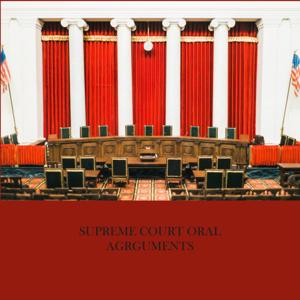

This episode updates on four major cases granted certiorari by the Supreme Court on December 5th, 2025, following Friday's episode. The cases span constitutional citizenship rights, federal court jurisdiction, criminal procedure, and arbitration law, representing some of the most significant legal questions facing the Court this term.
RoadmapOpening: December 5th Cert Grants
• Four cases granted certiorari in one day
• Focus on birthright citizenship case that drew most attention
• Brief coverage of three additional jurisdictional cases
Trump v. Barbara: The Birthright Citizenship Case
• Background from Trump v. CASA oral arguments
• Chief Justice Roberts' comments about expedited review
• Executive Order 14,160 targeting children of unauthorized immigrants and temporary visitors
• Multiple district court injunctions blocking the order
Three Additional Cases
• T.M. v. University of Maryland Medical System Corporation (Rooker-Feldman doctrine)
• Abouammo v. United States (venue and statute of limitations)
• Jules v. Balazs Properties (post-arbitration federal jurisdiction)
Episode Highlights
• Constitutional urgency: Chief Justice Roberts' prior comments about moving "expeditiously" now seem prophetic given the Court's cert-before-judgment grant in the birthright citizenship case
• Universal injunction aftermath: The CASA decision's limits on universal injunctions created complications that led directly to the Barbara case
• Circuit splits galore: All four cases involve significant circuit splits requiring Supreme Court resolution
• Jurisdictional themes: Three of the four cases involve fundamental questions about federal court authority and jurisdiction
Referenced Cases
Trump v. Barbara | Case No. 25-365 | Docket Link
Question Presented: Whether the phrase "subject to the jurisdiction thereof" in the Citizenship Clause requires that a person's parents have lawful domicile in the United States at the time of birth.
Arguments: Government argues "subject to the jurisdiction" requires political allegiance through lawful domicile and that Wong Kim Ark only applied to permanently domiciled aliens. Respondents defend broad birthright citizenship based on Wong Kim Ark precedent and argue executive order violates federal statute and 130 years of settled law.
T.M. v. University of Maryland Medical System Corporation | Case No. 25-197 | Docket Link
Question Presented: Whether the Rooker-Feldman doctrine can be triggered by a state-court decision that remains subject to further review in state court.
Arguments: T.M. argues doctrine should only apply to final state court judgments based on Section 1257's text and Exxon Mobil precedent. Hospital argues no meaningful circuit split exists and federalism concerns support broader application of doctrine.
Abouammo v. United States | Case No. 25-5146 | Docket Link
Question Presented: (1) Whether venue is proper in a district where no offense conduct took place, so long as the statute's intent element "contemplates" effects that could occur there. (2) Whether a criminal information unaccompanied by a waiver of indictment is an "information charging a felony" under 18 U.S.C. § 3288.
Arguments: Abouammo argues venue should be limited to where essential conduct elements occur and that invalid informations cannot toll limitations periods. Government defends effects-based venue when statutes contemplate such effects and argues Congress deliberately removed waiver requirements from Section 3288.
Jules v. Balazs Properties | Case No. 25-365 | Docket Link
Question Presented: Whether a federal court that initially exercises jurisdiction and stays a case pending arbitration maintains jurisdiction over a post-arbitration Section 9 or 10 application where jurisdiction would otherwise be lacking.
Arguments: Jules argues Badgerow requires independent federal jurisdiction for all post-arbitration motions to prevent forum shopping. Respondents defend "jurisdictional anchor" theory allowing courts that stay cases for arbitration to retain jurisdiction over final motions.
 View all episodes
 By SCOTUS Oral Arguments

4.6
1010 ratings
This episode updates on four major cases granted certiorari by the Supreme Court on December 5th, 2025, following Friday's episode. The cases span constitutional citizenship rights, federal court jurisdiction, criminal procedure, and arbitration law, representing some of the most significant legal questions facing the Court this term.
RoadmapOpening: December 5th Cert Grants
• Four cases granted certiorari in one day
• Focus on birthright citizenship case that drew most attention
• Brief coverage of three additional jurisdictional cases
Trump v. Barbara: The Birthright Citizenship Case
• Background from Trump v. CASA oral arguments
• Chief Justice Roberts' comments about expedited review
• Executive Order 14,160 targeting children of unauthorized immigrants and temporary visitors
• Multiple district court injunctions blocking the order
Three Additional Cases
• T.M. v. University of Maryland Medical System Corporation (Rooker-Feldman doctrine)
• Abouammo v. United States (venue and statute of limitations)
• Jules v. Balazs Properties (post-arbitration federal jurisdiction)
Episode Highlights
• Constitutional urgency: Chief Justice Roberts' prior comments about moving "expeditiously" now seem prophetic given the Court's cert-before-judgment grant in the birthright citizenship case
• Universal injunction aftermath: The CASA decision's limits on universal injunctions created complications that led directly to the Barbara case
• Circuit splits galore: All four cases involve significant circuit splits requiring Supreme Court resolution
• Jurisdictional themes: Three of the four cases involve fundamental questions about federal court authority and jurisdiction
Referenced Cases
Trump v. Barbara | Case No. 25-365 | Docket Link
Question Presented: Whether the phrase "subject to the jurisdiction thereof" in the Citizenship Clause requires that a person's parents have lawful domicile in the United States at the time of birth.
Arguments: Government argues "subject to the jurisdiction" requires political allegiance through lawful domicile and that Wong Kim Ark only applied to permanently domiciled aliens. Respondents defend broad birthright citizenship based on Wong Kim Ark precedent and argue executive order violates federal statute and 130 years of settled law.
T.M. v. University of Maryland Medical System Corporation | Case No. 25-197 | Docket Link
Question Presented: Whether the Rooker-Feldman doctrine can be triggered by a state-court decision that remains subject to further review in state court.
Arguments: T.M. argues doctrine should only apply to final state court judgments based on Section 1257's text and Exxon Mobil precedent. Hospital argues no meaningful circuit split exists and federalism concerns support broader application of doctrine.
Abouammo v. United States | Case No. 25-5146 | Docket Link
Question Presented: (1) Whether venue is proper in a district where no offense conduct took place, so long as the statute's intent element "contemplates" effects that could occur there. (2) Whether a criminal information unaccompanied by a waiver of indictment is an "information charging a felony" under 18 U.S.C. § 3288.
Arguments: Abouammo argues venue should be limited to where essential conduct elements occur and that invalid informations cannot toll limitations periods. Government defends effects-based venue when statutes contemplate such effects and argues Congress deliberately removed waiver requirements from Section 3288.
Jules v. Balazs Properties | Case No. 25-365 | Docket Link
Question Presented: Whether a federal court that initially exercises jurisdiction and stays a case pending arbitration maintains jurisdiction over a post-arbitration Section 9 or 10 application where jurisdiction would otherwise be lacking.
Arguments: Jules argues Badgerow requires independent federal jurisdiction for all post-arbitration motions to prevent forum shopping. Respondents defend "jurisdictional anchor" theory allowing courts that stay cases for arbitration to retain jurisdiction over final motions.
25,819 Listeners
3,534 Listeners

677 Listeners
1,108 Listeners
6,293 Listeners

111,929 Listeners
7,219 Listeners
2,405 Listeners
5,799 Listeners
3,902 Listeners

15,867 Listeners
398 Listeners
744 Listeners
41 Listeners
793 Listeners