
Sign up to save your podcasts
Or



Zach Gray is more than simply a white guy from Michigan! He is very intentional about empowering individuals and families to reach their fullest potential. In Zach's Psychology Today profile he says, "our stories and life experiences are valuable and important; they inform the way we navigate and see the world". Zach believes it is possible to find healing and create change in one's life in a way that helps you find the best quality of life." Zach has lived through it and come out on the other side. I believe that we are worth all of the hard work to get to where we want to be. His clinical interests include trauma, anxiety, depression, bipolar disorder, interpersonal dynamics, substance use needs, relationship issues, anger management, self-exploration, and identity development. He is intentional about creating a safe and accepting space for individuals of all different backgrounds and walks of life. Cultural competency is important to him and it is something he consistently learns about both through education and the stories from individuals within his community. He values and respects everyones life experiences.
What You Will Hear:
Quotes:
“We are here for a very short amount of time and the issues of white supremacy and racism Justice, they're life or death And I need as a white person other white people to understand that we can't just have gentle calm conversations about things that are taking people's lives”
“the one thing that has given me longevity is being authentic and standing in my truth.”
Mentioned
Tiktok
JD is joined by certified public accountant Holly Reid to talk about financial education and the importance of imparting it early to our youth. Holly is an experienced finance professional who loves her career and believes we all have knowledge, experiences and a purpose to add value, contribute to society and enrich the lives of others. As a personal finance advocate, Holly is dedicated to helping adults and the next generation manage their finances as responsible stewards. Growing up in a household where, “we may have been poor in material possessions, but we were rich in love, family values, and an unwavering work ethic,” she speaks on how the lack exposed the economic disparities and piqued her interest to understand the economic landscape and specifically money management. In 2012, Holly created The Master Playbook to break the cycle of paycheck to paycheck living and to help adults and the next generation create a financial legacy worth leaving. She has educated thousands of people through her book, speaking engagements, and coaching sessions using sound financial principles, practical tips and her personal experiences.
What You Will Hear:
Quotes:
“One thing about personal finances is it’s very personal, what’s good for you, what process or app or thing that may work for you may not work for me and my situation, personality or what makes me feel safe or secure or stabilized.”
“Our society does not teach us to make our money work for us, it teaches us to spend.”
“Credit is one of the biggest things that tears us down.”
“The bible has the greatest number of scripture that speaks to money than any other topic.”
“If you look at the biggest lessons in my life it’s where I didn't get something I wanted or I failed at something I attempted and those are the biggest life lessons.”
Mentioned
Money Camps for Kids
The Master Playbook
@themasterplaybook Instagram Facebook TikTok LinkedIn
JD and Bobby Morgan continue their conversation about the current state of education and his efforts and goals to improve it. Bobby is a principal, writer, speaker, and consultant who works with other educators to promote equity and culturally responsive teaching practices. With over a decade in education, primarily in under-resourced populations, Bobby is passionate about cultivating brilliance in Black and Brown communities. Through coaching, workshops, and meaningful professional development, Bobby desires to change the educational landscape, ensuring pathways of success for students. In addition to his work within academic institutions, Bobby works as an educational advocate partnering to fight for equitable policies and legislative priorities for all students. Today we welcome Bobby Morgan with Liberation Lab to change the narrative with JD Fuller.
What You Will Hear:
Quotes:
“We honestly don’t pay teachers enough.”
“Educators are realizing that the same skills that they have, In the classroom can merit so much more outside of it.”
“What has rocked education to its core is the need for us to be prioritizing mental health and the ways in which we have not done that. And the ways we have not done that in a way that is even culturally responsive.”
“We should be able to inspect what we expect.”
“We've been trained as a culture to be afraid of the repercussions, and so there is power in knowing how to navigate those potential repercussions.”
“I'm not gonna leave you outside of the thing you enjoy. You're gonna be an active participant in your liberation.”
Mentioned
My Liberation Lab
@liberation.lab Instagram TikTok
@liberationlab Facebook LinkedIn
Bobby Morgan is a principal, writer, speaker, and consultant who works with other educators to promote equity and culturally responsive teaching practices. With over a decade in education, primarily in under-resourced populations, Bobby is passionate about cultivating brilliance in Black and Brown communities. Through coaching, workshops, and meaningful professional development, Bobby desires to change the educational landscape, ensuring pathways of success for students. In addition to his work within academic institutions, Bobby works as an educational advocate partnering to fight for equitable policies and legislative priorities for all students. Today we welcome Bobby Morgan with Liberation Lab to change the narrative with JD Fuller.
What You Will Hear:
Quotes:
“Part of the reason I'm so passionate about the things that I am is because I know what it's like to live in a world where you're not necessarily wanted, you’re excluded and you're pushed aside.”
“If we're really gonna talk about equity beyond black boxes and anti-racist statements on your website, show me where the money is going. Show me that you're putting your finances behind the things that you say you believe.”
“For somebody of African descent in this country, you are always as good as what you could produce. Always as good as how you can help the bottom line.”
Mentioned
Teach Like a Champion
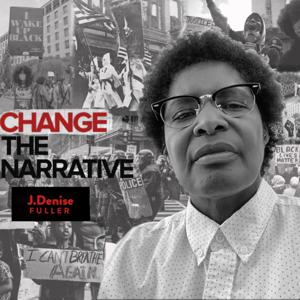
J. Denise Fuller (she, her, hers) is an African American LCSW who has over 25 years of experience as a mental health clinician, educator, writer, and consultant. With a Masters of Social Work from Smith College JD has held positions as an Adjunct Professor as well as a Clinical and Area Director for outpatient mental health programs. JD is an activist and “truth teller”. As an advocate for equity and inclusion she constantly speaks out against inequality. Focusing through a mental health lens, JD is a widely sought after clinician, providing education, training and consultation on ways to navigate the difficult conversations related to systemic and internalized racism, white privilege, and the tenets of oppression. She is esteemed for her insight, empathy, authenticity, unique perceptive, and ability to empower, while providing education. JD is a firm believer that one’s truth lives in the body and the lived experience guides the process of how we integrate new information.
The youngest of nine children, JD experienced how myopic teaching distorted her understanding of American history. This realization coupled with her thesis, The Racial Identity Development of the African American Female, catalyzed a lifetime of experiential learning and commitment to teaching about and advocating for others. JD works within the Black and White continuum to facilitate the learning process in the safe space she creates in order to explore the systems that have oppressed our learning. Solution-focused in guiding change, her clinical work has been girded by her dedication to help others discover their authentic selves. JD continues to speak out wherever she sees social inequity today to Change The Narrative.
What You Will Hear:
Quotes:
“I didn’t feel seen, kids act out what they don’t have the language for…..I was a professional acter outer.”
“I was resentful for not being taught the truth.”
“Managing the anger and turning it into something useful was the most challenging.”
“Resilient only means that you can keep knocking me down and all I’m gonna do is bouncing back.”
“To be human is not to be strong it’s just to be aware of all the plethora of feelings that we are left to feel throughout our lifetime.”
“White supremacy is a constant, constant barrier to our emotional and mental health.”
“As we expand the vision for the youth there are opportunities to see different pathways.”
At just a young age, Williams knew she wanted an impactful life filled with enriching and powering others’ lives. She had a passion for working with underserved, underrepresented, underprivileged communities, which led her to social work. Keyonia reflects on past advocacy experiences working in the foster care system. Currently, she is specializing in culturally specific counseling, coaching, consulting for individuals, groups and organizations.
What You Will Hear:
1:32 Keyonia’s cultural identity development with black pride
3:15 Growing up in an inner city as a significant catalyst for change
4:17 Inspiration to become a teacher of influence
5:27 Escaping inner cities to be faced with gentrification
6:08 Sacrificing a piece of black cultural to gentrification
7:34 Lack of resources to further strengthen the foster care system
11:37 Separating prejudice and racism from therapy
14:15 The BBS and the system’s need to take responsibility for licensure
15:13 The interconnectedness of your wellbeing and your profession
16:18 Teaching through an Afrocentric Theory Perspective
17:31 Williams current career path with cultural specific counseling
17:43 Black people receiving therapy with only Black Clinicians
21:04 Having education as access not as a privilege
23:09 Healing Black Souls program and efforts to destigmatizing/decolonizing
mental health and PTSD
28:04 Intersectionality of Religion, Spirituality and Mental Health
35:27 Parenting Classes from the Black perspective
Quotes:
“The choices we have to make come with a selling out factor.”
“ There is no good that comes from removing children from their home.”
“To think that one can practice therapy and separate who you are as an individual, your belief systems and your values is absolutely ridiculous.”
“If we are not checking in with our values and our belief systems, and how that’s showing up for us and our professional life, then we’re being problematic.”
“I am my community. My community is me.”
“As a black person seeking therapy from another black person, there’s only one thing I can do. I can show up and be my full self.”
“You cannot be Black in America and not have PTSD.”
“There is religion/religiosity, which takes on forms of a cult-like experience. There is spirituality, which can be individual, but also community, and then there’s mental health, which looks many different ways in collective cultures.”
“Black people were raised to understand, take care of, and be careful of whiteness.”
“Black babies deserve to grow up in homes that love and value them because they are not going to get that in this society.”
Mentioned
Instagram: @healing_black_souls_consulting
Healingblacksouls.org
Afrocentric Theory
JD sits down Dr.Han Ren to talk about generational trauma, decolonizing mental health and her brilliant approach to helping people live liberated and intentional lives. Dr. Han Ren is a licensed psychologist and licensed specialist in school psychology (LSSP) practicing in Austin, Texas specializing in anxiety, perfectionism, high achievers, and children of immigrants. Although her degree specialty and background were originally with children, she has experience working with individuals across the lifespan, both individually and as part of family therapy or parent consultation. Currently Dr. Han Ren mostly works with high achieving young adults. In addition to psychotherapy she provides psychoeducational and psychological assessments. Dr. Ren has also been an adjunct professor at the University of Texas in their Special Education and Human Development and Family Sciences departments. In her former life, she was a member of Teach For America and worked as a special educator for preschoolers. Outside of the therapy chair, you can usually find her trying to keep up with her two young kids or spinning on her Peloton.
What You Will Hear:
Quotes:
“There is so much more ease when we can trust each other and ourselves.”
“It’s really, really hard when people who are used to, historically, being centered are de-centered, even if they’re not truly being de-centered.”
“If you can separate yourself from whiteness as an identity marker, you’re so much more than your whiteness.”
“People are more offended by being called a racist than they are about racism.”
“There is power in collective cohesion and in working together.”
Mentioned
Dr.HanRen.com
Instagram @dr.hanren
TikTok
Pivotpsychologyatx.com
TedX
Di Barbadillo is a community organizer who works alongside Black Lives Matter LA, the Check the Sheriff Coalition, and the Philippines-US Solidarity Organization (PUSO SoCal). In addition, Di is an active Legal Observer and Co-President of the Executive Board for the National Lawyers Guild, Los Angeles. Di was born and raised in Los Angeles and is second-generation Filipina-American. She went to college at UCLA and law school at The University of the Pacific, McGeorge School of Law. In her free time, she likes to organize pop-up markets for local small businesses owned by people of color. She is a power house and we are so happy to have her on CTN with JD today
What You Will Hear:
Quotes:
“When you realize how much you didn't learn, you are kinda wondering how much of the history you were taught was revisionist, and you realized it was probably all of it.”
“Capitalism is very much like white supremacists”
“I look at Gen Z and I see a lot more open-mindedness. I see a lot more young people fighting for ethnic studies and I think if we can make people understand that we're trying to solidify a bond that used to be there and that was broken apart at some point, we're not just building something new.”
“We are not free until black people are free.”
“I takes conflict, cooperation, and solidarity moving together in different spaces.”
“Conflict is necessary. And conflict doesn't have to be a knock down, drag out, we're falling out, end all, be all like discussion.”
Mentioned
@Deeeeezzyyy
linktr.ee
Rescission Act
JD sits down with Andre White Jr. to discuss history and the untold layers of it. Andre is 27 years old with roots in Cleveland, Ohio and Charlotte, North Carolina. He is a voiceover actor, marketer, content creator, anti-racist, and host of the podcast Redacted History. Andre is active on social media using his personal experiences, creativity, and extensive knowledge of history to engage his audience under the handle @Blackkout.. He's a wealth of knowledge and creativity.
What You Will Hear:
Quotes:
“I would love to be afforded the opportunity someway, somehow, to go back and give back to all the black kids in Cleveland one day.”
“No one really cares about the inner city.”
“All it takes is one person to see who you are, potential, what you have to bring to the table.”
“The things that I preach about the podcast the most is that I can really be myself, for real.”
“Just encouraging people to take what you think you know, and you don’t know, and find the surface and then peel back the layers. And what you think you’re peeling back, you’re wrong because there's more to peel back and there’s more to understand, why and how things are happening around us.”
Mentioned
Redacted History Podcast Apple Spotify Youtube Instagram
@Blackkout___ tiktok Instagram
Linktr.ee
If you enjoyed this episode of Change The Narrative with JD Fuller Podcast, make sure to subscribe and drop us a five-star review.
Dara Starr Tucker is an American singer, songwriter, social commentator and satirist. She draws from the 1960’s and 1970’s, an era that holds special significance to her musical journey.Tucker has released four studio albums: All Right Now, Soul Said Yes, The Sun Season, and Oklahoma Rain, as well as a limited-release, live album, Dara Tucker Live in 2013. Vocalist and songwriter Dara is establishing herself as one of the premiere voices in contemporary music. She is poised to establish herself as one of the fresh, contemporary voices that will help to seamlessly move one of music’s greatest traditions into the 21st century. Tucker’s new album brings to life a collection of songs that reaffirm her belief in our shared humanity. Dara is here to tell us about her journey, her passion and her plan for the future.
What You Will Hear:
Quotes:
“Being black in America is very complex.”
“I do feel like I was better prepared for the realities of what the world is about from an early age”
“What is culture in the United States? At least it's not really something that's understood well and certainly not understood from the standpoint of black Americans possessing, having a sense of culture that is uniquely ours where we're seen as just a subset of American culture.”
Mentioned
Dr. Demento
Eric Monte
Norman Leer
Music
Spotify
Apple Music
I’m All Over The Place Podcast
Apple Podcast
Spotify
@darastarrtucker
TikTok
Youtube
@daratuckerb
Linktr.ee
From the publisher's feed