
Sign up to save your podcasts
Or

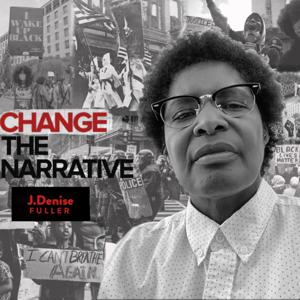


JD continues her conversation with Ernest Crimm III, the man who says Black History saved his life and wrote a book about it. He is a self-proclaimed Black History Advocate who is a native of the south side of Chicago and a product of the late 80's. Mr. Crimm is a University of Illinois Urbana Champaign alumni who advocates for Black History, equity and justice as a speaker, cultural consultant, socio political commentator, cast member on the PBS documentary ‘Divided We Fall’, author of the Amazon best-seller, Black History Saved My Life, former City Council Candidate and high school social science instructor. Mr. Ernest Crimm the third is a “must follow” on social media and we am so excited to share this space with him today,
What You Will Hear:
Quotes:
“The education system is a corporate entity.”
“Traditional therapy is not for everyone but it is an important opportunity to develop awareness and insight.”
“If you don’t know who you are anyone can name you.” - African Proverb
“In this realm nothing could exist without our existence. It all comes from the motherland.”
“When a group of people doesn't truly have a history that they're proud of they will put more into mythology than what actually happened."
"Black folks who felt comfortable expressing their anger, it's justified anger. You need to hear it and stop following the people that are fed to you through mainstream media.”
“For a lot of folks, racism or being called racist, they've equated that with us being called the N word.”
“There's no allyship in unlearning, there's only abolition and there is only taking charge of...
The man who says Black History Saved My Life and wrote a book about it is known as Mr. Ernest Crim III. He is a self-proclaimed Black History Advocate who is a native of the southside of Chicago and a product of the late 80's. Mr. Crim is a University of Illinois Urbana Champaign alumni who advocates for Black History, equity and justice as a speaker, cultural consultant, socio political commentator, cast member on the PBS documentary ‘Divided We Fall’, author of the Amazon best-seller, Black History Saved My Life, former City Council Candidate and high school social science instructor. Mr. Ernest Crim the third is a “must follow” on social media and we am so excited to share this space with him today,
What You Will Hear:
Quotes:
“They put us in those situations when we moved here as we left the south in search of safety and economic prosperity and it just forced us to make a way outta no way and we're still doing that now, despite all the negative press and publicity we get.”
“I took a black history course. And I think those two courses kind of encapsulate what I do now. I love journalism, I love writing, I love telling stories, and I love our history.”
“That's why there's violence and there's a lot of gang issues. It's because we are born into the situation and before we can even figure out what happens, the trauma keeps hitting us, so we're just trying to survive.”
“It was not about loving the profession, it was about loving our people.”
“Teaching is the only job where you can get in front of kids every single date and they have to be there.”
“When you say history saved your life, what it means is you found something in the past that gave you motivation to do great things moving forward.”
“We didn't have everything materially, but we were wealthy in terms of the love”
“My mom had to decide if she wanted me to go to a school that lacked resources that was all black or be bussed to a school that was all white and possibly deal with racial trauma.”
Mentioned
Instagram @ErnestCrimIII
Tik Tok @ErnestCrimIII
ErnestCrim.com
Mae Jemison
Quincy Jones
JD continues the conversation with scholar, author, historian, corporate consultant and truth seeker John Graham to talk about the disparities in education and corporate America as it pertains to the black experience. John Graham is an author of a book that speaks for those who've been without a voice throughout their professional career. Plantation Theory: The Black Professional’s Struggle Between Freedom & Security, showcases the realities that countless black corporate professionals face despite best efforts to prove their worthiness of opportunity. As a content marketer John has found his purpose is unlocking the hidden potential of authenticity and ensuring that the right message finds the right audience at the right time on the right platform. John self identifies as he/him, black man, husband, father, spiritualist, creative, and fraternal brother.
What You Will Hear:
Quotes:
“When do we reevaluate our relationship with work and define who are the beneficiaries of our excellence and if it's not us, why do we continue to push this rock uphill to make white spaces safer rather than making more black spaces?”
“I don’t believe there is a seat at the table we have to create our own table and our own seats.”
“There’s a cost for the climb, and we’re not told about that cost.”
“When you remember that we were brought to this country to work harder than any human being has worked on earth for no money, no recognition and no control of your destiny or the outcome and outputs of your labor. Well, then you start to onnect these dots over time and you recognize well the model hasn't really changed.”
“We've been afforded access, but it's not to the top.”.
“Excellence demands that you are twice as good for half the recognition and a third of the.pay and that only leads to shortened lifespan, stress, mental health issues, heart issues, cholesterol, you name it.”
“Equity accounts for disparity between starting places and equality just gives you same treatment.”
Mentioned
PlantationTheory.com
Twitter @instagraham1906
LinkedIn @johngrahamcreative
JD sits down with scholar, author, historian, corporate consultant and truth seeker John Graham to talk about the disparities in education and corporate America as it pertains to the black experience. John Graham is the author of a book that speaks for those who've been without a voice throughout their professional career. Plantation Theory: The Black Professional’s Struggle Between Freedom & Security, showcases the realities that countless black corporate professionals face despite best efforts to prove their worthiness of opportunity. As a content marketer John has found his purpose is unlocking the hidden potential of authenticity and ensuring that the right message finds the right audience at the right time on the right platform. John self identifies as he/him, black man, husband, father, spiritualist, creative, and fraternal brother.
What You Will Hear:
Quotes:
“An HBCU can not only give you that grounding of culture and the relief of not having to don the mask in all aspects and all times of day, but also you're in an environment where your excellence is an expectation and your failures aren't a reflection on your entire race. So you truly get to be an individual and meritocracy might actually have application in your daily lived experience.”
“Education is simply an indoctrination method done in civil societies to bring the youth into adulthood under certain world views, beliefs, practices, ideologies and so forth so as to have conformity across the masses.”
“If you attend a predominantly white institution as a black student and you graduate and you feel like I've been programmed to see the world through the eyes of a cis-gendered able-bodied white man, well that's the intent so that the world beliefs, ideals, views, and status quo can now be replicated or propagated.”
“Your Why should evolve.”
“In the American construct, which is a peculiar institution unto itself, race is at the forefront. It defines who you are before you even open your mouth.”
“Race as a concept, and a construct was designed specifically to easily identify the subclass of this country. “
“If you shine a light on transgressions and how those transgressions manifest today, somebody might have to be accountable and accountability isn't aligned with the power dominant structure.”
“When you step out of homogeneous environments and you go to places where you're the other, well, now you'll start to understand what whiteness is and is not, but most people don't actively seek out discomfort.”
Mentioned
PlantationTheory.com
Twitter @instagraham1906
LinkedIn @johngrahamcreative
Garrison Hayes is a Content Strategist,Social Media Marketer, Diversity & Inclusion Consultant and a Brand Consultant. He is currently DEI at Greenhouse Software and he helps Companies Amplify Diverse Voices through Powerful Video Content. He was also a Mogul Top 100 DEI Leader of 2021. Garrison is a Content Creator serving “thumb-stopping educational content to a 260,000+ follower community. He is a history devotee and a natural storyteller.
What You Will Hear:
Quotes:
“Our influence matters and the ways in which we use our influence is really important.”
“Our past informs the present moment. It's all bearing down on the very present moment and until we are able to really look back and reckon with and understand the past, we will not understand where we are now and we certainly won't understand where we're going. And so in unearthing those untold stories I am simply trying to help us understand where we are and how we got here so that we can chart a better way.”
“White people unfortunately, are socialized to rarely examine their own racial identity.”
“When people buy into something like the NRA they're a part of it and they can't bring themselves to evolve and realize, wow, this doesn't fit my ideology anymore.”
“You can think of a ton of people who really operate in this world as white people live with white privileges in many ways, vote white vote with the white majority, right and yet when we look at the census data, somehow they're excluded from this group”.
“Basically everything that is problematicis problematic in society has racist roots in America.”
“the history of country music is actually the history of like racial congruence, like black and white people coming together in a really powerful way but of course anti-blackness and white supremacy have boxed black people and many other people of color completely out of the genre.”
Mentioned
Linktree
@Garrionh Instagram
@GarrisonHayes TikTok
@Garrison_Hayes Twitter
@Garrison Hayes YouTube
The History of White People
Throughline - NPR
Thomas Kennedy writes about corruption and corporate greed. He is a journalist, organizer, writer and an immigrant. Thomas graduated with an International Relations major from Florida International University and a master's in Community and Social Change from the University of Miami. Thomas has worked for nonprofits and civil rights organizations, including Service Employees, International Union, The New Florida Majority and as the Political Director for the Florida Immigration Coalition, managing statewide electoral campaigns and voter registration efforts. Recently he worked for Bernie Sanders 2020 presidential campaign where he helped manage a team of volunteers across 50 states and worked at United We Dream. As national campaign manager he currently advises progressive and immigrant rights organizations and serves at the Democratic National Committee member who is focused on reforming the institution to make it more democratic and focused on working class issues. Thomas is one of our people. He is changing the narrative.
What You Will Hear:
Quotes:
“I got involved in activism because of my immigration status.”
“Growing up and never seeing Congress be able to do something like immigration reform really atunes you to like looking at the legislative process and how stagnant it is
“The arc of the moral universe is long, but it bends towards justice.” - Martin Luther King Jr.
“I think we live in like a pivotal time in human existence right now and it's incumbent on all of us to try to steer it in the right direction because there's malicious actors, some of them in Florida, that are fighting every single day and every single night to steer us in the oppressive reactionary, fascist direction.”
“The alternative is a brighter, more tolerant, equitable future, you know, in which again, we can realize the full potential that we have as a human species and let's face it. Like we are awesome. Like we have done incredible things. We have the potential to do so many more incredible things.”
“You don’t do politics, politics is going to do you.”
“How much worse can it get? You don't know until you sit back and do nothing.”
Mentioned
@Thomaskenn Twitter Instagram
Thomas Kennedy writes about corruption and corporate greed. He is a journalist, organizer, writer and an immigrant. Thomas graduated with an International Relations major from Florida International University and a master's in Community and Social Change from the University of Miami. Thomas has worked for nonprofits and civil rights organizations, including Service Employees, International Union, The New Florida Majority and as the Political Director for the Florida Immigration Coalition, managing statewide electoral campaigns and voter registration efforts. Recently he worked for Bernie Sanders 2020 presidential campaign where he helped manage a team of volunteers across 50 states and worked at United We Dream. As national campaign manager he currently advises progressive and immigrant rights organizations and serves at the Democratic National Committee member who is focused on reforming the institution to make it more democratic and focused on working class issues. Thomas is one of our people. He is changing the narrative.
What You Will Hear:
Thomas’s back story
Collapse of Argentine economy and Thomas’s family journey to the US
The undocumented experience and its challenges
Priviledge
Quotes:
“A lot of parents don't tell their children that they're undocumented.”
“If my name wasn't Thomas Kennedy, a very Anglo sounding name, and I didn't look as white passing as I do, if my name was Cesar Gomez and I was a little bit darker skin those situations could go differently because it's statistically proven that they go differently.”
Mentioned :
@Thomaskenn Twitter Instagram
Living Undocumented
Dr. Bryan Leyva is an AfroLatinx physician activist who studies the intersections of medicine, racism, and social inequality. He has a background in community organizing, social justice art, and public health research, and sees all his work as being part of a larger effort to decolonize and diversify medicine and achieve equity in healthcare. His research, rooted in social justice frameworks and community engagement, has been published in journals like NEJM, JAMA Internal Medicine, Journal of Health Care for the Poor and Underserved, Social Science & Medicine, and Implementation Science. He has been featured in several news outlets including @NBCNightlyNews. He is bold, honest, and not afraid to stay present in his truth and we are so happy he agreed to come on the show. This good doctor believes that sustained activism is rooted in something deeper than outrage and we are eager to find out what that is.
What You Will Hear:
Quotes:
“I went into medicine because I didn't find people that look like me. When I was seeking healthcare, my parents didn't find that and I wanted to be the physician that I never had.”
“I view health as empowerment, and I view it as a tool for social justice. ”
“I realized that medicine has been one of the worst perpetrators of inequality in this country.
”I think creativity is so important for movements. And I've seen the power of art, creativity and changing the way people think about problems and raising consciousness.”
“America is not okay because our democracy in jeopardy, we don't trust any of our systems of power and that's a dangerous position to be in. We don't trust the Supreme court. Many folks don't trust the president left and right. Many of us are disillusioned by our elected officials in Congress and so when you have a democracy where in your three branches of government there's lack of trust, you have a dangerous situation. ”
“Encouraging folk to not ignore the racism that happens by older folk in their family and in society because those are the very people who are running our country. How old people move, determines how the laws in our, in how our systems move.”
“We need to just be very clear that having, you know, a non-white son or daughter does not make you, anti-racist having a non-white, you know, husband or wife does not make you anti-racist and even being non-white does not make you anti-racist.”
“I think we all have something unique to offer and we all have to find that voice. The power in your voice comes from the power in your experiences.”
“If you have a passion for justice and equity and anti-racism and anti-blackness then find ways that you can do it within your own community, harnessing what's unique about you and consistently.”
Mentioned
@drbryanleyva
Clubhouse
Dr. Bryan Leyva is an AfroLatinx physician activist who studies the intersections of medicine, racism, and social inequality. He has a background in community organizing, social justice art, and public health research, and sees all his work as being part of a larger effort to decolonize and diversify medicine and achieve equity in healthcare. His research, rooted in social justice frameworks and community engagement, has been published in journals like NEJM, JAMA Internal Medicine, Journal of Health Care for the Poor and Underserved, Social Science & Medicine, and Implementation Science. He has been featured in several news outlets including @NBCNightlyNews. He is bold, honest, and not afraid to stay present in his truth and we are so happy he agreed to come on the show. This good doctor believes that sustained activism is rooted in something deeper than outrage and we are eager to find out what that is.
What You Will Hear:
Quotes:
“I believe in the liberation of all black people and whether it's in the United States, whether it's in the Caribbean, whether it's in Latin America, whether it's in Africa, we all have very similar struggles.”
“People of color are the global majority and until we start acting like that, We are not gonna find the economic power that we honestly have, even in poverty.” -JD
“I don't think people of color have privilege. That's not my language. My language is that some have more access than others, but privilege in America especially is totally aligned with skin color. “- JD
“ The world is gonna wanna make you what they want you to be. Remember, and like who you are, what community you belong to and why you do what you do and who you're doing it for, I really think keeps you grounded so that when things happen, you're not shaken.”
“We must build on what's already been done.”
Mentioned
@drbryanleyva
Clubhouse
Udit Kondal MD MPH is a Ventura county-based Board Certified Family Medicine Physician. He graduated from Drexel University College of Medicine, Board Certified in Family Practice (ABFM), and magna cum laude from Columbia University NY. Udit "Dr. Oo" Kondal, MD, MPH is a lifelong activist involved in Anti-police brutality work and Veganism. A budding Marxist Family doctor, multi-instrumentalist music, singer-songwriter music producer who loves to surf, skate, and play with his cat, Dr. Oo believes food and laughter are the best medicine. Dr. Oo says he believes in prevention and that good (or bad) health starts with what we eat. Welcome, Dr. Oo!
What You Will Hear:
Quotes:
“There's a scheme going on here and it's making you sick. It's profiting off of your illness and your addictions.”
“If we can utilize feminism and Marxism with anti-white supremacy, if we can guide our political action that way, and our, and our professional carriers that way, I think we could have a large impact.”
“Challenge.every rule, break every rule you can and after that, then you will really know the ins and outs of that rule.”
“I like to break rules because it makes me that much more learned and so much less stressed when I need to do something. That's right on the edge.I'm not stressed. I'm like, okay, cool.”
“So getting into trouble, I think for me has made me grow.”
“No shame in getting fired for the right reason. “
From the publisher's feed