
Sign up to save your podcasts
Or

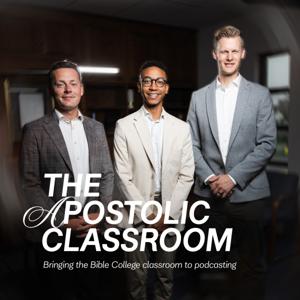

In this episode of The Apostolic Classroom, Steven Gill and Andrew Herbst tackle one of the most persistent questions in modern apologetics: Is Christianity compatible with science?
Rather than rehearsing caricatures or surface-level talking points, the conversation reframes science as a method of inquiry—not a rival worldview—and explores how scientific discovery and Christian theology have historically informed one another. Drawing from philosophy, church history, and well-documented scientific developments, the hosts examine how figures such as Galileo, Newton, Boyle, and Maury understood their work not as a challenge to Scripture, but as an outgrowth of belief in a rational, ordered Creator.
Key themes include the limits of scientific certainty, the difference between observability and metaphysics, the misuse of poetic and literary biblical texts in anti-Christian arguments, and why appeals to “settled science” often reveal philosophical assumptions rather than empirical conclusions. The discussion also addresses common objections surrounding evolution, thermodynamics, cosmology, and biblical interpretation—showing how many modern critiques of Christianity rest on misunderstandings of both science and Scripture.
This episode advances the apologetic framework of Season 2 by equipping believers to respond thoughtfully to claims that science has disproven the Bible—and by demonstrating that faith and reason, rightly understood, are not enemies but allies in the pursuit of truth.
This episode of The Apostolic Classroom was sponsored by Testament Coffee Roasters. Visit them at testament.coffee
 View all episodes
 By The Apostolic Classroom
5
4343 ratings
In this episode of The Apostolic Classroom, Steven Gill and Andrew Herbst tackle one of the most persistent questions in modern apologetics: Is Christianity compatible with science?
Rather than rehearsing caricatures or surface-level talking points, the conversation reframes science as a method of inquiry—not a rival worldview—and explores how scientific discovery and Christian theology have historically informed one another. Drawing from philosophy, church history, and well-documented scientific developments, the hosts examine how figures such as Galileo, Newton, Boyle, and Maury understood their work not as a challenge to Scripture, but as an outgrowth of belief in a rational, ordered Creator.
Key themes include the limits of scientific certainty, the difference between observability and metaphysics, the misuse of poetic and literary biblical texts in anti-Christian arguments, and why appeals to “settled science” often reveal philosophical assumptions rather than empirical conclusions. The discussion also addresses common objections surrounding evolution, thermodynamics, cosmology, and biblical interpretation—showing how many modern critiques of Christianity rest on misunderstandings of both science and Scripture.
This episode advances the apologetic framework of Season 2 by equipping believers to respond thoughtfully to claims that science has disproven the Bible—and by demonstrating that faith and reason, rightly understood, are not enemies but allies in the pursuit of truth.
This episode of The Apostolic Classroom was sponsored by Testament Coffee Roasters. Visit them at testament.coffee

19,494 Listeners

266 Listeners

2,638 Listeners
95 Listeners
817 Listeners
141 Listeners
1,018 Listeners
105 Listeners
529 Listeners

116 Listeners

85 Listeners
153 Listeners
71 Listeners

62 Listeners

9 Listeners