
Sign up to save your podcasts
Or



Based on Podcast App listening data
Did Greek philosophy merely give early Christian theologians a new vocabulary, or did it influence how they understood the nature of God?
In this episode of Apostolic Life in the 21st Century, Dr. David K. Bernard explores the influence of Plato, Philo, and Neoplatonism on Christian theology from the second through the fourth centuries. Drawing from church history, he examines how philosophical ideas entered theological discussions and considers whether their impact extended beyond terminology to the development of doctrine itself.
Dr. Bernard also evaluates the claim that the doctrine of the Trinity emerged strictly from biblical reflection, providing historical context for the complex interaction between Greek philosophy and early Christian thought.
For more on this topic, see the following books from Dr. David K. Bernard.
• The Oneness of God
• A History of Christian Doctrine
• The Glory of God in the Face of Jesus Christ
• Oneness and Trinity: AD 100–300
• The Trinitarian Controversy in the Fourth Century
Visit PentecostalPublishing.com to shop Dr. Bernard’s full catalog of published works. Enter promo code DKB10 at checkout to save 10 percent on your order.
If you enjoy this podcast, leave a five-star rating and a review on Apple Podcasts or your preferred podcast platform. We also appreciate it when you share Apostolic Life in the 21st Century with family and friends.
The New Testament records believers being baptized in the name of Jesus Christ, but what does history reveal about baptism in the generations immediately following the apostles?
In this episode of Apostolic Life in the 21st Century, Dr. David K. Bernard examines the historical evidence surrounding early Christian baptism. Looking beyond the biblical record, he explores writings and practices from the early postapostolic church to determine whether the historical record supports baptism in Jesus’ name and what early sources can tell us about the development of Christian baptism.
Visit PentecostalPublishing.com to shop Dr. Bernard’s full catalog of published works. Enter promo code DKB10 at checkout to save 10 percent on your order.
If you enjoy this podcast, leave a five-star rating and a review on Apple Podcasts or your preferred podcast platform. We also appreciate it when you share Apostolic Life in the 21st Century with family and friends.
This week, the United Pentecostal Church International gathers in Salt Lake City, Utah, for its annual General Conference, where missions will once again be a central focus. Through Global Missions and North American Missions, UPCI churches work together to take the gospel to communities and nations around the world.
In this episode of Apostolic Life in the 21st Century, Dr. David K. Bernard explains why missions is so important to the UPCI and why supporting missionaries and church planters is essential to fulfilling the Great Commission. He addresses why missions giving should be a priority for individual believers and congregations alike.
You can give to the missions efforts of the United Pentecostal Church International by visiting Give.UPCI.org. You can watch UPCI General Conference 2026 online at YouTube.com/@UPCI/streams.
Visit PentecostalPublishing.com to shop Dr. Bernard’s full catalog of published works. Enter promo code DKB10 at checkout to save 10 percent on your order.
If you enjoy this podcast, leave a five-star rating and a review on Apple Podcasts or your preferred podcast platform. We also appreciate it when you share Apostolic Life in the 21st Century with family and friends.
Why do some modern Bible translations omit verses or phrases found in the King James Version? Have translators removed portions of Scripture, or is there another explanation?
In this episode of Apostolic Life in the 21st Century, Dr. David K. Bernard explains how newly discovered manuscript evidence has influenced modern Bible translations. He also discusses the science of textual criticism—the process scholars use to identify the readings that most likely reflect the original text.
This podcast episode will help you understand why differences exist between the KJV and modern translations and strengthen your confidence in the accuracy, preservation, and reliability of Scripture.
For more on this topic, see Dr. Bernard's book God's Infallible Word. Visit PentecostalPublishing.com to shop Dr. Bernard’s full catalog of published works. Enter promo code DKB10 at checkout to save 10 percent on your order.
If you enjoy this podcast, leave a five-star rating and a review on Apple Podcasts or your preferred podcast platform. We also appreciate it when you share Apostolic Life in the 21st Century with family and friends.
Are Oneness Pentecostals fundamentalists? The term fundamentalist is often applied broadly to conservative Christians, but Christian Fundamentalism is a distinct movement with its own history and beliefs.
In this episode of Apostolic Life in the 21st Century, Dr. David K. Bernard explores the origins of Fundamentalism and compares its core beliefs with Oneness Pentecostalism. He explains where Apostolic believers share common ground with Fundamentalists and Evangelicals, and where important theological differences set them apart.
Listen as Dr. Bernard discusses what Apostolic Pentecostals can appreciate about these traditions while maintaining their distinct beliefs and identity within the broader Christian world.
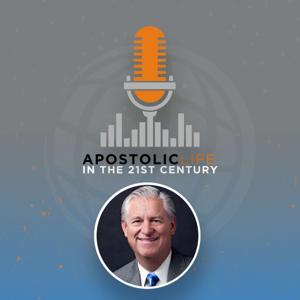
Apostolic Life in the 21st Century is the podcast where Dr. David K. Bernard answers your questions about what the Bible teaches and how those teachings apply to everyday life.
Visit PentecostalPublishing.com to shop Dr. Bernard’s full catalog of published works. Enter promo code DKB10 at checkout to save 10 percent on your order.
If you enjoy this podcast, leave a five-star rating and a review on Apple Podcasts or your preferred podcast platform. We also appreciate it when you share Apostolic Life in the 21st Century with family and friends.
As the scientific pursuit of longer, healthier lives intensifies, Christians face an important question: When does responsible care for our health become an attempt to avoid the reality of death?
In this episode of Apostolic Life in the 21st Century, Dr. David K. Bernard considers radical life extension from a biblical perspective. He distinguishes wise stewardship of our bodies from an unhealthy pursuit of longevity and explains how the hope of resurrection should shape our attitudes toward aging and mortality. He explains that, ultimately, the Christian’s hope is not to extend this present life indefinitely, but to receive eternal life with Jesus Christ.
Visit PentecostalPublishing.com to shop Dr. Bernard’s full catalog of published works. Enter promo code DKB10 at checkout to save 10 percent on your order.
If you enjoy this podcast, leave a five-star rating and a review on Apple Podcasts or your preferred podcast platform. We also appreciate it when you share Apostolic Life in the 21st Century with family and friends.
When a trusted pastor or spiritual leader falls into sin, the effects can reach far beyond the individual. A Christian leader's moral failure, abuse of authority, or abandonment of the faith can leave believers feeling wounded, confused, and uncertain about their own relationship with God.
Dr. David K. Bernard explains how Christians can respond biblically when spiritual leaders fail. He discusses accountability and restoration, the church’s responsibility to protect and care for those who have been harmed, and why believers must distinguish faith in Jesus Christ from confidence in human leaders. He also offers practical guidance for processing disappointment without allowing another person’s failure to become a stumbling block to faith.
Visit PentecostalPublishing.com to shop Dr. Bernard’s full catalog of published works. Enter promo code DKB10 at checkout to save 10 percent on your order.
If you enjoy this podcast, leave a five-star rating and a review on Apple Podcasts or your preferred podcast platform. We also appreciate it when you share Apostolic Life in the 21st Century with family and friends.
Infant baptism has been practiced for centuries across many Christian traditions. Proponents of the practice argue that baptism is primarily an act of God’s grace rather than an individual response of faith. Some also compare baptism to circumcision, arguing that it brings infants into the New Covenant just as circumcision marked entrance into God’s covenant with Abraham.
In this episode of Apostolic Life in the 21st Century, Dr. David K. Bernard examines the arguments for infant baptism and compares them with the pattern established in the New Testament. He discusses who qualifies as a candidate for baptism, the role of original sin in this debate, and why repentance and personal faith are central to the biblical practice of baptism.
Visit PentecostalPublishing.com to shop Dr. Bernard’s full catalog of published works. Enter promo code DKB10 at checkout to save 10 percent on your order.
If you enjoy this podcast, leave a five-star rating and a review on Apple Podcasts or your preferred podcast platform. We also appreciate it when you share Apostolic Life in the 21st Century with family and friends.
Did Jesus have long hair? Popular artwork and films often portray Him with shoulder-length hair, but does this image reflect historical reality? And how does it align with the apostle Paul’s teaching on men's hair in 1 Corinthians 11?
In this episode of Apostolic Life in the 21st Century, Dr. David K. Bernard responds to common objections to Paul's instruction that men should keep their hair short. He also examines the grooming customs of Jewish men in the first century and considers what the available evidence suggests about the length of Jesus’ hair.
This podcast episode offers a thoughtful, biblical response to frequently asked questions about holiness, Christian appearance, and the proper interpretation of Paul’s instructions.
Apostolic Life in the 21st Century is the podcast where Dr. David K. Bernard answers your questions about what the Bible teaches and how those teachings apply to everyday life.
Visit PentecostalPublishing.com to shop Dr. Bernard’s full catalog of published works. Enter promo code DKB10 at checkout to save 10 percent on your order.
If you enjoy this podcast, leave a five-star rating and a review on Apple Podcasts or your preferred podcast platform. We also appreciate it when you share Apostolic Life in the 21st Century with family and friends.
John 1:18 appears differently across modern Bible translations. Some read “God the only Son,” while the King James Version reads “the only begotten Son.” What accounts for this variation, and does the original Greek text identify Jesus as “God the Son”?
Dr. David K. Bernard examines the manuscript evidence behind John 1:18 and explains how textual criticism helps scholars evaluate variant readings. He also discusses the reliability of the biblical text, why he believes the traditional reading best reflects John’s original wording, and how the passage supports the biblical revelation of Jesus Christ.
Apostolic Life in the 21st Century is the podcast where Dr. David K. Bernard answers your questions about what the Bible teaches and how those teachings apply to everyday life.
Visit PentecostalPublishing.com to shop Dr. Bernard’s full catalog of published works. Enter promo code DKB10 at checkout to save 10 percent on your order.
If you enjoy this podcast, leave a five-star rating and a review on Apple Podcasts or your preferred podcast platform. We also appreciate it when you share Apostolic Life in the 21st Century with family and friends.
From the publisher's feed
Ranked by our users in the last 21 days

893 Listeners

266 Listeners

5,406 Listeners
65,358 Listeners
249 Listeners
96 Listeners
813 Listeners
106 Listeners

531 Listeners
699 Listeners
116 Listeners
84 Listeners
153 Listeners
62 Listeners
45 Listeners