
Sign up to save your podcasts
Or

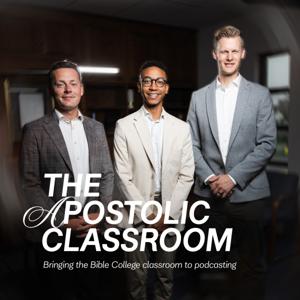


In this episode of The Apostolic Classroom, Steven Gill and Andrew Herbst conclude their discussion on the historical case for the resurrection by addressing one of the most common objections raised against the New Testament: Do the Gospel accounts contradict one another?
Drawing from the resurrection narratives in Matthew, Mark, Luke, and John, the hosts examine several of the alleged discrepancies critics frequently point to—including the number of women at the tomb, the timing of the resurrection morning, the appearance of the angels, and the sequence of events surrounding the empty tomb. Rather than treating these differences as contradictions, the conversation demonstrates how the Gospel writers present complementary eyewitness perspectives that together provide a fuller picture of history.
Along the way, Steven and Andrew explore the importance of historical method, audience, literary purpose, and sound biblical interpretation, showing why variation in eyewitness testimony often strengthens rather than weakens historical credibility. The discussion also highlights how Scripture communicates faithfully through distinct human authors while remaining unified in its central message.
This episode concludes the resurrection section of Semester 2's apologetics series, equipping believers to thoughtfully respond to claims of biblical contradiction and to approach the Gospel accounts with greater confidence, clarity, and historical awareness.
This episode of The Apostolic Classroom was sponsored by Liv Hill Nutrition. Visit them at livhillnutrition.net.
In this episode of The Apostolic Classroom, Steven Gill and Andrew Herbst arrive at the central claim of the Christian faith: the resurrection of Jesus Christ.
Building on the previous discussion surrounding the historical existence of Jesus, the conversation turns to the event upon which Christianity ultimately stands or falls. Drawing from Scripture, early Christian testimony, ancient historical sources, archaeology, and modern scholarship, the hosts examine why the resurrection is not merely a theological belief—but a historical claim that invites investigation.
Key themes include Paul's argument in 1 Corinthians 15, the significance of eyewitness testimony, the early proclamation of Christ's resurrection, and the remarkable consistency of the historical record surrounding the empty tomb. Along the way, Steven and Andrew address many of the most common objections raised against the resurrection—including the stolen-body theory, the apparent-death hypothesis, and claims of mass hallucination—evaluating each in light of the historical evidence.
Rather than asking listeners to embrace blind faith, this episode demonstrates that Christianity uniquely rests upon an event that can be historically examined. If Christ truly rose from the dead, then the resurrection becomes the foundation upon which every other Christian claim rests.
As Semester 2 continues its focus on apologetics, this episode equips believers to thoughtfully defend the central event of the gospel and to understand why the resurrection remains the strongest historical argument for the truth of the Christian faith.
This episode of The Apostolic Classroom was sponsored by Liv Hill Nutrition. Visit them at livhillnutrition.net.
The apologetics journey eventually arrives at one unavoidable question: What do we actually know about Jesus?
In this episode of The Apostolic Classroom, Steven Gill and Andrew Herbst begin a two-part discussion on the historical evidence for Jesus Christ. Drawing from the New Testament, ancient historians, archaeology, and the broader historical record, they examine why Jesus stands apart from every other figure in human history—and why His existence is accepted by virtually all serious historians.
The conversation explores the Gospel writers' commitment to historical detail, the significance of eyewitness testimony, and the ways figures such as Josephus, Tacitus, and other non-Christian sources corroborate key elements of the New Testament narrative. Along the way, the hosts address common misconceptions about the origins of Christianity, the reliability of the Gospels, and the claim that Jesus was merely a legendary figure developed over time.
Rather than asking listeners to accept Christianity blindly, this episode demonstrates that the Christian faith is rooted in real people, real places, and real events. The evidence for Jesus is not confined to the pages of Scripture alone—it is woven throughout the historical record.
As Semester 2 continues its focus on apologetics, this episode lays an essential foundation for understanding why the historical Jesus remains one of the most compelling and consequential figures ever to walk the earth.
This episode of The Apostolic Classroom was sponsored by Liv Hill Nutrition. Visit them at livhillnutrition.net.
In this bonus episode of The Apostolic Classroom, Steven Gill and Andrew Herbst turn to the field of biblical archaeology—examining how discoveries from the ancient world intersect with the claims of Scripture.
Continuing the apologetics focus of Semester 2, the conversation explores a critical question: Is the Bible merely a collection of religious stories, or does it stand as real, verifiable history? Through examples drawn from archaeology, ancient writings, and historical records, the hosts demonstrate how the people, places, and events described in Scripture consistently align with what we find in the broader historical record.
Key themes include the role of archaeology in validating historical claims, the relationship between doctrine and real-world events, and why Christianity cannot be separated from history without losing its foundation. The discussion also addresses common objections—such as the absence of evidence for certain events—and explains how archaeological discovery, by nature, is partial, developing, and often surprising.
Along the way, Steven and Andrew highlight notable findings—from references to King David to parallels with the Exodus—showing how artifacts, inscriptions, and ancient texts contribute to a growing body of evidence that supports the Bible’s historical reliability.
This episode provides a compelling introduction to biblical archaeology, equipping listeners with a deeper understanding of how history and Scripture converge—and why that matters for both faith and apologetics.
In this episode of The Apostolic Classroom, Steven Gill and Andrew Herbst take on one of the most debated—and often misunderstood—topics in modern Christianity: Bible translations.
Focusing on the King James Version, the conversation explores why the hosts continue to show strong confidence in its underlying manuscript tradition. Rather than appealing to preference or tradition alone, they examine the deeper question: What is beneath the English text?
Building on previous discussions about New Testament manuscripts, this episode walks through key differences between translation philosophies, manuscript families, and how those differences can shape interpretation. Through real examples, the hosts demonstrate how variations between Bible versions can affect doctrine, raise theological questions, and even introduce apparent contradictions.
At the same time, the conversation is framed with care and clarity—aiming not to attack individuals, but to thoughtfully present a conviction. Listeners will also hear a balanced perspective on common misconceptions, including what it does (and does not) mean to defend the KJV, and why the discussion is about preservation and transmission—not the perfection of early modern English.
Whether you’ve never thought about textual history or you’ve wrestled with these questions before, this episode invites you to take a closer look at the Bible you’re reading—and why it matters.
This episode of The Apostolic Classroom was sponsored by Liv Hill Nutrition. Learn more at livhillnutrition.net.
In this episode of The Apostolic Classroom, Steven Gill and Andrew Herbst turn to one of the most important questions in Christian apologetics: Can we trust the New Testament we have today?
Moving beyond surface-level objections, the conversation explores how ancient manuscripts are evaluated—examining the role of age, quantity, and consistency in determining textual reliability. The hosts compare the New Testament’s manuscript tradition with other works of ancient history, highlighting just how unique the biblical record is in both its preservation and its proximity to the original writings.
Along the way, they address common criticisms such as the “telephone game” analogy, claims of textual corruption, and questions about contradictions between manuscripts. By tracing the historical “paper trail” of the New Testament and engaging both scholarly and theological perspectives, the episode demonstrates why the Bible stands on remarkably strong evidential ground.
This episode continues the apologetics focus of Season 2, equipping believers not only to trust the New Testament for themselves, but to confidently respond to modern skepticism with clarity and conviction.
This episode of The Apostolic Classroom was sponsored by Liv Hill Nutrition. Visit them at livhillnutrition.net
In this bonus episode of The Apostolic Classroom, Steven explores a foundational apologetics question: Why does church history matter for believers today? Drawing from his essay in God’s Kingship, he examines how many of the theological debates Christians face today are not new—but deeply rooted in the earliest centuries of the church.The conversation challenges the assumption of “inevitable progress,” showing how doctrine has often developed through cycles of clarity, confusion, and correction rather than steady improvement. Through case studies of early Christian figures like Justin Martyr and Tertullian, Steven highlights how philosophical frameworks began shaping theological language—and in some cases, introduced ideas not found in the New Testament itself.Key themes include the importance of defining Christianity by Scripture rather than tradition, the danger of reading later ideas back into the Bible, and how church history helps believers discern not only what Christianity is—but what it is not. The episode also emphasizes the role of humility, urging listeners to engage theological differences with both conviction and grace.A thoughtful and challenging supplement to the Apologetics semester, this episode equips listeners to approach doctrine with historical awareness, biblical grounding, and a deeper understanding of how the past continues to shape the present.
In this bonus episode of The Apostolic Classroom, Steven Gill takes listeners inside one of the essays from the upcoming book God’s Kingship, offering a deeper look at the life, background, and theology of the Apostle Paul.
Drawing from both Scripture and historical scholarship, Steven explores a common claim found in modern biblical studies—that Christianity emerged in two stages: an early Jewish form centered on Jesus and a later version shaped by Paul that departed from Judaism. Through a careful reading of the New Testament, he challenges this narrative and argues that Paul’s teaching was not a rejection of Judaism but a continuation and fulfillment of the Hebrew Scriptures.
The episode examines Paul’s Jewish identity, his continued participation in Jewish practices after his conversion, and his consistent reliance on the Old Testament in teaching about Christ, salvation, and the nature of God. Steven also addresses modern misunderstandings surrounding Paul’s relationship to the law of Moses, the role of Gentiles in God’s plan, and the dangers of both replacement theology and attempts to impose Jewish law on the church.
By reframing Paul within his historical and biblical context, this episode highlights how the apostle understood the church not as a radical departure from Israel, but as the fulfillment of God’s promises revealed in the law and the prophets.
This bonus episode offers listeners a preview of one of the essays included in God’s Kingship, the companion volume developed alongside the first semester of The Apostolic Classroom. Learn more at https://publications.truthbook.co/godskingship.
In this episode of The Apostolic Classroom, Steven Gill, Jeremias Zuniga, and Andrew Herbst continue their discussion on one of the most important questions in Christian apologetics: how we can trust the Bible we have today.
Building on the previous episode’s exploration of how the canon of Scripture was recognized, the conversation turns to the preservation, transmission, and reliability of the biblical text. The hosts examine how the early church identified apostolic writings, why certain books were received as authoritative, and how the canon developed through recognition rather than invention.
Along the way, they address common misconceptions about how the Bible was formed, discuss the role of the early church in preserving Scripture, and consider why the canon remains a crucial foundation for Christian theology and practice. Rather than viewing the Bible as a collection of writings assembled centuries later by institutional authority, the discussion highlights how the canon emerged organically within the life of the early church as believers recognized the voice of God in apostolic teaching.
This episode continues the apologetics framework of Season 2, helping believers understand and articulate why the Bible can be trusted as the preserved Word of God.
This episode of The Apostolic Classroom was sponsored by Liv Hill Nutrition. Visit them at livhillnutrition.net
In this episode of The Apostolic Classroom, Steven and Andrew move from theology to history—examining how the early church understood, received, and defended the canon of Scripture.
Was the Bible assembled centuries later by church councils? Were there competing “Christianities” with competing Bibles? Or was there a consistent apostolic core recognized from the beginning?
Drawing from early sources such as Irenaeus, the Muratorian Fragment, Origen, Eusebius, and Athanasius, the hosts show that the canon was not created by vote or preference—but guarded against distortion.
Rather than inventing Scripture, early Christians defended what they had received.
Season 2 continues its focus on apologetics, equipping believers to understand the historical integrity of the Bible and to answer modern skepticism with confidence.
This episode of The Apostolic Classroom was sponsored by Liv Hill Nutrition. Visit them at livhillnutrition.net
From the publisher's feed
Ranked by our users in the last 21 days

19,459 Listeners

266 Listeners

2,643 Listeners
96 Listeners

814 Listeners
141 Listeners
1,010 Listeners

105 Listeners

531 Listeners

115 Listeners

84 Listeners

153 Listeners
71 Listeners

62 Listeners

9 Listeners