
Sign up to save your podcasts
Or

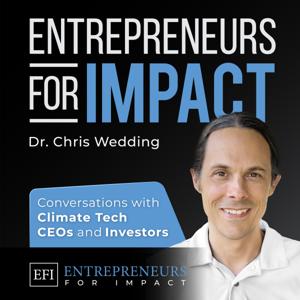


Today I’m sharing a conversation where the tables are turned: I was a guest on the Supercool podcast with my friend Josh Dorfman, the cofounder of climate tech startup Plantd.
We get into:
And why did I create a cartoon version of my photo for this episode? I don't really know.
Check out more episodes with Josh at Supercool:
https://podcasts.apple.com/us/podcast/supercool/id1758404839
--
Get more from Climate CEOs...
Are you a VC- or PE-backed CEO building in energy, infrastructure, or climate tech?
Get smarter on energy, infrastructure, and climate tech in 2 minutes.
Help more people find this podcast.
Most climate investors ask which project offers the best return. A better question: Which investment makes the next 100 projects easier, cheaper, and faster?
This episode explores the Transition Acceleration Framework developed by CalSTRS, Generate Capital, and Rhodium Group, and why catalytic capital can have an impact far beyond a single project.
Seven things you’ll learn in this episode:
Read more here:
https://entrepreneursforimpact.substack.com/p/where-does-the-next-climate-dollar
--
Are you a VC- or PE-backed CEO building in energy, infrastructure, or climate tech?
Get smarter on energy, infrastructure, and climate tech in 2 minutes.
Help more people find this podcast.
Roughly 70% of U.S. substations were built before modern digital technology. Now AI, renewables, batteries, and EVs are forcing a century-old grid to become something fundamentally different.
Company bio:
NovaTech Automation provides automation, monitoring, and control technology for electric utilities, with equipment in roughly 25% of U.S. substations. Founded in 1979, the family-owned company helps utilities modernize aging infrastructure while integrating increasingly complex power sources and loads.
Guest bio:
Conrad Oakey is CEO of NovaTech Automation and the second generation to lead the 45-year-old company. A Duke MBA, he has helped expand the business while navigating utility sales, acquisitions, succession, and technological change.
Seven things you’ll learn in this episode:
--
Are you a VC- or PE-backed CEO building in energy, infrastructure, or climate tech?
Get smarter on energy, infrastructure, and climate tech in 2 minutes.
Help more people find this podcast.
Hiring mistakes can cripple a startup in energy, infrastructure, or industrial technology. This simple three-trait framework helps CEOs spot great team players and six dangerous hiring archetypes before they join the company.
The Frramework:
Adapted from Patrick Lencioni’s "The Ideal Team Player," this episode applies three traits to climate tech hiring: humble, hungry, and smart, meaning emotionally intelligent.
Even talented candidates can fail when one of these traits is missing.
Seven things you’ll learn in this episode:
The one interview question that matters:
Which virtue is missing?
Read more here:
https://entrepreneursforimpact.substack.com/p/which-climate-tech-character-did
--
Are you a VC- or PE-backed CEO building in energy, infrastructure, or climate tech?
Get smarter on energy, infrastructure, and climate tech in 2 minutes.
Help more people find this podcast.
What kills hard-tech startups usually isn’t the technology. It’s everything surrounding it: unit economics, supply chains, customers, workforce, financing, and the long road from demonstration to deployment.
Guest bio:
Dr. Vanessa Chan is an entrepreneur, engineer, angel investor, and educator who works at the intersection of technology, commercialization, and business. She previously served as Chief Commercialization Officer at the U.S. Department of Energy and now leads innovation and entrepreneurship at the University of Pennsylvania’s Engineering program. She was also a partner at McKinsey & Company, where she co-led its innovation practice. TIME named her to its TIME100 Climate list of influential climate leaders in 2024. She holds three patents and, outside of work, runs her own pottery studio.
Seven things you’ll learn in this episode:
--
Are you a VC- or PE-backed CEO building in energy, infrastructure, or climate tech?
Get smarter on energy, infrastructure, and climate tech in 2 minutes.
Help more people find this podcast.
Big projects routinely blow their budgets, schedules, and sometimes the companies building them. But research across 16,000+ projects reveals surprisingly consistent rules for getting them right.
In this solo episode, I translate lessons from How Big Things Get Done by Bent Flyvbjerg and Dan Gardner into practical strategies for entrepreneurs building factories, energy projects, infrastructure, and other capital-intensive businesses.
Seven lessons for entrepreneurs:
Read about all 15 tips here:
https://entrepreneursforimpact.substack.com/p/15-rules-for-building-big-projects
--
Are you a VC- or PE-backed CEO building in energy, infrastructure, or climate tech?
Get smarter on energy, infrastructure, and climate tech in 2 minutes.
Help more people find this podcast.
Nitrogen fertilizer feeds billions of people. But producing it consumes staggering amounts of energy. Switch Bioworks is engineering microbes that could replace industrial fertilizer with biological alternatives at a fraction of the cost.
Company bio:
Switch Bioworks is a biofertilizer company engineering programmable microbes that colonize plant roots and then switch from growth to producing ammonia, giving crops access to nitrogen without relying entirely on conventional fertilizer. Initially targeting the roughly 100 million acres of U.S. corn, Switch has raised nearly $24 million in venture capital plus roughly $5 million in grants and is developing technology that could eventually extend to phosphorus and other biological applications.
Guest bio:
Tim Schnabel is the founder and CEO of Switch Bioworks, which grew out of his Stanford PhD research into genetically engineering plant-root microbes to produce fertilizer. A scientist-turned-entrepreneur and lifelong plant obsessive, Tim has spent roughly a decade working on biological alternatives to the century-old Haber-Bosch process while learning how to translate deep science into a venture-scale business.
Seven things you’ll learn in this episode
--
Are you a VC- or PE-backed CEO building in energy, infrastructure, or climate tech?
Get smarter on energy, infrastructure, and climate tech in 2 minutes.
Help more people find this podcast.
Legendary venture capitalist Brad Feld, co-founder of Foundry Group and Techstars and author of Give First, explains how founders can use resilience, mentorship, long-term thinking, and non-transactional relationships to build stronger startups and startup communities, especially in climate tech and turbulent markets.
This podcast was so important when we recorded it last year that I'm republishing it now.
Company bio:
Foundry Group is a venture capital firm that invests in technology startups and venture funds across the U.S. Techstars is a global startup accelerator and entrepreneurial network built around mentorship, founder development, and the philosophy of “Give First.”
Speaker bio:
Brad Feld is a legendary venture capitalist, entrepreneur, author, and longtime startup mentor who has spent four decades investing in and advising 4,000+ founders. His book, Give First, explores how non-transactional generosity can strengthen founders, relationships, and startup communities.
Seven things entrepreneurs will learn in this episode:
--
Join our confidential CEO community.
Private CEO group for VC/PE-backed climate tech founders navigating capital, strategy, and scale. Capped at 45 CEOs and 45 Mentors (investors and post-exit CEOs), representing $40B in enterprise value or investment capital.
→ entrepreneursforimpact.com
Join 40,000 professionals who get our free newsletter.
Climate tech finance, strategy, leadership. 2-min read.
→ entrepreneursforimpact.substack.com
Leave a 20-second podcast review.
If you found it valuable, be a climate community builder and rate, review, or follow the podcast on Apple and Spotify. It helps push more capital and talent toward scalable climate solutions.
Climate tech is scaling fast. But the data shows huge gaps in industrial decarbonization, carbon removal, energy storage, and the capital needed to turn breakthrough technologies into profitable businesses.
Company bio:
Speed & Scale is a climate action initiative built around measurable objectives and key results (OKRs) for reaching net-zero emissions, originating from John Doerr’s Speed & Scale framework.
https://speedandscale.com
Its Climate Tech Map, developed with partners including Breakthrough Energy, Elemental Impact, Energy Innovation, McKinsey Sustainability, and Stanford’s Doerr School, organizes thousands of climate technologies into a navigable roadmap of decarbonization opportunities.
https://climatetechmap.com
Guest bios:
Ryan Panchadsaram is co-author of Speed & Scale and an investor at Doerr Capital, where his work spans climate technology investing, philanthropy, and climate strategy; his earlier career includes entrepreneurship and public-sector leadership.
Quinn is Director of Research at Speed & Scale, and an investor at Doerr Capital, where she helps translate complex climate, technology, and market data into actionable frameworks for investors, entrepreneurs, policymakers, and professionals entering climate tech.
Seven things you’ll learn in this episode:
--
Join our confidential CEO community.
Private CEO group for VC/PE-backed climate tech founders navigating capital, strategy, and scale. Capped at 45 CEOs.
→ entrepreneursforimpact.com
Join 40,000 professionals who get our newsletter.
Climate tech finance, strategy, leadership. 2-min read.
→ entrepreneursforimpact.substack.com
Leave a podcast review.
If you got value, take 30 seconds and do the community a favor. It helps push more capital and talent toward scalable climate solutions.
Climate CEOs are expected to project confidence. But acting invincible can make investors, employees, and customers trust you less.
This minisode explores the "vulnerability paradox" and why selective candor can be a leadership advantage.
Confidence and vulnerability aren’t opposites — CEOs need to project conviction, especially during fundraising, layoffs, missed milestones, and difficult customer negotiations. But pretending everything is perfect can undermine credibility.
People connect through shared struggle — Investors, employees, and customers respond to leaders who acknowledge that building companies is messy. The perfectly scripted founder story rarely feels believable.
Share challenges selectively — Vulnerability doesn’t mean telling everyone everything. Share the right mistakes, lessons, and unresolved challenges with the right audience.
Replace perfection with learning — “Here’s what we’re learning” can build more trust than pretending everything is going according to plan.
Candor can be commercially valuable — Trust matters in fundraising, hiring, partnerships, and enterprise sales. Sometimes admitting uncertainty strengthens the relationship instead of weakening it.
The core lesson — Strong CEOs don’t need to look invincible. They need to know when confidence builds trust, and when honesty builds more.
👉 Get the written summary:
https://entrepreneursforimpact.substack.com/p/climate-ceos-stop-acting-invincible
--
1️⃣ Join our confidential CEO community.
Private CEO group for VC/PE-backed climate tech founders navigating capital, strategy, and scale. Capped at 45 CEOs.
→ entrepreneursforimpact.com
2️⃣ Join 40,000 professionals who get our newsletter.
Climate tech finance, strategy, leadership. 2-min read.
→ entrepreneursforimpact.substack.com
3️⃣ Leave a podcast review.
If you got value, take 30 seconds and do the community a favor. It helps push more capital and talent toward scalable climate solutions.
From the publisher's feed
Ranked by our users in the last 21 days
9,625 Listeners
2,344 Listeners

56,449 Listeners

179 Listeners
167 Listeners

6,375 Listeners
81 Listeners
283 Listeners
203 Listeners

41 Listeners
138 Listeners