Cold Case Unsealed

Cold Case Unsealed

By AC WilsonTrue Crime
Download on the App Store

Cold Case Unsealed episodes

  • Cold Case Solved 24 Years Later—DNA From Son Identifies the Killer
    In 1974, Dorothy Britt disappeared after meeting her abusive ex-husband, Larry Britt, at a local bar. Although investigators discovered human blood in the suspect’s truck that matched Dorothy's type, the case was dismissed when his new wife provided a false alibi. The investigation remained a cold case for over two decades until advancements in forensic technology allowed detectives to revisit the physical evidence. By comparing the mitochondrial DNA from the old bloodstains to a sample provided by Dorothy’s son, authorities finally confirmed the victim's identity. Facing this new evidence and a recanted alibi, Larry Britt confessed to the murder and led police to the location of the remains. This long-awaited breakthrough resulted in a guilty plea, providing a sense of closure and justice for the family after twenty-four years of uncertainty.


    This episode includes AI-generated content.
    40 min
  • The Vanilla Coke Cold Case
    The episode details the successful resolution of a forty-year-old cold case involving the 1981 murder of Sylvia Quayle in Colorado. After traditional investigation methods and a false confession failed to produce a suspect, law enforcement utilized genetic genealogy and private partnerships to identify David Anderson as the killer. Detectives confirmed his identity by recovering a discarded soda can from his trash to match his DNA with evidence found at the original crime scene. Although his first trial ended in a mistrial, a second jury found him guilty of murder, resulting in a life sentence. This case highlights how modern forensic advancements can provide long-awaited justice for families of victims in decades-old crimes.

    This episode includes AI-generated content.
    41 min
  • Search for Nashville Woman’s Killer Continues More Than a Decade Later
    This episode details the unsolved 2013 death of Livia Rose Smith, a Nashville resident who died after exiting a moving vehicle believed to be a taxi. Despite witnesses seeing her enter a yellow van outside a bar, investigators have never identified the driver or determined exactly what caused her to fall. Her family, led by her brother, suspects she was fleeing an attempted assault during the short trip to her home. The tragedy notably led to stricter city regulations requiring GPS tracking in all local cabs to prevent similar untraceable disappearances. Currently, the Metro Nashville Police Department’s Cold Case Unit continues to seek leads, supported by a substantial monetary reward for information.

    This episode includes AI-generated content.
    42 min
  • Woman in Spanish Cold Case Identified After 20 Years as Liudmila Zavada
    In 2025, an international police effort known as Operation Identify Me successfully identified Liudmila Zavada, a Russian woman whose body was discovered on a Spanish roadside two decades earlier. Long referred to as "the woman in pink," her identity was finally restored through a fingerprint match in a Turkish database and subsequent DNA verification from a relative in Russia. This breakthrough highlights the critical role of Interpol in coordinating global data-sharing to solve cold cases involving migrants and victims of suspicious deaths. The initiative seeks to provide closure for families and generate fresh leads for investigators by releasing previously restricted case details to the public. By transitioning from an anonymous file to a named individual, Zavada's case demonstrates how modern forensics and cross-border cooperation can overcome the challenges of time and geography. The resolution of this mystery serves as a template for identifying dozens of other unidentified women across Europe who have remained nameless for years.

    This episode includes AI-generated content.
    37 min
  • The Murder on Elm Street - Cold Case of Donna Sue Hyatt
    This source provides a detailed account of the 1987 cold case murder of Donna Sue Hyatt in Carlsbad, New Mexico. Through the lens of the true crime program "Bloodline Detectives," the text illustrates how a brutal crime remained unsolved for over three decades despite the diligent efforts of initial investigators. The narrative highlights the transformative role of investigative genetic genealogy, which allowed modern detectives to identify Michael Ruff Wigley as the killer by linking crime scene DNA to his living relatives. Although the suspect died in a 1989 car accident, forensic experts confirmed his guilt by exhuming his remains for a definitive biological match. Ultimately, the episode explores the intersection of cutting-edge science and investigative persistence in providing long-awaited answers to the victim's family.

    This episode includes AI-generated content.
    48 min
  • She Spent 20 Years Hunting Her Best Friend’s Killer
    This episode details the decades-long quest for justice led by Sheila Wysocki following the 1984 murder of her college roommate, Angie Samota. For twenty years, the case remained cold as investigators incorrectly focused on Samota’s acquaintances, eventually exhausting all leads. Driven by a personal vision, Wysocki pressured the Dallas Police Department and even became a private investigator to force a re-examination of the evidence. Her persistence led to a DNA breakthrough that exonerated her former friends and identified the real killer as Donald Bess, a serial rapist already in prison. The account highlights how tenacious civilian advocacy can overcome bureaucratic hurdles to solve historical crimes. Ultimately, the source reflects on the complex nature of closure and the pursuit of truth for victims.

    This episode includes AI-generated content.
    1 hr
  • Ontario Police Hope for Break in 52-Year-Old Cold Case, Offer $50K Reward
    The episode details the enduring investigation into the 1974 death of Karen Caughlin, a 14-year-old girl who vanished after being dropped off at a friend’s house in Sarnia, Ontario. Although initially treated as a homicide, a forensic reassessment in 2017 suggests she was likely killed in a vehicle collision before her body and belongings were moved to a rural ditch. Authorities are specifically searching for information regarding a "Plum Crazy" purple Chrysler vehicle from the early 1970s that may have sustained damage during that period. Despite the passage of over five decades, the Ontario Provincial Police maintain an active case file and offer a $50,000 reward for tips. The narrative highlights the profound grief of the Caughlin family, who continue to seek closure and justice for their youngest sibling. This overview serves as a public appeal, hoping that modern forensics or new witness testimony will finally resolve the mystery.

    This episode includes AI-generated content.
    34 min
  • Catching the Furniture City Killer
    This episode details the decades-long investigation into the 1996 murder of Sharon Hammack, whose body was discovered bound and discarded in Grand Rapids, Michigan. Although law enforcement initially struggled with a lack of witnesses and limited forensic technology, the case was eventually revitalized through investigative genetic genealogy. By analyzing DNA from a blanket found at the crime scene, experts identified Garry Artman, a truck driver with a violent history of sexual assault, as the primary suspect. Artman was apprehended in 2022 and subsequently convicted of Hammack's murder, bringing a sense of justice to her grieving family after twenty-six years. Before his death in prison, Artman confessed to ten additional killings in the Michigan area and another in Florida. This source illustrates the power of modern forensic science in identifying serial offenders and resolving cold cases that were once considered unsolvable.

    This episode includes AI-generated content.

    44 min
  • The Sunday Morning Slasher: The Case of Carl Eugene Watts
    The episode details the chilling life and crimes of Carl Eugene Watts, an American serial killer known as the "Sunday Morning Slasher." It chronicles his early childhood illness and the subsequent violent fantasies that escalated from stalking to a prolific murder spree across Michigan, Texas, and Canada. Despite multiple warnings from psychiatric experts and several arrests, systemic failures and a controversial plea deal nearly allowed Watts to walk free after he confessed to over a dozen killings. The narrative highlights how persistent investigators and a crucial eyewitness eventually secured a life sentence in Michigan, preventing his 2006 release from a Texas prison. Ultimately, the source identifies Watts as a terrifyingly effective predator whose total victim count is suspected to exceed one hundred women.

    This episode includes AI-generated content.
    27 min
  • The Heinous Murder of 9-Year-Old Marise Chiverella
    The episode details the investigation into the 1964 murder of nine-year-old Marise Chiverella in Hazleton, Pennsylvania. After the case remained cold for over half a century, authorities finally identified the killer as James Forte through the use of investigative genetic genealogy. A critical turning point occurred when Eric Schubert, an eighteen-year-old genealogy prodigy, volunteered his expertise to help police narrow down the suspect's family tree. By combining modern DNA technology with traditional detective work, investigators exhumed Forte's remains to confirm a definitive match. Although the perpetrator died decades before the discovery, the breakthrough provided the Chiverella family with long-awaited answers regarding the tragedy. This account highlights how scientific advancement and community collaboration can resolve even the most enduring cold cases.

    This episode includes AI-generated content.
    42 min

About Cold Case Unsealed

From the publisher's feed

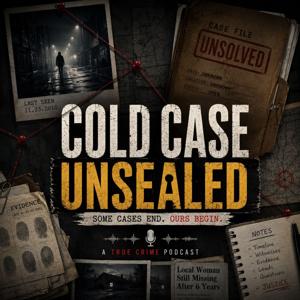
Cold Case Unsealed is a gripping true crime podcast that reopens forgotten investigations, unsolved murders, and mysterious disappearances that never received the answers they deserved. Each episode…