
Sign up to save your podcasts
Or



Section 7
Revelation given to Joseph Smith the Prophet and Oliver Cowdery, at Harmony, Pennsylvania, April 1829, when they inquired through the Urim and Thummim as to whether John, the beloved disciple, tarried in the flesh or had died. The revelation is a translated version of the record made on parchment by John and hidden up by himself.
Doctrine and Covenants 19
It took Martin and Lucy Harris years to acquire one of the finest farms in Palmyra, New York. But in 1829 it became clear that the Book of Mormon could be published only if Martin mortgaged his farm to pay the printer. Martin had a testimony of the Book of Mormon, but Lucy did not. If Martin went forward with the mortgage and the Book of Mormon did not sell well, he would lose his farm, put his marriage at risk, and damage his reputation in the community. Although our circumstances are different from Martin’s, at some time or another we all face difficult questions like those he faced: What is the gospel of Jesus Christ worth to me? What am I willing to sacrifice to help build God’s kingdom? Martin Harris ultimately decided that he would mortgage his farm so the first 5,000 copies of the Book of Mormon could be printed. But even this sacrifice—and any sacrifice we might make—is small compared to the sacrifice of Jesus Christ, “the greatest of all” (Doctrine and Covenants 19:18), who bled from every pore to save the repentant.
For more information about the publication of the Book of Mormon, see Saints, 1:76–84.
Section 6
Revelation given to Joseph Smith the Prophet and Oliver Cowdery, at Harmony, Pennsylvania, April 1829. Oliver Cowdery began his labors as scribe in the translation of the Book of Mormon, April 7, 1829. He had already received a divine manifestation of the truth of the Prophet’s testimony respecting the plates on which was engraved the Book of Mormon record. The Prophet inquired of the Lord through the Urim and Thummim and received this response.
Doctrine and Covenants 6–9
In the fall of 1828, a young schoolteacher named Oliver Cowdery took a teaching job in Manchester, New York, and stayed with the family of Lucy and Joseph Smith Sr. Oliver had heard about their son Joseph and his remarkable experiences, and Oliver, who considered himself a seeker of truth, wanted to know more. The Smiths described visits from angels, an ancient record, and the gift to translate by the power of God. Oliver was fascinated. Could it be true? Lucy and Joseph Sr. gave him advice that applies to anyone seeking truth: pray and ask the Lord.
Section 5
Revelation given through Joseph Smith the Prophet, at Harmony, Pennsylvania, March 1829, at the request of Martin Harris.
Section 4
Revelation given through Joseph Smith the Prophet to his father, Joseph Smith Sr., at Harmony, Pennsylvania, February 1829.
Section 3
Revelation given to Joseph Smith the Prophet, at Harmony, Pennsylvania, July 1828, relating to the loss of 116 pages of manuscript translated from the first part of the Book of Mormon, which was called the book of Lehi. The Prophet had reluctantly allowed these pages to pass from his custody to that of Martin Harris, who had served for a brief period as scribe in the translation of the Book of Mormon. The revelation was given through the Urim and Thummim. (See section 10.)
Section 2
An extract from Joseph Smith’s history relating the words of the angel Moroni to Joseph Smith the Prophet, while in the house of the Prophet’s father at Manchester, New York, on the evening of September 21, 1823. Moroni was the last of a long line of historians who had made the record that is now before the world as the Book of Mormon. (Compare Malachi 4:5–6; also sections 27:9; 110:13–16; and 128:18.)
Chapter 1
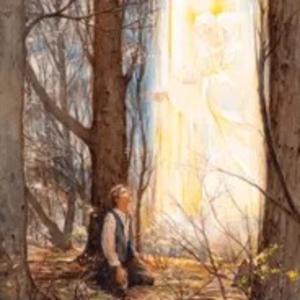
Joseph Smith tells of his ancestry, family members, and their early abodes—An unusual excitement about religion prevails in western New York—He determines to seek wisdom as directed by James—The Father and the Son appear, and Joseph is called to his prophetic ministry.
From the publisher's feed