
Sign up to save your podcasts
Or

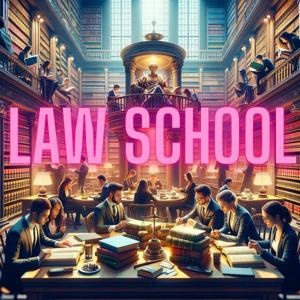

Lecture Notes: Constitution Law 2025 – Full Outline (thelawschoolofamerica.com/ConstitutionLaw2025.html)
Understanding Judicial Review: The Backbone of Constitutional LawThis episode dives into the power of judicial review and why it sits at the core of United States constitutional law. We walk through the political brilliance of Chief Justice John Marshall in Marbury v. Madison, the birth of the Court’s authority to strike down acts of Congress, and how that decision still frames modern debates about the separation of powers.
You will hear how a late–night flurry of “midnight judges,” a refused commission, and a seemingly impossible dilemma gave Marshall the opportunity to announce a simple but revolutionary idea: the Constitution is supreme law, and it is the judiciary’s duty to say what the law is.
What we unpack in this episodeJudicial power does not extend to every interesting dispute. Timing is everything: come too early and you face a ripeness problem; come too late and the case is moot. The plaintiff also needs a concrete, non-speculative injury to establish standing. When the alleged wrong is a vague “what if,” the Court steps back and the issue often becomes an unreviewable question better suited to the political branches.
Across all of this runs a single theme: separation of powers. Judicial review is powerful, but it operates inside a constant negotiation with Congress and the Executive over who decides what, and when.
Quick TakeawaysKeywords: judicial review, Marshall’s political genius, ripeness, mootness, standing, unreviewable questions, political question doctrine, separation of powers, legal principles, landmark court cases.
 View all episodes
 By The Law School of America


3.1
6060 ratings
Lecture Notes: Constitution Law 2025 – Full Outline (thelawschoolofamerica.com/ConstitutionLaw2025.html)
Understanding Judicial Review: The Backbone of Constitutional LawThis episode dives into the power of judicial review and why it sits at the core of United States constitutional law. We walk through the political brilliance of Chief Justice John Marshall in Marbury v. Madison, the birth of the Court’s authority to strike down acts of Congress, and how that decision still frames modern debates about the separation of powers.
You will hear how a late–night flurry of “midnight judges,” a refused commission, and a seemingly impossible dilemma gave Marshall the opportunity to announce a simple but revolutionary idea: the Constitution is supreme law, and it is the judiciary’s duty to say what the law is.
What we unpack in this episodeJudicial power does not extend to every interesting dispute. Timing is everything: come too early and you face a ripeness problem; come too late and the case is moot. The plaintiff also needs a concrete, non-speculative injury to establish standing. When the alleged wrong is a vague “what if,” the Court steps back and the issue often becomes an unreviewable question better suited to the political branches.
Across all of this runs a single theme: separation of powers. Judicial review is powerful, but it operates inside a constant negotiation with Congress and the Executive over who decides what, and when.
Quick TakeawaysKeywords: judicial review, Marshall’s political genius, ripeness, mootness, standing, unreviewable questions, political question doctrine, separation of powers, legal principles, landmark court cases.

43,528 Listeners

7,639 Listeners

153,248 Listeners
484 Listeners
515 Listeners
8,524 Listeners

111,948 Listeners

558 Listeners

370,110 Listeners

444 Listeners

47,654 Listeners

17 Listeners
3,948 Listeners

1,725 Listeners

3 Listeners