
Sign up to save your podcasts
Or



Clients getting hurt for the first time in a significant way often don't know where to go, not just for legal advice but for medical advice.
Not only does it impact their health and their recovery, but it impacts the strength of their case. Without the right medical treatment, without the right supporting doctors and experts, insurance companies just don't take the claims as seriously.
Because at the end of the day, they're looking at our clients, and they're not necessarily seeing them as people, but as numbers on a spreadsheet.
How can a client find the appropriate medical care that improves their health and their legal case?
Dr. Scott Hickey and Dr. Shawn Borich are the physicians behind Maximum Medical Improvement, which helps people find not just a medical specialist, but the right specialist, from the right subspecialty who understands their specific case.
MMI then works with lawyers to help strengthen the legal argument from a medical perspective, by being able to answer specific questions about the specific situation that their client has found themselves in.
A resource that advocates for lawyers and patients: MMI is bridging the gap between medical care and legal support.
"Patients need an advocate because they don't know the questions to ask. And that's what we can provide, since we know the questions they should be asking" - Dr. Scott Hickey
In this episode, we discuss:
◼️ How gaps in treatment can negatively impact both health outcomes and legal cases.
◼️ Why the role of emergency physicians is unique in understanding various specialties.
◼️ Why finding an advocate is essential for patients to receive the care, and legal support, that they need.
◼️ How the healthcare system has shifted towards billing and coding over patient care.
◼️ How to encourage collaboration between medical and legal professionals.
Chapters
00:00 Navigating the Healthcare System
05:00 How MMI Partners Fills a Gap
09:55 Getting Early Medical Intervention
20:00 The Evolution of Patient Care
25:00 The Emergency Room Experience
27:12 The Dynamics of Emergency Medicine
35:39 Getting Support to Navigate the Bureaucracy
44:01 Ethically Connecting Clients and Patients
Courtroom Stories & Tactics | RVA Trial Lawyers
Available on Spotify, Apple, YouTube, and at RVATrialLawyers.com
Based out of Richmond, Virginia, Courtroom Stories & Tactics by RVA Trial Lawyers exists for lawyers who try cases to juries on behalf of people. Through our podcast, we hope to learn from them, support them, connect them, inspire them, and preserve their work for future trial lawyers.
If you are willing, we would greatly appreciate it if you left us a 5-Star Google Review by clicking here. Your review will help people find us.
Thank you!
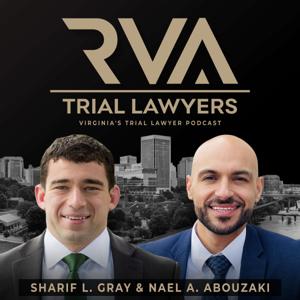
Sharif Gray and Nael Abouzaki
How do you set the value for a case?
Are you holding your case back from getting what it's really worth? And who makes that determination?
Robert Hirschhorn's advice: "Don't put caps on yourself. You want to choose the biggest number that you could ever imagine a jury would award [in a case such as yours], and whatever that number is, multiply it times two."
But to be successful, you need to get the jury to sympathize. You need to justify the villainization of the defendant. You need to anchor your case around the numbers, and then move beyond the numbers.
Rob's perspective comes from 40+ years as a jury and trial consultant, selecting juries that have returned tens of billions of dollars in verdicts. He speaks from experience when it comes to understanding the difference between a liability jury and damages jury, or knowing what are the right elimination questions.
He also speaks through a lens of personal tragedy, deeper purpose and legacy-building.
To that end: be a sponge, never stop learning, and explore new technology, such as Rob's own VerdictHub: a new, AI-driven system that surveys "digital jurors" for incredibly accurate jury predictions.
We explore all this and more in this energizing conversation!
"When you get to the damages part, you have to mention the amount of money, because if you don't, the amount of money the jury thinks is appropriate will always be lower than what you are going to be asking for."
In this episode, we discuss:
◼️ Why it's so important for the jury to know that you care about your client.
◼️ Not limiting yourself with artificial caps on claims.
◼️ Why family members make the best trial partners.
◼️ How to identify and frame the villain in the case. It's not always obvious.
◼️ Dropping low economic damages, and focusing on pain and suffering.
◼️ How Artificial Intelligence is changing the landscape of jury consulting.
Chapters
00:00 Ask For Big Numbers
03:46 How To Get Huge Verdicts
11:40 Cat Bennett's Legacy
21:20 Look For Accountability, Not Villains
26:40 Liability Vs Damages Jury
30:02 AI Meets Jury Consulting
33:32 Stress Testing The Model
35:09 What Verdict Hub Does
49:01 Trust And When To Use It
Courtroom Stories & Tactics | RVA Trial Lawyers
Available on Spotify, Apple, YouTube, and at RVATrialLawyers.com
Based out of Richmond, Virginia, Courtroom Stories & Tactics by RVA Trial Lawyers exists for lawyers who try cases to juries on behalf of people. Through our podcast, we hope to learn from them, support them, connect them, inspire them, and preserve their work for future trial lawyers.
If you are willing, we would greatly appreciate it if you left us a 5-Star Google Review by clicking here. Your review will help people find us.
Thank you!
Sharif Gray and Nael Abouzaki
Over two and a half years ago, our firm was approached by a father in Winchester, VA, with a case that had been rejected by at least three other law firms.
We knew it would be a very challenging case, with very limited evidence. It was not a "typical" case with clear-cut medical or economic damages. Others would ask us over time why we said yes to taking it on, despite the odds and obstacles.
The short answer, of course, is because it was the right thing to do.
But beyond that, we measured this case from a different perspective: that the promise of accountability was the strongest argument for pursuing damages, to the tune of $20 million.
Still, there's the framing of an argument, and then there's being able to actually implement it in court and get a winning verdict.
Today we bring together the team whose remarkable efforts, starting in 2023, ultimately led to this significant result. Gray Broughton, Zachary Grubaugh, Nathan Hittle and Lara Bradshaw join Sharif Gray to share their perspectives on the preparation, organization, tackling the various stages of the case through numerous obstacles, and ultimately getting the result that they did, for a very deserving young man and his father.
This is the story behind the case.
"The days of evaluating cases like insurance adjusters needs to end." - Sharif Gray
In this episode, we discuss:
◼️ Why Gray recognized that this was a case worth taking on, when so many others wouldn't.
◼️ The moment when everything shifted, and the case became the firm's top priority.
◼️ Why focus groups provided the ultimate breakthrough that showed we had a solid case.
◼️ How we were able to navigate not having experts, only lay witnesses, in a case with very limited evidence.
◼️ How the firm was able to tap into individual strengths and come together for a consummate team effort, all while juggling other cases at the same time.
Chapters
00:00 Introduction
03:32 The Case Comes to the Firm
05:20 Case Facts and Client History
09:15 Focus Group Insights and Case Framing
17:32 All Hands Trial Prep
27:55 Trial Logistics And Motions
38:39 Opening Statement Impact
48:36 Deposition Shock Questions
56:07 Expert Witness Takedown
01:02:39 Closings and Rebuttal Flow
01:10:46 Big Numbers Perspective
01:14:27 Key Takeaways Roundtable
Courtroom Stories & Tactics | RVA Trial Lawyers
Available on Spotify, Apple, YouTube, and at RVATrialLawyers.com
Based out of Richmond, Virginia, Courtroom Stories & Tactics by RVA Trial Lawyers exists for lawyers who try cases to juries on behalf of people. Through our podcast, we hope to learn from them, support them, connect them, inspire them, and preserve their work for future trial lawyers.
If you are willing, we would greatly appreciate it if you left us a 5-Star Google Review by clicking here. Your review will help people find us.
Thank you!
Sharif Gray and Nael Abouzaki
You are the most powerful person you know.
Whether you're a trial lawyer, working in corporate America, or in any walk of life, nothing can change this simple fact.
You have the ability to make the choices and decisions that are healthy and positive, for you and those around you.
And yes, these are real choices. They may be challenging, they may shake things up, but there's a reason why you're considering them in the first place: career purpose and fulfillment is likely missing.
Jenn Cloutier has been down this road, after a 20+ career in corporate, reaching a point where she realized, "I outgrew the company that I worked for."
Her answer? To break out on her own as an executive coach, helping others first recognize if they are fulfilled in their work and career, and then helping them navigate through transitions that make sense for them.
Where have you given away your power? Is it time to take it back?
We talk about self-leadership, work/life balance, effective human management, finding purpose and belonging, and how, ultimately, it takes a lot of courage and risk to say, "This isn't for me."
"When you really do that deep internal work, if we're conscious about it, we can make choices that get us to where we want to be."
In this episode, we discuss:
◼️ How self-leadership applies to trial lawyers.
◼️ Why feeling stuck often comes from a lack of perceived choices.
◼️ How effective leaders and managers that are human-centric create better results for everyone.
◼️ Why the role of a coach is to facilitate self-discovery, not to provide answers.
◼️ The commitment to change: are you able to see that change, and want to make that change?
◼️ How human beings need purpose, togetherness, connectedness and belonging.
Chapters
00:00 Finding Your Purpose and Choices
06:10 The Deer and the Call for Change
08:56 Navigating Career Transitions
15:01 Understanding Choices and Overcoming Stuckness
20:59 Recognizing Personal Power
26:52 Effective Workplace Leadership and Dynamics
29:53 The Responsibility of Companies
34:55 What is the Difference Between Coaches and Consultants?
43:26 If You're Not Feeling Fulfilled, Where Does Change Begin?
Courtroom Stories & Tactics | RVA Trial Lawyers
Available on Spotify, Apple, YouTube, and at RVATrialLawyers.com
Based out of Richmond, Virginia, Courtroom Stories & Tactics by RVA Trial Lawyers exists for lawyers who try cases to juries on behalf of people. Through our podcast, we hope to learn from them, support them, connect them, inspire them, and preserve their work for future trial lawyers.
If you are willing, we would greatly appreciate it if you left us a 5-Star Google Review by clicking here. Your review will help people find us.
Thank you!
Sharif Gray and Nael Abouzaki
For years, you've been building your law career: head down, focused, years of commitment and perseverance.
But are you sure you're where you need to be?
Perhaps you know already: 'This is the best place, the best people and the best work for me, right now.' Which is a wonderful feeling, and something we're all striving for.
But if you find yourself trying to fit in, to stay true to yourself and your values, to find more meaning in law work, you're not alone.
Glenn Katon experienced this himself, and took the bold step, when the time was right, to make a change. Glenn was a trial lawyer for 10 years before turning his focus, and practice, to civil rights law for the past 15 years. Many of Glenn’s cases have challenged high profile civil rights abuses, and he has been quoted in the New York Times, Wall Street Journal, Washington Post, and Newsweek, among other publications.
Today, we talk about the challenges, both systemic and cultural, facing civil rights litigation, and how to navigate these obstacles.
But our discussion always circles back to this question of, "How do you really find your passion?"
If you're not where you want to be right now: start exploring.
"You have to be willing to not take the safest route. You can find a way to community, and then it just becomes a matter of how much are you willing to go off the beaten path."
In this episode, we discuss:
◼️ How Glenn's upbringing in Brooklyn impacted his worldview.
◼️ How Glenn was able to transition from corporate law to civil rights law.
◼️ Why civil rights lawyers face unique struggles in their work.
◼️ That finding a community in law can help you guide career transitions.
◼️ Why qualified immunity presents significant challenges in civil rights litigation.
◼️ The undermining of constitutional rights, as protected in the 4th, 5th and 14th amendments.
Chapters
00:00 From Corporate Law to Civil Rights Advocacy
02:57 The Impact of Glenn's Upbringing on His Career
10:12 The Rocking Chair Test: Reflecting on Career Choices
19:48 Finding Your Passion in Law
30:13 Navigating Qualified Immunity in Civil Rights Cases
39:46 The Importance of Authenticity in the Courtroom
49:46 Advice for Young Lawyers
Courtroom Stories & Tactics | RVA Trial Lawyers
Available on Spotify, Apple, YouTube, and at RVATrialLawyers.com
Based out of Richmond, Virginia, Courtroom Stories & Tactics by RVA Trial Lawyers exists for lawyers who try cases to juries on behalf of people. Through our podcast, we hope to learn from them, support them, connect them, inspire them, and preserve their work for future trial lawyers.
If you are willing, we would greatly appreciate it if you left us a 5-Star Google Review by clicking here. Your review will help people find us.
Thank you!
Sharif Gray and Nael Abouzaki
Losing a trial case can feel like a crushing gut punch, an emotional hit, burdened with the weight of disappointing your client. It stings, and it's hard to shake off.
You can't control the outcome, but you can control your reaction to it.
Matt Nakajima is an accomplished trial lawyer who has secured more than forty verdicts and settlements of $1 million or more. Since 2025 alone, he has recovered over $100 million for his clients.
Several of these cases have resulted in nationwide safety changes, particularly in corporate negligence and trucking collision cases - helping prevent similar harm to others.
But before reaching this level of success, Matt had his share of losses. The kind of defeats that made him question if trial work was even the right thing for him.
Today, we talk about perseverance, the importance of community, continuous training and learning from losses.
'Resilience' may sound like a buzzword, but witness it applied here with an intention and commitment that's genuine and inspiring.
"That ability to pick yourself back up and try again I think is really what separates good lawyers from average, and then to become great."
In this episode, we discuss:
◼️ How the realities of being a private investigator compare to portrayals in the media.
◼️ How to build rapport, an essential ingredient for trust in investigations.
◼️ Why effective interviewing requires patience and active listening.
◼️ Why lawyers should prioritize the process over the outcome in trials.
◼️ How understanding the legal landscape is also crucial for investigators.
◼️ That giving grace to others can improve professional relationships.
Chapters
00:00 Introduction: A Stark Choice
02:03 Matt's First Solo Trial: Taking Risks
05:53 Lessons from Loss
12:04 Empathy in Advocacy, Connecting with Clients
21:58 Investing in Yourself: The Roadmap for Aspiring Trial Lawyers
28:01 Personal Growth: Balancing Life and Law
31:58 The Briefcase Analogy: Valuing Human Life
40:01 Advice for New Lawyers
Courtroom Stories & Tactics | RVA Trial Lawyers
Available on Spotify, Apple, YouTube, and at RVATrialLawyers.com
Based out of Richmond, Virginia, Courtroom Stories & Tactics by RVA Trial Lawyers exists for lawyers who try cases to juries on behalf of people. Through our podcast, we hope to learn from them, support them, connect them, inspire them, and preserve their work for future trial lawyers.
If you are willing, we would greatly appreciate it if you left us a 5-Star Google Review by clicking here. Your review will help people find us.
Thank you!
Sharif Gray and Nael Abouzaki
How would the FBI approach jury selection?
Imagine applying these same tools and trainings to your own jury selection and investigations, and having the ability to uncover evidence that changes the outcome of cases.
Jim Melia is a retired FBI special agent turned professional investigator, here in Richmond, VA. Today he shares his insight into the skills required for effective interviewing, how to build rapport with someone, and why anything from empathy to confession comes from building a human connection.
You can't just launch into a pointed question that puts someone, a complete stranger, on the spot. Our conversation today is a fascinating study in psychology and negotiation, a masterclass on how trial lawyers should conduct jury selection.
"I never got a confession out of anybody by yelling at them. You get confessions out of people by building rapport and being respectful, telling people what their options are, and giving them a way to confess to you while saving face. That's what works."
In this episode, we discuss:
◼️ How the realities of being a private investigator compare to portrayals in the media.
◼️ How to build rapport, an essential ingredient for trust in investigations.
◼️ Why effective interviewing requires patience and active listening.
◼️ Why lawyers should prioritize the process over the outcome in trials.
◼️ How understanding the legal landscape is also crucial for investigators.
◼️ That giving grace to others can improve professional relationships.
Chapters
00:00 Building Rapport: The Foundation of Trust
02:03 From FBI to Private Investigator
05:57 The Art of Investigation: Skills and Techniques
12:02 Pivotal Interviews: The Key to Successful Investigations
18:13 Scientific Interviewing: Modern Techniques in Interrogation
24:06 The Role of Private Investigators in Legal Cases
30:04 Lessons for Lawyers: Collaborating with Investigators
36:02 Life as a Private Investigator: Reality vs. TV
46:58 How Should Lawyers Use Private Investigators
Courtroom Stories & Tactics | RVA Trial Lawyers
Available on Spotify, Apple, YouTube, and at RVATrialLawyers.com
Based out of Richmond, Virginia, Courtroom Stories & Tactics by RVA Trial Lawyers exists for lawyers who try cases to juries on behalf of people. Through our podcast, we hope to learn from them, support them, connect them, inspire them, and preserve their work for future trial lawyers.
If you are willing, we would greatly appreciate it if you left us a 5-Star Google Review by clicking here. Your review will help people find us.
Thank you!
Sharif Gray and Nael Abouzaki
Civil Defense Lawyer Jason Boone shares his personal experience of making sure he maintains the right work/life balance for him and his family.
In a conversation of frankness and authenticity, Jason talks about how lawyers of all stripes can, and should, find a balance that works for them.
There are the years when you need to put in the time to learn the profession, and get the reps. But then there's knowing when and how to scale that back, to ensure you have more balance to your time, and become an even better lawyer as a result.
Meanwhile, understanding how the defense side prepares for trial gives you valuable insight in framing not just your arguments, but your preparation.
Do defense attorneys share the same sense of collegiality and camaraderie that often exists amongst plaintiff lawyers? How do they approach valuation? Do defense lawyers make use of focus groups, and in the same way?
"As a young lawyer, that's where you really need to put in the time learning, shadowing, finding a great mentor. To get to the point where, later in your career, you can say, 'I'm done at 4:30. I'll be back on in two and a half hours, if I need to be.'"
In this episode, we discuss:
◼️ How you have to be intentional about spending time with family.
◼️ The evolving culture within the legal field, particularly post-COVID.
◼️ How to do your prep, and stop taking notes during trial.
◼️ The nature of nuclear verdicts: large awards that are not supported by the facts.
◼️ How valuation of cases can vary significantly based on location and circumstances.
◼️ Why grades matter, no matter what anyone tells you.
Chapters
00:00 Do Defense Lawyers Work Together?
01:46 Balancing Family and Trial Work
12:24 Being Intentional About Your Time
18:57 Knowing When Enough Prep is Enough
28:07 Is It Competition Between Defense Lawyers?
33:43 Understanding Nuclear Verdicts
38:47 Valuation of Cases from the Defense Perspective
40:08 What do Focus Groups for Defense Look Like?
44:13 Advice for New Lawyers: Grades Matter
Courtroom Stories & Tactics | RVA Trial Lawyers
Available on Spotify, Apple, YouTube, and at RVATrialLawyers.com
Based out of Richmond, Virginia, Courtroom Stories & Tactics by RVA Trial Lawyers exists for lawyers who try cases to juries on behalf of people. Through our podcast, we hope to learn from them, support them, connect them, inspire them, and preserve their work for future trial lawyers.
If you are willing, we would greatly appreciate it if you left us a 5-Star Google Review by clicking here. Your review will help people find us.
Thank you!
Sharif Gray and Nael Abouzaki
Virginia's appellate landscape changed a lot in 2022, to where, similar to many other states, virtually everyone has an automatic right to go to the Court of Appeals.
Yes, it can feel complicated and overwhelming. But the appellate process is a vital part of the legal system that deserves attention from trial lawyers. If you have a client who desperately wants to appeal, or the other side is not happy and wants to appeal, you need to be prepared for this process.
Today's conversation guides you through the steps of trial to appeal, with an expert on appellate law. Rachel Yates is the founder and lead appellate counsel at Yates Appellate Law, a Richmond firm who specialize in criminal appeals and civil appeals.
"Appeals, it's that slow quiet work and research about something that maybe no one else has ever really thought to look at. Your job is to find that out, and then help make the law. And I think that is the coolest thing."
In this episode, we discuss:
◼️ Recognizing that the transition from trial to appeal is complex and requires careful navigation.
◼️ Why transcripts are crucial for preserving the record in appeals.
◼️ Why the brief is the most important part of the appeal process.
◼️ What proffers are, how they work, and why proffers are vital for ensuring that important evidence is considered on appeal.
◼️ Understanding the timeline for appeals is critical, avoid missing deadlines.
Chapters
00:00 Why Your Issue May Not Get Considered
05:42 The Appeal Process Explained
08:26 Changes in the Appellate Landscape
14:05 Navigating the Transition Phase
29:20 Preserving Issues for Appeal
35:41 Making Your Proffer on the Record
35:53 Handling Excluded Evidence
36:47 Describing Digital Evidence in Court
40:38 Why Is Video Recording Not Used?
45:36 The Appellate Process: Briefs and Oral Arguments
55:57 Filing for Rehearing and Supreme Court Appeals
59:00 Memorable Appeals and Lessons Learned
Courtroom Stories & Tactics | RVA Trial Lawyers
Available on Spotify, Apple, YouTube, and at RVATrialLawyers.com
Based out of Richmond, Virginia, Courtroom Stories & Tactics by RVA Trial Lawyers exists for lawyers who try cases to juries on behalf of people. Through our podcast, we hope to learn from them, support them, connect them, inspire them, and preserve their work for future trial lawyers.
If you are willing, we would greatly appreciate it if you left us a 5-Star Google Review by clicking here. Your review will help people find us.
Thank you!
Sharif Gray and Nael Abouzaki
When is being "reasonable," patient and compromising in fact just a strategy of the other side to delay, frustrate and ultimately to avoid trial?
We should be respectful. We should be professional. But at no point should we ever compromise the duty to our client for the sake of getting along.
Samantha Cohn talks about the moral and ethical motivations behind her career shift to becoming a personal injury lawyer, her techniques for being assertive in the court room, and not rolling over to somebody else's demands and expectations.
Of recognizing when 'Be reasonable' is more like, 'Roll over and come to my side and agree with me, so I don't have to work too hard.'
"I want the defense to see that freight train coming at them, to know that we're serious, and that they're not going to be able to drag their feet in trying to get this resolved."
In this episode, we discuss:
◼️ If you're going to be a trial lawyer, you have to accept that it's going to be lonely sometimes.
◼️ What to do when insurance companies prioritize profit over people.
◼️ How getting trial experience is absolutely crucial for personal injury lawyers.
◼️ Why mentorship and surrounding oneself with experienced lawyers is vital to improving.
◼️ What is insurance subrogation, and why it is a good foray into personal injury law.
◼️ Why the legal profession demands integrity and moral courage.
Chapters
00:00 "That Doesn't Comport With my Moral Compass"
02:58 Samantha's Journey to Becoming a Lawyer
05:30 How Subrogation Can Lead to Personal Injury Law
11:16 How Insurance Companies Treat People
16:45 The Emotional Toll on Lawyers of Personal Injury Cases
21:31 Fighting for Clients in Court
25:52 Accountability and Taking Responsibility to Avoid Litigation
30:49 It's Not About the Money
36:09 There is No Such Thing as a Loss
49:43 "I Still Have Nerves Before Going to Court"
54:45 Seek Mentors and People You Admire
Courtroom Stories & Tactics | RVA Trial Lawyers
Available on Spotify, Apple, YouTube, and at RVATrialLawyers.com
Based out of Richmond, Virginia, Courtroom Stories & Tactics by RVA Trial Lawyers exists for lawyers who try cases to juries on behalf of people. Through our podcast, we hope to learn from them, support them, connect them, inspire them, and preserve their work for future trial lawyers.
If you are willing, we would greatly appreciate it if you left us a 5-Star Google Review by clicking here. Your review will help people find us.
Thank you!
Sharif Gray and Nael Abouzaki
From the publisher's feed
Trial lawyers do not become great overnight. It takes persistence, a relentless work ethic, a willingness to learn from mistakes, a burning passion for the craft, an authentic self, and the courage…
Those who become great trial lawyers also become great people. Through their work, they grapple with the realities of the human condition and in the process cultivate character, principle, integrity, leadership, strength, compassion, and perseverance.
Based out of Richmond, Virginia, Courtroom Stories & Tactics by RVA Trial Lawyers exists for lawyers who try cases to juries on behalf of people. Through our podcast, we hope to learn from them, support them, connect them, inspire them, and preserve their work for future trial lawyers.
(804) 915-1611
[email protected]
1210 E Cary St Suite 300-3
Richmond, VA 23219

192 Listeners

39,385 Listeners