
Sign up to save your podcasts
Or

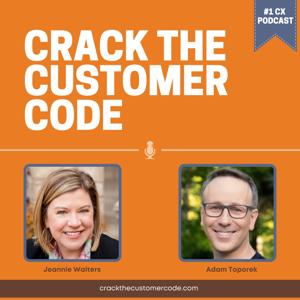


Adam Toporek explains how the Peak-End Rule can make or break a customer experience in surprising ways, and how leveraging it helps you leave a more favorable impression on your customers...on purpose! Ruling customer emotions with the Peak-End Rule One thing we’ve covered a lot on this show is how to “wow” your customers. But we often forget that an overall wonderful experience can be filled with terrible moment-to-moment experiences, and vice-versa. So what are your customers really feeling after the experience you’ve invested so much in? Does all the surprise and delight you add to your customer experience add up to something your customers will really look back on favorably? It seems pretty simple, but it’s a vexing paradox even the best business leaders struggle to get a grip on! “Our memory of the experiences is not the average of how we felt throughout the experiences.” - Adam Toporek This is why business leaders need not only to understand the Peak-End Rule, but to bake it into our customer experience strategies. What do you want customers to remember you for, and are you really approaching this the right way? What are the emotional high and low points in your customer experience, and more importantly, which will customers remember you for? In our last episode, bestselling author Shaun Belding explained there’s more than one kind of “Wow” in customer experiences. So understanding the Peak-End rule goes a long way in helping you make the difference between inspiring customers to say “Wow, let’s do that again!” vs “Wow, that stunk to high heaven!” Listen in for Adam's expert tips to take charge of these critical emotional tipping points. Related Content 360Connext® post, How to Drive Business Results With The Peak-End Rule Customers That Stick® post, Exceeding Customer Expectations Is Nice but Not Necessary Episode 344: Shaun Belding, The Journey to Wow Episode 321: Jesse Cole, Revolutionizing the Ballpark Experience We're on C-Suite Radio! Check it out for more great podcasts Sponsor message Give your team the customer service training they deserve Want to bring game-changing customer service training to your team? CTS Service Solutions offers a half-day in-person workshop designed to motivate and educate your customer-facing team members. Using energy, excitement, and interaction, our workshop helps frontline teams embrace a customer-centric outlook, then — using the principles from our book Be Your Customer’s Hero — gives them the skills and confidence they need to handle any service interaction. Don’t leave your frontline team hanging… Give them the training they deserve. Learn more at customerheroworkshop.com, that is customerheroworkshop.com. Take care of yourself and take care of your customers.
Learn more about your ad choices. Visit megaphone.fm/adchoices
Adam and Jeannie unlock your potential to create and deliver ever-improving customer experiences with Shaun Belding, CEO of The Belding Group and author of The Journey to Wow.
Are you on your Journey to Wow?
Leaders everywhere say they want to “wow” their customers. So they create new processes and experiences that look great from within the walls of their organizations. Then they find out customers are saying “wow, that was… awful!” But who hasn’t said that more than once? We all know there are two kinds of “wow,” so why do we forget about this when creating customer experiences?
“Customer Experience has a payoff. You have to believe that.” -Shaun Belding
Shaun Belding, CEO of the Belding Group, understands how easy it is to miss the mark when creating memorable customer experiences. In fact, his latest book is all about how to create these “wow” experiences without losing sight of customer emotions and what “wow” really means to them.
It starts with defining what “wow” really means within the context of your customer experiences, and how that fits into your culture and processes. Then you must realize there’s no end-game where the experience is great, and anticipate the next improvement.
"Just because you were great yesterday doesn't mean you're going to be great today." -Shaun Belding
In this interview, Shaun breaks down his approach not only to defining the different kinds of “wow” in your experience, but how to put that into a context that’s actually useful, then discover where you need to focus. So we hope listen in then say “Wow, I am so glad I listened to this episode!”
“You can’t ask the front lines to be relentless if the CEO isn’t driving it.” -Shaun Belding
Interview HighlightsShaun Belding has been in the customer experience space for 27 years. (Pretty amazing, since he claims to be only 32 years old…) He is CEO of the Belding Group of companies - an award-winning global customer experience consulting and customer service training company. He is a bestselling author of six books, published internationally in 12 languages, including the just-released The Journey to WOW.
Connect with Shaun
Take care of yourself and take care of your customers.
Learn more about your ad choices. Visit megaphone.fm/adchoices
Jeannie and Adam discuss the past, present and future of custom subscription boxes and their growing role in the data revolution. Subscription boxes enter the data revolution In the past few years, we have seen explosive growth in data collection methods. As a result, marketers get a better ROI on their campaigns while delivering more personalized products, services, and experiences. And now we’ve seen a growing trend in subscription boxes, where consumers offer much richer information from the start. Services like BirchBox, StitchFix, BarkBox, Blue Apron, and many others, offer custom-tailored boxes based not only on their initial preferences, but their behavior of returning merchandise, upgrading and downgrading service levels, and more. “The data that you CAN get is so much richer…” -Jeannie Walters But now these services are beginning to use Artificial Intelligence to analyze this data, and really leveraging the power of smart algorithms. This serves not only to reduce the costs of keeping stylists and consultants on the ready, but to create richer customer profiles and inform new ways of segmenting. The robots are collecting and acting on information about size, weight, dietary preferences, styling preferences, and many more things marketers wouldn’t have dreamed of having access to in the past. So, this all sounds great, doesn’t it? It’s a win/win where organizations have increasingly powerful data at hand and consumers save precious time knowing someone (or something) is making good choices for them, possibly better than the choices they’d make on their own. “Organizations are using every action we take as a data point to understand us.” -Adam Toporek However, you might guess that we’ve been wondering if this is sustainable, and we certainly are! What happens when algorithms start sending things they think customers should like, but don’t? Then what happens when customers “settle” for those choices simply to receive incentives for future purchases? In the search for perfect data, marketers and their robots continually open the door for new imperfect forms of targeting, and consequently, imperfect customer experiences. So this growing trend of subscription boxes coupled with the use of AI is rife with potential for disaster! In this episode, we dive into this trend from the customer’s perspective, look back at how it all got started, where it is today, and what it may mean for the future of marketing and big data. Our robots say you need to listen in! Related Content 360Connext® post, What’s Missing from your Data Insights? Customers That Stick® post, What Great Brands Do Episode 335: Do You have a Purchase or Usage Brand? Episode 311: Which Retail Touchpoints Matter Most We're on C-Suite Radio! Check it out for more great podcasts Sponsor message Give your team the customer service training they deserve Want to bring game-changing customer service training to your team? CTS Service Solutions offers a half-day in-person workshop designed to motivate and educate your customer-facing team members. Using energy, excitement, and interaction, our workshop helps frontline teams embrace a customer-centric outlook, then — using the principles from our book Be Your Customer’s Hero — gives them the skills and confidence they need to handle any service interaction. Don’t leave your frontline team hanging… Give them the training they deserve. Learn more at customerheroworkshop.com, that is customerheroworkshop.com. Take care of yourself and take care of your customers.
Learn more about your ad choices. Visit megaphone.fm/adchoices
Forward-thinking designer and strategic facilitator Ruben Ocampo joins us not only to set the record straight about what design thinking really is, but to share his unique, human-centric approach to service design.
Do you see service design through a human lens?In this ever-changing world of products and services, we have a major problem with problem-solving.
Too often, we approach service design as a means to our own ends. Then, in our efforts to adopt a better approach, we adopt terms like “design thinking” that tend to lose their true meaning through all the buzz.
Many companies interpret design thinking as a better kind of brainstorming session, which is only a small part of it. While great ideas may be born this way, they often only live on paper. As a result, companies waste millions launching innovations that don’t solve the problems they intended to solve. In fact, sometimes new problems are created in the process!
“Even if we don’t have the title of designer, we’re designing solutions for someone." -Ruben Ocampo
But Ruben Ocampo is here to help us understand a more human-centric (and efficient!) approach to service design. He outlines the three major ways of solving problems, how they limit our options, and some keys to keeping our capabilities and limitations in perspective.
“It’s all about building empathy through observation." -Ruben Ocampo
Service design is not just about innovating around customers to solve problems, or even to deliver better service. Rather, it's about creating experiences that influence customer behavior and evoke positive emotions. So seeing experiences through a human lens is critical! This can be a bigger challenge for organizations that have been operating the same way forever. But Ruben has tackled this not only with businesses, but with cities and government agencies too!
Listen in to learn Ruben’s approach to human-centric design, so you can attack service issues head on and move forward with a service design that delights customers and sets your brand apart from the competition.
Interview HighlightsRuben Ocampo is a designer and strategic facilitator who helps leaders imagine and enact visionary change by engaging them in a purposeful and meaningful dialogue with customers, workforce, and other stakeholders in the value chain. Having received Master degrees in both business administration and human-centered design, Ruben’s unique approach combines different ways of creating and interpreting shared meaning.
Ruben has worked across several sectors, including government, manufacturing, hospitality, health, and financial services. He teaches master's-level courses in management and design and has spoken at design conferences and seminars in the US and abroad.
Connect with Ruben
Take care of yourself and take care of your customers.
Learn more about your ad choices. Visit megaphone.fm/adchoices
Adam and Jeannie discuss the apparent decline in trust of Word of Mouse and how businesses and consumers are navigating the misinformation associated with online reviews. Navigating the new Word of Mouse Positive word of mouth can be very powerful in driving sales and forging loyalty. But because marketers know this, review sites and forums are becoming rife with fake reviews. For example, it’s been said recently that up to one-third of reviews on TripAdvisor are fake. “People are more and more suspect of fake reviews.” -Adam Toporek However, it’s not just TripAdvisor we’re talking about here. There’s a huge market for fake reviews, and some marketers have started using “review farms” and other clever (or not-so-clever) ways to sneak them into giants like Amazon. As a result, customers are trusting word of mouse, or online reviews, less and less. “They are gaming the system to the detriment of those of us who do trust reviews…” -Jeannie Walters So, is word of mouse as a means to influence customers on the decline? Yes and no… As businesses find more ways to exploit customers’ dependence on online reviews, customers are becoming more savvy in determining which reviews to trust. In fact, they’re finding ways to share more trustworthy information on platforms where the businesses in question have less control. In today’s episode, Jeannie and Adam explore what is driving this shift and what it means for your business. How can you approach reviews in the age of fake word of mouse? Will your genuinely fantastic online reviews get lost in the din? Listen in and put your money where your mouse is! Related Content 360Connext® post, 3 Ways to Survive Dangerously Casual Customer Reviews Customers That Stick® post, When Sales Does Service on Social with Phil Gerbyshak Episode 183: Online Reviews More Important Than Ever Episode 152: Daniel Lemin, Manipurated We're on C-Suite Radio! Check it out for more great podcasts Sponsor message Give your team the customer service training they deserve Want to bring game-changing customer service training to your team? CTS Service Solutions offers a half-day in-person workshop designed to motivate and educate your customer-facing team members. Using energy, excitement, and interaction, our workshop helps frontline teams embrace a customer-centric outlook, then — using the principles from our book Be Your Customer’s Hero — gives them the skills and confidence they need to handle any service interaction. Don’t leave your frontline team hanging… Give them the training they deserve. Learn more at customerheroworkshop.com, that is customerheroworkshop.com. Take care of yourself and take care of your customers.
Learn more about your ad choices. Visit megaphone.fm/adchoices
Bestselling author and career futurist Marti Konstant joins us to discuss how an agile career can create a brighter future for you, your colleagues, and your organization.
Why career agility is a priorityWith customer expectations changing constantly, agility is important in today’s marketplace. But how agile is your business, really, if your career is not? How ready are you to take the next step in your project, in your organization, or ultimately, in your career?
“… develop talent value for yourself that wouldn’t exist…” -Marti Konstant
Marti Konstant created the Career Agility Model not only to help professionals keep one foot stepping towards tomorrow’s success, but to help them bring more value to their organizations today. Having an agile career, as Marti explains, makes you more successful in projects, careers, and personal branding.
But it’s not about learning to do anything and everything at once. In fact, focusing on one great thing can be your ticket to leveraging your other strengths in the future.
“Become known for one thing, people will engage you on those other skillsets.” -Marti Konstant
So as many of our listeners are interested in building their personal brands while being superstars to their own teams, we’re delighted to have this amazing discussion about how both you and your organization can benefit from career agility.
Agility is needed on all fronts to succeed in an ever-changing marketplace, and true career agility starts with the amazing insights and actions Marti reveals in this interview. To find out how to use the Career Agility Model, create an Idea Zone to stay on the ready, assemble and leverage your own Feedback Squad, and more, listen in!
Interview HighlightsMarti Konstant is a workplace futurist, career growth analyst, author, speaker, and founder of the Agile Careerist Project™. Her career path includes: artist, designer, brand developer, entrepreneur, technology marketing executive, and investor. Marti delivers keynotes, workshops and training, where future of work and career agility are central themes.
Her book, Activate Your Agile Career: How Responding to Change Will Inspire Your Life’s Work, was listed as #1 New Release and Best Seller on Amazon. She earned a Master of Business Administration from the University of Chicago Booth School of Business.
Connect with Marti
Take care of yourself and take care of your customers.
Learn more about your ad choices. Visit megaphone.fm/adchoices
Jeannie Walters CCXP gives you the 101 on customer journey mapping so you can stop stalling and start making a difference today.
Customer Journey Mapping: What’s holding you back?When the subject of customer journey mapping comes up, we often think of gorgeous, robust maps that take forever to complete. Then we think of how much work that must be, how enormous our customer journey is, and ultimately, how we don’t have the time or money for all that.
But that’s why many business leaders miss out on the amazing “A-Ha!” moments and opportunities to add delight that only come from a customer journey mapping project. It’s too easy to get hung up on the deliverable itself, when it’s actually the project, the “doing” of customer journey mapping, that makes the magic happen.
“Doing a journey map for journey mapping’s sake…Congratulations, you have a poster, and customers still hate you.” – Jeannie Walters
What’s more, customer journey mapping is typically seen as a huge project that takes forever. “How can we map the entire customer journey? It’s enormous! And we have so. Many. Customer Segments…”
Stop right there. You don’t have to map the entire journey of every customer. You don’t have to consider every customer at once and create a giant monster that eats up all your time and money. And more importantly, you don’t have to worry about making it pretty.
“The magic of journey mapping is in the process.” – Jeannie Walters
In this episode, Jeannie gives you the 101 on journey mapping so you can get started right away, no matter who your customers are or what your situation is.
Customer journey mapping doesn’t have to be huge and expensive to spark action that makes a real difference, so don't let the beautiful maps you see online dictate what your map should be like. Listen in to learn more about Jeannie’s fully-adaptable “can-do” approach!
Related ContentSponsor message
Give your team the customer service training they deserve
Want to bring game-changing customer service training to your team? CTS Service Solutions offers a half-day in-person workshop designed to motivate and educate your customer-facing team members. Using energy, excitement, and interaction, our workshop helps frontline teams embrace a customer-centric outlook, then — using the principles from our book Be Your Customer’s Hero — gives them the skills and confidence they need to handle any service interaction. Don’t leave your frontline team hanging… Give them the training they deserve. Learn more at customerheroworkshop.com, that is customerheroworkshop.com.
Take care of yourself and take care of your customers.
Learn more about your ad choices. Visit megaphone.fm/adchoices
Adam and Jeannie discuss how to overcome the pitfalls and challenges of developing a business model around entrepreneurship with Danny Schuman, author of “The Worst Business Model” and founder of Twist.
Do entrepreneurs need to have a business model?As entrepreneurs, solopreneurs and small business owners, we tend to follow our passions and go with our guts on everything. But sooner or later, we must develop a business model or scaling becomes difficult… or even impossible!
“Sometimes it’s hard to get out of our own way.” -Danny Schuman
It’s tough to develop standards and policies when thus far, we’ve surrounded ourselves with great people, done whatever we do best, and it’s all been working out. While it can feel like we don’t need a business model, serving more clients and maintaining solid relationships with them becomes incredibly difficult.
But how can we develop guidelines and rules without losing touch with the passion that brought us here in the first place?
As an entrepreneur who beat the odds, Danny Schuman has been asked this question many times, so it inspired him to write a book! In fact, he dug in and interviewed hundreds of entrepreneurs to find the best ways to develop a business model while staying engaged with customers and offering the best possible experiences.
“We often do things that work but we don’t really notice them…” -Danny Schuman
In this episode, we learn some great ways to stay positive, stay focused, put a method behind our madness, and more importantly, leverage what’s been working for us in ways that are scalable.
Interview HighlightsDanny Schuman is a writer, marketer, and entrepreneur who has spent his career creating ideas to solve challenges. He founded marketing consultancy Twist in January 2009, working with big and small brands to develop successful brand strategy, focus their message, and bring that message to the right people with great marketing materials.
Before founding Twist, Danny wrote and creative directed marketing campaigns that helped build iconic brands like Quaker Oatmeal, Coors Light, and Gatorade. He and Michael Jordan started working on Gatorade on the same day. Michael called Danny “Peanut Butter Jelly Boy,” but that’s a story for another time. His #1 best-selling book The Worst Business Model in the World: A New Kind of Guide for a New Kind of Entrepreneur is available on Amazon!
Connect with Danny
Take care of yourself and take care of your customers.
Learn more about your ad choices. Visit megaphone.fm/adchoices
Adam and Jeannie explore the decline of people using the phone for customer service and how to know if chat is better for you and your customers.
Why is chat better than phone for some customers?We all know calling a company for customer service is typically time-consuming and frustrating. So with text-based service options like chat becoming more available, many of us are opting not to pick up the phone.
“We all have been trained to not pick up the phone…” -Jeannie Walters
But is this really better? While chat offers convenience and a better sense of control for the customer, phone conversations capture more of the emotion and urgency of the situation. So even though we save on resources by sending customers through this channel, we miss out on valuable insights that can only be communicated through the spoken word.
Perhaps we should not be looking at this as one channel being better than the other. Instead, maybe we should be thinking about what actually serves the customer in the moment. For instance, is chat only preferred because the customer gave up while waiting for a service agent on the phone?
“That’s not a problem of the channel. That’s a problem of the execution.” -Adam Toporek
This is a hot issue to which there’s no one right answer. In fact, the Washington Post recently published an article encouraging customer NOT to call for customer service. While this idea may sound great for companies hoping to save on resources, it signals a public perception of failure around phone support.
So what can you do about this, and what does it mean for customer service in your company? More importantly, what does it mean for the way customers perceive your brand and how you collect those insights? We talk about this and a lot more on the podcast. Listen in!
Related ContentSponsor message
Give your team the customer service training they deserve
Want to bring game-changing customer service training to your team? CTS Service Solutions offers a half-day in-person workshop designed to motivate and educate your customer-facing team members. Using energy, excitement, and interaction, our workshop helps frontline teams embrace a customer-centric outlook, then — using the principles from our book Be Your Customer’s Hero — gives them the skills and confidence they need to handle any service interaction. Don’t leave your frontline team hanging… Give them the training they deserve. Learn more at customerheroworkshop.com, that is customerheroworkshop.com.
Take care of yourself and take care of your customers.
Learn more about your ad choices. Visit megaphone.fm/adchoices
Joshua March, bestselling author and Founder of Conversiocial, shares how social media messaging helps create better customer experiences while cutting customer service costs.
Customer service efficiency through social media messagingBesides the fact that customers want help via social media messaging, it’s cheaper, faster and more efficient that traditional channels. But most companies have yet to adopt it as a core channel for customer service and communication in general.
“If you’re taking a day to respond, then people will just end up phoning” @joshuamarch
These channels aren’t going away, friends. In fact, 8 billion business-to-consumer messages are sent via Facebook messenger monthly, and this number has grown 4 times past 12 months.
So we invited Joshua March, Founder of Conversocial, to discuss the benefits and challenges of adopting social media messaging as a primary method of communication, both internally and with customers.
“You really need to be treating messaging as a semi-real-time channel.” @joshuamarch
Josh not only explains why social messaging is important and here to stay, but he shares great examples of companies using social media messaging in ways that provide faster, more efficient customer service while saving big money on communications. For example, one company has moved up to 60% of their customer service communications to social messaging.
You can do this too! You can handle customer service more efficiently and consistently via social media messaging than any other. As a result, you will save money, bolster public perception, CSAT, NPS and more. Listen in!
Interview HighlightsJoshua March founded Conversocial in 2009 based on his vision that online communication and customer service were undergoing fundamental shifts, requiring businesses to invest in new processes and technologies to manage the rapidly shifting social landscape.
A leading proponent of social media, Joshua previously founded leading social application company iPlatform, one of the world's first Facebook Preferred Developers, which was acquired in 2012. Having started his career in London, Joshua is now based in New York where he leads the US operations of Conversocial, as well as global strategy. And he is now the author of the new book Message Me, a book on the future of customer service.
Connect with Joshua
Take care of yourself and take care of your customers.
Learn more about your ad choices. Visit megaphone.fm/adchoices
From the publisher's feed
75 Listeners

126 Listeners

3 Listeners
44 Listeners

15 Listeners

10 Listeners
85 Listeners