Reform UK is having the best year of its life. Official opposition in Wales. Seventeen seats in Scotland. Over 1,400 councillors. And yet Middle England still hasn't climbed aboard.
This week on Craft Politics: Darren Grimes, Reform UK councillor, deputy leader of Durham County Council, and one of GB News's most recognisable voices, joins Joseph Lavoie and Andrew Percy to answer what Reform actually is, where its next million voters come from, and whether it can govern or just campaign.
We discuss:
The ceiling problem. Reform won more council seats on a smaller vote share than the year before. Is this a party filling the void left by Labour and Conservative collapse, or something structurally stronger?
Where the next million comes from. Darren's two-pronged attack: prove economic credibility to the Sussexes and cultural compatibility to the Red Wall. And why Essex, not just Durham, is now in play.
Not Thatcher's party. Why Reform would nationalise British Steel, why it's past the ideological purity of the 1980s, and how Darren's Labour-voting grandad changed his mind about Maggie.
The Burnham threat. Andy Burnham is coming for the same voter Reform wants. Darren's response: nobody in County Durham knows who he is, and Manchesterism isn't going to solve the North's problems.
The migration radicalisation. A majority of British voters now support detention of illegal migrants. Darren's warning: if Reform doesn't get this right, people will conclude the ballot box is broken and go to the horseshoe of doom.
Government in waiting. What Reform's first 100 days would look like, from scrapping green levies to lifting the cap on medical school places, and why Whitehall needs grabbing by the balls.
Also discussed: HMO Britain, why the BBC immigration argument was always wrong, the billionaire who just left taking £330 million in tax with him, and whether Darren has parliamentary ambitions. Spoiler: the call might come.
Find Darren on GB News and follow him on X.
—
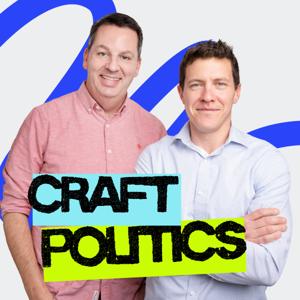
Craft Politics is a cross-border political podcast where Canadian and British experts come on to answer one sharp political question per episode. Co-hosted by Joseph Lavoie (former senior advisor in a Canadian Prime Minister's Office) and Andrew Percy (former UK Conservative MP).
Listen on Apple Podcasts: https://podcasts.apple.com/ca/podcast/craft-politics/id1790715962
Listen on Spotify: https://open.spotify.com/show/3Zaw8zZHe7qiFYIby7lKRB
Web: https://www.craftpolitics.fm
Joseph Lavoie on LinkedIn: https://www.linkedin.com/in/josephlavoie/
Andrew Percy on LinkedIn: https://www.linkedin.com/in/andrew-percy-b996b431a/
Guest inquiries: [email protected]
#CraftPolitics #UKPolitics #ReformUK #CanadianPolitics #Anglosphere