
Sign up to save your podcasts
Or

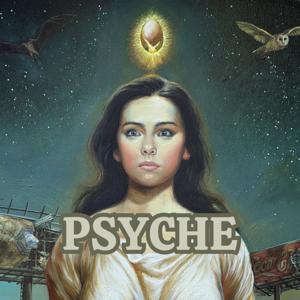

Lately I’ve been spending a lot of time with Massimo Recalcati, and that rabbit trail led me to Luca Di Gregorio’s Lacan in Italy—and specifically to a line that completely grabbed me: that Lacan’s legacy “demands invention up to the limit of heresy.”
In this episode, I explore what it might mean to truly inherit a thinker without becoming their disciple in the worst sense of the word. What does it mean to be faithful to an intellectual tradition through creativity rather than imitation? Does Recalcati mean we should push right up to the edge of heresy without crossing it—or that real thinking inevitably looks heretical to somebody?
Along the way, I reflect on Jung’s famous anti-dogmatic spirit, the Zen phrase “kill the Buddha,” my own experience with a deeply Jungian therapist who embodied intellectual generosity rather than orthodoxy, and the strange tribalism that can emerge around thinkers like Lacan, Hegel, Freud, and beyond.
This becomes an episode about psychoanalysis, philosophy, therapy, and maybe even psychological adulthood itself—the difficult task of learning from our intellectual fathers and mothers without remaining their children forever.
 View all episodes
 By Quique Autrey
5
1515 ratings
Lately I’ve been spending a lot of time with Massimo Recalcati, and that rabbit trail led me to Luca Di Gregorio’s Lacan in Italy—and specifically to a line that completely grabbed me: that Lacan’s legacy “demands invention up to the limit of heresy.”
In this episode, I explore what it might mean to truly inherit a thinker without becoming their disciple in the worst sense of the word. What does it mean to be faithful to an intellectual tradition through creativity rather than imitation? Does Recalcati mean we should push right up to the edge of heresy without crossing it—or that real thinking inevitably looks heretical to somebody?
Along the way, I reflect on Jung’s famous anti-dogmatic spirit, the Zen phrase “kill the Buddha,” my own experience with a deeply Jungian therapist who embodied intellectual generosity rather than orthodoxy, and the strange tribalism that can emerge around thinkers like Lacan, Hegel, Freud, and beyond.
This becomes an episode about psychoanalysis, philosophy, therapy, and maybe even psychological adulthood itself—the difficult task of learning from our intellectual fathers and mothers without remaining their children forever.

90,994 Listeners
15,251 Listeners
2,117 Listeners
1,461 Listeners

135 Listeners
313 Listeners

512 Listeners
583 Listeners

593 Listeners
354 Listeners
3,590 Listeners

59 Listeners

202 Listeners
287 Listeners
233 Listeners