
Sign up to save your podcasts
Or

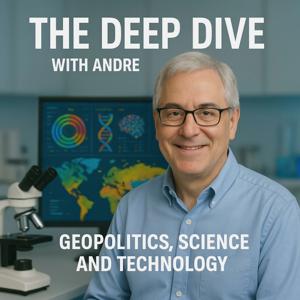

The provided source conducts a comparative analysis of the two leading quantum computing platforms: D-Wave's quantum annealing and IBM's universal gate-based model, highlighting their fundamentally different approaches. It outlines D-Wave's focus on specialized optimization problems for immediate commercial application, in contrast to IBM's long-term pursuit of a universal, fault-tolerant quantum computer capable of solving a broad range of future challenges. The document explores how these differing philosophies impact their hardware architectures, software ecosystems (Ocean SDK vs. Qiskit), and application domains, from D-Wave's logistics and finance solutions to IBM's research in materials science and cryptography. Ultimately, the analysis concludes that the choice between platforms depends on a user's specific problem type and time horizon, emphasizing that they cater to distinct needs within the evolving quantum landscape.
Research done with the help of artificial intelligence, and presented by two AI-generated hosts.
Note: “qubit” was incorrectly pronounced as “kwibit” instead of “cue-bit” (the standard pronunciation). This issue arises from phonetic handling, and it cannot be easily corrected because the second-stage AI is not reading from a fixed script but generating new dialogue from the research report. As a result, all the episodes on Quantum Computing were affected by this error.
 View all episodes
 By Andre Paquette


3.7
33 ratings
The provided source conducts a comparative analysis of the two leading quantum computing platforms: D-Wave's quantum annealing and IBM's universal gate-based model, highlighting their fundamentally different approaches. It outlines D-Wave's focus on specialized optimization problems for immediate commercial application, in contrast to IBM's long-term pursuit of a universal, fault-tolerant quantum computer capable of solving a broad range of future challenges. The document explores how these differing philosophies impact their hardware architectures, software ecosystems (Ocean SDK vs. Qiskit), and application domains, from D-Wave's logistics and finance solutions to IBM's research in materials science and cryptography. Ultimately, the analysis concludes that the choice between platforms depends on a user's specific problem type and time horizon, emphasizing that they cater to distinct needs within the evolving quantum landscape.
Research done with the help of artificial intelligence, and presented by two AI-generated hosts.
Note: “qubit” was incorrectly pronounced as “kwibit” instead of “cue-bit” (the standard pronunciation). This issue arises from phonetic handling, and it cannot be easily corrected because the second-stage AI is not reading from a fixed script but generating new dialogue from the research report. As a result, all the episodes on Quantum Computing were affected by this error.
14,378 Listeners

5,520 Listeners
12,237 Listeners
4,170 Listeners
1,627 Listeners

21 Listeners

15,950 Listeners